
 CA
 NZ
 UK
 US
 IND

 AU

 Share
 X (Formerly Twitter)
 Whatsapp
 Facebook
 LinkedIn
 Telegram
 Email This Article
 Copy Link
 Summarize with AI
 Chat GPT
 Perplexity
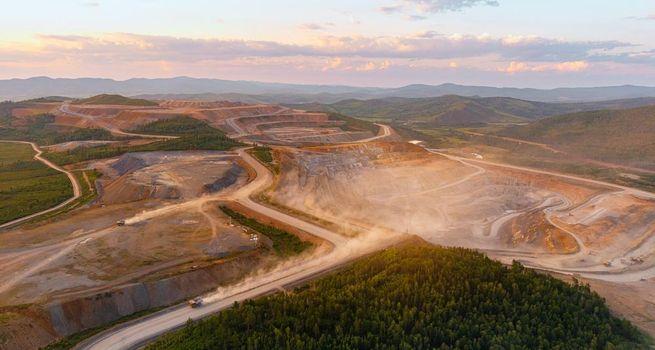
Rare earth elements (REEs) are a group of 17 metallic elements that share similar chemical properties. Despite their name, most rare earths are not particularly scarce in the Earth’s crust. The term “rare” is a historical artefact — it refers to the fact that these elements are rarely found in concentrated, economically mineable deposits, and they are notoriously difficult to separate from one another.
The 17 rare earth elements consist of the 15 lanthanides — lanthanum (La), cerium (Ce), praseodymium (Pr), neodymium (Nd), promethium (Pm), samarium (Sm), europium (Eu), gadolinium (Gd), terbium (Tb), dysprosium (Dy), holmium (Ho), erbium (Er), thulium (Tm), ytterbium (Yb), and lutetium (Lu) — plus two chemically related elements: scandium (Sc) and yttrium (Y).
These elements are typically divided into two categories. Light rare earth elements (LREEs) include lanthanum through europium and are generally more abundant and less valuable. Heavy rare earth elements (HREEs) include gadolinium through lutetium plus yttrium, and are significantly rarer, harder to extract, and command much higher prices per kilogram.
Why Rare Earths Matter
The unique electronic and magnetic properties of rare earth elements make them irreplaceable in a wide range of high-technology applications. Their importance can be understood through several critical use cases.
Permanent magnets represent the single largest and most strategically important application. Neodymium-iron-boron (NdFeB) magnets are the strongest permanent magnets commercially available. They are used in electric vehicle traction motors, direct-drive wind turbine generators, industrial robotics, hard disk drives, and a vast array of consumer electronics. Praseodymium is typically alloyed with neodymium to enhance magnet performance, while dysprosium and terbium are added in smaller quantities to maintain magnetic strength at high operating temperatures — a critical requirement for automotive and aerospace applications.
In the defence sector, rare earth magnets are embedded in precision-guided munitions, jet engines, satellite communication systems, night vision equipment, and sonar systems. The United States Department of Defense has identified rare earths as essential to more than 300 weapon systems and platforms.
Beyond magnets, rare earths serve essential functions in catalytic converters (cerium, lanthanum), petroleum refining catalysts, polishing compounds for glass and semiconductors (cerium oxide), phosphors for lighting and displays (europium, terbium, yttrium), and specialty glass and ceramics.
The NdPr Premium
Not all rare earths carry equal economic weight. Neodymium and praseodymium — often quoted together as NdPr oxide — account for over 80% of total rare earth market value. This concentration of value means that the commercial viability of most rare earth projects depends primarily on the grade and quantity of NdPr in their ore bodies, along with their ability to produce separated NdPr oxide at competitive cost.
For investors evaluating ASX rare earth companies, understanding the NdPr content of a company’s deposit is one of the most important analytical starting points. A project with large total rare earth oxide (TREO) resources but low NdPr distribution may be less economically attractive than a smaller deposit with a higher NdPr proportion.
Heavy Rare Earths: The Hidden Value
While NdPr dominates by total market value, heavy rare earth elements (HREEs) — particularly dysprosium and terbium — command far higher prices per kilogram and play a strategically irreplaceable role. Dysprosium is added to NdFeB magnets to maintain their performance at elevated temperatures, which is critical for automotive and aerospace applications where motors operate under high thermal stress. Terbium serves a similar function and is also used in magnetostrictive alloys for sonar systems and precision actuators.
The supply of heavy rare earths is even more concentrated than light rare earths, with the majority historically sourced from ionic adsorption clay deposits in southern China. This geological concentration means that companies with credible HREE exposure — such as the ionic clay explorers on the ASX — carry additional strategic value, even if their total resource tonnages are modest.
Iluka’s Eneabba refinery is being designed with the capability to separate both light and heavy rare earth oxides, which would make it one of the very few facilities globally able to offer the full suite of magnet rare earths from a non-Chinese source. This capability, if successfully demonstrated at commercial scale, could be a significant competitive differentiator.
Rare Earth Deposit Types
Understanding the geological nature of different rare earth deposits helps investors assess the technical risks and opportunities associated with individual ASX companies.
Carbonatite and alkaline intrusive deposits are the most common source of light rare earths and include some of the world’s largest and highest-grade deposits. Lynas’s Mt Weld is a weathered carbonatite, and its exceptional grade and NdPr distribution are a function of both the primary mineralogy and the supergene enrichment processes that concentrated rare earths near the surface over geological time. Arafura’s Nolans project is hosted in an apatite-rich vein system associated with an alkaline intrusive complex. These hard rock deposits typically require conventional open-pit or underground mining followed by energy-intensive crushing, grinding, and flotation to produce a mineral concentrate.
Ionic adsorption clay deposits represent a fundamentally different geological and processing model. In these deposits, rare earth ions are loosely adsorbed onto the surface of clay minerals, from which they can be extracted using relatively simple leaching processes without the need for hard rock mining. Ionic clay deposits have historically been a major source of heavy rare earths in China and are now being targeted by ASX companies including Australian Rare Earths (AR3), Ionic Rare Earths (IXR), and Brazilian Rare Earths (BRE). The potential advantage of clay deposits is lower capital expenditure and reduced environmental impact, though they are typically lower grade and may face challenges around leaching efficiency and waste management.
Mineral sands deposits contain rare earth-bearing minerals, particularly monazite and xenotime, as by-products of conventional mineral sands mining for zircon, rutile, and ilmenite. Iluka’s strategy leverages its accumulated monazite stockpile from decades of mineral sands operations. The advantage of this approach is that the rare earth mineral has already been extracted as a by-product, reducing upstream mining costs.
Placer and secondary deposits include beach sands and alluvial accumulations of rare earth minerals. While generally lower grade, these deposits may offer lower-cost extraction pathways in favourable geological settings.
For investors, the deposit type influences capital requirements, processing complexity, environmental risk, and the timeline to production. Hard rock deposits are well understood but capital-intensive. Ionic clay deposits offer potential capital efficiencies but are less proven outside China. Mineral sands-derived feedstocks benefit from existing upstream operations but require dedicated downstream processing facilities.
[Internal Link: What Are Critical Minerals and Why Do They Matter?]
Industry Overview: The Global Rare Earth Market
The global rare earth industry is defined by a single dominant characteristic: concentration. No other major commodity market is as heavily controlled by a single country as rare earths are by China.
China’s Dominance
China accounts for approximately 60–70% of global rare earth mining output, depending on the year and the measurement methodology. More critically, China controls roughly 90% of global rare earth processing capacity — the intermediate step where mined ore is refined into separated rare earth oxides and metals that manufacturers can actually use.
This processing bottleneck is the real strategic vulnerability. Even if a mine in Australia or the United States produces rare earth concentrate, it must typically be shipped to China for separation and refining before it can enter the magnet supply chain. Lynas Rare Earths is the most notable exception, operating its own separation facility in Malaysia with plans to expand processing onshore in Australia.
China has demonstrated a willingness to use its market position as a geopolitical tool. In 2010, China restricted rare earth exports to Japan during a territorial dispute, causing prices to spike dramatically. More recently, Chinese export controls on gallium, germanium, and antimony in 2023–2025 reinforced concerns about supply security. Bloomberg Intelligence estimates that potential Chinese export quotas could displace as much as 13,000 metric tonnes of demand in 2026, forcing Japanese industry and Western defence suppliers into a bifurcated market as marginal buyers.
Supply and Demand Fundamentals
The demand picture for rare earths is driven by three structural growth engines: electrification of transport, expansion of renewable energy generation, and modernisation of defence capabilities.
Electric vehicle adoption is the single largest demand driver. NdFeB permanent magnets are used in the traction motors of most battery electric vehicles. In 2024, demand from EV motors alone reached approximately 37 kilotons of NdPr equivalent, and is forecast to consume roughly 50% of global magnet supply by 2040. NdPr demand overall is predicted to rise at approximately 7% per annum through 2030.
Wind energy adds a significant additional demand layer. Direct-drive offshore wind turbines, which are increasingly preferred for their lower maintenance requirements, use substantially more rare earth magnets per megawatt than geared turbines.
On the supply side, despite billions of dollars in public and private investment in non-Chinese projects, Bloomberg Intelligence forecasts a 36% global NdPr shortfall by 2030. New mines typically require 7–15 years to move from discovery to production, meaning that projects being developed today will not meaningfully contribute to supply until the late 2020s or early 2030s.
The International Energy Agency (IEA) projects total rare earth demand could reach approximately 280,000 tonnes by 2030, while broader forecasts suggest demand could rise by two to three times by 2035 and potentially seven to ten times by 2050 as electrification and advanced manufacturing accelerate globally.
Pricing Dynamics
Rare earth pricing is notably opaque compared to commodities like gold, copper, or iron ore. There is no widely used public exchange for rare earth trading. Spot prices are published by services such as Asian Metal, Fastmarkets, and the Shanghai Metals Market, but these prices reflect a Chinese-dominated market and may not accurately represent the cost of securing supply through long-term offtake agreements outside China.
NdPr oxide prices have historically been volatile, ranging from below US$40/kg to above US$100/kg over the past decade, driven primarily by Chinese production decisions, speculative activity, and shifts in environmental enforcement within China. As of early 2026, NdPr oxide prices have been supported by renewed geopolitical tensions and tighter Chinese export controls, with Bloomberg Intelligence projecting the annual NdPr market value could reach US$10 billion in 2026.
For investors, this pricing opacity and volatility means that revenue projections for ASX rare earth companies carry a wider margin of uncertainty than for most other mining commodities. Sensitivity analysis around NdPr price assumptions is essential when evaluating project economics.
The Emergence of an Ex-China Pricing Market
One of the most significant structural developments in the rare earth market is the growing discussion around establishing transparent pricing mechanisms outside of China. Currently, Chinese domestic prices set the global benchmark, and ex-China producers effectively operate as price-takers. This means that even if a company like Lynas sells its product to Japanese or European customers, the price it receives is largely determined by conditions in the Chinese market.
Several initiatives are exploring the creation of non-Chinese price discovery mechanisms, including exchange-traded contracts or standardised reference prices. If such mechanisms emerge and gain adoption, they could fundamentally alter the pricing dynamics for ASX rare earth companies, potentially creating a “Western premium” for supply chain-secure material. However, the development of liquid, transparent pricing markets for rare earths faces significant challenges, including the small size of the market relative to major commodities, the diversity of rare earth products (which makes standardisation difficult), and the limited number of non-Chinese participants.
The Role of Recycling
Rare earth recycling from end-of-life products — particularly permanent magnets from electric vehicles, wind turbines, and electronic waste — represents a potential supplementary supply source. Currently, less than 1% of rare earths are recycled globally, primarily due to the technical difficulty and cost of extracting rare earth materials from complex manufactured products.
Several research programmes and start-ups are working to develop commercially viable rare earth recycling processes. If successful at scale, recycling could meaningfully supplement primary mine supply from the mid-2030s onward, particularly for NdPr recovered from the growing fleet of end-of-life electric vehicles. For ASX rare earth miners, increased recycling volumes could eventually moderate demand growth for primary mined material, though the timeline for material impact remains distant and uncertain.
Market Size and Growth Projections
The total global rare earth market was valued at approximately US$5–7 billion in 2024, depending on the measurement methodology. NdPr oxide is the dominant value driver. Bloomberg Intelligence projects the annual NdPr market value alone could reach US$10 billion in 2026, reflecting both volume growth and potential price increases driven by geopolitical factors.
Looking further ahead, the total rare earth market is expected to grow substantially as electrification, defence modernisation, and advanced manufacturing drive demand. Some industry forecasts project the total market could exceed US$20 billion by 2030, though such projections carry significant uncertainty around pricing assumptions.
For context, the rare earth market remains small relative to other commodities — iron ore, for example, represents a market valued at over US$200 billion annually. The relatively small size of the rare earth market means that it can be moved significantly by individual events, policy changes, or large buyer/seller actions, contributing to the price volatility that characterises the sector.
[Internal Link: How Commodity Prices Affect ASX Mining Stocks]


 Nov 13, 2026





 Please wait processing your request...