
 CA
 NZ
 UK
 US
 IND

 AU

 Share
 X (Formerly Twitter)
 Whatsapp
 Facebook
 LinkedIn
 Telegram
 Email This Article
 Copy Link
 Summarize with AI
 Chat GPT
 Perplexity
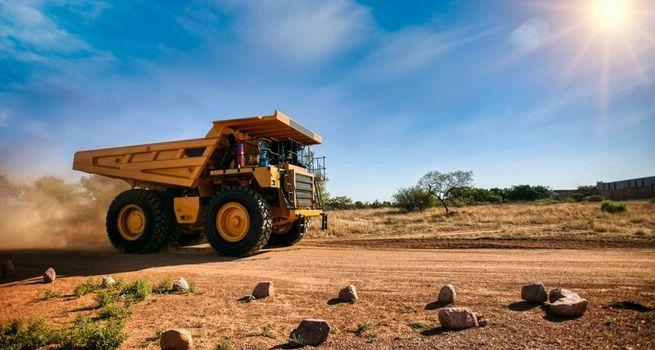
West Wits Mining Limited, currently visible on the Australian Securities Exchange under the deferred settlement ticker WWIDA, has recently traded at a fresh 52-week high near A$0.655 and now carries a market capitalisation of approximately A$299.91 million. For a company whose flagship asset is a near-surface gold project in the Witwatersrand Basin of South Africa, the scale of the re-rating is significant. It reflects a combination of historically strong gold prices, growing confidence in the pathway from development to production at the Qala Shallows Gold Project, and a broader re-engagement by investors with near-term gold producers positioned in established mining jurisdictions. This feature unpacks the drivers of the rally, the financial profile of a late-stage developer and the risks that could weigh on future performance.
Executive Summary
West Wits Mining Limited has pushed into new 52-week high territory, with its deferred settlement line (ASX: WWIDA) last trading around A$0.655. The market capitalisation of approximately A$299.91 million is notably larger than that of many Australian junior gold peers, reflecting the company's progress along the development pathway and its proximity to becoming a near-term gold producer in South Africa's historic Witwatersrand Basin.
The rally is driven by an alignment of powerful factors: a structurally elevated gold price environment, consistent progress at the Qala Shallows Gold Project near Johannesburg, a broader rotation of capital into near-production developers, and the attention generated by corporate activity that has resulted in the creation of the deferred settlement line. Each of these forces has reinforced the other and has created conditions in which the stock has been able to break out of its multi-year base.
Financially, West Wits remains a pre-production developer, with diluted earnings per share on a trailing twelve-month basis effectively flat at around zero Australian cents and a year-on-year change in diluted earnings per share of approximately minus seventy-eight per cent. These figures reflect the cost base of a company investing in mine development and commissioning preparations rather than producing revenue, and they should be interpreted in that context.
Market sentiment has turned meaningfully constructive. Retail investors have been drawn to the combination of the gold thematic and the tangible near-term production narrative, while specialist resource funds have been building positions that suggest confidence in the development timeline. The price action is indicative of genuine re-rating rather than purely speculative enthusiasm, although the dynamics of small-cap resource stocks mean that volatility is likely to remain elevated.
Risks are substantial and include operational execution challenges, ongoing funding needs, exposure to the South African electricity and regulatory environment, currency and commodity volatility, and the inherent difficulty of transitioning from developer to producer. Investors should recognise these risks and approach the position with appropriate sizing, diversification and time horizon.
1. Company Overview: A Near-Term Gold Producer in a World-Famous Basin
West Wits Mining Limited is an Australian-listed gold company whose flagship asset is the Qala Shallows Gold Project, located within the historic Witwatersrand Basin on the Main Reef of South Africa's gold fields, in close proximity to Johannesburg. The Witwatersrand is the single most prolific gold-producing region in human history, having delivered billions of ounces over more than a century of mining. West Wits' strategic proposition is to access the shallower, near-surface portions of the Main Reef that were either bypassed or only partially mined during earlier eras, using modern mining, processing and exploration techniques to deliver a relatively low-cost, short lead-time gold operation.
Business Model and Sector Positioning
West Wits operates within the development and near-production segment of the gold sector, a category of company that sits between grassroots explorers and established producers. The strategic logic of this segment is that value can be created relatively rapidly by taking a well-understood resource through the last stages of study, financing and construction, and then converting it into a cash-generating mine. Because much of the geological work required to define the resource has already been done through decades of historical mining and exploration, the risk profile is different from that of a pure exploration story. The key uncertainties relate to execution, permitting, financing and operating performance rather than whether the metal is there.
Within the broader Australian-listed gold universe, West Wits is relatively distinctive because of its geographic focus on South Africa and its position as a near-term producer rather than a late-stage developer. That combination attracts investors who are looking for exposure to the gold price without the binary outcomes of exploration drilling and who are willing to accept South African jurisdictional considerations in exchange for the leverage that comes from a lower capital intensity, faster development project. The emergence of a deferred settlement line (WWIDA) reflects the corporate activity associated with funding or restructuring steps that are often required to move a project into construction and commissioning.
Core Operations and the Qala Shallows Gold Project
Operationally, West Wits is focused on advancing the Qala Shallows Gold Project through its pre-production phase, including final technical studies, permitting, construction preparations and early mining activities. The project targets near-surface portions of the Main Reef, which are amenable to mining methods that are simpler and less capital-intensive than the ultra-deep mining typical of other parts of the Witwatersrand. The processing strategy is designed to leverage existing infrastructure in the surrounding mining region, reducing capital requirements and shortening the time from construction decision to first production.
The broader project portfolio includes additional exploration and development targets within the same basin, providing potential upside beyond the initial Qala Shallows development. The company's strategic narrative emphasises the possibility of expanding production and life-of-mine over time through systematic exploitation of these adjacent opportunities. Meanwhile, ongoing engagement with local stakeholders, government authorities, communities and employees is a crucial element of the project's social licence to operate and has received significant management attention in recent years.
2. Recent Price Performance and the Move to a 52-Week High
Market data shows the WWIDA deferred settlement line trading around A$0.655, unchanged on the most recent session observed, with reported volume of approximately 26,070 shares. The unchanged daily print on relatively modest turnover should not be mistaken for a lack of momentum. The deferred settlement line is the market's mechanism for trading shares that have been issued in a corporate action but not yet settled in the primary line, and its price is closely linked to the main WWI ticker through arbitrage. The move to a new 52-week high reflects the cumulative direction of that broader WWI price discovery process, and it places West Wits near the top of its multi-year trading range.
Price Action, Volume and Technical Structure
The path to the current 52-week high has been gradual and constructive. West Wits has spent an extended period consolidating within a broad range, building a base from which to break out. During that consolidation, the company has advanced its project while investor sentiment towards the broader gold sector has improved. The eventual break above the upper boundary of the consolidation range has drawn attention and has encouraged additional participation from both retail and institutional investors.
Volume patterns associated with the break-out have been informative. On days when the share price has moved higher, volume has tended to expand, while on days of weakness it has typically contracted. That sequence is considered technically healthy because it suggests that buyers are in control of the trend and that sellers are either exhausted or unwilling to push prices materially lower. Moving averages have aligned in a positive configuration, and short-term momentum indicators are in the upper half of their ranges without yet showing exhaustion signals.
The interaction between the WWIDA deferred line and the primary WWI ticker adds a layer of nuance to the volume picture. Activity on the deferred line is often a reflection of recent capital raising or corporate events, and investors trading it are frequently specialists who understand the settlement dynamics and are prepared to arbitrage any price differential with the main line. The fact that the combined price discovery process has produced a new 52-week high is itself a meaningful signal that the market's perception of West Wits has shifted in a positive direction.
Why the 52-Week High Now?
Several factors explain why this 52-week high is occurring now. The first is the gold price environment. Gold has been trading at historically elevated levels, supported by central bank accumulation, safe-haven demand and inflation concerns. For a near-term gold producer with defined resources, every improvement in long-term price assumptions flows directly into project economics, and the resulting uplift in implied net present value feeds into the equity market's valuation. The second factor is progress at the Qala Shallows project itself. Incremental updates around mining commencement, permitting, processing infrastructure and contract awards each reduce residual uncertainty and narrow the gap between the market's implied valuation and the company's underlying potential.
A third factor is corporate activity and the capital structure work that has produced the WWIDA deferred settlement line. When developers raise capital to fund final construction or working capital, the associated share issuance and settlement process can sometimes create short-term overhangs. In this case, the resolution of that process appears to have coincided with a period of renewed investor interest, allowing the stock to break higher rather than being weighed down by it. Finally, the broader appetite for near-term gold producers has been rising, reflecting a recognition that such companies offer one of the most direct ways to gain exposure to a rising gold price with limited remaining exploration risk.
3. Key Drivers Behind the Rally
The drivers behind West Wits Mining's recent rally can be grouped into four broad categories: commodity price dynamics, company-specific operational progress, capital structure and corporate activity, and macroeconomic and sector-wide tailwinds.
Gold Price and Commodity Dynamics
Gold's sustained strength remains the single most important driver of the rally. The metal has repeatedly pushed through previous records, and each new high is accompanied by upward revisions to long-term price assumptions used in project valuations. For a company such as West Wits, with a defined project and an identified path to production, higher gold prices mean higher projected revenues, improved margins and a greater likelihood that the project will deliver strong returns over its life. These effects are particularly pronounced in the Witwatersrand Basin, where mining projects can carry relatively high unit costs but benefit substantially when gold prices rise, producing strong operational leverage.
The structure of the gold market also matters. With ongoing central bank buying, strong physical demand, a supportive investor narrative and limited near-term new supply, the conditions for continued price strength remain favourable. That backdrop makes it easier for near-term producers to secure financing, negotiate offtake arrangements and attract long-term shareholders. All of these ingredients feed into the perception that West Wits is moving into an increasingly favourable phase of its corporate development.
Company-Specific Operational and Strategic Catalysts
At the company level, West Wits has been progressing through the final steps required to bring the Qala Shallows project into production. Updates on mining activities, plant construction and refurbishment, permitting and approvals, and contract arrangements with service providers have all contributed to a growing sense of momentum. Each incremental announcement narrows the remaining set of execution risks and brings the company closer to sustained production. Investors reward this kind of tangible progress because it moves the valuation conversation from theoretical to practical.
Strategic catalysts have also played a role. Any discussion of offtake arrangements, working capital financing, strategic partnerships or community and regulatory engagement tends to move the needle for a near-term producer. In particular, the ability to demonstrate that the company can navigate the South African regulatory, labour and electricity environment is central to investor confidence, and West Wits' operational narrative has increasingly emphasised these elements. The net effect has been to create an impression of a well-prepared company moving steadily toward its production debut.
Macroeconomic and Sector-Wide Tailwinds
Beyond company-specific factors, broader macroeconomic and sector dynamics have supported the rally. Global investor interest in gold has increased, and within the gold equities universe the spotlight has fallen on companies that offer near-term production exposure rather than long-dated exploration optionality. Near-term producers are particularly sensitive to gold price movements and to changes in investor risk appetite, and that sensitivity has been working in West Wits' favour. Meanwhile, the Witwatersrand Basin itself has been experiencing a quiet renaissance as companies like West Wits demonstrate that shallow, modern, well-managed operations can be viable in an area that has historically been dominated by ultra-deep mining.
There is also a growing thematic interest in the idea of revisiting mature mining districts using modern techniques and improved geological understanding. Projects that can profitably exploit overlooked resources in established basins carry an implicit scarcity value because they sidestep the lengthy timelines typically associated with greenfield exploration. West Wits benefits from this narrative because its strategy is explicitly built around that concept.
4. Financial Analysis: Reading a Near-Production Developer
Financially, West Wits Mining remains a pre-production or early production company, and its reported earnings profile reflects that status. Diluted earnings per share on a trailing twelve-month basis is effectively flat at around zero Australian cents, and the year-on-year change in diluted earnings per share is approximately minus seventy-eight per cent. These figures reflect the ongoing cost base associated with final development activities, corporate overhead, and the absence of material production revenue during the period under consideration.
Income Statement, Cash Flow and Balance Sheet Dynamics
Like most developers, West Wits' income statement is dominated by project study, development, corporate and interest costs rather than revenue. Cash flow statements typically show negative operating cash flow as overheads and corporate costs are funded, investing cash flow dominated by construction and equipment expenditure, and financing cash flow reflecting periodic capital raises, project finance drawdowns or convertible instruments. The balance sheet carries the Qala Shallows project and associated exploration and mining rights at their carrying values, alongside cash, receivables and any borrowings or finance leases associated with the development.
For an investor, the key variables to understand are the remaining capital required to complete the development, the company's current cash position, any undrawn facilities, and the expected ramp-up profile once mining and processing commence. A developer that can bridge the period between the end of capital expenditure and the start of material cash flow without needing to raise emergency funding is best positioned to avoid dilutive surprises. Investors should therefore look closely at disclosures around construction milestones, commissioning timelines and working capital requirements, which together shape the realistic path from today's share price to the first period of sustained operating cash flow.
Valuation Metrics and Interpretation of Negative Growth
Valuation for West Wits is best approached through a net asset value or discounted cash flow lens rather than through traditional earnings multiples. Analysts model the expected production profile, mining costs, recovery rates, gold price assumptions and capital requirements, and they discount the resulting cash flows back to the present day. The output is a per-share valuation that can be compared with the current market price to understand the degree of optimism or caution embedded in the equity. Sensitivity analysis is important, because modest changes in the assumed gold price, recoveries or costs can swing the implied value by material amounts.
The year-on-year decline in diluted earnings per share is a statistical reflection of the company's stage in the development cycle. As construction expenditure has accelerated and as additional shares have been issued to fund that construction, reported earnings per share has become more negative on a relative basis. Investors should interpret this as an expected feature of the business model rather than as a sign of underlying weakness. What matters is whether the capital being deployed is translating into measurable progress toward production and whether the eventual operational performance validates the assumptions in the financial models.
5. Market Sentiment and Investor Behaviour
Sentiment around West Wits Mining has shifted from cautious to constructive as the market has become more comfortable with the progress at Qala Shallows and with the broader story of near-surface Witwatersrand gold mining. That shift has been reflected in both price action and in the composition of the investor base.
Retail and Institutional Flows
Retail investors have been an important source of demand, attracted by the combination of the gold thematic, the near-term production narrative and the scale of the Witwatersrand region as a symbol of the global gold industry. Many self-directed investors view West Wits as a way to participate in a modernised version of the historic Witwatersrand story, with lower capital intensity and shorter lead times than the ultra-deep mining operations that have traditionally dominated the basin. Social media and specialist newsletters have amplified this narrative and helped broaden the retail shareholder base.
At the institutional level, specialist resource funds and broader small-cap mining investors have also been active. For a company transitioning from developer to producer, institutional engagement is particularly valuable because it brings patient capital and access to expertise that can help the company navigate the challenges of commissioning, ramp-up and operational stabilisation. The presence of such investors in the register tends to dampen volatility during pullbacks and provides a base of support that can keep the share price well above previous lows even during periods of temporary sentiment deterioration.
Speculation Versus Fundamentals
No rally in a small-cap gold developer is free from speculation, and West Wits is no exception. A portion of the current buying activity is driven by traders and newsletter followers who are chasing momentum rather than underwriting the long-term production case. Beneath that layer, however, there is a clearly identifiable fundamental thesis built around the Qala Shallows project, the gold price environment and the broader appetite for near-term producers. The co-existence of these layers is typical of rallies in the junior and mid-cap mining space, and the balance between them has a significant influence on how the share price behaves from one week to the next.
When fundamentals and speculation are aligned, rallies tend to be durable and to build on themselves. When they diverge, with speculation running ahead of tangible progress, the price action becomes more vulnerable to sharp reversals. At present, the balance appears to be broadly healthy, with speculation reinforcing rather than replacing a fundamental story. Investors should nonetheless monitor that balance carefully, because any sign that the speculative layer is outpacing fundamentals would be an early warning that a correction could be near.
6. Risks and Potential for Correction
West Wits Mining faces a broad spectrum of risks, some of which are generic to the mining sector and some of which are specific to its jurisdiction, asset and stage of development.
Operational, Jurisdictional and Regulatory Risks
Operationally, the transition from development to production is notoriously difficult. Construction delays, cost overruns, commissioning challenges, ramp-up underperformance and the realities of integrating a complex mining operation all represent potential sources of disappointment. Even projects with well-prepared technical studies can encounter unexpected issues in the field, and the market's reaction to such setbacks can be swift and severe.
Jurisdictional risk in South Africa is another key consideration. The country has a long and complex mining history, with a framework of labour law, empowerment requirements, environmental regulations and electricity supply challenges that all shape the operating environment. While the Witwatersrand's infrastructure is generally well-developed, concerns around power reliability and regulatory stability have at times weighed on sentiment toward South African mining equities. West Wits' ability to navigate these issues successfully will be a critical determinant of whether its operational plan unfolds as intended.
Commodity, Financing and Dilution Risks
Commodity risk is inherent. A material decline in the gold price would reduce the economic attractiveness of the Qala Shallows project and would be reflected in the share price. Financing risk is also significant, as final construction, working capital and ramp-up require careful capital management. The terms on which any additional capital is raised, whether through equity, debt, streaming or convertible instruments, will materially influence the return profile to existing shareholders. Dilution is a realistic possibility and should be considered when modelling potential outcomes.
Finally, the rapid move to new 52-week highs creates a purely technical risk of correction. Small-cap resource stocks frequently experience pullbacks of twenty to thirty per cent even within ongoing uptrends, and such corrections can be triggered by something as simple as a slow newsflow period or a broader rotation of capital. Investors should be prepared for this kind of volatility and should avoid committing capital they cannot afford to see decline materially in the short term. A disciplined approach to position sizing, combined with clear thresholds for adding to or reducing the position, is essential for anyone considering an exposure at current levels.
Conclusion and Forward Outlook
West Wits Mining Limited's move to a fresh 52-week high reflects a compelling combination of gold price tailwinds, steady project progress at Qala Shallows, growing investor appetite for near-term gold producers, and the resolution of capital structure considerations that had previously weighed on sentiment. For a company whose strategy is built around delivering a modernised, near-surface gold operation in one of the most famous mining basins in history, this shift in market perception represents an important validation of the approach that management has taken over recent years. The share price re-rating is arguably catching up with the operational progress that has been delivered behind the scenes.
At the same time, the path from here to sustained production will not be free of challenges. Execution on construction and commissioning, management of the South African operating environment, navigation of the final funding requirements, and the maintenance of investor confidence through inevitable periods of volatility will all be tested. The next several quarters are likely to be decisive, as the company moves from the final stages of development toward its first period of meaningful production and cash flow.
For investors considering exposure, the appropriate stance is one of informed engagement rather than uncritical enthusiasm. West Wits offers exposure to a distinctive gold story, with a clear pathway toward production and meaningful leverage to the gold price, but it comes with real risks that must be weighed carefully. Thoughtful position sizing, a clear time horizon and a willingness to tolerate volatility on the path to operational maturity are essential elements of a sensible approach. Approached in that way, WWIDA and its primary line WWI can serve as a rewarding expression of the near-term gold production thesis, but one whose ultimate success will depend as much on execution as on price action.
Important Disclaimer
This article is provided for informational and educational purposes only and does not constitute financial advice, investment advice, or a recommendation to buy or sell any security. It has been prepared without taking into account the objectives, financial situation or needs of any particular person. Readers should conduct their own research and consult a licensed financial adviser before making any investment decision. Figures and metrics referenced are drawn from publicly available market data at the time of writing and may change rapidly. WWIDA represents the deferred settlement line of West Wits Mining Limited, whose primary ASX ticker is WWI. Past performance is not a reliable indicator of future results. The author is not a licensed financial adviser and holds no liability for decisions made on the basis of this content.


 Nov 13, 2026





 Please wait processing your request...