
 CA
 NZ
 UK
 US
 IND

 AU

 Share
 X (Formerly Twitter)
 Whatsapp
 Facebook
 LinkedIn
 Telegram
 Email This Article
 Copy Link
 Summarize with AI
 Chat GPT
 Perplexity
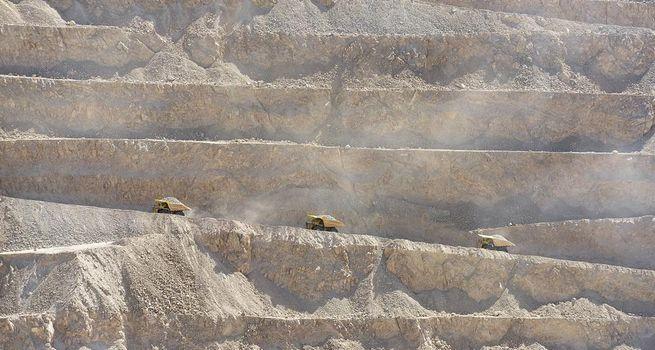
West African Resources Limited (ASX:WAF) closed 23 April 2026 at A$3.26, down 2.51% on the session, bringing the market capitalisation to A$3.87 billion. The pullback came in the context of otherwise record-high gold prices and followed the company's strong Q1 2026 production update, which confirmed 107,728 ounces of group gold production and reaffirmed full-year guidance of 430,000 to 490,000 ounces. The share price weakness was therefore more about profit-taking and sector rotation than any operational shortfall, with the gold equity cohort — which had delivered market-leading returns through the first four months of 2026 — giving back a portion of recent gains on a day of broader commodity rotation.
For a company that has transitioned from a junior gold developer to a mid-tier producer in just a few short years, West African Resources continues to be one of the more compelling growth stories in the Australian mining sector. With two operating assets in Burkina Faso — the established Sanbrado mine and the new Kiaka mine, which reached commercial production in late 2025 — WAF is now delivering record output at a time when gold bullion is trading at all-time highs in USD terms. The 2.51% decline on 23 April 2026 should be viewed against the substantial outperformance the stock has delivered year-to-date and over the past two years.
Company Overview
West African Resources is a Perth-based, ASX-listed gold producer with operations and exploration assets in Burkina Faso, West Africa. The company owns 100% of the Sanbrado gold mine, which has operated profitably since commissioning in early 2020 and consistently delivered strong production at competitive all-in sustaining costs. In late 2025, WAF commissioned the Kiaka gold mine, a large-scale open-pit operation that is expected to contribute the majority of group production from 2026 onwards. Kiaka's plant-nameplate capacity of 8.4 million tonnes per annum supports steady-state production of approximately 230,000 to 280,000 ounces annually, transforming WAF into a mid-tier producer with more than 400,000 ounces per year of combined output.
Beyond Sanbrado and Kiaka, WAF holds exploration and development rights across multiple tenement packages in Burkina Faso, including the Toega deposit adjacent to Sanbrado and earlier-stage targets that could extend mine life or support future production expansions. The group's corporate office is based in Perth, Western Australia, but the operational centre of gravity is firmly in West Africa, requiring the management team to navigate the specific commercial, political and security dynamics of operating gold mines in the Sahel.
Why WAF Shares Fell on 23 April 2026
The 2.51% decline on 23 April 2026 reflected three factors. First, after a strong year-to-date rally in the ASX gold cohort — driven by record USD gold prices, geopolitical demand for safe-haven assets, and central bank buying — profit-taking flows had become more pronounced through April 2026. Gold equities typically exhibit greater beta than the physical metal, and when spot gold consolidates after a run, the equity cohort can see amplified pullbacks as fund managers lock in gains. West African Resources, as one of the best-performing mid-cap producers in the sector, attracted a disproportionate share of that profit-taking activity.
Second, the Q1 2026 production report — released earlier in April and confirming 107,728 ounces of group output — had already been largely priced in by the time 23 April rolled around. The market had a strong sense of the production trajectory from earlier quarterly disclosures and guidance updates, meaning the Q1 confirmation served as validation rather than a catalytic surprise. The proof-of-concept for Kiaka's ramp is now firmly established, and the market's attention shifts toward execution on the full 2026 guidance and the longer-dated growth pipeline.
Third, ongoing concerns around Burkina Faso jurisdiction risk continue to provide a sentiment backdrop that periodically flares up. Burkina Faso has experienced political transitions and broader Sahel security concerns over recent years, and while WAF's operations have continued uninterrupted, the discount applied to Burkina Faso-exposed miners versus their Australian, Canadian or Nevada peers remains meaningful. Any adverse headline emerging from the region — whether security-related, regulatory or geopolitical — can weigh on share price independent of underlying company performance.
Sector and Market Context
The Australian gold mining cohort has delivered exceptional returns through early 2026, supported by gold prices reaching successive record highs in USD terms and, correspondingly, elevated AUD prices for Australian producers. The sector has benefited from a combination of central bank buying (particularly from emerging market authorities), geopolitical risk demand, and renewed interest in gold as a portfolio diversifier amid equity and bond volatility. Producers with reliable production, low all-in sustaining costs and growth pipelines have been among the best-performing ASX names, and West African Resources has been a standout within that cohort.
Within the mid-tier producer segment, WAF competes for investor capital against names like Capricorn Metals, Ramelius Resources, Perseus Mining, Westgold Resources and Bellevue Gold. Each has distinct jurisdiction profiles, cost structures and growth trajectories. WAF's differentiator has been its delivery against aggressive guidance — Kiaka being built on time and on budget — and the quality of the geological endowment across its Burkina Faso tenement portfolio. The jurisdiction discount is real but has compressed as multi-year operating history and political stability (at least from the specific perspective of mining sector relations) have accumulated.
Financial and Valuation Context
On FY26 guidance of 430,000 to 490,000 ounces at AISC below US$1,900 per ounce, WAF is positioned to generate substantial free cash flow through 2026 at current gold prices. Revenue run-rates are at record levels and expected to grow further as Kiaka reaches steady state. Capital investment for 2026 is budgeted at US$165-200 million to support power infrastructure expansion, pre-production development at Kiaka, and underground upgrades at Sanbrado. After that capital cycle, free cash flow is expected to step up meaningfully, with potential for expanded capital returns to shareholders.
Valuation on a forward P/E basis sits in the single digits, reflecting the combination of strong earnings leverage to gold prices and the jurisdiction discount that continues to apply to Burkina Faso exposure. EV/EBITDA multiples are similarly compressed. Consensus price targets from Australian broker coverage cluster in the A$3.50-4.50 range, implying meaningful upside from the 23 April close. The dividend has been modest to date as the company has prioritised Kiaka development capital, but investors expect a progressive dividend policy to emerge as the capital cycle concludes and free cash flow recovers to steady-state levels.
Risks and Opportunities
Downside risks for WAF include: a sustained decline in USD gold prices that compresses margins; operational challenges at Sanbrado or Kiaka that disrupt guidance delivery; political instability or security incidents in Burkina Faso that escalate operating risk; regulatory or tax changes in the host country that affect profit share between government and operator; and foreign currency movements in the US dollar gold price versus operating cost base. The security situation in the Sahel region remains the single most monitored risk factor for WAF-specific investors.
Opportunities include: continued exploration success at Toega, Sanbrado extensions, and Kiaka satellite deposits that could extend mine life and add optionality; further operational leverage to record gold prices flowing through to cash generation; potential for dividend initiation or expansion as capital intensity moderates; selective M&A to add complementary assets or scale; and ongoing jurisdiction discount compression if West Africa's mining sector reputation improves. The combined Sanbrado-plus-Kiaka production base provides WAF with a scale and cash generation profile that no longer requires outside capital to fund growth.
Outlook
Looking ahead through the remainder of 2026, WAF investors will focus on: continued production consistency across Sanbrado and Kiaka; quarterly AISC tracking against the sub-US$1,900 per ounce guidance; execution of the capital programme including power infrastructure and Sanbrado underground upgrades; exploration results from the ongoing drill programmes; and any commentary on dividend policy or capital returns at the August 2026 full-year result. Gold price trajectory remains the single largest exogenous variable, with central bank buying patterns and macro risk environment driving short-term moves.
Broader Investor Considerations
West African Resources offers investors exposure to record gold prices through a mid-tier producer with operational credibility, scale growth, and a meaningful exploration pipeline. The Burkina Faso jurisdiction risk is real but transparently priced into the valuation. For investors seeking production exposure to the current gold price environment with growth characteristics rather than mature mine pure-play, WAF remains one of the higher-quality options among ASX-listed mid-tier producers. The jurisdiction discount, while a headwind, also creates asymmetric upside if that discount compresses over time as the operating track record continues to extend.
Within portfolio construction, WAF typically sits alongside other mid-tier producers as a growth-plus-yield gold holding, offering higher production leverage than majors like Newmont or Barrick but with more scale and track record than early-stage developers. The 23 April 2026 share price pullback modestly improves the entry point without altering any of the structural investment merits.
Conclusion
West African Resources' 2.51% decline to A$3.26 on 23 April 2026 represented tactical profit-taking after a strong year-to-date rally rather than any material change to the fundamental investment case. Q1 2026 production of 107,728 ounces validates the trajectory toward full-year guidance of 430,000 to 490,000 ounces at AISC below US$1,900 per ounce. The 2026 capital programme is funded, the exploration pipeline is active, and gold prices remain supportive at all-time highs. The investment thesis continues to hinge on production delivery, cost discipline, Burkina Faso jurisdiction stability, and the eventual transition to a capital return phase once the current growth investment cycle concludes.
Gold Macro and Central Bank Demand
The macro backdrop for gold through 2026 has been shaped by sustained central bank buying, ongoing geopolitical tensions, and structural concerns about sovereign debt sustainability in major developed economies. Emerging market central banks — particularly the People's Bank of China, Reserve Bank of India and the central banks of Turkey, Poland and several Gulf states — have continued to add meaningfully to official gold holdings, providing a price floor and persistent physical demand that the equity cohort benefits from. The structural case for gold in a world of elevated fiscal deficits and de-dollarisation initiatives remains compelling, supporting the view that mid-tier producers with operational leverage to gold prices should continue to attract portfolio capital over multi-year horizons.
Exploration Upside and Resource Life Extension
WAF's exploration pipeline continues to deliver positive results across multiple targets. The Toega deposit adjacent to Sanbrado has been a consistent contributor of mineable reserve additions, with ongoing infill drilling supporting both near-mine reserve replacement and the identification of deeper extensions. Around Kiaka, the company has multiple satellite targets that could extend open-pit mining life or support underground development in later years. Exploration success also provides optionality for potential production capacity expansion beyond the current nameplate, though any such expansion would involve incremental capital investment and regulatory approval timelines. For investors valuing long-dated optionality, the exploration pipeline provides meaningful upside beyond the current production guidance.
Hedging, FX and Capital Returns
Management has historically maintained a measured hedging programme that locks in a portion of near-term gold sales at forward prices, reducing downside earnings volatility but also capping upside during sharp bullion rallies. The hedge book is disclosed in quarterly reports and is generally viewed as a prudent risk management tool by the investment community. Foreign currency exposure is primarily USD-AUD, with the company reporting in USD and selling gold in USD, while operating costs are a mix of local currency (CFA Franc, stable to the Euro) and USD. Capital return policy has been modest through the Kiaka development phase, but investors expect progressive dividend initiation or step-up as free cash flow normalises at mid-tier producer steady-state levels from 2027 onward.


 Nov 13, 2026





 Please wait processing your request...