
 CA
 NZ
 UK
 US
 IND

 AU

 Share
 X (Formerly Twitter)
 Whatsapp
 Facebook
 LinkedIn
 Telegram
 Email This Article
 Copy Link
 Summarize with AI
 Chat GPT
 Perplexity
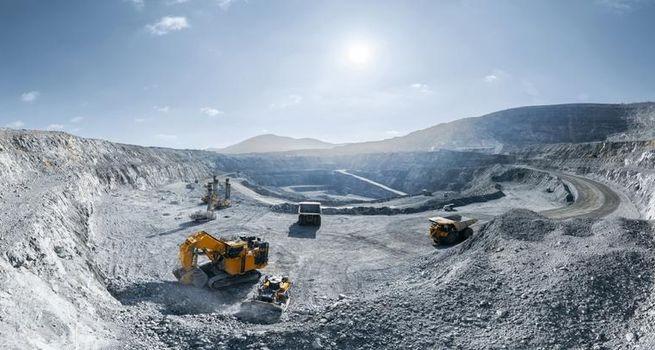
Vital Metals Limited (ASX:VML) traded to a gain of 7.14 percent on 10 April 2026, closing at A$0.150 with turnover of 30,400 shares. With a market capitalisation of A$33.14 million, Vital Metals is a development-stage rare earth elements (REE) company focused on the Nechalacho project in Canada's Northwest Territories. Unlike junior explorers like Kalamazoo Resources, Vital Metals has advanced its Nechalacho deposit to the point where significant metallurgical and economic studies are underway—positioning it closer to production decision-making.
The investment case for Vital Metals hinges on the company successfully progressing a pre-feasibility study (PFS) on the Tardiff deposit within the Nechalacho property, with the goal of completing the PFS in 2026. If the PFS demonstrates economic viability, the company would be positioned to move toward full feasibility studies, financing, and eventual construction and production—a multi-year timeline but a more concrete pathway to value creation than junior exploration.
Company Overview
Vital Metals Limited is an ASX-listed mineral development company focused on rare earth element extraction and processing. The company owns 100 percent of the Nechalacho project, located in Yellowknife, Northwest Territories, Canada. Nechalacho is a significant rare earth deposit, and the Tardiff deposit within the property is one of the world's largest, highest-grade primary rare earth deposits with particularly elevated concentrations of neodymium and praseodymium (NdPr)—the most commercially valuable rare earth elements.
The company's strategy is to advance Nechalacho from an exploration-stage asset toward development and eventual production. The current focus is on completing a pre-feasibility study (PFS) for the Tardiff deposit, which will provide preliminary economics, production scenarios, and capital/operating cost estimates. A positive PFS would de-risk the project significantly and position the company for feasibility study and financing.
Vital Metals is not currently in production, and shareholder value depends entirely on successful development progression and commercialisation of the Nechalacho project. The company has announced options issuance (July 2026 planned issue of 3.41 million options) as part of a placement or capital-raising structure, indicating ongoing capital needs and dilution expectations.
Why VML Went Up Today
The 7.14 percent rally to A$0.150 on 10 April 2026 reflects positive sentiment toward rare earth development and anticipation of Vital Metals' pre-feasibility study results:
First, the company has signalled that the PFS is on track for completion in 2026, with expected announcement in H2 2026 (estimated). Market participants are likely pricing in positive expectations around the PFS, anticipating that the study will demonstrate viable project economics. A completed PFS is a major de-risking milestone, moving the company from development-stage to feasibility-stage status.
Second, rare earth markets have strengthened in 2026 as global supply chains prioritise domestically sourced and Western-aligned rare earth supply chains. The U.S., Canada, and allied nations are investing heavily in critical minerals strategies, and Nechalacho—as a significant, high-quality rare earth deposit in a politically stable, Western-allied jurisdiction—stands to benefit from this policy tailwind.
Third, prices of neodymium and praseodymium (the highest-value rare earths and key inputs for permanent magnets used in renewable energy, electric vehicles, and defence applications) have remained elevated, improving project economics. Higher REE prices support the PFS assumptions and increase the likelihood of positive outcomes.
Fourth, the options issuance (3.41 million options scheduled for July 2026) signals management confidence in the company's trajectory and optionality. Options grants are typically issued at or near current market prices, suggesting that management believes shares are adequately valued.
Finally, the broader rare earth development sector has attracted institutional and retail investor attention. Peloton Metals, Ioneer (US-listed, developing Rhyolite Ridge in Nevada), and other rare earth developers have attracted capital. Vital Metals, with its advanced-stage project and compelling deposit quality, is positioned to benefit from sector enthusiasm.
Company Assets and Nechalacho Project Overview
The Nechalacho project is Vital Metals' primary asset. Located in the Yellowknife region of the Northwest Territories, Canada, the project comprises multiple mineral deposits, of which the Tardiff deposit is the largest and focus of current development efforts.
The Tardiff deposit is described as one of the world's largest, highest-grade primary rare earth deposits. The deposit is characterised by particularly high concentrations of neodymium and praseodymium (NdPr), which together represent approximately 50–60 percent of the total rare earth oxide content. This NdPr-rich mineralogy is highly valuable, as NdPr is the primary rare earth used in permanent magnets (wind turbines, EV motors, defence applications).
Project geology is well-understood. Historical work by prior owners and Vital Metals has defined the resource through drilling and geological surveying. The deposit is reasonably well-characterised, reducing geological risk relative to early-stage explorers. However, metallurgical and economic risks remain: the company must demonstrate that ore can be economically mined, processed, and refined to produce rare earth concentrates or oxides at commercial scales.
Nechalacho has a long history of interest and exploration. Prior owners (including larger mining companies and Chinese entities) have invested substantially, and regulatory and permitting pathways are partially established, reducing development timeline risk relative to greenfield sites.
The project is subject to Canadian federal and territorial regulations (Northwest Territories). Indigenous consultation and engagement are important considerations for project development and could influence timelines or conditions. Water and environmental constraints in the Canadian north are significant but manageable with modern engineering.
Deep Fundamental Analysis
Evaluating a development-stage rare earth project requires assessment of deposit quality, metallurgical feasibility, economics, capital requirements, and development timeline risk.
Deposit Quality and Resource Definition
The Tardiff deposit is described as one of the world's largest, highest-grade primary rare earth deposits. The combination of size (likely hundreds of millions of tonnes of ore) and grade (high rare earth oxide content, particularly NdPr-rich) positions it among the world's most economically attractive primary rare earth projects.
High NdPr concentration is a major advantage. Rare earth processing yields a basket of rare earth elements, many of which have limited commercial value. Deposits rich in NdPr command premium pricing and are sought after by buyers because the processing output is more valuable.
The resource has been drilled and sampled extensively by prior owners and Vital Metals, reducing geological risk. However, the company has not yet published a current JORC resource estimate (to our knowledge from public announcements), which would provide transparency on tonnage, grade, and resource confidence levels. Investors should seek recent resource estimate updates.
Processing feasibility is being evaluated in the PFS. Rare earth processing is technologically complex and involves multiple steps: ore extraction → crushing/grinding → beneficiation/concentration → leaching → separation → refinement. Each step presents technical and cost challenges. The company must demonstrate that processing can be done at acceptable recovery rates, cost per tonne, and environmental standards.
Pre-Feasibility Study and Development Timeline
The PFS is the next major milestone. This study will provide: (1) Preliminary mine plan (ore pit design, mining method, production rates), (2) Processing flowsheet and metallurgical recovery assumptions, (3) Capital cost estimate (mine + processing plant + infrastructure), (4) Operating cost estimates (mining, milling, energy, labour), (5) Production schedule and project economics (NPV, IRR, payback period), (6) Market and offtake assumptions (customer contracts or spot pricing).
A positive PFS (demonstrating acceptable economics, e.g., IRR > 15 percent, payback period < 10 years, positive NPV) would be highly valuable, moving the company from development-stage to feasibility-stage. This would de-risk the project significantly and likely trigger investor re-rating.
The PFS is scheduled for completion in 2026. If on-time delivery occurs, announcement is likely in Q3–Q4 2026. Delays or negative outcomes (poor metallurgical recovery, higher-than-expected capital costs) would be significant downside catalysts.
Following the PFS, a full feasibility study would follow (if PFS is positive), likely taking 12–18 months. Feasibility study would incorporate more detailed engineering, customer offtakes, financing structures, and regulatory approvals. Only after a positive FS would the company move toward final investment decision (FID) and construction.
Full development timeline from current point to production is estimated at 4–6 years, assuming no major setbacks. This means that Vital Metals shareholders are investing in a 2030–2032 production ramp, with value recognition heavily skewed toward the latter years.
Rare Earth Markets and Offtake Potential
Rare earth markets are underpinned by demand from permanent magnet manufacturers (wind turbines, EV motors, defence applications), catalysts (petroleum refining), phosphors (displays), and other specialty applications. Global REE demand is forecast to grow 5–8 percent annually over the next decade, driven by renewable energy buildout and EV electrification.
However, supply is concentrated. Most primary rare earth production occurs in China (rare earth mining, processing, and refining), creating strategic vulnerability for Western countries and Japan, South Korea, and other allied nations. Supply-chain diversification toward Western sources (U.S., Canada, Australia) is a strategic priority.
Vital Metals' Nechalacho project is well-positioned to benefit from this supply-chain diversification narrative. Production from Nechalacho would be in a politically stable, Western-aligned jurisdiction (Canada), appealing to customers seeking supply security and regulatory assurance. The high NdPr content makes the product particularly valuable for premium magnet manufacturers.
Offtake agreements (binding customer contracts) are critical for project financing. The company will likely need to secure one or more major customers (permanent magnet manufacturers, refined rare earth traders, or end-users) to demonstrate offtake demand and de-risk the project. The PFS will likely include market study and preliminary customer interest, but binding offtakes typically come during feasibility study or post-FID.
Pricing assumptions in the PFS will be critical. If the company uses conservative long-term price assumptions (e.g., historical averages rather than current elevated spot prices), the project could have upside if prices remain elevated. Conversely, if prices collapse, project economics could be severely challenged.
Capital Requirements and Financing Risk
Developing Nechalacho from current stage to production will require substantial capital investment. Typical rare earth mining and processing projects require A$500 million–A$2 billion in capital expenditure (capex), depending on scale, processing complexity, and location.
Vital Metals' planned production scale (likely 10,000–20,000 tonnes per annum of rare earth oxide equivalent, based on deposit size) would suggest capex in the range of A$800 million–A$1.5 billion. This is far larger than the company's current market cap of A$33.14 million.
Financing this project will require a combination of: (1) Strategic investment from major REE consumers or downstream manufacturers, (2) Project debt (backed by offtake agreements), (3) Equity capital raises, (4) Potential government support or subsidies (given critical minerals policy).
Equity dilution is inevitable and expected. The company will likely need to raise A$200–400 million in equity from now through production, representing significant dilution to current shareholders. Early-stage investors must be comfortable with this dilution path.
The options issuance (July 2026) is a preliminary capital-raising signal. Larger capital raises would follow if the PFS is positive, likely in H2 2026 or 2027.
Financing risk is material: if global capital markets tighten, if rare earth prices collapse, or if the PFS disappoints, the company could struggle to finance the project on acceptable terms. This could force delays, partnership agreements at unfavourable terms, or asset sales.
Risks to Development and Shareholder Value
Metallurgical risk is significant. While rare earth deposits may contain high concentrations of rare earth oxides, processing may be technically challenging or uneconomic. Poor metallurgical recovery rates (e.g., 50 percent instead of target 75 percent) could significantly worsen project economics.
Capital cost risk: Rare earth processing plants are complex and capital-intensive. Cost overruns (typical in mining/minerals development) could inflate capex, worsening project returns.
Operating cost risk: Labour, energy, water, and environmental compliance costs in the Canadian north are high. Operating costs could exceed PFS assumptions, compressing margins and reducing project IRR.
Commodity price risk: If rare earth (especially NdPr) prices decline sharply, project economics could deteriorate significantly. Conversely, price increases would improve economics. The company has exposure to REE price volatility.
Financing risk: The project is too large for Vital Metals to finance independently. Strategic partnerships, debt, and equity raises are required. Adverse financing conditions could delay the project.
Regulatory and permitting risk: Indigenous consultation, environmental impact assessments, and regulatory approvals are required in Canada. Regulatory delays or stricter conditions could impact project timeline and costs.
Development timeline risk: Mining/minerals projects frequently experience delays. PFS or FS delays could push production out years, affecting shareholder value and raising cost risk.
Market risk: Long-term rare earth demand assumptions embedded in the PFS could prove optimistic if adoption of renewable energy or EV demand slows.
Competition risk: Other rare earth developers (Peloton Metals, Ioneer, others) could bring competing projects online, limiting pricing power and market share for Nechalacho output.
Strategic execution risk: The company may struggle to negotiate favourable strategic partnerships, offtake agreements, or financing structures, forcing acceptance of unfavourable terms.
Technical Analysis
From a technical perspective, VML has moved from approximately A$0.12–0.13 in late 2025 to A$0.150 on 10 April 2026, representing a 15–25 percent move upward over 4 months. This reflects gradual accumulation and positive sentiment toward rare earth developers.
Today's 7.14 percent move on moderate volume (30,400 shares) suggests steady accumulation into anticipation of PFS results or positive rare earth sector sentiment. The move is consistent with the broader rare earth sector strength in early 2026.
Key resistance levels are A$0.16–0.18 (prior range highs). Support is constructing at A$0.13–0.135. Continuation above A$0.18 would suggest further upside potential; breakdown below A$0.13 would indicate downside re-testing.
Relative to peers, VML is trading at a valuation consistent with development-stage rare earth projects. The upcoming PFS could serve as a significant technical catalyst—positive results could drive 20–30 percent upside, while disappointing results could trigger 20–30 percent downside.
Sector and Market Context
Vital Metals competes in the rare earth development space, alongside companies like Peloton Metals (Canada, primarily lithium but with REE projects), Ioneer Ltd (US-listed, Rhyolite Ridge project in Nevada), USA Rare Earth (private), and various other explorers.
The rare earth sector has received significant policy and investor attention since 2023, driven by supply-chain concerns around Chinese rare earth dominance and strategic importance of REE for renewable energy and defence. Both U.S. and Canadian governments have prioritised rare earth supply-chain diversification.
Vital Metals' Nechalacho project is particularly well-positioned within this policy narrative: it is in Canada (politically stable, Western-aligned), has high NdPr content (most commercially valuable), and has progressed to development stage (de-risked vs. junior explorers).
Competition for capital and talent in rare earth development has intensified as more projects advance. However, the number of advanced rare earth projects globally remains limited, and successful developers could command significant value.
The rare earth sector has benefited from rising NdPr and other rare earth prices in 2025–2026, improving project economics across the board. However, this could reverse if economic weakness reduces demand for permanent magnets or if Chinese supply increases unexpectedly.
Investor Sentiment and Catalysts
Investor sentiment toward VML appears to be positive based on the recent 15–25 percent appreciation and moderate trading activity. This suggests that a segment of investors perceive value in the company's development stage and PFS completion timeline.
Retail investor interest in rare earth developers has risen in 2026 as critical minerals policies have gained prominence and rare earth prices have remained elevated. Online discussion of VML and other rare earth names has increased.
Institutional interest is likely modest but growing. Some ESG-focused funds, commodity specialists, and mining-focused funds may have exposure.
Key sentiment drivers include: (1) PFS results (most important catalyst), (2) Rare earth prices (macro tailwind), (3) Capital raises and financing announcements, (4) Strategic partnerships or offtake agreements, (5) Development milestone announcements.
Future Outlook
The forward outlook for VML depends critically on successful progression through development milestones, particularly the PFS in 2026.
Bull Case
Under a bull scenario, Vital Metals releases a positive PFS in Q3–Q4 2026 demonstrating attractive project economics (e.g., IRR > 20 percent, payback period < 8 years, positive NPV with conservative assumptions). The study confirms metallurgical feasibility and identifies a viable processing method.
Following the PFS, the company secures strategic partnerships with major REE consumers or magnets manufacturers, providing capital and offtake commitments. Strategic investors inject A$100–200 million in equity and/or partnership funding, reducing execution risk and providing financing certainty for subsequent phases.
The company progresses to feasibility study (2027–2028), incorporating customer offtakes and financing structures. Rare earth prices remain elevated or strengthen further, improving project economics. A positive FS triggers final investment decision in 2028.
Production ramp begins in 2029–2030, with first ore tonnes delivered in 2031–2032. Market prices for rare earths remain elevated due to continued supply concerns and demand growth, supporting strong project cash flows and profitability.
By 2032–2033, the company is generating significant cash flows from production, likely approaching profitability at the company level. Early-stage investors at A$0.15 could see 3–8x returns by the 2032 timeframe.
Alternatively, strategic acquisition by a major mining company or REE processor at a significant premium (A$0.50–1.00+) becomes plausible if the company demonstrates production readiness.
Bear Case
Under a bear scenario, Vital Metals releases a disappointing or marginal PFS in late 2026, showing weaker-than-expected metallurgical recovery, higher capital costs, or less attractive project economics (e.g., IRR < 15 percent, payback period > 10 years).
Weaker PFS results or negative market sentiment toward rare earth projects cause investor sentiment to deteriorate. The share price declines to A$0.08–0.10, eroding market cap by 33–46 percent.
Financing becomes more challenging. The company struggles to secure strategic partners or capital on acceptable terms, forcing either asset sales at unfavourable valuations or extended timelines for development.
Rare earth prices decline due to economic weakness, rising Chinese supply, or over-enthusiasm in spot markets. Spot prices falling from current elevated levels (e.g., from A$10–15/kg NdPr oxide to A$5–8/kg) would significantly worsen project economics.
Metallurgical challenges or regulatory delays push development timeline out further, increasing costs and reducing project NPV.
Competition from other rare earth developers intensifies if multiple projects advance simultaneously, limiting pricing power.
In this scenario, the share price could decline to A$0.05–0.08, representing a 46–67 percent loss from current levels. Development timeline would extend to 2034+ or be abandoned altogether.
Key Catalysts to Watch
Pre-Feasibility Study Results (expected Q3–Q4 2026): The most important catalyst. Positive results with attractive economics would support significant upside; disappointing results would trigger downside.
Rare Earth Price Movements: NdPr and other REE prices are macro drivers affecting project economics. Rising prices support the thesis; falling prices are concerning.
Strategic Partnership Announcements (2026–2027): Partnerships with major REE consumers, magnets manufacturers, or mining companies would de-risk the project and provide capital/offtake certainty.
Capital Raise Announcements (2026–2027): Equity raises would signal financing confidence but would dilute shareholders. Terms matter: accretive or dilutive?
Feasibility Study Commencement and Progress (2027–2028): Announcement of FS commencement would signal PFS success and move the company toward FID.
Offtake Agreement Announcements: Binding customer contracts would demonstrate market demand and de-risk the project.
Development Milestone Announcements: Environmental impact assessment approvals, permitting progress, or other regulatory milestones would reduce execution risk.
Conclusion
Vital Metals Limited (ASX: VML) represents a more advanced, less speculative opportunity than junior explorers, positioned at the nexus of rare earth supply-chain diversification and Western strategic minerals policy. The company's Nechalacho project—one of the world's largest, highest-grade primary rare earth deposits—has progressed to the point where pre-feasibility study is imminent (expected 2026).
The 7.14 percent rally on 10 April 2026 reflects positive sentiment toward this development milestone and broader rare earth sector strength. However, investors must acknowledge that material execution risks remain: metallurgical feasibility, capital cost overruns, financing challenges, and commodity price exposure are all significant.
The bull case is compelling: successful PFS → strategic partnerships → feasibility study → FID → production by 2031–2032 could deliver 3–8x returns over 5–6 years. The bear case is equally material: PFS disappointment, financing challenges, or price collapse could erase 46–67 percent of value.
For investors with a 5–6 year time horizon, high risk tolerance, and conviction in rare earth supply-chain diversification, Vital Metals offers exposure to a strategically important, advanced-stage development asset. Position sizing should reflect commodity price and execution risks. The upcoming PFS announcement (expected Q3–Q4 2026) will be a pivotal catalyst.
Disclaimer
This article is for informational purposes only and does not constitute financial advice, a recommendation to buy or sell any security, or an offer to sell any securities. The information is based on sources believed to be reliable as of 10 April 2026 but is not guaranteed to be complete or accurate. Past performance is not indicative of future results. The share price, market capitalisation, and other data referenced are subject to rapid change and should be verified independently. Investors should conduct their own due diligence and consult with a licensed financial adviser before making investment decisions. Investing in development-stage mining companies carries significant risk, including potential for substantial loss of invested capital. Development timelines frequently extend beyond projections, and commodity prices are volatile and difficult to predict. Equity dilution is expected and inevitable. Opinions expressed are those of the analyst at the time of writing and may change without notice. This article does not account for individual circumstances, tax implications, or personal financial situation.


 Nov 13, 2026





 Please wait processing your request...