
 CA
 NZ
 UK
 US
 IND

 AU

 Share
 X (Formerly Twitter)
 Whatsapp
 Facebook
 LinkedIn
 Telegram
 Email This Article
 Copy Link
 Summarize with AI
 Chat GPT
 Perplexity
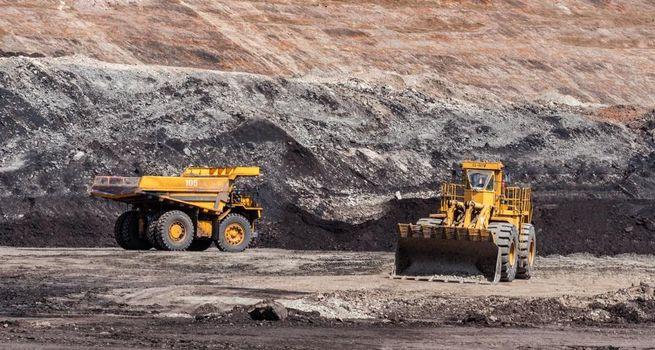
Unity Metals Limited represents one of the most intriguing investment opportunities to emerge on the Australian Securities Exchange in 2026. As ASX's first IPO of the year, listed on January 12, 2026, this Perth-based exploration company has already captured investor attention with its strategic focus on gold and base metal exploration across Southeast Asia. The Unity Metals stock analysis presented in this comprehensive report examines whether UM1 ASX represents a compelling investment opportunity or a speculative play best avoided. Since its IPO launch, Unity Metals share price has demonstrated considerable volatility, ranging from an all-time low of $0.185 on its listing day to an all-time high of $0.290 just two days later on January 14, 2026. This dramatic price movement reflects the inherent volatility of junior exploration companies and the market's uncertainty regarding the company's future prospects. Over the subsequent weeks, the stock has shown resilience, rising 12.50% week-over-week and an impressive 57.50% on a monthly basis, suggesting growing investor confidence in the company's exploration portfolio and strategic direction. However, the question remains: is UM1 a good buy at current valuations? This Unity Metals ASX analysis delves into the company's business model, market position, financial condition, risk factors, and growth catalysts to provide investors with a thorough understanding of what this emerging explorer offers. Understanding the fundamentals of a newly-listed junior explorer is crucial for making informed investment decisions, particularly in the resource sector where exploration success and commodity price movements can dramatically alter shareholder value. The following comprehensive analysis provides investors with the insights necessary to evaluate whether Unity Metals merits a place in their portfolio.
Company Overview
Unity Metals Limited is an Australian mineral exploration company headquartered in Perth, Western Australia, with a strategic focus on discovering and developing gold and base metal deposits across Southeast Asia. The company was established with the explicit purpose of identifying and advancing high-quality exploration projects in one of the world's most geologically prospective regions. Unity Metals operates a portfolio of four key exploration projects strategically located in Cambodia and Thailand, regions that have historically produced significant mineral discoveries and continue to attract exploration investment from major international mining companies. The company's projects include the Ngot Gold Project, O'Phlay Gold Project, Ta Vaeng Copper and Gold Project, and the Loei Copper and Gold Project. This diversified portfolio approach reduces the company's exploration risk by spreading capital across multiple promising properties rather than concentrating efforts on a single asset. The company's management team brings substantial experience in mineral exploration, development, and capital markets, positioning Unity Metals to execute on its strategic objectives effectively. As a newly-listed junior explorer, Unity Metals lacks operating mines or revenue-generating assets, instead relying on capital markets funding to advance its exploration programs. The company's market capitalization and trading volume remain reflective of its newly-listed status, with typical junior explorer trading characteristics including higher volatility and lower liquidity compared to established mining companies. Unity Metals has not declared or paid any dividends to shareholders, a common characteristic of early-stage exploration companies that prioritize reinvesting capital into exploration and development activities. The company's ASX listing provides access to institutional capital markets and enhances its credibility with investors, government regulators, and strategic partners. The Perth headquarters location situates the company within Australia's premier mining services and exploration industry cluster, providing access to specialized expertise, infrastructure, and service providers essential for mineral exploration operations.
Business Model Breakdown
Unity Metals' business model is fundamentally different from traditional mining companies that generate revenue from ore production and sales. Instead, the company operates as an exploration-stage enterprise focused on identifying, acquiring, and advancing mineral exploration projects through systematic geological, geochemical, and geophysical investigation. The revenue model for junior explorers like Unity Metals centers on value creation through exploration success and project advancement, which ultimately translates to increased shareholder value when discoveries are made or projects are advanced to development or production stages. The company's primary revenue source would come from either: (1) discovering economically viable mineral deposits that justify development and production, (2) selling or partnering exploration projects to larger mining companies, or (3) securing strategic investment or joint venture arrangements with established mining operators. This business model requires significant capital investment with uncertain returns, fundamentally different from revenue-generating businesses. Unity Metals funds its operations through capital raises from the equity markets, primarily through its ASX listing. The company's IPO in January 2026 provided initial capital for exploration activities, and further funding would likely come through additional share placements, rights issues, or strategic partnerships. The capital structure of the company remains crucial, as excessive dilution of existing shareholders through subsequent capital raises can negatively impact returns. The exploration process itself follows a systematic approach: identifying prospective geological areas, securing exploration licenses and agreements, conducting initial surveys and geological mapping, performing detailed geochemical and geophysical surveys, drilling exploration holes to define mineralization, and ultimately completing feasibility studies if economic mineral deposits are identified. Each stage of exploration requires investment but provides information that either supports advancement to the next stage or suggests project relinquishment. Success in the exploration business depends on geological intuition, technical expertise, favorable commodity prices, and ultimately, luck. The addressable market for Unity Metals' discoveries includes major mining companies actively seeking new deposits to replace depleted reserves, junior mining companies seeking to grow production pipelines, and mining investors seeking exposure to exploration upside through junior company investments.
Industry & Market Analysis
The global mineral exploration industry operates within a dynamic environment shaped by commodity prices, geopolitical factors, regulatory environments, and technological advances. Gold and base metals remain strategically important commodities, with gold serving as a safe-haven asset and industrial hedge currency, while copper and other base metals support global construction, electrical, and manufacturing industries. The Southeast Asian region where Unity Metals operates presents unique opportunities and challenges distinct from more established mining jurisdictions. Southeast Asia has emerged as a globally significant mineral-producing region, with major discoveries including the Grasberg copper-gold mine in Indonesia and numerous gold deposits across Thailand, Laos, and Cambodia. The region's geological potential remains substantial, with unexplored or underexplored areas offering significant discovery upside for exploration companies willing to invest in systematic exploration programs. However, Southeast Asian exploration also presents regulatory, political, and operational risks including varying government stability, evolving regulatory frameworks, local community engagement requirements, and infrastructure limitations. The gold market has demonstrated resilience and price strength, driven by geopolitical uncertainty, central bank policies, and continued demand from jewelry, industrial, and investment sectors. Gold prices have remained relatively elevated historically, supporting exploration economics and senior mining company valuations. Copper markets have benefited from global infrastructure development, renewable energy transition initiatives including solar and wind power, and electric vehicle adoption, which all drive substantial copper demand. The global copper supply deficit concerns have supported prices at elevated levels, potentially benefiting exploration companies seeking to develop copper projects. The junior exploration sector itself operates as a subset of the broader mining industry, characterized by high risk, high volatility, and periodic cycles of capital availability. During commodity booms, capital flows readily to junior explorers; during downturns, funding becomes scarce and valuations compress significantly. Currently, global economic uncertainty and geopolitical tensions have created mixed conditions for junior explorers. Technological advances in mineral exploration, including improved geological modeling, geophysical techniques, and data analysis capabilities, have enhanced exploration success rates and reduced exploration timelines. These technological improvements benefit companies like Unity Metals that can adopt advanced techniques in their exploration programs.
Why the Stock is Near All-Time Lows
While Unity Metals share price has recovered significantly from its January 12, 2026 IPO low of $0.185, understanding why the stock initially traded at depressed levels provides valuable context for evaluating current valuations. Several interconnected factors contributed to the initial weakness and continue to influence UM1 ASX pricing dynamics. First, the IPO pricing itself appeared to be set conservatively, likely reflecting standard underwriter pricing practices for junior explorers where market conditions and investor appetite remain uncertain at launch. Initial weakness post-IPO is not uncommon as early investors take profits or as market participants assess whether the IPO pricing accurately reflects intrinsic value. Second, the broader junior exploration sector faced headwinds during January 2026, including mixed precious metals market sentiment and concerns regarding capital availability for junior explorers. Macroeconomic uncertainty, rising interest rates in some jurisdictions, and geopolitical tensions created cautious market sentiment toward speculative investments. Third, investor concerns about execution risk remain paramount for newly-listed explorers. Unity Metals' portfolio of early-stage exploration projects carries significant uncertainty regarding whether systematic exploration activities will successfully identify economic mineral deposits. The time horizon for potential value realization extends years into the future, requiring patient capital and multiple successful exploration phases. Fourth, Southeast Asian country risk considerations continue to weigh on investor sentiment. While the region offers geological promise, political stability, regulatory changes, and government policies can dramatically impact exploration economics and project timelines. Investors assessing UM1 a good buy must carefully consider geopolitical risk premiums applicable to Southeast Asian assets. Fifth, liquidity considerations typical of newly-listed junior explorers contribute to pricing challenges. Lower trading volumes create wider bid-ask spreads and increase price volatility, discouraging some institutional investors who require reasonable liquidity for position entry and exit. Sixth, the absence of near-term value catalysts contributes to lower valuations typical of exploration-stage companies. Unlike companies approaching commercial production with visible cash generation timelines, Unity Metals' value creation depends on uncertain future exploration success and commodity price dynamics. These factors, combined with natural post-IPO profit-taking and conservative investor positioning in smaller-cap names, contributed to initial trading at valuations near the IPO low. However, the subsequent 57.50% monthly gain suggests market reassessment of the company's assets and potential.
Financial Analysis
Analyzing the financials of a newly-listed junior explorer like Unity Metals requires a different analytical framework compared to traditional revenue-generating businesses. Rather than examining traditional profitability metrics, income statements, and cash flow from operations, investors must focus on capital structure, cash position, burn rate, and capital adequacy for planned exploration activities. Unity Metals, as a newly-listed company, would typically hold significant cash from its IPO proceeds, estimated based on listing size and typical junior explorer capital raises. For a company like Unity Metals, a typical IPO would raise between $5 million and $15 million, providing runway for exploration activities across its four-project portfolio over multiple years. The company's operational expenses primarily consist of exploration and evaluation costs, personnel expenses for the small management team, and administrative costs associated with ASX listing and regulatory compliance. As a junior explorer, Unity Metals likely operates with minimal overhead, typical of companies focused on exploration rather than production. Importantly, the company generates no revenue from mineral sales, meaning all operational expenses represent capital deployment rather than ongoing business costs. The burn rate calculation becomes critical: dividing available cash by annual operational expenses provides a measure of how long the company can fund operations without additional capital raises. For exploration companies, burn rates typically range from $500,000 to $2 million annually for junior explorers depending on portfolio size and exploration intensity. Unity Metals' exploration programs across four projects likely target annual spending in the $1 million to $2 million range initially. Financial metrics typically applied to operational businesses prove less relevant for Unity Metals. Traditional measures like earnings per share, price-to-earnings ratios, and dividend yield offer limited insight into junior explorers. Instead, investors should focus on metrics like price-to-cash (cash available per share), exploration budget per share, and exploration acreage per share. These metrics help assess whether the company is deploying capital efficiently across its asset base. Importantly, exploration companies frequently require additional capital raises through placements or rights issues to fund ongoing exploration and maintain operational viability. Each capital raise dilutes existing shareholders unless conducted at prices above current trading levels. The capital structure and anticipated dilution represent significant financial considerations for UM1 ASX investors. Balance sheet strength, measured by cash position relative to burn rate, remains crucial. A company with substantial cash reserves relative to annual spending can pursue aggressive exploration programs and weather commodity downturns; conversely, limited cash forces conservative spending or early capital raises.
Key Risks
Investing in Unity Metals stock analysis reveals numerous risks that investors must carefully consider before committing capital. Understanding and weighing these risks appropriately forms the foundation of responsible investment decision-making regarding UM1. Exploration risk represents the primary danger facing the company. Despite geological promise in Southeast Asian exploration properties, there remains no guarantee that systematic exploration activities will identify economically viable mineral deposits. Many exploration projects fail to yield commercial discoveries despite significant capital investment. The company's projects remain early-stage, meaning substantial exploration work must be completed before any deposits could potentially be developed into producing mines. Commodity price risk significantly impacts junior explorers' fortunes. If gold, copper, or other commodity prices decline substantially, even promising mineral deposits may become uneconomic to develop, eliminating value creation potential. Conversely, rising commodity prices enhance project economics, but exploration companies cannot control commodity prices. Geopolitical and country risk considerations weigh heavily on Southeast Asian exploration companies. Changes in government policies, mining regulations, political instability, conflicts, or unfavorable government actions could restrict exploration activities or eliminate project economics. Cambodia and Thailand have varying governance stability and regulatory frameworks that could change unfavorably for mining companies. Liquidity risk affects UM1 ASX particularly given its newly-listed status and typical junior explorer trading volumes. Limited liquidity may prevent investors from exiting positions at desired prices, particularly during market stress when other sellers emerge simultaneously. Capital dilution risk emerges from likely future capital raises. As Unity Metals advances exploration programs or extends cash runway, additional capital raises will dilute existing shareholders unless conducted at elevated prices. Excessive dilution can eliminate early-stage shareholder returns despite successful exploration discoveries. Technical and operational risk encompasses the company's ability to execute exploration programs effectively, retain experienced personnel, and deploy capital efficiently. Poor execution or unfavorable exploration results could waste capital and destroy shareholder value. Partnership risk exists should Unity Metals seek strategic partnerships or joint ventures; unfavorable deal terms could disadvantage existing shareholders. Regulatory and permitting risk applies particularly to Southeast Asian operations where regulatory regimes remain less predictable than in established mining jurisdictions. Securing and maintaining exploration licenses requires ongoing compliance and government relationships. Financial risk includes insufficient cash to fund planned exploration, forcing early capital raises at unfavorable terms or project relinquishment. Interest rate risk affects junior explorers' capital costs and financing availability. Equity market risk reflects the general sensitivity of junior explorers to stock market sentiment, risk appetite, and capital availability during market downturns. Management execution risk depends on the capability and experience of Unity Metals' management team in advancing exploration programs and creating shareholder value. Individual stock risk recognizes that even in successful exploration sectors, individual companies can underperform peers through poor decisions or unfavorable exploration results.
Growth Opportunities
Despite the risks inherent in exploration-stage companies, Unity Metals presents several meaningful growth opportunities that could drive significant shareholder value creation. These opportunities depend on successful execution and favorable commodity market conditions, but represent the potential upside that attracts investors to junior exploration stocks. The most immediate growth opportunity involves advancing exploration programs across the company's four-project portfolio. The Ngot Gold Project, O'Phlay Gold Project, Ta Vaeng Copper and Gold Project, and Loei Copper and Gold Project represent early-stage assets with exploration upside. Systematic exploration activities including geological mapping, geochemical surveys, geophysical surveys, and drilling programs could identify significant mineral deposits. Successful exploration advancing projects to resource definition stages would materially increase asset valuation. Major discovery potential exists within the Southeast Asian geological setting. The region's proven mineral endowment, historical discoveries, and substantial unexplored areas suggest meaningful potential for discovery-stage companies executing systematic exploration. A major gold or copper discovery could dramatically increase Unity Metals share price and attract strategic buyer interest. Strategic partnership opportunities could accelerate value creation. Larger mining companies frequently partner with junior explorers to advance early-stage projects, providing funding, technical expertise, and development capabilities. Joint venture arrangements or earn-in agreements could provide Unity Metals with non-dilutive funding to advance exploration while securing larger partners' development resources. Potential acquisition by established mining companies represents another growth scenario. Mining companies regularly acquire junior explorers to build project pipelines or gain access to early-stage deposits. Successful exploration results could attract acquisition interest at substantial premiums to current trading prices. Market sentiment recovery toward junior explorers and precious metals could re-rate UM1 valuations upward. Cyclical improvements in capital markets' risk appetite, gold price strength, or copper supply deficit concerns could drive investor re-allocation toward junior exploration companies and higher valuations per unit of exploration assets. Management execution represents another growth variable. Successful exploration requires geological expertise, project management capability, and capital deployment discipline. Strong management can maximize value from exploration budgets and identify the best projects for advancement, driving outperformance relative to peers. Commodity price upside on gold and copper could enhance project economics materially. Rising commodity prices make lower-grade deposits economically viable and increase the value of identified mineral deposits, supporting faster advancement to development and production. Technological improvements in exploration efficiency could enable the company to accomplish more exploration per capital dollar deployed. Advanced geological modeling, improved geophysical techniques, and data analytics could enhance exploration success rates. Regional consolidation opportunities could emerge if Unity Metals successfully discovers mineral deposits or develops successful joint ventures, attracting interest from larger regional explorers seeking portfolio consolidation. Dividend potential could emerge long-term if the company successfully develops assets to producing mines generating cash flow, though this outcome remains years away and involves substantial execution risk.
Management & Strategy
The capability and strategic vision of Unity Metals' management team significantly influences the company's probability of success in creating shareholder value. While specific management personnel details require company disclosures, successful exploration companies typically feature leadership with proven experience in mineral exploration, project development, capital markets, and business execution. Unity Metals' management structure likely includes a Chief Executive Officer with mineral exploration industry experience, a Chief Financial Officer managing capital deployment and financial strategy, a Chief Operating Officer or Exploration Manager overseeing technical exploration programs, and board directors providing governance oversight and strategic guidance. The strategic approach Unity Metals appears to pursue involves building a diversified portfolio of exploration properties across multiple commodity targets (gold, copper) in complementary geographical locations within Southeast Asia. This diversification approach reduces risk compared to single-project companies by spreading exploration investment across multiple opportunities. The strategy reflects recognition that exploration success depends partially on systematic portfolio management, advancing promising properties while deprioritizing less prospective assets. The company's capital deployment strategy appears designed to efficiently allocate exploration budgets across the four-project portfolio based on exploration results and geological prospectivity. This staged approach to capital deployment minimizes waste on unprospective projects while concentrating resources on emerging winners. The company's approach to government relationships and local community engagement represents another strategic consideration. Successful exploration in Southeast Asia requires building strong relationships with government mining authorities, securing community support for exploration activities, and navigating local social and environmental considerations. Management's ability to build these relationships influences exploration success and timeline. Partnership strategy appears to embrace potential joint ventures and strategic collaborations with larger mining companies. By remaining open to partnerships, Unity Metals can access non-dilutive funding, technical expertise, and development capital without fully diluting existing shareholders. This approach balances growth ambitions with shareholder protection. Technical exploration strategy involves deploying modern exploration techniques including advanced geological mapping, comprehensive geochemical sampling, sophisticated geophysical surveys (gravity, magnetic, radiometric), and systematic drilling programs on prospective properties. This methodical approach increases discovery probability compared to less systematic exploration. Funding strategy focuses on capital markets access through the ASX listing, supplemented by potential strategic partnerships providing exploration funding. Management must balance exploration ambitions with realistic capital available, avoiding over-commitment of resources. Long-term value creation strategy aims to either discover economic mineral deposits advancing toward development, secure strategic partnerships with larger mining companies providing development capital, or position the company for acquisition by established mining operators. This multi-pathway approach acknowledges various potential value realization scenarios. Corporate governance standards appropriate for an ASX-listed company ensure shareholder protections, transparent reporting, and appropriate executive oversight through board committees.
Competitive Landscape
Unity Metals operates within a highly competitive exploration sector where numerous junior explorers compete for investor capital, attractive exploration tenements, and strategic partnerships with larger mining companies. Understanding the competitive landscape provides context for assessing the company's relative position and competitive advantages. The junior exploration sector encompasses hundreds of publicly-listed companies globally, with varying portfolio quality, management capability, and financial resources. Competition for investor capital remains intense, particularly during periods of limited risk appetite when capital becomes scarce and junior explorers must make compelling cases for capital allocation. Established junior explorers with longer operating histories, proven exploration track records, and larger cash reserves may enjoy competitive advantages over newly-listed companies like Unity Metals in accessing capital markets. However, newly-listed status also creates opportunities to attract investor attention to fresh exploration stories and emerging companies yet to disappoint the market. Regional competition involves other exploration companies operating across Cambodia, Thailand, Laos, and surrounding Southeast Asian countries. Larger, more established junior explorers and emerging mining companies may already control premium exploration properties in the region. Unity Metals must ensure its property portfolio offers geological prospectivity comparable to or exceeding regional competitors' assets. Major mining company competition represents another dimension. Established mining companies with substantial cash reserves regularly conduct exploration activities and acquire early-stage projects through partnerships or acquisitions. These large competitors' capital resources, technical expertise, and development capabilities provide advantages, though smaller junior explorers like Unity Metals can succeed by finding exceptional deposits or securing strategic partnerships. Property competition involves competition for attractive exploration tenements. Governments typically control mining exploration licenses, granting them based on application procedures, bidding processes, or historical tenure. Unity Metals competes with other applicants for the most prospective exploration properties, requiring relationships with government mining authorities and competitive bids. Talent competition affects the company's ability to recruit experienced geologists, engineers, and corporate personnel. Southeast Asian exploration operations require specialized expertise, and Unity Metals must compete with larger companies and consulting firms for qualified personnel. Capital competition involves competing with other junior explorers for investor capital. Investors allocate limited resources among competing junior exploration companies, requiring Unity Metals to present a compelling investment thesis relative to alternatives. Partnership competition involves competing with peer junior explorers for strategic partnerships with larger mining companies. Only the most prospective projects receive partnership interest, requiring Unity Metals to advance projects sufficiently to attract partnership consideration. Acquisition competition involves positioning for potential acquisition by larger mining companies. Success depends on exploration results and strategic fit with potential acquirers' growth objectives. Market sentiment competition affects trading valuations and capital availability. During periods when investor sentiment favors certain sectors or geographies, companies positioned in favor gain valuation premiums while others face discounts regardless of fundamental merit. Competitive advantages Unity Metals might develop include geographical focus on underexplored Southeast Asian regions offering discovery potential, portfolio diversification reducing single-project risk, experienced management team execution capability, potentially strategic property locations with geological prospectivity, and successful exploration results translating to valuation re-rating. However, newly-listed status disadvantages include limited exploration track record, smaller cash resources than established competitors, lower brand recognition among investors, and lack of historical exploration success proving management capability.
Valuation Analysis
Valuing exploration-stage junior companies like Unity Metals requires analytical frameworks fundamentally different from valuing traditional revenue-generating businesses. Standard valuation approaches like price-to-earnings ratios, dividend discount models, and free cash flow multiples prove inapplicable to companies generating no revenue and often negative cash flow from operations. Instead, valuation methodologies for junior explorers emphasize alternative metrics reflecting the company's stage of development and intrinsic asset value. Net cash valuation represents one approach applicable to junior explorers. This method calculates the company's net cash position (cash minus debt) and divides by shares outstanding to derive cash per share. This calculation provides a floor valuation below which trading becomes irrational, as investors could theoretically receive this cash value through liquidation. For Unity Metals, assuming typical junior explorer IPO proceeds of $10 million and ongoing exploration spending of $1.5 million annually, the net cash position would gradually decline as exploration spending consumes cash reserves. At current trading levels around $0.25-0.30 per share, valuation appears reasonable if cash reserves support multiple years of exploration spending. Comparable company analysis examines valuations of similar junior exploration companies to assess whether UM1 trading multiples represent reasonable relative valuations. Junior explorers with early-stage gold portfolios in Asian jurisdictions provide comparison points. This analysis reveals whether Unity Metals trades at premiums or discounts to peer valuations on metrics like price-to-exploration asset value, price-to-cash, or other applicable measures. Early-stage junior explorers typically trade at modest premiums to net cash value, reflecting modest positive valuations for exploration assets. Significant premiums would suggest elevated investor optimism about exploration potential or management capability. Asset valuation approaches estimate the value of the company's exploration projects based on geological prospectivity, comparable project valuations, and stage of advancement. Early-stage projects like Unity Metals' assets would receive modest valuations until exploration advances to resource definition stages. Geological prospectivity represents a key variable, with projects in proven mineral provinces receiving higher valuations than those in underexplored regions. Discounted cash flow approaches prove problematic for Unity Metals given the absence of projected cash generation timelines. However, scenario-based DCF analysis could model potential outcomes where exploration succeeds, deposits are developed, and mines generate cash flows. These highly speculative scenarios with low probability weights might produce range-bound valuations reflecting modest positive present values for exploration upside. Market sentiment valuation acknowledges that junior explorer valuations heavily reflect investor sentiment toward junior exploration companies, risk appetite, and commodity prices rather than purely fundamental analysis. During risk-on market environments, junior explorers command premium valuations; during risk-off periods, valuations compress regardless of fundamental merit. Enterprise value to exploration assets represents another metric, calculating total enterprise value per unit of exploration tenement acres or per exploration project. This metric helps assess capital efficiency and reasonable valuations for early-stage exploration companies. Conclusion regarding UM1 valuation suggests current trading levels around $0.25-0.30 appear reasonable for a newly-listed junior explorer with early-stage Southeast Asian projects. Prices significantly below $0.20 would suggest distressed valuations offering potential opportunity, while prices substantially above $0.40 without significant exploration success would suggest elevated valuations warranting caution. The lack of near-term catalysts supports modest valuations, while successful exploration could support meaningful re-rating upward. Investors should focus less on absolute valuation levels and more on whether risk-reward offers adequate compensation for the substantial risks inherent in junior exploration investment.
Future Outlook
Assessing Unity Metals future prospects requires understanding the likely timeline for value creation and potential catalysts that could influence share price trajectory. As a junior explorer, the company's future depends on execution of exploration programs, commodity price movements, and capital availability. The near-term outlook, covering the next 12-24 months, likely features continued exploration activities across the four-project portfolio with periodic announcements of exploration results. Initial drilling results, resource estimates for prospective areas, or significant mineral intersections could provide positive catalysts supporting valuation gains. The company's ability to efficiently deploy capital across the portfolio and prioritize the most promising projects influences near-term sentiment. A successful capital raise at favorable terms would signal investor confidence, while a capital raise at depressed prices would suggest dilution concerns. Commodity price movements, particularly gold and copper prices, will significantly influence investor sentiment toward UM1. Rising precious metals prices generally benefit junior exploration companies by improving project economics and supporting valuations. Conversely, commodity declines could pressure junior explorer valuations independent of company-specific factors. The medium-term outlook, covering 2-4 years, likely features resource definition activities on the most promising projects. Advancing projects to resource calculation stages would represent meaningful progress and could attract strategic partnership interest. A major mineral discovery among the portfolio would represent an inflection point dramatically re-rating valuations upward. Strategic partnerships with larger mining companies could provide non-dilutive funding for continued exploration and development. The long-term outlook, covering 4+ years, could see successful projects advancing toward preliminary economic assessments and potentially preliminary feasibility studies. Eventually, should exploration succeed sufficiently, developed projects could attract acquisition interest from operating mining companies or development capital for progression toward production. Some projects might ultimately reach operating mine status, though this outcome remains years away and involves substantial execution risk. The regulatory environment represents an important outlook consideration. Changes in government mining policies, environmental regulations, or community relations requirements in Cambodia and Thailand could influence project economics or timelines. The company must monitor regulatory developments and maintain strong government and community relationships. Capital market outlook affects junior explorers' ability to raise capital at reasonable terms. Should investment markets experience sustained risk-off sentiment, junior exploration funding becomes severely constrained, pressuring valuations across the sector. Conversely, improving capital markets would support junior explorer capital raises and valuations. Geopolitical developments in Southeast Asia could influence project operations and investor sentiment toward the region. Political stability, international relations, and regional security considerations affect exploration risk assessments. Technological advances in exploration efficiency could enhance the company's ability to accomplish more exploration per capital dollar invested. Adopting advanced geological modeling and interpretation techniques could improve exploration success rates. Commodity supply/demand dynamics will evolve as global energy transition accelerates, potentially supporting elevated copper prices from renewable energy and electric vehicle demand. Gold price outlook remains linked to macroeconomic conditions, geopolitical tensions, and central bank policies. Management's strategic execution represents a critical outlook variable. Skilled capital deployment, successful project advancement, and strategic partnerships could accelerate value creation. Overall, Unity Metals' future appears dependent on exploration success, commodity prices, capital availability, and management execution rather than near-term revenue catalysts.
Bull vs Bear Case
Evaluating whether UM1 a good buy requires examining both the bull case supporting higher valuations and the bear case suggesting downside risk. Understanding both perspectives helps investors assess risk-reward tradeoffs and form reasoned investment conclusions. The Bull Case for Unity Metals rests on several compelling arguments. Southeast Asia represents one of the world's most geologically prospective unexplored regions with proven mineral endowment including major gold and copper deposits. The region continues to attract exploration investment from major mining companies, validating the area's exploration potential. Unity Metals' four-project portfolio offers diversification and multiple exploration opportunities within a proven mineral province. Successful exploration stands to dramatically re-rate valuations; a major discovery could increase share prices multiples. The timing of the IPO captures potential investor enthusiasm for junior explorers and commodity price support from energy transition demand for copper and ongoing gold appeal. Management's experience and strategic approach suggest professional execution of exploration programs. The company's capital position should support multiple years of exploration spending without immediate dilutive capital raises. Early trading performance showing 57.50% monthly gains suggests positive investor momentum and improving sentiment. Potential strategic partnerships or acquisitions by larger mining companies could provide liquidity and value realization scenarios. The prevailing sentiment among bull investors emphasizes exploration upside, favorable geology, and potential for significant returns from discovery. The Bear Case against Unity Metals identifies material risks and concerns. Exploration companies frequently fail to discover economic deposits despite substantial capital investment; success rates remain modest. The company lacks operating mines, revenue generation, and cash flow, meaning all value depends on speculative exploration success. Early-stage projects involve years of work before commercial viability assessment, creating extended timelines for potential value realization. Geopolitical and country risk in Southeast Asia remains substantial; policy changes could constrain operations or eliminate project economics. Recent strength in UM1 share price may represent excessive valuation for early-stage exploration assets with no near-term catalysts. Capital dilution appears inevitable as the company funds operations; excessive dilution could eliminate shareholder returns even with successful exploration. The junior exploration sector faces cyclical capital constraints; market downturns could severely limit funding availability. Commodity prices remain volatile; gold or copper declines would pressure project economics and investor sentiment. Management's exploration capabilities remain unproven; historical results don't guarantee future success. Competing regional explorers may control superior geological assets or enjoy first-mover advantages. The bear case emphasizes exploration risk, capital dilution, geopolitical concerns, and speculative valuation. The Risk-Reward Assessment considers these competing narratives. Bull case investors believe exploration upside and geological potential justify modest valuations; a discovery could produce outsized returns compensating for risk. Bear case investors contend valuations already reflect meaningful optimism; exploration risk remains substantial and poorly understood. The appropriate investment stance depends on individual risk tolerance, time horizon, and conviction regarding exploration success probability. Risk-averse investors uncomfortable with speculative exploration plays should avoid UM1. Investors with higher risk tolerance and belief in Southeast Asian exploration potential might view current valuations as offering reasonable risk-adjusted returns. The balance between bull and bear considerations suggests Unity Metals represents a speculative opportunity rather than a defensive investment. Current valuations appear defensible but not compelling without strong conviction regarding exploration success.
Conclusion
Unity Metals Limited represents an interesting but highly speculative investment opportunity for investors with appetite for junior exploration company risk. The Unity Metals stock analysis presented in this comprehensive report demonstrates that the company offers both meaningful potential upside and substantial downside risk inherent in exploration-stage ventures. The question is UM1 a good buy ultimately cannot be answered with a simple affirmative or negative response, as the appropriate answer depends fundamentally on individual investor circumstances, risk tolerance, and investment objectives. For investors comfortable with speculative investments and possessing appropriate time horizons measured in years rather than months, Unity Metals offers potential for significant returns should exploration succeed in identifying economic mineral deposits. The company's Southeast Asian project portfolio benefits from genuine geological prospectivity, proven regional mineral endowment, and diversification across multiple exploration opportunities. Successful exploration advancing projects to resource definition or development stages could attract strategic partnerships or acquisition interest at substantial premiums to current prices. The recent 57.50% monthly share price gain reflects improving sentiment toward junior explorers and recognition of the company's exploration potential, though investors should recognize that historical trading performance provides no guarantee of future returns. However, for conservative investors seeking established businesses with visible revenue streams and demonstrable profitability, Unity Metals presents unacceptable risk levels. The complete absence of operating assets, revenue generation, or positive cash flow makes traditional valuation methods inapplicable. The company's success depends entirely on exploration outcomes representing genuine uncertainty, and even successful exploration requires years of advancement toward commercial viability. Capital dilution appears inevitable as the company funds ongoing exploration, potentially reducing existing shareholders' ownership percentages materially. The geopolitical and regulatory risks associated with Southeast Asian operations add complexity relative to exploration companies in established mining jurisdictions. Investors considering Unity Metals should recognize several key considerations in formulating investment decisions. First, the investment thesis must rest on conviction regarding Southeast Asian exploration potential and management capability to identify and advance economic deposits. Second, investors should accept complete loss of invested capital as a plausible outcome and size positions accordingly within broader portfolios. Third, investors should monitor exploration results, capital deployment efficiency, and management execution carefully, recognizing that new information could warrant investment thesis revision. Fourth, investors should maintain discipline regarding valuation, avoiding excessive enthusiasm during periods of strength or excessive pessimism during weakness. Fifth, investors should diversify exploration exposure rather than concentrating capital in single junior explorer stocks. In summary, whether Unity Metals represents a buy, hold, or sell decision depends on individual investor assessment of risk tolerance, exploration opportunity conviction, and portfolio context. Current valuations for UM1 ASX appear reasonable for a newly-listed junior explorer with early-stage Southeast Asian projects, neither compelling nor obviously overvalued. The risk-reward profile slightly favors risk-on investors with higher risk tolerance, while risk-averse investors should maintain exposure limitations. Ultimately, successful investment in Unity Metals requires patient capital, disciplined position sizing, and realistic expectations regarding exploration timelines and probabilities. For investors meeting these criteria, a modest allocation to Unity Metals may be warranted as part of a diversified exploration company portfolio; for others, capital might be more appropriately deployed in less speculative investment opportunities.
Disclaimer: This article is for informational and educational purposes only and does not constitute financial advice. The author is not a licensed financial advisor. Investors should conduct their own due diligence and consult with a qualified financial professional before making any investment decisions. Past performance is not indicative of future results. All investments carry risk, including the potential loss of principal.


 Nov 13, 2026





 Please wait processing your request...