
 CA
 NZ
 UK
 US
 IND

 AU

 Share
 X (Formerly Twitter)
 Whatsapp
 Facebook
 LinkedIn
 Telegram
 Email This Article
 Copy Link
 Summarize with AI
 Chat GPT
 Perplexity
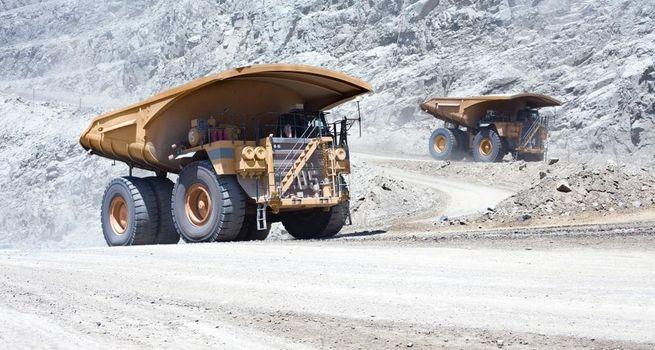
Tali Resources represents a compelling but high-risk investment opportunity for investors seeking exposure to mineral exploration with a focus on emerging and critical metals. Trading on the Australian Securities Exchange under the ticker TR2, this company operates as a mineral exploration enterprise headquartered in Western Australia, one of the world's premier mineral provinces. The company's strategic positioning in Western Australia, combined with its diversified exploration portfolio spanning multiple commodity types, positions it as a unique player in the junior exploration space. Over the past year, Tali Resources shares have demonstrated significant appreciation, rising 38.10 percent and reflecting growing investor interest in exploration assets. However, recent market movements reveal the inherent volatility characteristic of exploration stocks, with shares declining 10.77 percent over the past week and 18.31 percent over the past month. This volatility, represented by a beta coefficient of 3.08, significantly exceeds the broader Australian market's movements, making it essential for potential investors to understand the risk profile associated with this security. The company's exploration focus spans multiple commodity types including sediment-hosted copper deposits, iron oxide copper gold (IOCG) systems, carbonatite-related rare earth elements (REE), niobium deposits, orogenic gold systems, and various critical metals. This diversification strategy, while reducing single-commodity risk, requires understanding multiple geological and market factors simultaneously. For investors evaluating Tali Resources as a potential portfolio addition, this analysis provides comprehensive insights into the company's operations, financial position, exploration strategy, and investment considerations in the current market environment.
Understanding Tali Resources' Exploration Portfolio and Commodity Focus
The foundation of Tali Resources' investment thesis rests on its strategically selected exploration portfolio, which targets multiple mineral deposit types with varying development timelines and market dynamics. The company's exploration activities encompass sediment-hosted copper deposits, which represent some of the world's largest and most economically significant copper sources. These deposits, formed through chemical precipitation in sedimentary sequences, offer exceptional potential for large-scale, cost-effective mining operations. By pursuing sediment-hosted copper exploration, Tali Resources positions itself to capitalize on copper's critical importance in global energy transition initiatives and electrical infrastructure development. Complementing this focus, the company explores for iron oxide copper gold (IOCG) systems, among the world's most important mineral deposit types. These deposits have produced some of the largest and highest-grade ore bodies globally, including the Olympic Dam deposit in South Australia and various world-class operations. IOCG systems often contain polymetallic mineralization, providing exploration upside across multiple metals simultaneously. The company's carbonatite-related rare earth element and niobium exploration targets emerging market demands driven by clean energy technologies, electric vehicles, and advanced manufacturing applications. Rare earth elements have become strategically critical for numerous industries, from renewable energy generation to electronics manufacturing and defense applications. Niobium serves essential functions in steel production, aerospace engineering, and specialized industrial applications. Additionally, Tali Resources pursues orogenic gold exploration, targeting the gold systems that have historically attracted significant investment and delivered substantial economic returns. The diversification across these commodity types reflects a sophisticated approach to exploration risk management, reducing dependence on any single metal's price cycle while positioning the company to benefit from multiple structural market trends supporting demand for minerals essential to global economic development and energy transition.
The Australian Mineral Exploration Landscape and Western Australia's Competitive Advantages
Western Australia represents the preeminent global jurisdiction for mineral exploration and development, offering significant competitive advantages that directly benefit companies like Tali Resources operating within this region. The state possesses exceptional geological attributes, with some of the world's most prospective mineral provinces including the Pilbara region, known for iron ore and gold production; the Yilgarn Craton, hosting world-class gold deposits; and the Canning Basin, containing substantial sedimentary sequences favorable for copper mineralization. These geological foundations have established Western Australia as a preferred destination for mineral exploration capital and expertise. Beyond geology, Western Australia maintains robust institutional infrastructure supporting exploration and mining activities. Established regulatory frameworks provide clarity and consistency in permitting processes, crucial for companies advancing exploration projects toward development. The jurisdiction's strong rule of law, established mining codes, and transparent regulatory environment have consistently attracted international exploration capital. Labor availability and supply chain infrastructure developed to support major mining operations create competitive advantages for exploration companies preparing assets for potential development. The region's established mining heritage has cultivated deep expertise in mining engineering, geology, metallurgy, and operational management, resources that exploration companies can access when advancing projects toward production. Furthermore, Australia's stable political environment, institutional strength, and membership in international trade frameworks reduce sovereign risk compared to numerous other major mineral provinces. This stability premium becomes increasingly valuable as projects advance through exploration phases toward development, as investors demand reduced political and regulatory risk. Tali Resources' Western Australian location therefore provides intrinsic competitive advantages, positioning its exploration assets favorably relative to similar projects in less stable jurisdictions. The company benefits from the established reputation of Western Australian projects and the investor recognition associated with operating in a Tier-1 mineral jurisdiction, facilitating capital raising and stakeholder engagement as projects advance.
Analyzing Tali Resources Stock Performance - The 38.10% Annual Gain
The 38.10 percent appreciation in Tali Resources shares over the past year reflects substantial investor enthusiasm and positive market sentiment regarding the company's exploration strategy and asset portfolio. This significant performance gain substantially outpaced typical returns from major Australian equity indices and demonstrates investor recognition of specific value drivers within the company's operations and strategic positioning. Understanding the components of this performance gain provides critical context for evaluating current valuation levels and assessing whether the stock's current price adequately reflects underlying fundamentals. Several factors likely contributed to the substantial annual gain observed in TR2 shares. Growing global emphasis on energy transition has dramatically increased demand for copper, rare earth elements, niobium, and gold, all key commodities within Tali Resources' exploration portfolio. Copper prices have benefited from expectations of increased consumption driven by electric vehicle proliferation, renewable energy infrastructure development, and grid modernization initiatives. Similarly, rare earth elements have experienced sustained price support from technology sector demand and strategic supply concerns. Additionally, improved market sentiment toward exploration and mining stocks more broadly, following periods of capital scarcity, may have supported valuations across the junior exploration sector. Positive exploration results from the company, successful capital raises, or strategic partnership announcements could have contributed to the substantial annual appreciation. Market recognition of the quality of the company's exploration targets and the competence of its management team may have justified valuation expansion. However, the recent sharp weekly and monthly declines, falling 10.77 percent and 18.31 percent respectively, suggest potential profit-taking by investors or market concerns regarding near-term catalysts. This divergence between strong annual performance and recent weakness warrants careful analysis of underlying causes. Understanding whether recent weakness represents a fundamental shift in market conditions or a temporary correction becomes critical for evaluating current investment attractiveness. The high beta coefficient of 3.08 indicates that these price fluctuations are amplified relative to broad market movements, suggesting that systematic market factors disproportionately affect the stock's performance.
Stock Volatility Deep Dive - Understanding the 3.08 Beta Coefficient
The beta coefficient of 3.08 associated with Tali Resources shares represents exceptionally high volatility compared to the broader Australian market, with the stock moving approximately three times as much as typical market index movements. This volatility metric carries critical implications for portfolio construction, risk assessment, and investment decision-making. A beta of 3.08 indicates that during periods when the Australian Securities Exchange benchmark experiences a one percent gain, Tali Resources shares would historically be expected to appreciate approximately three percent. Conversely, during market declines, the stock would be expected to fall approximately three percent for every one percent decline in the broader market. This amplified volatility characteristic creates both opportunities and risks for investors. For risk-tolerant investors with long investment horizons and sufficient portfolio diversification, the amplified upside potential during market rallies may offer attractive returns compensating for the increased volatility. For conservative investors with shorter time horizons or concentrated portfolios, the elevated volatility may present unacceptable risk, potentially causing portfolio value to experience unsettling fluctuations. The high beta reflects several underlying characteristics typical of junior mineral exploration companies. Exploration stocks depend heavily on investor sentiment regarding commodity prices, economic growth expectations, and risk appetite. During periods of market pessimism or rising interest rates, investors frequently flee to safer assets, disproportionately selling exploration stocks. Conversely, during optimistic periods, investors pursue high-beta assets aggressively, driving disproportionate appreciation. The company's lack of established cash flow generation creates dependence on capital markets for financing, making it sensitive to shifts in capital availability and equity market conditions. Successful exploration results can drive sudden valuation adjustments, creating sharp price movements. Additionally, the relatively smaller trading volume compared to major-cap stocks can amplify price movements during periods of buying or selling pressure. The 1.75 percent volatility measure provides additional context, though the specific meaning of this metric requires clarification regarding measurement methodology. Understanding volatility comprehensively requires assessing not only historical price fluctuations but also underlying drivers of volatility, including commodity price sensitivity, market sentiment regarding exploration stocks, and company-specific news flow.
Recent Price Weakness - Analyzing the 10.77% Weekly and 18.31% Monthly Declines
The recent sharp declines in Tali Resources share price, falling 10.77 percent over the past week and 18.31 percent over the past month, represent concerning developments for existing shareholders and important context for prospective investors evaluating the stock's current attractiveness. These declines, particularly pronounced over the monthly period, suggest potential deterioration in investor sentiment or emergence of company-specific or market-wide negative catalysts. Understanding the drivers of these recent declines becomes essential for assessing whether they represent buying opportunities for value-oriented investors or warning signals suggesting the necessity for caution. Potential explanations for the recent weakness merit consideration. Broader market conditions affecting exploration stocks could explain the declines, with rising interest rates, economic uncertainty, or shifting investor preferences away from high-risk assets potentially creating headwinds across the junior exploration sector. Commodity price weakness, particularly affecting copper or rare earth elements, could have triggered the decline if market participants have revised downward their expectations for commodity market fundamentals. Company-specific developments may have contributed to the weakness, potentially including disappointing exploration results, delays in exploration programs, capital raises undertaken at lower valuations than recent share prices, executive departures, or negative mining industry developments affecting exploration companies more broadly. The magnitude of the recent monthly decline significantly exceeds typical daily volatility, suggesting either a substantial negative catalyst or accumulation of negative sentiment triggers. The weekly decline of 10.77 percent represents a severe pullback, even for a high-beta stock, potentially indicating panic selling or sudden revelation of negative information. For investors considering entry into Tali Resources at current price levels, assessing whether recent weakness represents an attractive accumulation opportunity or a warning signal becomes critical. This assessment requires understanding the specific drivers of recent weakness and evaluating whether underlying business fundamentals have deteriorated or whether the market has overreacted to temporary setbacks. Comparing the current valuation multiple to historical averages and to peer company multiples provides quantitative context for assessing relative value. Additionally, examining the company's exploration progress, funding adequacy, and pipeline of near-term catalysts helps investors form views regarding whether current weakness represents capitulation or justified market skepticism.
Is TR2 a Good Buy? - Investment Considerations and Valuation Assessment
Determining whether Tali Resources represents an attractive investment opportunity requires comprehensive analysis balancing potential upside from exploration success against downside risks inherent in junior mineral exploration. The answer varies substantially depending on individual investor characteristics, including risk tolerance, investment time horizon, portfolio diversification, and specific investment objectives. For risk-tolerant investors with multi-year investment horizons and well-diversified portfolios, Tali Resources may merit consideration as a speculative position offering exposure to multiple commodity trends and exploration upside. The company's diversified commodity portfolio positions it to benefit from multiple structural market trends supporting mineral demand. Energy transition commitments globally have created fundamental support for copper demand, with many analysts projecting sustained higher copper prices for extended periods. Rare earth element demand remains supported by technological trends and strategic concerns regarding supply concentration. Gold has benefited from its role as a portfolio hedge and from jewelry and industrial demand. If Tali Resources successfully advances exploration assets toward resource definition, share price appreciation could be substantial, offering returns capable of compensating for the elevated volatility and risk profile. However, for conservative investors, risk-averse portfolio managers, or investors with shorter time horizons, Tali Resources' risk profile may outweigh potential rewards. The exploration stage nature of the company means that cash generation remains years away at best, if ever achieved. Capital requirements for progressing exploration may necessitate additional equity dilution or debt issuance, potentially reducing shareholder value. Exploration risk is substantial, with only a small percentage of exploration projects ultimately advancing to commercial production. Market sentiment toward exploration stocks exhibits cyclicality, and current favorable sentiment may not persist. Recent price weakness may indicate that current valuation no longer reflects investor enthusiasm. Regarding valuation assessment, several considerations prove critical. The recent 38.10 percent annual appreciation suggests significant valuation expansion has already occurred. If this appreciation was justified by improving fundamentals or successful exploration results, the stock may represent fair value or continued upside. If appreciation reflected speculative enthusiasm unsupported by fundamentals, current weakness may represent justified repricing. Comparison to peer exploration companies reveals whether Tali Resources trades at premiums or discounts relative to similar-stage exploration companies. Industry practice metrics, such as capitalization per prospective acreage or cost per exploration program, provide quantitative frameworks for assessment. The company's balance sheet strength and funding runway determine capital adequacy for advancement of exploration programs without need for near-term dilutive financing. Strong cash positions provide runway for sustained exploration while weak positions indicate potential imminent capital raises at potentially unfavorable terms. Overall assessment suggests that Tali Resources merits consideration for sophisticated investors comfortable with exploration-stage volatility and willing to accept substantial downside risk for potential substantial upside. Conservative investors should likely avoid the position or maintain only token allocations.
Copper Exploration Strategy - Sediment-Hosted and IOCG Copper Potential
Copper represents one of the most critical commodities globally, with fundamental demand support from energy transition initiatives, electrical infrastructure development, and telecommunications expansion. Tali Resources' pursuit of both sediment-hosted copper and iron oxide copper gold (IOCG) copper systems reflects a sophisticated approach to copper exploration, targeting the deposit types most likely to support large-scale, long-life mining operations. Sediment-hosted copper deposits form through precipitation of copper minerals in reducing sedimentary sequences, often in connection with evaporitic mineral assemblages. These deposits are remarkable for their large tonnages and low grades, characteristics that support cost-effective extraction at scale through large open-pit mining operations. Exemplary sediment-hosted copper deposits include the Zambian Copperbelt, which has produced millions of tons of copper and continues to support major mining operations. By exploring for sediment-hosted copper, Tali Resources positions itself to potentially discover assets capable of supporting production at industrial scale, generating substantial shareholder value if commercial deposits are discovered. The copper exploration market has experienced substantial renewed interest given global demand expectations. Energy transition initiatives, including electric vehicle production and renewable energy infrastructure, are expected to increase copper demand substantially over coming decades. Investment banks have projected significant supply deficits in future years, supporting higher copper prices and justifying exploration investment. Additionally, copper's superior electrical conductivity makes it irreplaceable in numerous applications, providing fundamental demand support less vulnerable to substitution or technological change compared to some other commodities. IOCG copper exploration complements sediment-hosted copper targeting by pursuing alternative deposit styles capable of producing economic copper resources. IOCG deposits have historically produced some of the world's largest copper and gold resources, including Olympic Dam in South Australia and Candelaria in Chile. These deposits are frequently polymetallic, containing copper, gold, and other valuable metals simultaneously, providing multiple revenue streams. The company's focus on both deposit types reflects recognition that multiple copper deposit styles may exist within its exploration territories. Western Australia has significant historical production from both deposit types, suggesting that additional deposits of both styles may exist. Geologically favorable provinces for copper often host multiple deposit types, reflecting diverse mineralization processes operating within the province. For investors interested in copper exposure through exploration-stage assets, Tali Resources' copper portfolio provides meaningful exposure to a commodity with strong secular demand trends. However, exploration risk remains substantial, as discovery of economic deposits is neither assured nor predictable on specific timelines.
Rare Earth Elements and Critical Metals - Exposure to Technology Megatrends
The company's exploration for carbonatite-related rare earth elements (REE) and niobium positions Tali Resources at the intersection of critical technology trends and emerging supply constraints. Rare earth elements have become strategically vital for modern technology, with applications spanning renewable energy generation, electric vehicles, electronics manufacturing, aerospace systems, and defense applications. Carbonatite deposits represent one of the primary geological sources of rare earth elements globally, with major operating mines including Mountain Pass in the United States and mining operations in China dominating global REE supply. Carbonatite exploration, therefore, targets the deposit type most likely to produce economic REE resources. The REE market has experienced substantial transformation over recent years, reflecting recognition of the strategic importance of these elements and concerns regarding supply concentration. China dominates current global REE production, and this concentration has created geopolitical risks, supply chain vulnerability concerns, and policy initiatives promoting supply chain diversification. Western governments have committed substantial resources to developing domestic and allied-nation REE supply capabilities, including government support for exploration and development of new sources outside China. This policy support creates structural tailwinds for REE exploration in Tier-1 mining jurisdictions like Australia, where government policy and investment mechanisms support REE development. REE demand is expected to increase substantially given the expanding electric vehicle market, growing renewable energy capacity additions, and increasing use of advanced technologies incorporating REE-dependent components. Investment analysts have projected significant growth in REE demand extending into future decades, supporting prices and exploration investment. Niobium serves critical functions in steel production, where small additions significantly improve strength and performance characteristics, making specialty steels incorporating niobium essential for infrastructure, vehicles, and advanced applications. Additionally, niobium serves important roles in aerospace engineering, medical devices, and specialized manufacturing applications. The niobium market remains smaller and less well-known than copper or rare earth elements, but it supports premium pricing due to limited production and specific application requirements. Brazil dominates global niobium production, creating geographic concentration risks that parallel REE supply concerns. Diversification of niobium supply sources would benefit consuming industries and create opportunities for new producers. For investors interested in exposure to critical metal themes, Tali Resources' REE and niobium exploration provides meaningful optionality. The company positions itself to potentially benefit from policy support and investment trends supporting critical metals development. However, exploration risk remains high, and REE and niobium markets are less developed and liquid than commodity markets for established metals, creating additional uncertainty regarding potential project development.
Gold Exploration Program - Traditional Value with Modern Relevance
Tali Resources' pursuit of orogenic gold mineralization represents traditional exploration activity with enduring relevance and modern appeal. Gold has maintained investment value for millennia, and contemporary gold demand encompasses investment demand driven by portfolio diversification and inflation hedge concerns, jewelry demand reflecting cultural and aesthetic preferences, and industrial applications in electronics and specialized manufacturing. Orogenic gold deposits form through structural and metamorphic processes in mountain-building regions, with mineralization occurring in connection with fault systems, shear zones, and metamorphic rock sequences. These deposits have historically produced major ore bodies and have attracted sustained exploration and mining investment globally. Western Australia hosts world-class orogenic gold deposits, including the Kalgoorlie district, which has produced millions of ounces of gold historically and continues to support major mining operations. The Yilgarn Craton, within which many of Tali Resources' exploration activities occur, has exceptional orogenic gold prospectivity. Gold prices have exhibited substantial strength over recent years, supported by investor demand for safe-haven assets amid global economic and geopolitical uncertainty. Central bank gold purchases have provided additional demand support, with various national governments building strategic gold reserves. Additionally, investment demand through exchange-traded funds and other gold investment vehicles has contributed to sustained price elevation. The gold market benefits from long-term demand support driven by these factors, though prices do experience cyclicality tied to interest rate environments and inflation expectations. From an exploration perspective, gold offers advantages relative to some other commodities. Gold exploration relies on well-established and mature exploration techniques, allowing efficient targeting and risk reduction. Gold's high value per unit weight means that relatively small ore bodies can support economic mining operations, expanding the potential resource base that Tali Resources might discover. The established gold mining industry provides clear pathways for monetizing discoveries, as major mining companies actively pursue acquisition of gold exploration assets. For investors seeking exposure to gold, Tali Resources' orogenic gold program provides options for exploration-stage exposure to this traditional precious metal. The company's Western Australian location positions it within one of the world's most prosperous orogenic gold provinces. However, gold prices are less directly supported by energy transition themes than copper or rare earth elements, and gold mining faces increasing environmental and social acceptance challenges in certain jurisdictions. Additionally, exploration for subtle orogenic gold deposits, particularly in areas of complex geology, can prove challenging and time-consuming.
Understanding ASX Listing Benefits and Market Mechanics for TR2
Tali Resources' listing on the Australian Securities Exchange (ASX) provides numerous benefits that affect investment characteristics, liquidity, transparency, and regulatory environment. Understanding these benefits and the specific market mechanics of ASX-listed securities proves essential for investors considering Tali Resources as a portfolio holding. The ASX represents one of the world's leading securities exchanges, with substantial trading volume, sophisticated market infrastructure, and regulatory oversight ensuring market integrity and investor protection. ASX-listed securities benefit from continuous price discovery mechanisms, ensuring that share prices reflect current market information and investor sentiment. This continuous price discovery supports fair valuation and allows investors to enter and exit positions at prices proximate to current market consensus valuations. The regulatory framework governing ASX-listed securities provides transparency requirements, financial reporting standards, and disclosure obligations designed to protect investor interests. Tali Resources must comply with ASX listing rules, which impose corporate governance standards, financial disclosure requirements, and restriction on insider trading. These requirements provide investor protections and promote market integrity. For Australian investors, ASX-listed securities offer practical benefits including tax treatment as domestic securities, familiarity with regulatory environment, and access to domestic custodians and brokerage services. The Australian dollar denomination eliminates currency risk relative to Australian investors, in contrast to international securities. For international investors, the ASX listing provides exposure to Australian exploration assets and potential arbitrage opportunities if the security trades on other exchanges or if international investors may arbitrage price differences between markets. The continuous nature of the ASX market means that Tali Resources shares are traded throughout each business day, and investors can execute positions at market prices without requiring specific capital raise events. This contrasts with private exploration companies, where investment typically requires participation in organized capital raises at negotiated prices. The ASX market also provides price history and trading data that investors can analyze to assess historical volatility, trading patterns, and market sentiment evolution. For Tali Resources specifically, ASX listing provides benefits including: access to diverse investor base supporting trading liquidity, transparent market pricing supporting fair valuation, regulatory oversight and transparency requirements providing investor protections, and eligibility for inclusion in diversified equity indices, potentially supporting demand. Understanding these market mechanics helps investors assess the quality of their potential investment and the practical considerations affecting trading and portfolio management.
Comparative Analysis - TR2 Against Peer Exploration Companies
Evaluating Tali Resources' investment merits requires comparative analysis against peer exploration companies pursuing similar commodities and operating in comparable geological settings. This comparative analysis reveals whether Tali Resources offers comparable or superior risk-adjusted returns relative to alternatives available to investors. Several peer companies merit comparison. Junior exploration companies pursuing copper exploration in Australia include companies operating in Western Australia and other regions with significant copper prospectivity. Assessing relative trading multiples, cash burn rates, exploration success metrics, and management team quality reveals how Tali Resources compares to alternative copper exploration opportunities. Similarly, rare earth element exploration companies operating in Australia and other Tier-1 jurisdictions provide comparison points for evaluating the company's REE portfolio. The relative scarcity of operating gold mines in Australia creates substantial exploration upside, and comparing Tali Resources to peer gold explorers reveals competitive positioning. Comparative analysis should examine several key metrics. Trading valuation multiples, such as price-to-book or price-to-cash burn ratios, indicate whether investors have priced Tali Resources at premium or discount valuations relative to peers. Funds under management or cash balance per unit of exploration acreage indicates capital resources relative to exploration scope. Recent exploration success rates, including number of drilling programs completed, results generated, and advancement milestones achieved, reveal execution quality. Management team composition and track record provides insight into likelihood of successful exploration execution. Several factors create competitive advantages for certain exploration companies. A large cash position enables extended exploration programs without requiring near-term dilutive financing. Large exploration acreage in prospective geological settings provides greater discovery potential. Recent exploration success, demonstrated through favorable drilling results or advancement to resource definition, creates momentum. Access to technical expertise and relationships supporting exploration efficiency and effectiveness enhances discovery probability. Tali Resources' competitive position relative to peers reflects its portfolio of diverse commodities, strategic Western Australian location, and apparent technical expertise. However, the company's recent share price weakness may reflect market perception that peers offer superior value or execution quality. Detailed comparative analysis would require access to detailed financial information, exploration data, and management team backgrounds, which investors should assemble as part of comprehensive due diligence process. Overall, investors should position Tali Resources within a portfolio of exploration companies rather than as standalone exposure, diversifying across multiple exploration teams and commodity focuses to reduce portfolio risk.
Financial Analysis - Balance Sheet Strength, Funding, and Capital Requirements
The financial condition of Tali Resources determines its capacity to execute exploration programs, fund operations, and avoid dilutive capital raises. Comprehensive financial analysis examining balance sheet strength, cash burn rates, funding runway, and capital requirements proves essential for investors evaluating investment merits. As an exploration-stage company, Tali Resources does not generate operating cash flow from mining operations, instead depending entirely on capital raises and investment returns on cash reserves to fund operations. This fundamental characteristic makes balance sheet analysis and capital adequacy assessment particularly critical. Key financial metrics merit examination. Cash and cash equivalents indicate funding runway, with adequate cash reserves enabling sustained exploration programs and operational activities without requiring near-term capital raises. The size of reserves relative to annual cash burn rates indicates funding runway in years, informing investors regarding timing of potential future capital raises. Current liabilities, particularly short-term debt obligations, indicate financial stress or normal operational obligations. Minimal short-term debt is preferable, indicating that the company does not face imminent repayment obligations. Long-term debt levels indicate whether the company has accessed debt financing or maintained pure equity capitalization. Equity financing maintains simplicity and avoids covenant compliance burdens, though debt financing can reduce shareholder dilution. Shareholder equity and share count reflect the company's capitalization and indicate the dilution that shareholders have experienced through historical capital raises. High historical dilution suggests previous capital raises were undertaken at unfavorable valuations, potentially damaging shareholder value. Cash burn rate indicates the company's rate of cash consumption and determines funding runway. High cash burn rates may indicate intense exploration activity, generating discovery potential but creating capital requirements. Conservative burn rates may indicate measured exploration pace but potentially sacrifice discovery opportunity. Capital requirements for near-term exploration programs determine future capital raise potential. The company should have transparent communication regarding planned exploration expenditures, allowing investors to assess capital adequacy and anticipate future financing needs. For Tali Resources specifically, comprehensive financial analysis would examine the company's current cash balance, recent capital raise activities, guidance regarding exploration expenditures, and anticipated timing of future capital requirements. Investors should assess whether the company has sufficient capital to execute exploration programs over a meaningful period without requiring near-term dilutive financing. If capital raises are anticipated, investors should consider the potential valuation impact and whether near-term dilution might prevent share price appreciation despite successful exploration results. Strong financial positioning, with substantial cash reserves and extended runway before requiring capital raises, provides significant advantages, particularly during periods of challenging capital market conditions affecting exploration company financing.
Exploration Risk Assessment - Stages and Discovery Probability Considerations
Exploration risk encompasses the multifaceted uncertainties affecting exploration companies' ultimate success in discovering economic mineral deposits. Comprehensive risk assessment examining exploration probability, capital requirements through successive exploration stages, and timeline to potential production decisions provides critical context for investment evaluation. The exploration process unfolds through successive stages, each involving specific activities, capital requirements, and probability of advancement. Early-stage exploration focuses on identifying prospective geological settings, developing models explaining mineralization, and completing regional-scale surveys and sampling. Early-stage exploration involves relatively modest capital expenditure but encounters lower probability of identifying targets meriting advancement. The probability that any individual early-stage property will advance to later-stage exploration remains modest, typically well below fifty percent. Early-stage exploration success is probabilistic rather than deterministic, depending on geological interpretation, prospecting success, and favorable discovery mechanics. Grassroots exploration, targeting areas where mineralization has not been previously identified, encounters even lower probability of success than exploration in known mineralized provinces. Tali Resources' location in Western Australia reduces grassroots risk relative to exploration in under-explored provinces, as the region's mineral prospectivity is well-established. Prospect development represents the next stage, where geological models are refined through targeted drilling and detailed surveying. Prospect development exploration costs increase substantially relative to early-stage work, but discovery probability increases measurably. Successful prospect development commonly reveals mineral occurrences, establishing economic viability potential. Resource definition requires extensive drilling programs to quantify mineralization in sufficient detail to support engineering and mine planning. Resource definition drilling programs can require millions of dollars and persist for multiple years. Only properties demonstrating economic merit at the prospect stage advance to resource definition, maintaining prudent capital allocation discipline. The probability that properties advancing to resource definition ultimately define economic resources remains uncertain, depending on deposit size, grade, and commodity price assumptions. Feasibility studies and permitting precede production decisions, and these stages encounter additional risks including technical feasibility uncertainties, environmental approval challenges, and community acceptance issues. For junior exploration companies like Tali Resources, the exploration risk profile is substantial. The company must balance advancing multiple exploration prospects simultaneously against concentrated focus on fewer prospects. Simultaneous advancement of multiple prospects diversifies risk but may spread capital insufficiently for any individual prospect to achieve near-term breakthroughs. Concentrated focus on fewer prospects provides greater likelihood of near-term results but increases single-prospect risk. The probability that Tali Resources successfully discovers economic deposits meriting development remains uncertain, as the vast majority of exploration programs fail to generate commercially viable deposits. Industry statistics suggest that only a small percentage of exploration programs ultimately create shareholder value, while the majority create no economic benefit. Investors should therefore approach Tali Resources as a speculative position where successful outcome would generate substantial returns but unsuccessful outcome would result in total capital loss. The timing of potential discoveries and resource definitions remains uncertain and unpredictable, making it difficult for investors to forecast when or whether material value creation might occur.
Market Catalysts and Expected Near-Term Developments for TR2
Stock price movements for exploration companies like Tali Resources frequently coincide with exploration results announcements, capital raise activities, strategic partnership announcements, or commodity price movements. Identifying potential catalysts and their likely timing provides investors with frameworks for evaluating near-term trading and investment dynamics. Exploration results announcements represent the most immediate and impactful catalysts for exploration stocks. When the company completes drilling programs and publishes assay results, those results typically drive significant share price movements. Favorable results, demonstrating material mineralization grades and widths, commonly generate positive share price reaction. Disappointing results typically trigger share price declines, as investors revise downward their probability-weighted expectations for ultimate success. The timing and frequency of exploration results announcements depend on the company's exploration program schedule and drilling pace. The company should communicate publicly regarding exploration programs, anticipated drilling timelines, and expected results announcement schedules. Investors should monitor company announcements regarding recent drilling activities and anticipated results reporting dates to position themselves ahead of results announcements. Strategic partnership announcements and joint venture agreements can serve as significant catalysts, particularly if partnerships involve major mining companies or provide capital infusion. Partnerships with established mining operators can validate exploration targets and provide capital resources for advancement. Conversely, partnerships involving unfavorable terms, significant ownership dilution, or limited capital commitment may negatively affect investor sentiment. Capital raise activities, including equity offerings or debt issuance, represent important catalysts through their impact on share pricing and dilution. Capital raises undertaken at premium valuations relative to current trading prices generate positive sentiment, while capital raises at discounted valuations create negative shareholder impact. The timing and terms of anticipated capital raises merit close investor monitoring. Corporate actions, including stock splits, consolidations, or dividend initiatives, can affect share price mechanically, though fundamental value remains unaffected. Commodity price movements, particularly substantial movements in copper, gold, or rare earth element prices, affect investor sentiment toward related exploration companies. Rising commodity prices improve market sentiment toward exploration companies, as higher prices improve potential economic viability of deposits. Falling commodity prices deteriorate sentiment, as lower prices reduce economic viability thresholds for potential deposits. Regulatory developments, including changes to mining permitting processes, environmental standards, or indigenous peoples' consultation requirements, can affect exploration timelines and project feasibility. Positive regulatory developments that streamline permitting or reduce compliance burdens can generate positive market sentiment. Adverse regulatory changes can generate negative sentiment. For Tali Resources specifically, investors should monitor company announcements regarding exploration progress, results timing, and strategic developments. Regular review of ASX announcements and company communications helps investors remain informed regarding near-term catalysts. Commodity price movements, particularly copper prices given the company's copper exploration focus, should also receive investor attention as demand and supply factors affecting copper prices influence overall market sentiment toward the company.
Investment Conclusion - Summary of Tali Resources Investment Thesis
Tali Resources (ASX: TR2) presents a complex investment proposition combining significant upside potential against substantial downside risks characteristic of junior mineral exploration companies. The investment thesis rests on several key pillars. First, the company operates within a Tier-1 mineral jurisdiction, Western Australia, reducing sovereign risk relative to exploration companies operating in less developed or politically unstable regions. Second, the company pursues multiple commodities aligned with favorable long-term demand trends, including copper supported by energy transition initiatives, rare earth elements supported by technology demand and supply concerns, and gold supported by investment demand. Third, the company's diversified commodity portfolio reduces single-commodity risk, providing exposure across multiple market trends. Fourth, the company's exploration acreage in prospectively favorable geological settings provides meaningful discovery potential. The year-to-date appreciation of 38.10 percent reflects investor recognition of these positive factors and suggests that market sentiment regarding exploration stocks and related commodities has improved. However, the recent sharp monthly and weekly declines warrant careful analysis regarding investor sentiment deterioration or emergence of negative developments. For investors, several key considerations should guide decision-making. Risk tolerance proves critical, as the company's beta of 3.08 indicates volatility substantially exceeding typical market movements. Conservative investors should avoid the position unless they maintain sophisticated understanding of exploration risk and substantial portfolio diversification. Investment time horizon should extend multiple years, as exploration success timelines are unpredictable and near-term volatility should be expected and tolerated. Portfolio diversification across multiple exploration companies and commodity exposures helps reduce idiosyncratic risk and improves risk-adjusted returns. Comprehensive due diligence regarding the company's financial position, exploration programs, management team quality, and competitive positioning should precede investment decisions. The recent price weakness creates opportunities for investors with conviction regarding the company's long-term prospects to accumulate positions at lower valuations than prevailing during the year-to-date appreciation. However, the weakness may also represent justified market skepticism regarding near-term catalysts or earnings visibility. Overall, Tali Resources merits consideration for sophisticated, risk-tolerant investors seeking exposure to exploration-stage assets with favorable underlying fundamentals. Conservative investors should likely avoid the position or maintain only token allocations. The investment decision ultimately depends on individual investor characteristics, objectives, and risk tolerance rather than universal investment applicability.
Disclaimer: This article is for informational and educational purposes only and does not constitute financial advice. The author is not a licensed financial advisor. Investors should conduct their own due diligence and consult with a qualified financial professional before making any investment decisions. Past performance is not indicative of future results. All investments carry risk, including the potential loss of principal.


 Nov 13, 2026





 Please wait processing your request...