
 CA
 NZ
 UK
 US
 IND

 AU

 Share
 X (Formerly Twitter)
 Whatsapp
 Facebook
 LinkedIn
 Telegram
 Email This Article
 Copy Link
 Summarize with AI
 Chat GPT
 Perplexity
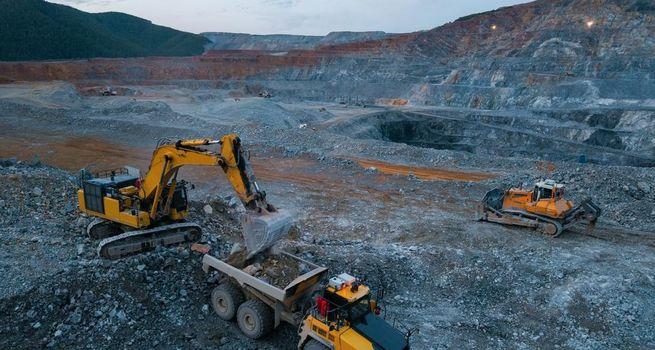
Stanmore Resources Limited (ASX:SMR) fell 6.42% to AUD 2.48 on 10 April 2026, making it one of the more significant large-cap losers on the Australian Securities Exchange for the day. With a market capitalisation of approximately AUD 2.43 billion, Stanmore is a notable metallurgical coal producer operating in Queensland's Bowen Basin, and its share price is highly sensitive to global steelmaking coal prices and related macroeconomic factors. Today's decline pushes the stock further into the cross-hairs of investors debating the long-term outlook for metallurgical coal in a decarbonising world.
From a financial perspective, Stanmore Resources reports a trailing twelve-month diluted EPS of negative AUD 0.08 with a year-on-year earnings growth rate of minus 125.65%. This combination reflects a significant deterioration in earnings relative to the prior comparable period, consistent with a meaningful fall in realised metallurgical coal prices and potentially higher cost pressures at key operations. For a business that has historically been a strong cash generator, moving into negative earnings territory is a notable shift that warrants careful attention.
This detailed analysis explores Stanmore Resources' business model, the plausible drivers behind today's 6.42% fall, a comprehensive fundamental review, sector comparison, technical picture, risks and catalysts, and outlook. Where specific verified information is not available, the article clearly flags inferred commentary based on sector norms.
Company Overview: Stanmore Resources and Australian Metallurgical Coal
Stanmore Resources Limited is an Australian metallurgical coal producer with operations concentrated in Queensland's Bowen Basin, which is one of the world's most significant sources of high-quality coking coal used in steelmaking. The company's portfolio has grown considerably in recent years through strategic acquisitions, making it a more substantial player in the global metallurgical coal market than its history would suggest. [Inferred from the company's publicly known asset base; specific current portfolio details should be verified from SMR's most recent annual report.]
Business Model
Stanmore Resources operates mines that extract metallurgical coal for sale primarily to steelmakers in Asia, with key customers historically located in countries such as Japan, India and South Korea. Revenue is generated by selling coal under a combination of long-term contracts, reference-price contracts and spot market sales. Profitability depends on the spread between the realised coal price and the all-in cost of production, including mining, processing, transport, royalties, sustaining capital and corporate overhead. When coal prices are high, operating leverage delivers strong free cash flow; when prices fall, the same leverage can compress margins quickly.
Operational Footprint
The company's operational footprint includes producing mines in the Bowen Basin, which have historically produced a mix of hard coking coal and pulverised coal injection (PCI) products. These products command different price points in the international market, and each has its own demand drivers. Investors should understand the mix of products that Stanmore produces and how that mix interacts with recent movements in benchmark metallurgical coal prices.
Strategic Positioning
Within the ASX metallurgical coal sector, Stanmore is positioned as a mid-cap producer with a focused geographic footprint. Larger diversified producers such as BHP and Glencore produce coking coal as one part of a broader portfolio, while more specialised peers offer direct coking coal exposure similar to Stanmore. Investors should consider whether they want diversified or pure-play exposure to metallurgical coal when comparing Stanmore with the broader sector.
Why Is Stanmore Resources (ASX: SMR) Down Today?
A 6.42% single-day move in a AUD 2.43 billion market cap coal producer is a meaningful event, but not unusual in the commodity producer space during periods of price volatility. Several factors typically combine to drive moves of this magnitude.
Coal Price Movements
Metallurgical coal prices have been volatile throughout early 2026, reflecting the interplay between Chinese steel production, Indian demand, supply-side disruptions from weather and logistics, and the broader pace of global industrial activity. Any meaningful move in benchmark hard coking coal or PCI prices typically translates quickly into share price action for coal producers like Stanmore. A decline in benchmark prices on or around 10 April 2026 would be sufficient explanation for today's move, even without any company-specific news. [Inferred; specific benchmark coal price movements on the day should be verified from commodity price indices.]
Company-Specific Announcements
Stanmore may also have released an operational, financial or strategic update that triggered the move. Common drivers include quarterly production reports, changes to cost guidance, issues at specific mines, weather-related disruptions, union or labour developments, or changes in corporate strategy such as acquisitions or divestments. Investors should check the company's most recent ASX announcements for any disclosures released on or immediately before 10 April 2026. [Specific 10 April 2026 announcement not independently verified in this article.]
Macro and Sector Sentiment
Coal equities are also exposed to broader macro and sentiment factors including global growth expectations, interest rate policy, ESG-driven capital flows, and commentary from major steelmakers or consuming economies. A 6.42% move can sometimes reflect a rotation away from fossil fuel exposure rather than a fundamental change in the company's operating performance. Investors should consider the breadth of selling across the coal cohort to assess whether today's move is specific to Stanmore or sector-wide.
Deep Fundamental Analysis of Stanmore Resources (ASX: SMR)
For a producing metallurgical coal company, fundamental analysis should focus on production volumes, unit costs, balance sheet strength, capital return profile and the sensitivity of earnings to commodity prices.
Earnings and Profitability
Stanmore's trailing twelve-month diluted EPS of negative AUD 0.08 and year-on-year earnings growth of minus 125.65% point to a period of sharp earnings deterioration. The company has historically been a strong cash generator during peak coal price cycles, so the current negative EPS likely reflects significantly weaker realised prices against the prior comparable period. Investors should look at the company's operating cost curve to understand at what price level the business returns to positive earnings and cash generation.
Production and Cost Base
Production volumes and unit cash costs are the key levers for a metallurgical coal producer. Investors should track Stanmore's reported production relative to guidance, as well as its unit cash costs and free-on-board (FOB) cost position relative to global peers. Companies positioned in the lower half of the global cost curve are generally better placed to survive cyclical downturns, while higher-cost producers are more exposed to margin compression. [Inferred; specific cost curve positioning should be verified from company disclosures and sector research.]
Balance Sheet Strength
Balance sheet strength is a key consideration for cyclical commodity producers. Investors should review Stanmore's cash balance, debt position, net debt to EBITDA ratio and any committed capital expenditure or acquisition-related obligations. A producer with low leverage and a strong cash buffer has the flexibility to ride out periods of weak pricing, while one with elevated debt can face significant refinancing and distribution risks in downturns.
Capital Returns Profile
Metallurgical coal producers have historically returned significant capital to shareholders during peak pricing periods, through a combination of dividends and share buybacks. Stanmore's capital return policy and its sustainability in a weaker price environment will be key to the investment thesis for yield-focused investors. A sustainable payout through the cycle is preferable to a high payout that is cut when prices fall, because share prices typically react more negatively to dividend cuts than to modest sustained payouts.
Sector Comparison: SMR Versus ASX Coal Peers
The ASX coal sector includes both pure-play coal producers and diversified miners with coal exposure. Relevant peers for comparison with Stanmore include Whitehaven Coal, New Hope Corporation, Coronado Global Resources and the diversified majors that also produce metallurgical coal.
Commodity Mix and Margin Profile
Peers differ in the mix of thermal versus metallurgical coal produced, which has a meaningful effect on margin profile and long-term investment thesis. Metallurgical coal is considered more structurally supported due to its essential role in primary steelmaking, while thermal coal faces stronger headwinds from the energy transition. Stanmore's focus on metallurgical coal positions it relatively favourably within this spectrum, although all coal producers face some degree of ESG-related headwinds.
Valuation Comparison
Valuation comparison across the coal sector is typically done using enterprise value to EBITDA ratios, price-to-cash-flow ratios and dividend yield. With Stanmore's trailing earnings currently negative, EV/EBITDA and forward multiples are more relevant than trailing P/E. Investors should compare Stanmore's valuation on a forward basis to peers and consider the sensitivity of each company's earnings to commodity price assumptions.
Key Risks and Catalysts for Stanmore Resources
Primary Risks
The most significant risks for Stanmore Resources investors include: commodity price risk, particularly for metallurgical coal; operational risk at mines including weather, geological and labour issues; cost inflation risk for diesel, explosives, labour and royalties; regulatory and environmental risk at both state and federal levels; ESG-related risk that could affect capital access and valuation multiples; and global demand risk driven by steel production trends in key markets. [Inferred from typical metallurgical coal sector risks.]
Potential Catalysts
Potential positive catalysts include: a recovery in metallurgical coal prices driven by stronger steel demand or supply disruptions; strong production quarters that reinforce guidance; operational improvements that reduce unit costs; announcements of attractive bolt-on acquisitions or divestments; continued capital returns through dividends or buybacks; and any improvement in the broader investor sentiment towards metallurgical coal as a strategic commodity.
Outlook for SMR: Near-Term and Medium-Term
The near-term outlook for Stanmore Resources is closely linked to metallurgical coal price dynamics. If benchmark prices stabilise or recover in coming weeks, SMR shares are likely to reflect that improvement. If prices weaken further, Stanmore's share price could come under additional pressure, particularly given the current negative trailing EPS.
Over the medium term, the outlook depends on the interplay between global steel demand, supply discipline within the metallurgical coal industry and the company's own operational execution. Metallurgical coal remains essential for primary steelmaking today, which provides some support for the long-term demand case even amid the broader energy transition. Stanmore's ability to manage costs, maintain production discipline and return capital through the cycle will be key to its medium-term equity performance. [Outlook is inferred and general in nature, not a specific forecast.]
Monitoring Checklist: What to Watch for SMR
For investors holding or considering Stanmore Resources, a disciplined monitoring framework is the single most effective defence against surprise losses. The following checklist summarises the most important areas to track in the days and weeks following today's 10 April 2026 decline, in order of their likely importance for the share price outlook.
Near-term monitoring points
First, any ASX announcement released in the 24 to 48 hours after today's move should be read carefully. Companies are required to disclose material information promptly, and a timely announcement could clarify whether the decline reflects a specific catalyst or broader sentiment. Second, investors should watch the next scheduled quarterly cash flow or activity report, which provides the most granular operational and financial data available between full-year results. Third, any sustained volume increase in the shares — whether on the buy or sell side — is an important signal of institutional interest or distribution. Fourth, independent news flow about the company's sector, key commodity prices or regulatory environment should be monitored for contextual drivers.
Medium-term monitoring points
Over a longer horizon, investors should track the company's progress against its stated strategic milestones, its cash runway relative to planned spend, and any changes in management, board composition or substantial shareholders. The substantial shareholder notices filed under the Corporations Act are a particularly valuable source of information, because they disclose when large holders are buying or selling. Reading these alongside the company's own announcements is often the best way to distinguish between sentiment-driven noise and genuine shifts in institutional conviction.
Conclusion: Key Takeaways on SMR Share Price Move
Stanmore Resources' 6.42% decline on 10 April 2026 to AUD 2.48 reflects the volatility inherent in metallurgical coal equities and the sensitivity of share prices to commodity price moves, operational updates and sector sentiment. With trailing negative EPS and a sharp year-on-year earnings deterioration, the company is currently absorbing the impact of weaker realised prices.
For existing shareholders, the key questions are whether metallurgical coal prices stabilise, whether Stanmore's cost base remains competitive, and whether the company can continue returning capital through the cycle. For prospective investors, the current price may offer exposure to a potential coal price recovery, but only after careful consideration of the ESG, operational and macroeconomic risks involved.
As always, investors should consult a licensed financial adviser and conduct their own research before making any investment decisions. This article is general market commentary only and is not a recommendation to buy, hold or sell SMR shares.


 Nov 13, 2026





 Please wait processing your request...