
 CA
 NZ
 UK
 US
 IND

 AU

 Share
 X (Formerly Twitter)
 Whatsapp
 Facebook
 LinkedIn
 Telegram
 Email This Article
 Copy Link
 Summarize with AI
 Chat GPT
 Perplexity
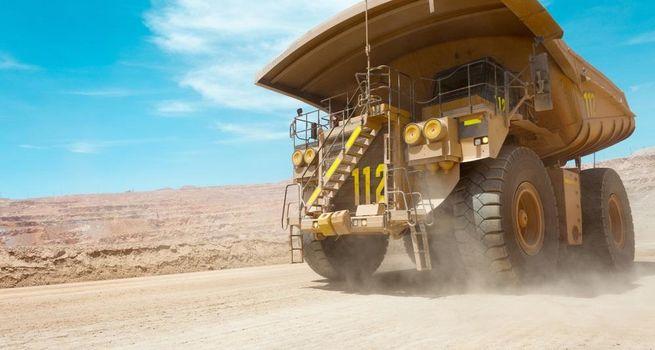
SQX Resources Ltd (ASX:SQX) is positioned as an Australian small-capitalisation resources company. Based on its naming convention, SQX operates within the junior exploration segment of the ASX — a category characterised by a focus on tenement acquisition, drilling, resource definition and staged project advancement.
SQX Resources ASX stock, like other early-stage explorers, has experienced share-price volatility reflecting both company-specific catalysts (exploration results, funding events) and sector-wide sentiment (commodity prices, risk appetite). Appearances on daily top-loser screens are not unusual for juniors, particularly around capital raises or broader risk-off moves.
For investors, ASX SQX sits at the high-risk, high-reward end of the equity spectrum — the kind of exposure that can deliver multiples of capital on discovery success, but also carries meaningful potential for dilution and disappointment.
Business Model and Operations
The typical small-cap explorer business model, which likely applies to SQX, centres on:
- Tenement portfolio: Holdings in prospective mineral provinces, secured through pegging, acquisition or joint venture.
- Exploration programs: Field mapping, geochemical sampling, geophysical surveys and drilling campaigns.
- Resource reporting: Progress from prospective targets to JORC-compliant resources.
- Study progression: Scoping study → prefeasibility study → definitive feasibility study.
- Corporate and financing: Ongoing equity raises, grants and potential strategic partnerships.
Small-cap explorers typically operate with lean head offices, outsource specialist drilling and technical work, and concentrate capital on field activity.
Industry Overview
SQX Resources likely operates in one or more of the following resource categories, each with its own macro context:
- Gold: Defensive haven asset, supported by central bank buying and geopolitical hedging demand.
- Battery metals (lithium, nickel, cobalt, graphite): Long-duration demand tied to electric-vehicle and grid-storage growth.
- Copper: A core beneficiary of electrification and infrastructure buildout.
- Rare earths and critical minerals: Strategic supply-chain diversification away from China.
- Uranium: Renewed nuclear momentum as part of decarbonisation agendas.
- Base metals (zinc, lead, tin): Industrial demand linked to construction and manufacturing cycles.
Australia remains one of the world's most supportive jurisdictions for exploration, with well-defined regulatory regimes and extensive geological databases — but permitting timelines and Native Title engagement require careful management.
Recent News and Market Movement
Market movement in ASX SQX — as with junior peers — is typically driven by:
- Drilling results: Assay outcomes, particularly from maiden drill programs, can cause significant price action.
- Tenement activity: New acquisitions, farm-ins and divestments.
- Exploration licences: Granting of permits, approvals or extensions.
- Capital raising: Equity placements and rights issues to fund programs.
- Director and substantial-holder changes: Insider trades often track sentiment.
- Sector rotation: Commodity-price swings drive broad moves in resource juniors.
During broad-based risk-off episodes, micro-cap resource stocks frequently appear on top-loser tables regardless of operational momentum.
Financial Performance and Key Metrics
A meaningful financial analysis of ASX SQX should focus on:
- Cash balance: Typically tracked in Appendix 5B filings for explorers.
- Quarterly cash burn: Splits between exploration, corporate and overhead spending.
- Runway: Months of operation at current burn without a new raise.
- Capital structure: Outstanding shares, options and performance rights.
- Tenement tenure: Licence expiry dates and renewal status.
- Recent raise pricing: Discounts and investor support indicate market confidence.
Juniors seldom have meaningful revenue; instead, progress is measured through exploration milestones and resource reporting.
Growth Opportunities
For SQX Resources, potential growth opportunities include:
- Discovery success: A maiden JORC resource can transform market capitalisation.
- Resource expansion: Incremental drilling that lifts tonnage or grade.
- Strategic partnerships: Farm-ins with larger companies, delivering capital and technical support.
- Commodity-price tailwinds: Rising underlying prices improve project economics and valuation.
- Corporate transactions: Potential M&A activity among juniors consolidating tenements.
Resource juniors that deliver cumulative, high-quality news flow tend to re-rate materially.
Risks and Challenges
Risks applying to any junior, including ASX SQX, include:
- Exploration failure: Drilling may not deliver economic resources.
- Funding risk: Ongoing need for equity issuance can dilute existing holders.
- Commodity volatility: Weak prices pressure project economics and sentiment.
- Liquidity risk: Thin trading can cause outsized moves both ways.
- Permitting and environmental approvals: Jurisdictional risk around timelines and community engagement.
- Operational execution: Managing drilling logistics in remote regions is non-trivial.
- Governance: Board composition, remuneration and disclosure quality matter.
Investors should weigh these risks against the potential upside of discovery.
Share Price Analysis
A share price analysis for ASX SQX should examine:
- Multi-year trend: Is the stock in a prolonged downtrend, range or early uptrend?
- Relative performance: Behaviour versus resource peers and relevant commodity indices.
- Volume patterns: Accumulation versus distribution phases.
- Drawdowns: Historical retracements post capital raise give context on typical volatility.
- Catalyst calendar: Upcoming drill results or study milestones.
Small-cap resource charts often exhibit sharp gaps around news events and quiet consolidation phases between catalysts.
Future Outlook and Forecast
The forecast outlook for SQX Resources depends primarily on:
- Results of ongoing or planned exploration programs.
- Commodity price trajectory in target metals.
- Ability to fund progression to feasibility stages.
- Management's track record of capital discipline and execution.
Upside scenarios involve delivery of meaningful resource or discovery outcomes and access to supportive capital. Downside scenarios involve persistent dilution, disappointing drill results or macro-driven commodity weakness.
Conclusion
SQX Resources Ltd (ASX: SQX) represents an investable theme in Australian junior resources, where disciplined selection and risk management are essential. Investors who allocate to speculative explorers typically do so as part of a diversified portfolio, recognising that outcomes vary widely.
For ASX SQX, the investment case depends on converting exploration opportunity into tangible resource definition and economic project outcomes. As always, prospective investors should verify the latest ASX announcements, consider suitability for their risk profile and consult a licensed adviser if in doubt.
Peer Comparison and Competitive Positioning
A thorough analysis of SQX Resources Limited ASX stock benefits from considering the company alongside peers operating in adjacent segments. SQX Resources is positioned as a junior explorer within Australia's robust mining-investment landscape, operating in a sector with strong support from geological databases, mature permitting frameworks and active capital markets.
Relevant peer benchmarks for ASX SQX include:
- ASX-listed junior explorers in the same commodity category.
- Broader ASX Small Resources index constituents.
- Mid-tier exploration and development peers for benchmarking.
- Global junior peers in equivalent geology.
- Diversified mining-focused ETFs for sector context.
Peer comparison is not about ranking companies definitively but about contextualising relative valuation, growth, balance-sheet health and execution track record. Investors should consider:
- Relative valuation multiples on revenue, earnings or resources.
- Growth rates and operating trends over comparable reporting periods.
- Strategic positioning within the broader sector ecosystem.
- Management execution track record and capital discipline.
- Liquidity and size relative to peers — smaller companies typically trade at a discount but offer higher torque to execution.
When making peer comparisons, care should be taken to normalise for differences in business mix, geography and stage of development. A peer with a similar reporting framework often provides the most accurate comparison.
Valuation Framework for Investors
Valuing SQX Resources Limited requires combining appropriate analytical frameworks. For ASX SQX, the following approaches are typically relevant:
- Market capitalisation per hectare of tenement and EV per ounce/tonne of inferred resource: Standard benchmarks for ASX resource juniors, alongside study-based valuations when applicable.
- Relative valuation: Compare key multiples against peer group medians.
- Scenario analysis: Develop base, upside and downside cases based on different operational outcomes.
- Sum-of-the-parts: Where the business has distinct segments with different economic characteristics, valuing each separately can highlight hidden value.
- Discounted cash flow (DCF): For companies with visible cash flows, DCF can anchor intrinsic value; for pre-revenue names, DCF assumptions can be speculative and should be stress-tested.
- Option-based valuation: For speculative exploration or early-stage technology companies, real-option thinking helps frame the convexity of potential outcomes.
No single valuation framework is sufficient; triangulating across approaches yields a more robust view. Investors should be transparent about their assumptions and continuously revisit them as new data becomes available.
Key Catalysts Calendar
Tracking forthcoming catalysts is central to both short-term trading and long-term investment in ASX SQX. Typical catalyst categories include:
- Drilling announcements and assay results.
- Geophysical and geochemical survey outcomes.
- Tenement acquisitions or JV agreements.
- Resource estimates and updates.
- Capital raises and strategic partnerships.
- Commodity-price movements in target metals.
Building a personal catalyst calendar — combining scheduled disclosures, industry events and peer reporting dates — can help investors anticipate volatility and position accordingly. Many specialist investors track quarterly disclosure dates, conference presentations and peer data as part of their information edge.
Investment Strategies and Investor Suitability
Different investor archetypes approach SQX Resources Limited ASX stock with different objectives:
- Speculative investors: Willing to underwrite discovery risk.
- Thematic investors: Interested in commodity-specific themes.
- Diversified small-cap investors: Include juniors as part of a broader basket.
- Short-term traders: React to drilling and capital raise events.
Regardless of archetype, position sizing, portfolio diversification and disciplined rebalancing are essential. Small-cap and mid-cap stocks in particular can deliver strong returns but with pronounced drawdowns; suitability depends on investor risk tolerance, time horizon and income needs.
Tax considerations — including franking credits where applicable, capital gains treatment and entity structure — should also inform investment decisions. Investors are encouraged to consult a qualified tax adviser for specific advice.
Trading Liquidity, Spreads and Execution
Practical considerations around trading SQX Resources Limited ASX stock include:
- Average daily turnover: Small-cap stocks often have relatively low turnover; large orders can move the market.
- Bid-ask spreads: Wider spreads increase implicit execution costs.
- Short-sale activity: Not always disclosed for smaller names, but aggregated short position data is available.
- Block trades and crossings: Large institutional prints can signal shifting positioning.
- Post-announcement volatility: Rapid moves in either direction often follow price-sensitive news.
Investors should consider using limit orders, time their execution to higher-liquidity windows, and avoid trading in thin after-hours markets where available. For large allocations, engaging a broker for a worked order or block cross can minimise impact costs.
Due Diligence Checklist
Before investing in ASX SQX, a disciplined due-diligence process should include:
- Review tenement maps and licence status.
- Assess the technical team's track record.
- Evaluate cash balance and funding plan.
- Benchmark against peer juniors on market cap, share count and runway.
- Consider commodity-specific price trends.
- Review governance and director shareholdings.
- Understand the exploration roadmap and expected milestones.
Due diligence is an ongoing process rather than a one-off checklist. Even high-conviction positions warrant periodic review as fundamentals, markets and strategy evolve.


 Nov 13, 2026





 Please wait processing your request...