
 CA
 NZ
 UK
 US
 IND

 AU

 Share
 X (Formerly Twitter)
 Whatsapp
 Facebook
 LinkedIn
 Telegram
 Email This Article
 Copy Link
 Summarize with AI
 Chat GPT
 Perplexity
Highlights:
- Rio Tinto delivered 9% year-on-year growth in copper equivalent production in Q1 2026, driven by a 9% increase in copper output supported by the continued ramp-up of Oyu Tolgoi in Mongolia, with Pilbara iron ore achieving its second highest Q1 production since 2018 at a 13% year-on-year improvement.
- The Simandou iron ore project in Guinea achieved a landmark milestone with the first full SimFer shipment of high-grade product successfully delivered to China, with first sales realised in April 2026 — marking the commercial debut of what is expected to become a globally significant high-grade iron ore Supply source.
- Both the Fenix 1B and Sal de Vida lithium projects achieved mechanical completion as planned in Q1 2026, with first production on track for the second half of 2026, while the company's $650 million annualised productivity programme was fully implemented by March 2026 with further improvements being pursued.
Rio Tinto Limited (ASX:RIO) shares were trading at AUD 187.48 on 15 May 2026, down 2.34% on the day, consistent with the broader S&Amp;P/ASX 300 Metals and Mining index which fell 2.72%. Over the preceding twelve months, RIO shares had gained approximately 56.20% — a performance that reflects both the favourable Commodity price environment and the market's progressive recognition of the Diversification and growth quality embedded in Rio Tinto's portfolio.
The Q1 2026 result is headlined by 9% year-on-year growth in copper equivalent production — a metric that captures the combined output across all commodities on a copper-equivalent basis and provides a single indicator of overall portfolio growth. This result reflects simultaneous improvement across copper, iron ore, and the continuing build-out of lithium capacity, while aluminium demonstrated operational resilience in managing weather-related bauxite disruptions through the strength of its integrated value chain. Full-year production and unit cost guidance was reaffirmed across all major commodities.
Copper: Oyu Tolgoi Drives Strong Year-on-Year Growth
Rio Tinto's copper production rose 9% year-on-year in Q1 2026, with the continued successful ramp-up of Oyu Tolgoi in Mongolia as the primary driver of Volume growth. Oyu Tolgoi is one of the world's largest and highest-quality copper-gold mines, and its underground operations — which represent the bulk of the resource — have been progressively ramping up following years of development and Investment. The Q1 2026 data confirms that the ramp-up trajectory is performing to plan, adding substantial copper volumes to Rio Tinto's portfolio at a time when the global copper price environment remains supportive.
Rio Tinto's copper unit cost guidance — C1 net unit costs for Kennecott, Oyu Tolgoi, and Escondida of US$0.65–0.75 per pound — positions the company's copper portfolio as a low-cost producer at the global scale. This cost position is particularly significant in the current environment, where rising energy and consumables costs are pressuring higher-cost producers, and it provides Rio Tinto with both Earnings resilience in downside scenarios and exceptional Margin capture in the current elevated price environment. Drilling at Resolution Copper — the joint venture between Rio Tinto (55% and operator) and BHP (45%) — is now underway following the completion of the land exchange in March, advancing what could become a generationally important copper resource in Arizona.
Iron Ore: Near-Record Pilbara Output Despite Cyclone Disruption
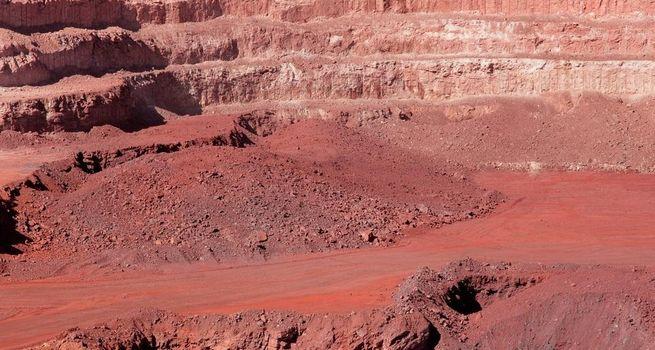
Rio Tinto's Pilbara iron ore operations delivered their second highest Q1 production since 2018 in the first quarter of 2026, with output up 13% year-on-year. Sales were up 2% year-on-year for the quarter. The Pilbara result is all the more notable given that tropical cyclones impacted shipments by approximately 8 million tonnes during the quarter, with around half expected to be recovered in subsequent periods. The ability to achieve near-record production despite this disruption speaks to the operational resilience and scale flexibility of the Pilbara system.
Unit cash cost guidance for Pilbara iron ore on a free-on-board basis remains at US$23.5–25.0 per wet metric tonne — a range that reflects Rio Tinto's cost Leadership position in the global seaborne iron ore market. The assumed Australian dollar Exchange Rate of 0.67 embedded in this guidance provides a natural hedge given that operating costs are largely incurred in Australian dollars while Revenue is denominated in US dollars. Any Australian dollar weakness relative to this assumption would provide a further tailwind to reported unit costs.
The Simandou iron ore project in Guinea achieved a historic milestone during the quarter, with the first full SimFer shipment of high-grade Simandou product successfully delivered to China, with first sales realised in April 2026. Simandou is one of the largest and highest-grade untapped iron ore resources in the world, and its entry into commercial production represents a significant addition to the global iron ore supply landscape. High-grade iron ore — which attracts premium pricing from steel mills seeking to improve blast furnace efficiency and reduce carbon intensity — is a product characteristic that differentiates Simandou from the mainstream Pilbara product and positions it for sustained Demand from quality-conscious steel producers.
Aluminium: Integrated Value Chain Absorbs Weather Disruption
Rio Tinto's aluminium division demonstrated what management describes as the 'strength and agility' of its integrated value chain during Q1 2026, as weather-related disruptions to bauxite operations were absorbed across the broader aluminium system spanning the Americas, Asia Pacific, and Europe. The vertical integration of Rio Tinto's aluminium Business — from bauxite mining through alumina refining to primary aluminium smelting — provides a structural buffer against point-in-time disruptions at individual stages of the production chain, enabling the business to maintain supply continuity to customers even when Upstream operations face temporary constraints.
The Middle East conflict context, referenced in Rio Tinto's Q1 update, has had limited direct operational impact on the aluminium business, with the vertically integrated and geographically diversified value chain providing security of supply. Diesel consumption of approximately 1.6 billion litres annually — around two-thirds in the Pilbara — represents an exposure to energy cost Inflation, but Rio Tinto's scale and global supply chain Leverage are cited as providing a resilient cost position despite higher fuel prices.
Lithium: Mechanical Completion Marks the Path to Production
Two of Rio Tinto's lithium projects achieved mechanical completion during Q1 2026 — Fenix 1B and Sal de Vida — with first production on track for the second half of 2026. These milestones represent the transition of Rio Tinto's lithium business from development to production, adding a third value-generating business alongside iron ore and copper. Lithium's role in battery technology — central to both electric vehicles and stationary energy storage — positions it as one of the most strategically important commodities in the global energy transition, and Rio Tinto's entry into commercial lithium production marks a significant expansion of the company's exposure to this structural demand theme.
The timing of the lithium ramp-up into a period of evolving market dynamics for battery materials will be closely watched by investors tracking Rio Tinto's diversification thesis. While lithium price Volatility has been a feature of recent years, Rio Tinto's management of the Fenix and Sal de Vida project timelines to mechanical completion as planned represents effective execution against a long-dated development schedule.
Productivity Programme: $650 Million in Annualised Benefits Implemented
By March 2026, Rio Tinto had implemented the initiatives contributing $650 million in annualised productivity benefits — a programme encompassing operational improvements, right-sizing of central functions, and streamlining of organisational and non-operational expenses. This productivity quantum, delivered on schedule, represents a meaningful structural reduction in the cost base that enhances the company's earnings resilience across commodity price cycles. Management has indicated that further significant improvements are now being pursued, focused on throughput, operating costs, and central costs, targeting additional benefits beyond the $650 million already embedded.
This productivity discipline is an important dimension of Rio Tinto's financial performance narrative that complements the volume growth story. Delivering production growth while simultaneously reducing per-unit costs creates compounding margin improvement and positions the company to generate superior returns through commodity cycles rather than relying purely on price tailwinds.
Share Price Performance and Market Context
RIO's 56.20% twelve-month share price appreciation on the ASX reflects a genuine re-rating driven by the combination of the copper growth story at Oyu Tolgoi, near-record Pilbara iron ore performance, Simandou's commercial debut, and the $650 million productivity programme. The 2.34% decline on 15 May is attributable to sector-wide selling pressure — the ASX Metals and Mining Index fell 2.72% on the same day — rather than any company-specific development. There are no price-sensitive company-specific updates today for Rio Tinto. The stock's performance remains closely correlated to iron ore and copper price movements, and the current commodity environment continues to provide a supportive backdrop for Rio Tinto's earnings and Cash Flow generation.
Conclusion
Rio Tinto's Q1 2026 production results confirm a company executing with operational discipline across its diversified portfolio while advancing multiple long-duration growth Options. The 9% copper equivalent production growth, near-record Pilbara iron ore output achieved despite cyclone disruption, Simandou's historic maiden shipment, lithium projects reaching mechanical completion, and the full implementation of the $650 million productivity programme collectively represent a substantive operational achievement. With full-year guidance reaffirmed and the Resolution Copper drilling programme underway, Rio Tinto enters the remainder of 2026 with a production outlook grounded in demonstrated Q1 performance and a Long-term Growth pipeline that spans copper, iron ore, lithium, and emerging new commodities.


 Nov 13, 2026





 Please wait processing your request...