
 CA
 NZ
 UK
 US
 IND

 AU

 Share
 X (Formerly Twitter)
 Whatsapp
 Facebook
 LinkedIn
 Telegram
 Email This Article
 Copy Link
 Summarize with AI
 Chat GPT
 Perplexity
Highlights
- Rio Tinto's 2025 full-year results showed net cash from operating activities of $16.8 billion (up 8%), Underlying EBITDA of $25.4 billion (up 9%), and Profit After Tax attributable to owners of $10.0 billion — with the results underpinned by operational excellence, disciplined cost management, and rising contributions from copper and aluminium that are progressively changing the company's commodity mix and earnings diversification profile.
- The ordinary dividend of $6.5 billion (a 60% payout ratio) marks the tenth consecutive year that Rio Tinto's dividend has been at the top end of its stated range — a remarkable consistency in capital returns that demonstrates the resilience of the underlying asset base across multiple commodity price cycles and the Board's confidence in the sustainability of the cash generation.
- Key 2025 project milestones include the completion of the Oyu Tolgoi copper underground development in Mongolia, the first shipment of high-grade iron ore from the Simandou project in Guinea in December 2025, the opening of the Western Range iron ore replacement mine in the Pilbara on time and budget, and the closing of the Arcadium lithium acquisition ahead of schedule — transforming Rio Tinto's commodity portfolio for the energy transition era.
Rio Tinto Limited (ASX:RIO) is in the midst of the most consequential portfolio renewal period in its recent corporate history. Simultaneously completing one of the world's most complex mining projects (Oyu Tolgoi underground copper in Mongolia), commissioning the first shipment of iron ore from what may become the world's largest and highest-grade iron ore mine (Simandou in Guinea), and acquiring one of the world's most significant lithium companies (Arcadium Lithium), Rio Tinto has undertaken in 2025 a set of transformative strategic commitments that will define its character as a company for the next two to three decades.
The financial results that accompanied this strategic activity were equally impressive. Underlying EBITDA of $25.4 billion for the full year 2025 — up 9% from 2024 — reflects operational excellence and disciplined cost management across the core Pilbara iron ore business while copper and aluminium's rising contributions add both absolute earnings and portfolio diversification. The 10% net cash generated from operating activities of $16.8 billion provides the financial foundation for the ongoing dividend, the organic growth pipeline, and the capital requirements of the newly acquired lithium business.
At A$161.620 on April 2, 2026, Rio Tinto's ASX-listed shares declined 3.273% in a session characterised by broader materials sector selling. The EODHD/Others consensus Hold rating with a target price of GBX 7024.22 (London Stock Exchange pence) reflects the dual-listed nature of Rio Tinto's equity — the company is listed on both the London Stock Exchange (as Rio Tinto Plc) and the ASX (as Rio Tinto Limited), with the two share classes trading with a small premium or discount to each other depending on relative market conditions. The GBX 7024.22 target price translates to an AUD equivalent that analysts consider broadly representative of fair value at current commodity price assumptions.
Financial Results: Nine Per Cent EBITDA Growth in Context
Underlying EBITDA of $25.4 billion for 2025 — compared to $23.3 billion in 2024 — represents 9% growth in the company's core operational earnings. The improvement was driven by the combination of higher commodity prices (particularly copper, which benefited from energy transition demand and supply-side constraints), improved operational performance across multiple assets, and the early contributions from recently completed projects including the Oyu Tolgoi underground and the Simandou first shipment.
The composition of the 2025 EBITDA is increasingly diversified compared to earlier periods when iron ore dominated. Rio Tinto's management specifically highlighted the 'rising contributions from copper and aluminium' as a key driver of the results — a characterisation that is consistent with the company's stated strategic ambition of building a more balanced commodity portfolio anchored by the energy transition metals that will drive long-term demand growth. Aluminium, which encompasses Rio Tinto's Pacific Aluminium and ISAL smelters alongside the Weipa bauxite mine in Queensland, has benefited from stronger aluminium prices and the company's continued focus on low-carbon aluminium production using renewable energy sources.
Profit after tax attributable to owners of $10.0 billion — a figure that crosses the symbolic double-digit billion threshold for the first time in recent reporting periods — reflects not just operational earnings but the contribution of lower finance costs, effective tax management within a complex multi-jurisdiction structure, and the absence of the significant impairment charges that have periodically depressed Rio Tinto's statutory results in prior years. The quality of the $10.0 billion profit is improved by its alignment with the underlying EBITDA trajectory rather than being inflated by one-off gains.
The Tenth Consecutive Top-of-Range Dividend: A Track Record Built on Asset Quality
The ordinary dividend of $6.5 billion — representing a 60% payout ratio — marks the tenth consecutive year that Rio Tinto's dividend has been declared at the top end of its stated 40-60% payout range. This consistency over a decade is a financial achievement that few mining companies of any size can match. It encompasses the iron ore price boom years of the early 2010s, the subsequent commodity price collapse, the recovery period, the COVID-19 disruption, and the post-pandemic price cycle — a range of market conditions against which Rio Tinto has consistently delivered top-of-range returns.
The durability of this dividend track record reflects the fundamental quality of the Pilbara iron ore business as the earnings backbone of Rio Tinto's portfolio. The Pilbara operations — which produce approximately 330 million tonnes of iron ore per annum at some of the lowest unit costs in the world — generate a level of cash flow that is sufficient to sustain top-of-range dividends even during periods of moderate iron ore pricing. Copper and aluminium earnings add supplementary cash flow that makes the payout even more sustainable during periods when iron ore prices are above the mid-cycle price assumption embedded in Rio Tinto's long-term planning.
The CEO's statement that the $6.5 billion dividend is 'making it the tenth consecutive year at the top end of the range' is both a factual statement and a clear signal of intent — management is publicly committing to a dividend standard that has been maintained through a decade of commodity market cycles. For income-focused investors in a global mining company, this consistency is a rare and genuinely valuable attribute that distinguishes Rio Tinto from peers who have reduced or suspended dividends during challenging market periods.
Oyu Tolgoi: A Decade in the Making, Now Complete
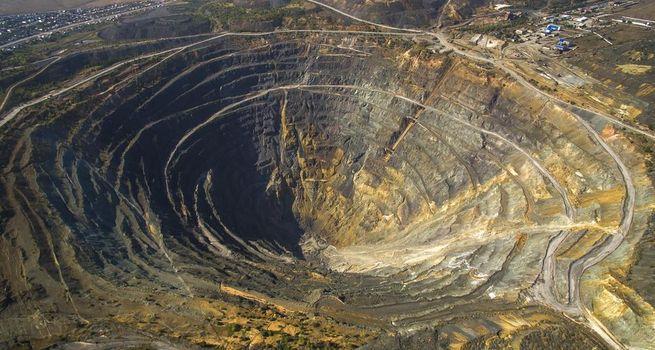
The completion of the Oyu Tolgoi copper underground development project in Mongolia in 2025 is the culmination of one of the most technically challenging and commercially contentious mining projects of the past decade. The project, developed through Turquoise Hill Resources (now fully owned by Rio Tinto following a 2022 acquisition) and the Mongolian state mining company Erdenes Oyu Tolgoi, involved the construction of a block cave underground mine beneath an existing open-pit copper-gold operation at elevations and in geological conditions that represented genuinely novel engineering challenges.
The underground development has been subject to repeated delays, cost overruns, and political negotiations with the Mongolian government over the terms of the investment agreement — all of which have been extensively documented and have weighed on Rio Tinto's share price at various points during the development period. The completion of the underground development removes the most significant single execution risk from Rio Tinto's project pipeline and transitions Oyu Tolgoi from a development asset (consuming capital without generating commensurate returns) to a producing asset whose underground throughput will ramp up toward its nameplate capacity over coming years.
Oyu Tolgoi is expected to become one of the top five largest copper mines in the world once the underground block cave reaches full production — a position that would add substantially to Rio Tinto's copper production profile and further increase the copper segment's contribution to Group earnings. The timing of this ramp-up — alongside BHP's Escondida expansion and other major copper projects globally — will be a significant determinant of the copper supply outlook for the late 2020s and early 2030s.
Simandou: Guinea's Iron Ore Giant Ships Its First Ore
The first shipment of iron ore from the Simandou high-grade iron ore project in Guinea in December 2025 is one of the most consequential events in the global iron ore industry in recent years. Simandou is widely acknowledged as the world's largest known iron ore deposit that has not yet been fully developed, and its potential to add very substantial volumes of very high-grade iron ore to the global supply balance has been a factor in iron ore market analysis for decades. Rio Tinto holds interests in Simandou's northern blocks through its joint venture partnership with the Guinean government and Chinese partners.
The significance of the first shipment is both symbolic and commercial. Symbolically, it confirms that what has been an extraordinarily complex, multi-decade development initiative — involving the construction of a 600+ kilometre railway through challenging West African terrain, a deepwater port at Morebaya Bay, and the mine infrastructure itself — is now a producing reality rather than a future aspiration. Commercially, the first shipment marks the beginning of a ramp-up period during which Simandou's production volumes will increase toward nameplate capacity, progressively adding to Rio Tinto's total iron ore shipments and to global supply.
The long-term implications of Simandou's development for the global iron ore market are complex. As a very high-grade deposit (over 65% Fe content), Simandou's product commands a significant price premium over the benchmark 62% Fe specification that underpins most market pricing. This premium positioning means that Simandou's iron ore, when fully ramped, competes most directly with Vale's Carajás premium fines rather than with lower-grade Australian material — a market segmentation that reduces the direct price impact on Rio Tinto's own Pilbara iron ore sales.
Arcadium Lithium: The Energy Transition Acquisition
The closing of the Arcadium Lithium acquisition ahead of schedule in March 2025 added one of the world's most significant lithium producers to Rio Tinto's portfolio — a transformative addition that positions Rio Tinto at the intersection of mining's established commodity base and the energy transition's critical materials demand. Arcadium, formed through the merger of Allkem and Livent, holds producing lithium operations in Argentina (LIEX and Olaroz brine extraction projects) and Canada (Nemaska Lithium spodumene), alongside a pipeline of development assets.
The acquisition is notable for its timing: lithium prices declined significantly from their 2022 peaks through the 2023-2024 period, and the Arcadium acquisition was completed at a price that reflected this cyclical price weakness. Rio Tinto's management has signalled a focus on 'delivering in-flight lithium projects in Argentina and Canada' — confirming that the near-term priority is executing on the development projects already within the Arcadium portfolio rather than pursuing further acquisitions.
Conclusion
Rio Tinto's 2025 full-year results demonstrate a company delivering on both its financial promises (ten consecutive years at the top of the dividend range, $25.4 billion EBITDA, $10.0 billion profit) and its strategic ambitions (Oyu Tolgoi complete, Simandou shipping, Arcadium acquired). The April 2, 2026 decline of 3.273% to A$161.620 reflects broader sector selling rather than company-specific deterioration — the underlying fundamentals of a company generating $16.8 billion in operating cash flow, declaring $6.5 billion in ordinary dividends, and completing the most ambitious capital programme in its recent history are not consistent with a narrative of weakness.


 Nov 13, 2026





 Please wait processing your request...