
 CA
 NZ
 UK
 US
 IND

 AU

 Share
 X (Formerly Twitter)
 Whatsapp
 Facebook
 LinkedIn
 Telegram
 Email This Article
 Copy Link
 Summarize with AI
 Chat GPT
 Perplexity
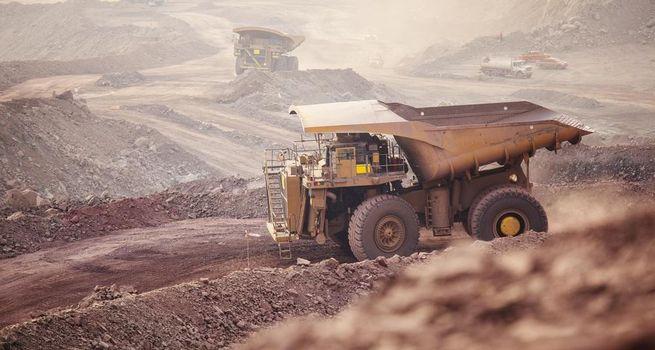
Resouro Strategic Metals Inc (ASX:RAU) is a dual-listed exploration and development company with a portfolio of critical-minerals projects, most notably in Brazil. The company has positioned itself as a rare-earth and titanium-focused junior, tapping into the accelerating global demand for permanent-magnet inputs (neodymium, praseodymium), heavy rare earths, and titanium feedstock used in pigments, aerospace and defence applications.
Resouro Strategic Metals ASX stock has seen the characteristic volatility of early-stage resource equities. Share-price moves have been driven by exploration updates, resource definition news, and swings in sentiment around rare-earths and critical-minerals pricing. As with most critical-minerals juniors, ASX RAU has appeared on daily top-loser screens at times, typically during broad-based sector de-risking or post-capital-raising.
For investors, RAU offers leveraged exposure to the critical-minerals theme — an area that has become central to Western strategic autonomy discussions, particularly in the context of China's dominant position across the rare-earths supply chain.
Business Model and Operations
Resouro Strategic Metals operates as an exploration-and-development company. Its operating model includes:
- Project acquisition: Securing prospective tenements in known rare-earth and titanium provinces.
- Exploration: Drilling programs, geophysics and geological modelling to define resources.
- Resource definition: Progressing from inferred to measured resources via JORC or equivalent codes.
- Technical studies: Scoping, prefeasibility (PFS) and definitive feasibility studies (DFS).
- Financing: Funding progress via equity raises, strategic partnerships, offtake advances, or government grants.
Key operational characteristics:
- Location: Brazilian focus, leveraging a well-established mining jurisdiction with rare-earth mineralogy.
- Project scale: Large land packages capable of supporting multi-decade project lives if economics stack up.
- Strategic optionality: Rare-earth, titanium and associated critical-mineral exposure.
Industry Overview: Critical Minerals and Rare Earths
The global rare-earth and critical-minerals sector has transitioned from niche commodity markets into a strategic priority for Western economies. Key industry dynamics include:
- Concentration of supply: China accounts for the majority of global rare-earth production and an even larger share of downstream processing.
- Demand growth: Electric vehicles, wind turbines, advanced robotics and defence systems all rely on NdFeB permanent magnets, which require neodymium, praseodymium, dysprosium and terbium.
- Titanium demand: Aerospace recovery, defence spend and premium pigments support multi-year demand growth.
- Policy support: Governments in the US, EU, Australia, Japan and Korea have introduced supply-chain incentives, tax credits and strategic partnerships.
- ESG and provenance: End users increasingly seek ethically and sustainably sourced inputs.
Within this environment, juniors such as Resouro Strategic Metals position themselves as future non-China suppliers. Success depends on resource scale, mineralogy (ease of processing), jurisdictional fit and execution.
Recent News and Market Movement
Recent commentary on Resouro Strategic Metals ASX stock has focused on:
- Drilling and resource updates: Progress at flagship Brazilian projects.
- Metallurgical work: Testing of processing routes and potential recovery rates.
- Strategic partnerships: Dialogue with potential offtakers or strategic investors.
- Capital raising cadence: Funding exploration and studies through periodic equity issues.
- Sector sentiment: ASX RAU tends to correlate with rare-earth peers such as Lynas, Iluka and smaller ASX-listed developers.
Volatility in the share price is expected given the pre-revenue stage; investors should track ASX announcements closely.
Financial Performance and Key Metrics
As a pre-production explorer-developer, traditional financial metrics give way to project-based indicators. Key metrics for ASX RAU include:
- Cash position and quarterly burn: Runway and funding adequacy.
- Exploration spend: Allocation and productivity of each drilling campaign.
- Resource size and grade: JORC-compliant tonnage, total rare-earth oxide (TREO) grades, heavy rare-earth split.
- Metallurgical recoveries: Critical determinant of project economics.
- Capital structure: Share count, options and performance rights.
- Corporate and G&A costs: Leanness of the executive structure.
- Study milestones: Progress toward scoping, PFS and DFS.
Each milestone that moves the project closer to production-readiness materially changes the investment thesis.
Growth Opportunities
Resouro Strategic Metals has multiple possible growth pathways that underpin a bull-case forecast:
- Resource scale-up: Continued drilling may expand and upgrade resource estimates.
- Metallurgical optimisation: Improvements in recovery and cost profile can enhance economics.
- Strategic partnerships: Offtake agreements or equity investments from downstream users, particularly magnet makers or titanium consumers.
- Government support: Eligibility for critical-minerals incentives in consumer jurisdictions (US, EU, Korea).
- M&A optionality: Consolidation among critical-minerals juniors could make high-quality assets takeover candidates.
Any combination of these can lift the forecast valuation of ASX RAU.
Risks and Challenges
A balanced analysis also identifies the risks that accompany a junior resource investment:
- Exploration risk: Grades, tonnages and mineralogy may not support a viable project.
- Metallurgical risk: Rare-earth flowsheets are notoriously complex; failures can sink projects.
- Commodity price risk: Rare-earth prices are volatile and influenced by Chinese policy.
- Financing risk: Studies and development capex require significant funding; dilution is likely.
- Permitting and ESG risk: Brazilian permitting processes have improved but remain a factor.
- Execution risk: Management must balance exploration, studies and corporate development.
- Market sentiment: Juniors are subject to rapid sentiment shifts, appearing on top-loser lists during risk-off phases.
Share Price Analysis
A disciplined share price analysis for ASX RAU blends technical and fundamental factors:
- Announcement-driven moves: Drilling and resource updates typically produce binary reactions.
- Capital-raise impact: Placements and rights issues commonly cause short-term share-price weakness.
- Sector correlation: RAU moves alongside peers; rare-earth ETFs and pricing indices provide useful context.
- Liquidity: Small-cap resource equities can gap significantly; position sizing is critical.
- Long-term chart: Investors should observe multi-year price behaviour against project progress.
Technical breakouts aligned with positive news flow can produce sustained trends, while breakdowns below key support often correlate with dilution or delay events.
Future Outlook and Forecast
The forecast outlook for Resouro Strategic Metals ASX stock depends on:
- Achieving resource expansion and grade confirmation across flagship projects.
- Progressing to a bankable feasibility study supported by favourable economics.
- Securing strategic partnerships or offtake agreements that de-risk financing.
- Constructive global rare-earth pricing trajectory.
- Continued policy support from Western consuming nations.
Upside cases envisage RAU emerging as a meaningful non-China rare-earths developer with strategic value. Downside cases involve resource disappointment, metallurgical hurdles or funding pressure.
Conclusion
Resouro Strategic Metals Inc (ASX: RAU) offers investors leveraged exposure to the critical-minerals theme, with a portfolio positioned in a prospective jurisdiction and mineralogy that aligns with structural Western demand. The investment case is classic junior-explorer: high-torque upside contingent on delivering resource definition and project economics, balanced by meaningful execution, funding and market risks.
Investors should position cautiously, track announcements closely and apply appropriate risk management given the stage and volatility of ASX RAU.
Peer Comparison and Competitive Positioning
A thorough analysis of Resouro Strategic Metals Inc ASX stock benefits from considering the company alongside peers operating in adjacent segments. Resouro operates in the critical-minerals space, a sector characterised by strategic national-security narratives, policy support, and episodic commodity-price volatility.
Relevant peer benchmarks for ASX RAU include:
- Lynas Rare Earths (ASX: LYC) — established non-China rare-earth producer.
- Iluka Resources (ASX: ILU) — mineral sands with rare-earth refining ambitions.
- Arafura Rare Earths (ASX: ARU) — developer with a major Northern Territory project.
- Hastings Technology Metals (ASX: HAS) — rare-earth developer.
- Global peers including MP Materials (NYSE: MP) and Neo Performance Materials (TSX: NEO).
Peer comparison is not about ranking companies definitively but about contextualising relative valuation, growth, balance-sheet health and execution track record. Investors should consider:
- Relative valuation multiples on revenue, earnings or resources.
- Growth rates and operating trends over comparable reporting periods.
- Strategic positioning within the broader sector ecosystem.
- Management execution track record and capital discipline.
- Liquidity and size relative to peers — smaller companies typically trade at a discount but offer higher torque to execution.
When making peer comparisons, care should be taken to normalise for differences in business mix, geography and stage of development. A peer with a similar reporting framework often provides the most accurate comparison.
Valuation Framework for Investors
Valuing Resouro Strategic Metals Inc requires combining appropriate analytical frameworks. For ASX RAU, the following approaches are typically relevant:
- EV per tonne of contained TREO (Total Rare Earth Oxides): A standard benchmark for rare-earth explorers, alongside in-ground resource valuation and study-based NPV metrics.
- Relative valuation: Compare key multiples against peer group medians.
- Scenario analysis: Develop base, upside and downside cases based on different operational outcomes.
- Sum-of-the-parts: Where the business has distinct segments with different economic characteristics, valuing each separately can highlight hidden value.
- Discounted cash flow (DCF): For companies with visible cash flows, DCF can anchor intrinsic value; for pre-revenue names, DCF assumptions can be speculative and should be stress-tested.
- Option-based valuation: For speculative exploration or early-stage technology companies, real-option thinking helps frame the convexity of potential outcomes.
No single valuation framework is sufficient; triangulating across approaches yields a more robust view. Investors should be transparent about their assumptions and continuously revisit them as new data becomes available.
Key Catalysts Calendar
Tracking forthcoming catalysts is central to both short-term trading and long-term investment in ASX RAU. Typical catalyst categories include:
- Drilling results and resource upgrade announcements.
- Metallurgical test work outcomes.
- Scoping, prefeasibility and definitive feasibility studies.
- Offtake agreements or strategic partnerships.
- Major capital raises or government co-investment.
- Brazilian permitting milestones.
Building a personal catalyst calendar — combining scheduled disclosures, industry events and peer reporting dates — can help investors anticipate volatility and position accordingly. Many specialist investors track quarterly disclosure dates, conference presentations and peer data as part of their information edge.
Investment Strategies and Investor Suitability
Different investor archetypes approach Resouro Strategic Metals Inc ASX stock with different objectives:
- Thematic investors: Attracted to critical-minerals supply-chain narratives.
- Speculative investors: Comfortable with exploration-stage risk.
- Commodity-focused traders: Respond to rare-earth price moves.
- Strategic investors: Evaluate RAU within a broader critical-minerals basket approach.
Regardless of archetype, position sizing, portfolio diversification and disciplined rebalancing are essential. Small-cap and mid-cap stocks in particular can deliver strong returns but with pronounced drawdowns; suitability depends on investor risk tolerance, time horizon and income needs.
Tax considerations — including franking credits where applicable, capital gains treatment and entity structure — should also inform investment decisions. Investors are encouraged to consult a qualified tax adviser for specific advice.
Trading Liquidity, Spreads and Execution
Practical considerations around trading Resouro Strategic Metals Inc ASX stock include:
- Average daily turnover: Small-cap stocks often have relatively low turnover; large orders can move the market.
- Bid-ask spreads: Wider spreads increase implicit execution costs.
- Short-sale activity: Not always disclosed for smaller names, but aggregated short position data is available.
- Block trades and crossings: Large institutional prints can signal shifting positioning.
- Post-announcement volatility: Rapid moves in either direction often follow price-sensitive news.
Investors should consider using limit orders, time their execution to higher-liquidity windows, and avoid trading in thin after-hours markets where available. For large allocations, engaging a broker for a worked order or block cross can minimise impact costs.
Due Diligence Checklist
Before investing in ASX RAU, a disciplined due-diligence process should include:
- Review JORC resource statements for grade, tonnage and confidence categories.
- Assess metallurgical work and flowsheet viability.
- Analyse financial position and funding pathway.
- Consider jurisdictional risks and permitting regime.
- Benchmark EV per tonne against peer critical-minerals developers.
- Evaluate management's track record in project development.
- Monitor rare-earth price dynamics and contracted pricing trends.
Due diligence is an ongoing process rather than a one-off checklist. Even high-conviction positions warrant periodic review as fundamentals, markets and strategy evolve.


 Nov 13, 2026





 Please wait processing your request...