
 CA
 NZ
 UK
 US
 IND

 AU

 Share
 X (Formerly Twitter)
 Whatsapp
 Facebook
 LinkedIn
 Telegram
 Email This Article
 Copy Link
 Summarize with AI
 Chat GPT
 Perplexity
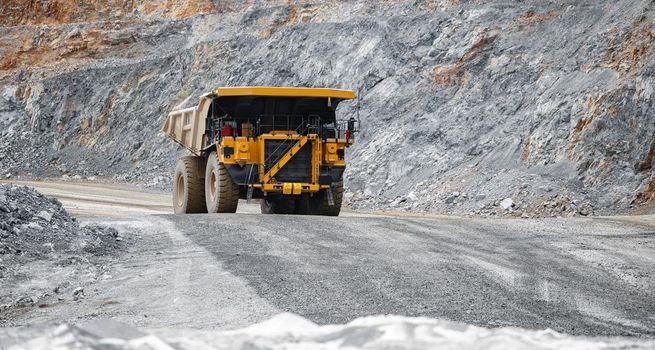
Redstone Resources Limited (ASX:RDS) represents one of the more speculative opportunities in the Australian micro-cap exploration sector, trading at just 0.003 AUD with a market capitalization of approximately 3.69 million AUD. As a Perth-based mineral exploration company focused on copper, nickel, and platinum group element discoveries, Redstone operates in one of the most volatile and risk-intensive segments of the mining industry. This comprehensive Redstone Resources stock analysis examines whether RDS presents a viable investment opportunity or a cautionary tale about the challenges facing junior explorers in today's resource markets.
The company's primary focus centers on the West Musgrave copper-nickel project located in Western Australia, alongside Canadian exploration properties. With earnings declining by 33.1% annually over the past five years and zero analyst coverage, Redstone exemplifies the challenges confronting early-stage mining explorers that have yet to establish commercial production. The stock's current technical signals show overwhelmingly bearish momentum, with the 52-week trading range of 0.002 to 0.007 AUD reflecting the extreme volatility and illiquidity characteristic of stocks in this market segment.
This is RDS a good buy analysis will explore multiple dimensions of the company's investment thesis, including its geological assets, financial position, management strategy, market conditions, and competitive landscape. Whether you're a seasoned commodities investor, a speculative trader seeking undervalued exploration upside, or someone curious about the copper exploration sector, this Redstone Resources stock analysis provides the comprehensive framework necessary to make informed investment decisions. The article addresses both bull and bear cases, examines intrinsic valuation metrics, and provides forward-looking perspectives on the company's RDS future outlook across various market scenarios.
Company Overview: Understanding Redstone Resources Limited
Redstone Resources Limited operates as an independent mineral exploration company with a clear strategic focus on discovering and developing base metal and precious metal deposits. Established and headquartered in Perth, Western Australia, the company benefits from proximity to world-class mining infrastructure and regulatory frameworks that support mineral exploration. The company's operational footprint spans two primary geographic regions: Western Australia and Canada, diversifying its exploration exposure across different jurisdictional landscapes.
The flagship asset, the West Musgrave copper-nickel project located in Western Australia's remote interior, represents the company's primary value driver. This exploration property encompasses substantial land packages with significant geological potential based on historical prospecting data and regional mineralization patterns. The West Musgrave district has historically attracted major mining companies' attention due to its intrinsic mineral endowment and structural geology favorable for base metal accumulation.
Redstone's corporate structure reflects the typical formation of junior explorers, with a small team of specialized geologists, engineers, and finance professionals focused on advancing exploration programs through carefully managed capital deployment. The company operates with minimal overhead compared to mid-tier mining companies, prioritizing field exploration spending and property evaluation over administrative infrastructure. This lean operational model is common among early-stage explorers seeking to maximize direct exploration expenditure as a percentage of total capital resources.
The company's shares trade on the Australian Securities Exchange (ASX) under the ticker RDS, providing regulated market access and institutional investment mechanisms. The ultra-low share price of 0.003 AUD reflects the extreme micro-cap status, with average daily trading volumes typically measured in hundreds of thousands of shares rather than millions. This liquidity profile creates significant challenges for institutional investors and presents considerable execution risk for retail traders attempting to establish or exit substantial positions.
Redstone's stated mission centers on discovering significant mineral deposits capable of supporting economically viable mining operations. The exploration model relies on combining geological expertise, systematic property evaluation, and strategic partnerships or joint ventures to advance early-stage prospects into development stage assets. Success in exploration requires patience, sustained capital availability, and fortunate timing in commodity price cycles.
Business Model Breakdown: How Redstone Resources Generates Value
Redstone Resources operates within the mineral exploration business model, a fundamentally different economic framework from producing mining companies. Understanding this model is essential for evaluating the Redstone Resources stock analysis and its RDS future outlook. Exploration companies like Redstone do not generate revenue from mine operations; instead, they create shareholder value through discovery of economically viable mineral deposits that subsequent development or strategic transactions can monetize.
The fundamental business model involves acquiring prospective exploration licenses, conducting geological surveys and drilling programs to delineate mineral resources, and advancing promising prospects toward development stage. Revenue generation occurs primarily through three mechanisms: (1) discovery and sale of mineral properties to larger mining companies, (2) joint ventures or strategic partnerships where larger companies fund exploration in exchange for participation rights, and (3) in rare cases, development and operation of discovered deposits. For junior explorers like Redstone, discovering an economically viable deposit can justify valuations many multiples higher than current levels, creating exceptional upside potential for early investors.
Redstone's current business model emphasizes copper, nickel, and platinum group element exploration, reflecting current commodity market dynamics and the company's geological expertise. Copper exploration holds particular appeal given global renewable energy transition demands, with copper consumption expected to rise significantly as electrification accelerates worldwide. The West Musgrave copper-nickel project aligns with this strategic positioning, targeting commodities with structural supply-demand tailwinds over the coming decade.
Capital deployment strategy represents a critical component of Redstone's business model. The company must carefully allocate limited shareholder capital to maximize geological learning and discovery potential while preserving capital adequacy for operational continuity. This requires disciplined project prioritization, staged drilling programs, and strategic partnerships to leverage external capital for exploration funding.
The exploration model's economics differ fundamentally from producing operations. Instead of steady cash flows from mine operations, exploration companies experience episodic capital outflows (drilling programs, surveys, assays) followed by occasional transformational inflows if significant discoveries occur or property sales materialize. This creates extreme uncertainty in cash requirements and timing, necessitating access to capital markets or strategic partnerships for financial sustainability.
Redstone's success metrics focus on geological outcomes rather than financial metrics like earnings or cash flow. Key performance indicators include mineralized resource discovery, ore grade improvements, resource expansion, and technical de-risking of exploration properties. Successful exploration companies typically demonstrate progressive advancement of projects toward definable mineral resources qualifying for preliminary economic assessment studies.
Industry and Market Analysis: The Copper Exploration Sector
The copper exploration and development sector operates within a complex ecosystem shaped by commodity price cycles, mining finance availability, regulatory frameworks, and global supply-demand fundamentals. Analyzing Redstone Resources within this context provides essential perspective for this is RDS a good buy evaluation and RDS future outlook projections.
Copper market fundamentals present compelling long-term supply-demand dynamics. Global copper demand is accelerating due to electrification of transportation, renewable energy infrastructure development, and emerging market urbanization. The International Energy Agency estimates copper demand could increase 50% or more through 2040 relative to 2020 levels under climate transition scenarios. This structural demand growth should benefit copper explorers significantly if they can advance projects during favorable commodity price environments.
However, exploration sector dynamics depend critically on mining finance availability and investor risk appetite for early-stage exploration ventures. During strong commodity bull markets with elevated prices, capital flows readily into exploration programs, enabling junior explorers to fund aggressive discovery programs. Conversely, commodity downturns and depressed metal prices create severe capital constraints, forcing many explorers into capital raising exercises dilutive to existing shareholders or even insolvency. The current macro environment presents mixed signals, with copper prices trading in moderate ranges following recent volatility.
The Australian exploration sector specifically benefits from world-class geological endowment, established mining infrastructure, skilled technical workforce, and stable regulatory frameworks. Western Australia particularly concentrates mineral exploration activity given its exceptional mineral resources and mining heritage. Redstone's geographic positioning in Western Australia provides advantages relative to explorers operating in less-developed jurisdictions.
Competition within the exploration sector intensifies as larger mining companies accumulate substantial exploration portfolios and junior explorers proliferate seeking discovery opportunities. Successful junior explorers differentiate through exceptional geological teams, strategic property positions in prospective regions, and partnerships enabling capital leverage. Redstone competes for investor capital, exploration personnel, and partnership opportunities within a crowded field of junior exploration companies pursuing similar commodities across multiple global regions.
Regulatory and environmental considerations increasingly influence exploration sector dynamics. Indigenous land rights, environmental permitting requirements, and community stakeholder engagement create additional complexity and timing risk for exploration programs. Western Australian projects benefit from relatively stable regulatory frameworks, though community consultation requirements and environmental impact assessments remain necessary for program advancement.
Mergers and acquisition activity within the exploration sector occurs when larger mining companies identify attractive acquisition targets. Redstone's value proposition to potential acquirers depends on the West Musgrave project demonstrating meaningful copper-nickel potential and resource delineation sufficient to justify acquisition economics. The exploration sector's M&A dynamics reward successful discoverers handsomely while many explorers ultimately prove unsuccessful.
Why Is Redstone Resources Trading Near All-Time Lows? Market Analysis
Redstone Resources' current trading price of 0.003 AUD, approaching all-time lows within the 52-week range of 0.002 to 0.007 AUD, reflects multiple converging challenges specific to the company and broader exploration sector dynamics. Understanding these factors provides critical context for evaluating this Redstone Resources stock analysis and the RDS future outlook.
First, fundamental exploration company challenges directly impact valuation. Exploration companies generate no revenue from ongoing operations, instead consuming capital on drilling programs and surveys with uncertain outcomes. This unique business model creates inherent valuation challenges—shareholders fund exploration activities with speculative probability of discovery-driven returns. When discoveries fail to materialize or delays occur, valuations compress rapidly as investor conviction deteriorates.
Second, Redstone's financial metrics present obvious challenges. With earnings declining 33.1% annually over five years and losses exceeding revenue, the company demonstrates the typical junior explorer profile of consistent cash burn with no path to profitability without major discoveries. Zero analyst coverage further reduces informational liquidity and institutional investor interest. Most institutional investors avoid micro-cap exploration stocks due to liquidity constraints and research costs exceeding available resources.
Third, technical market signals show overwhelmingly bearish momentum. The stock's downward trajectory from the 52-week high of 0.007 AUD to current 0.003 AUD levels indicates consistent seller pressure outmatching buyer interest. Ultra-low absolute prices create psychological deterrence among retail investors who often perceive penny stocks as inherently speculative or problematic, regardless of fundamental merit. The 50% volatility metric further reflects uncertainty and risk aversion.
Fourth, capital dilution concerns weigh on investor sentiment. Junior explorers typically require periodic capital raises through equity offerings to fund operations, inherently diluting existing shareholders. Dilution concerns depress valuations for companies with limited cash reserves and ongoing capital requirements, particularly when commodity prices remain moderate rather than exceptionally strong.
Fifth, macro commodity market conditions influence investor appetite for exploration equities. While copper benefits from structural demand tailwinds, mid-cycle pricing environments don't generate the exploration funding enthusiasm observed during strong bull markets. Current commodity price ranges create uncertainty about exploration program funding availability, potentially constraining Redstone's advancement pace.
Sixth, exploration drilling results appear to have disappointed market expectations during recent periods. Exploration outcomes from West Musgrave or Canadian properties may have failed to demonstrate the resource scale or grade quality necessary to justify significant project economics, deterring investor optimism.
Finally, the micro-cap liquidity profile creates a vicious cycle. Ultra-low trading volumes and minimal analyst coverage reduce information flow, limiting institutional investor participation. This restriction to retail and deep-value speculators concentrates investor base among participants with limited capital, reducing overall demand and supporting lower valuations. The combination of poor technical signals, lack of discoveries, minimal analyst coverage, and micro-cap illiquidity creates a self-reinforcing negative valuation spiral.
Financial Analysis: Examining Redstone Resources' Financial Position
Analyzing Redstone Resources' financial metrics provides quantitative foundations for this is RDS a good buy evaluation. The company's financial profile reflects typical characteristics of early-stage mineral explorers with limited revenue and ongoing capital requirements.
Earnings metrics present clear challenges. With negative earnings per share (EPS) of -0.00 AUD and declining earnings trajectory of 33.1% annually over five years, Redstone demonstrates consistent losses reflecting exploration expenditures exceeding revenue generation. The exploration business model inherently produces negative earnings during the discovery phase—shareholders fund exploration activities expecting future discovery-driven value creation rather than current profitability.
Market capitalization of 3.69 million AUD reflects the micro-cap status. For context, this valuation represents minimal absolute capital, suggesting limited resources available for exploration funding. The market values the company's West Musgrave and Canadian properties at approximately 3.69 million AUD, implying modest expectations for discovery potential or project advancement probability.
Share price volatility of 50% indicates extreme price variability and risk. This volatility reflects the speculative nature of exploration equities and thin trading volumes where modest volume swings can generate substantial percentage price movements. For investors, 50% volatility implies genuine potential for significant price appreciation or depreciation within relatively short timeframes.
The 52-week trading range of 0.002 to 0.007 AUD demonstrates significant price pressure throughout the year. The three-and-a-half-fold difference between high and low prices illustrates the magnitude of sentiment shifts concerning the company's prospects. Current prices near the low end suggest persistent negative sentiment among remaining market participants.
Cash position represents a critical metric for exploration companies. With minimal market capitalization and ongoing exploration costs, Redstone likely maintains limited cash reserves, creating ongoing capital requirements and dilution risks. Detailed cash flow analysis requires access to the company's latest quarterly or annual reports, but the micro-cap market capitalization suggests cash adequacy measured in months rather than years at current expenditure rates.
Debt obligations, if any exist, represent another important consideration. Some explorers carry debt from prior financing arrangements, creating additional financial obligations beyond shareholder capital. The company's balance sheet structure requires examination to assess financial leverage and obligations maturity profiles.
Book value analysis presents challenges for exploration companies. Unlike producing operations with tangible asset bases and equipment value, exploration company balance sheets primarily contain intangible exploration properties with uncertain commercial viability. Book value metrics therefore provide limited investment insight for pre-revenue explorers.
Price-to-book ratios, earnings multiples, and other traditional valuation metrics possess minimal relevance for exploration companies without revenue or profits. Instead, exploration company valuation relies more on geological asset evaluation, management credibility, cash runway, and probabilistic discovery potential assessments rather than conventional financial ratios.
Key Risks and Challenges Facing Redstone Resources
Investing in Redstone Resources involves substantial risks that potential investors must carefully consider. This risk analysis forms a critical component of comprehensive Redstone Resources stock analysis and realistic RDS future outlook assessment.
Exploration risk represents the fundamental challenge. Exploration companies face inherent uncertainty regarding mineral discovery prospects. Despite professional geological work and scientific methodology, exploration remains probabilistic with many programs failing to identify economically viable deposits. Redstone's success depends on West Musgrave or Canadian properties containing copper-nickel deposits of sufficient scale and grade to justify commercial mining development. Historical exploration success rates across the industry show that the majority of exploration programs fail to achieve economically significant discoveries.
Capital requirements and dilution risk create ongoing challenges. Redstone requires continuous capital deployment for exploration activities. With limited market capitalization and presumably modest cash reserves, ongoing capital needs will likely necessitate equity offerings that dilute existing shareholders' ownership percentages. Each capital raise further dilutes existing shareholders and establishes a lower entry price floor for new investors, creating valuation pressure.
Commodity price risk significantly impacts exploration economics. While copper fundamentals appear favorable structurally, commodity prices fluctuate significantly. Prolonged copper price weakness could devastate exploration sector funding, forcing Redstone to curtail programs or seek partnerships on unfavorable terms. Commodity price dependency creates macroeconomic exposure beyond the company's control.
Liquidity risk presents substantial challenges for existing shareholders. With average daily trading volumes measured in hundreds of thousands of shares and microscopic bid-ask spreads, exiting substantial positions may prove difficult without significant price concessions. Market depth limitations mean even modest selling pressure could generate substantial percentage price declines.
Management execution risk addresses whether Redstone's management team can successfully navigate exploration complexity and capital constraints. Experienced geological teams possess significant advantages, but even talented management cannot overcome unfavorable geology. Management track records, industry relationships, and strategic decision-making quality directly impact outcomes.
Regulatory and permitting risk encompasses indigenous land rights consultation, environmental impact assessments, and community engagement requirements. Western Australia's regulatory framework is stable, but project advancement timelines can extend substantially due to permitting requirements or stakeholder consultation obligations.
Partnership or joint venture risk emerges if Redstone pursues strategic partnerships to fund exploration. Partnership terms could prove unfavorable, requiring excessive stake dilution for funding access. Alternatively, potential partners may withdraw support if exploration results disappoint.
Geological risk extends beyond resource discovery to resource assessment accuracy. Even successful exploration programs may identify resources that prove uneconomical due to depth, grade variability, or mining complexity. Resources defined during exploration don't guarantee economic viability.
Finally, financing risk threatens operational continuity. If Redstone cannot access capital markets for funding, the company faces potential insolvency absent significant capital injections or successful partnerships. Share price depression could make equity financing prohibitively expensive on existing shareholder terms.
Growth Opportunities and Discovery Potential for RDS
Despite substantial risks, Redstone Resources possesses meaningful growth potential if exploration programs achieve success. This section addresses bull case scenarios supporting the RDS future outlook optimism.
West Musgrave copper-nickel project potential represents the primary growth opportunity. Historical exploration data and regional geological understanding suggest the West Musgrave district contains prospective copper-nickel mineralization. If Redstone's drilling programs delineate significant copper-nickel deposits comparable to world-class operations, the discovery could justify dramatic valuation increases. Even modest resource definitions (hundreds of thousands of tonnes of contained copper) could establish mine development prospects supporting substantially higher equity valuations.
Copper market fundamentals support exploration upside. Global copper demand is accelerating due to renewable energy infrastructure investment and electrification trends. Should commodity prices strengthen significantly above current levels, exploration sector funding availability improves dramatically. Strong copper prices would simultaneously enhance project economics by reducing required ore grades for mine viability.
Nickel recovery prospects also support growth. Nickel demand is expanding given battery material requirements for electric vehicles. If West Musgrave deposits contain commercial-grade nickel mineralization alongside copper, the project gains additional value. Diversified metal production enhances economic resilience and project attractiveness.
Platinum group element exploration adds supplementary upside. Platinum and palladium command premium prices in industrial applications, catalytic converters, and jewelry. If Redstone's Canadian properties or Australian assets contain meaningful PGE mineralization, additional value streams emerge beyond copper-nickel.
Strategic acquisition potential exists if major mining companies identify West Musgrave as strategically valuable. Large miners routinely acquire junior exploration companies for property portfolios, particularly if early-stage exploration suggests significant potential. Acquisition premiums can generate exceptional returns for early shareholders if major mining companies covet the properties.
Joint venture partnerships provide alternative growth pathways. Larger mining companies fund junior explorer exploration programs in exchange for earning interests in successful projects. Partnership funding enables Redstone to accelerate exploration pace without proportional shareholder dilution from equity offerings.
Capital structure improvement opportunities exist. As Redstone potentially achieves exploration success, improved financial metrics and reduced capital requirements could attract higher valuations. Reaching resource definition stages enables more sophisticated valuation methodologies and institutional investor participation.
Resource expansion potential emerges as initial exploration establishes mineralization. Early-stage discoveries typically expand geographically as drilling delineates additional zones. Successful explorers routinely expand resource estimates as drilling progresses, supporting progressive valuation increases.
Marginal cost inflation could benefit discovery prospects. As production costs escalate for established mining operations, lower-grade deposits become economically viable. Redstone discoveries that appear marginal under current cost assumptions could become profitable if operating cost inflation persists.
Exploration success in Canadian properties could diversify value drivers beyond West Musgrave. Canadian projects benefit from established mining infrastructure, skilled labor pools, and stable regulatory frameworks. Success there would demonstrate management capability across diverse jurisdictions.
Management and Strategic Vision: Redstone Resources Leadership
Evaluating management quality and strategic vision represents an essential component of Redstone Resources stock analysis, particularly for early-stage explorers where management execution directly determines success or failure.
Management team composition focuses on technical geologists with mineral exploration expertise and finance professionals managing capital deployment. For exploration companies, geological credentials and discovery track records carry exceptional importance. Successful exploration managers have demonstrated ability to identify prospective property positions, design effective drilling programs, interpret geological data, and recognize discovery opportunities.
Strategic positioning emphasizes copper, nickel, and platinum group element exploration, aligning with favorable commodity market trends. This strategic focus suggests management recognizes structural demand tailwinds supporting these commodities. Concentration on West Musgrave rather than scattered exploration properties demonstrates disciplined capital allocation prioritizing flagship asset development.
Exploration methodology and technical approach influence exploration success probability. Systematic geological surveys, targeted drilling programs, and data integration platforms enable more efficient exploration. Modern explorers utilize advanced geophysical techniques, geochemical modeling, and geological interpretation to guide drilling programs. Redstone's operational approach determines exploration efficiency and probability of meaningful discoveries.
Capital allocation discipline affects shareholder value creation. Management decisions regarding exploration spending prioritization, partnerships, and financing mechanisms influence financial performance. Conservative capital deployment during weak commodity periods preserves shareholder capital, while aggressive exploration during strong markets maximizes discovery potential. Redstone's management must balance these competing objectives.
Communications strategy with investors and stakeholders shapes market perception. Transparent reporting of exploration results, realistic timeline communication, and honest assessment of project status build credibility. Conversely, overpromising or providing misleading guidance destroys investor trust and valuation support.
Land package acquisition strategy determines exploration property quality. Access to prospective mineral ground represents fundamental exploration company value. Management's ability to secure attractive property positions either through direct acquisition or partnerships influences long-term value creation potential. West Musgrave positioning suggests management secured meaningful exploration acreage in geologically prospective regions.
Partnerships and strategic relationships enable exploration acceleration. Industry relationships with major mining companies, government agencies, and service providers facilitate exploration advancement. Successful explorers leverage networks to optimize program execution and funding access.
Environmental and social responsibility management increasingly influences exploration viability. Indigenous land rights consultation, environmental impact mitigation, and community engagement require management attention. Poor stakeholder management can derail otherwise geologically promising projects, while excellent stakeholder relations facilitate smoother project advancement.
Geological expertise depth within management determines interpretation quality and decision-making sophistication. Deep exploration experience enables management to recognize subtle mineralization signals and design efficient drilling programs. Shallow expertise may result in inefficient exploration spending and missed discovery opportunities.
Overall, Redstone's management team viability requires assessment of individual credentials, prior exploration success, strategic decision quality, and stakeholder relationships. Limited publicly available information regarding management backgrounds constrains detailed analysis, highlighting the importance of direct company engagement for sophisticated investors.
Competitive Landscape: Redstone's Position Among Exploration Companies
Redstone Resources operates within a highly competitive exploration sector populated by numerous junior miners and mid-tier explorers pursuing similar commodity targets across multiple global regions. Understanding competitive positioning provides essential context for evaluating the company's prospects and RDS future outlook.
Competitor universe includes hundreds of junior exploration companies targeting copper, nickel, and PGE deposits globally. Competition for investor capital intensifies continuously as exploration companies proliferate and institutional investors maintain limited allocation to exploration equities. Redstone competes for attention, capital, and partnership opportunities against other explorers with potentially superior geological asset positioning, management teams, or funding.
Property positioning represents critical competitive differentiation. Explorers with access to geologically prospective regions containing multiple discovery targets enjoy advantages over explorers with single-property focus. Redstone's West Musgrave concentration provides strategic focus but limits geographic diversification compared to explorers with larger portfolios spanning multiple regions or countries.
Geological team strength and discovery track records enable competitive differentiation. Explorers with reputation for successful discoveries attract superior investment and partnership terms. Conversely, explorers with disappointing exploration histories face capital and partnership constraints. Redstone's competitive position depends on management's track record and industry reputation.
Capital access represents a significant competitive advantage. Well-capitalized explorers can fund aggressive exploration programs regardless of equity market conditions. Explorers facing capital constraints must curtail spending or accept dilutive equity financing. Redstone's limited market capitalization suggests restricted capital access relative to better-capitalized competitors.
Stakeholder relationships and regulatory reputation influence competitive standing. Explorers with positive government and community relationships secure permitting more efficiently and access cooperative development frameworks. Poor stakeholder relations create additional friction and delays for exploration advancement.
Partnership leverage provides competitive advantages. Explorers with strategic partnerships fund exploration programs without equity dilution. Redstone's partnership potential depends on project attractiveness to larger mining companies evaluating partnership opportunities.
Geographic diversification across favorable mining jurisdictions enhances competitive positioning. Explorers operating across multiple countries with stable mining frameworks diversify political and regulatory risk. Single-jurisdiction focus creates concentration risk if regulatory frameworks deteriorate or geopolitical conditions change unfavorably.
Technical innovation in exploration methodology enhances competitive advantage. Explorers utilizing advanced drilling techniques, remote sensing technologies, or novel geological interpretation approaches improve discovery probability. Redstone's technical approach competitiveness requires assessment of methodology sophistication.
Cost efficiency in exploration operations influences competitive position. Lower-cost explorers preserve capital longer and achieve more drilling per dollar spent than high-cost operators. Exploration cost structures depend on labor availability, fuel costs, and operational logistics in respective jurisdictions.
Scale provides certain competitive advantages. Larger explorers with multiple properties spread administrative overhead across larger project portfolios. Micro-cap explorers like Redstone operate with limited scale efficiencies and higher per-property administrative costs.
Redstone's competitive position appears modest relative to better-funded explorers with larger properties, stronger management reputations, or superior access to capital. However, discovery success could rapidly improve competitive standing through reputation establishment and partnership opportunities.
Future Outlook: Near-Term and Long-Term Perspectives for RDS
Projecting Redstone Resources' RDS future outlook requires considering multiple time horizons with varying probability assumptions and commodity scenarios. Near-term and long-term perspectives diverge significantly based on exploration success assumptions and macro commodity trends.
Near-term outlook (12-24 months) depends critically on exploration results from West Musgrave and Canadian properties. Upcoming drilling programs and assay results will substantially influence market sentiment. Positive metallurgical results or resource definition progress could support modest share price recovery. Conversely, disappointing results risk continued downward pressure. Capital availability represents another near-term consideration—ability to maintain exploration funding without severely dilutive equity raises supports continued program advancement.
Intermediate outlook (2-5 years) hinges on exploration success achievement and potential partnership formation. If exploration programs identify meaningful mineral resources, resource definition and preliminary economic assessment studies represent likely next steps. Resource definition requires substantial capital investment but generates more substantial valuation support through commercialization pathway clarity. Successful partnerships with major mining companies could accelerate development timelines and provide funding for advanced studies.
Long-term perspective (5+ years) depends on whether West Musgrave achieves development-stage classification. Mining development timelines extend across 5-10 year periods from resource definition to production. If Redstone progresses projects toward commercial development, shareholder value could increase substantially through development optionality and eventual production economics. Alternatively, if exploration fails to achieve resource definitions sufficient for development advancement, long-term returns could disappoint significantly.
Commodity price scenario analysis reveals RDS future outlook sensitivity. Bull case scenarios with sustained elevated copper prices improve project economics and exploration funding availability. Bear case scenarios with depressed copper prices constrain exploration funding and worsen development economics. Current commodity prices exist in moderate ranges, supporting cautious exploration activity but not aggressive expansion.
Technical analysis suggests oversold conditions at current price levels, raising potential recovery prospects from depressed valuations. However, oversold technical conditions alone don't guarantee recovery—fundamental exploration success remains necessary for sustainable price appreciation.
General mining sector sentiment influences RDS future outlook substantially. Positive mining sector sentiment attracts exploration sector capital inflows, supporting junior explorer valuations. Sector pessimism depresses exploration stocks regardless of individual company fundamentals. Macro sentiment regarding mining commodities remains mixed—copper fundamentals appear favorable while sector dynamics remain challenged.
Shift toward renewable energy and electrification provides long-term structural tailwinds for copper demand and exploration investment. However, these positive longer-term trends provide limited support for near-term capital deployment if commodity prices remain moderate.
Institutional capital flows toward exploration could improve meaningfully if broader market sentiment shifts toward exploration equities. Currently, exploration sectors trade with depressed valuations reflecting limited institutional interest. Sentiment restoration could support broader valuation expansion across exploration equities including Redstone.
Risk management considerations suggest that RDS future outlook remains highly uncertain. Exploration outcomes remain probabilistic, commodity prices fluctuate unpredictably, and capital market access cannot be guaranteed. Investors should approach RDS with realistic expectations regarding success probability and be prepared for scenarios where exploration disappoints and valuations decline further.
Bull Case vs. Bear Case: Contrasting Investment Perspectives
Comprehensive investment analysis requires understanding both optimistic and pessimistic scenarios. This bull versus bear case framework illuminates the central question: Is RDS a good buy?
Bull case rationale emphasizes discovery potential and commodity fundamentals. Supporters argue West Musgrave contains substantial copper-nickel deposits that early-stage exploration has underappreciated. Copper structural demand tailwinds from electrification and renewable energy expansion support long-term price strength. Successful discoveries could establish resource bases justifying mine development, supporting valuations many multiples higher than current levels. The stock trades at depressed valuations suggesting minimal discovery probability priced in, creating asymmetric risk-reward for investors accepting exploration risks.
Bull advocates note that exploration represents probabilistic opportunity—even modest success probability combined with exceptional upside for discovery cases justifies speculative positions. Management team experience and West Musgrave geologic prospectivity suggest meaningful discovery probability exceeds market-implied expectations. Capital requirements remain manageable relative to potential discovery value, suggesting efficient capital deployment for exploration programs. Low absolute share price enables retail investors to establish meaningful shareholding positions with modest capital, creating leveraged upside exposure.
Bull case investors highlight that micro-cap micro-cap status could enable dramatic valuation expansion if discoveries materialize or sentiment shifts. Small capital requirements for meaningful discovery revaluations create exceptional return potential for patient capital accepting exploration timelines and inherent uncertainty.
Bear case rationale emphasizes exploration failure risks and capital constraints. Critics argue that exploration companies statistically fail to achieve significant discoveries—success rates remain low and capital requirements exceed available resources for most explorers. Redstone's weak financial metrics, declining earnings trajectory, and limited analyst coverage suggest fundamental challenges that warrant skepticism regarding discovery probability.
Bear case investors point out that zero analyst coverage reflects institutional indifference—smart money apparently sees limited investment merit. The stock trades near all-time lows and has depreciated substantially, suggesting market participants increasingly doubt prospects. Capital constraints mean Redstone requires dilutive equity raises to fund ongoing exploration, further deteriorating shareholder economics.
Bear advocates argue that commodity prices remain moderate rather than strength, reducing exploration sector capital availability and funding economics. Exploration budgets contract during uncertain commodity environments, potentially constraining West Musgrave advancement pace. Poor technical signals showing consistent seller pressure indicate negative momentum unlikely to reverse absent transformational news.
Bear case emphasizes that exploration remains speculative—successful discoveries represent exceptions rather than rules within junior explorer populations. Statistically, capital deployed into exploration typically generates negative returns as unsuccessful programs dissipate shareholder capital without compensating discoveries.
Bear investors recommend avoiding speculative exploration stocks entirely or awaiting dramatic changes in fundamental circumstances before reconsidering. Current valuations may represent fair pricing for genuine risks rather than opportunities.
Objective analysis suggests that both cases contain merit. Bull case opportunity depends on exploration success probability assessment—if genuine discovery probability exceeds market expectations, valuation upside appears substantial. Bear case risks reflect statistical reality that exploration failure rates exceed success rates. Individual investor theses should reflect personal risk tolerance, conviction in management capability, and commodity market outlook positioning.
Conclusion: Investment Summary and Recommendations
This comprehensive Redstone Resources stock analysis examines the fundamental question: Is RDS a good buy at current 0.003 AUD valuations? The answer depends fundamentally on investor risk tolerance, investment thesis conviction, and return expectations.
Redstone Resources represents a speculative exploration opportunity within the copper-nickel exploration sector. The company possesses geologically prospective West Musgrave properties in a world-class mineral region. However, exploration success remains probabilistic and capital constrained. The stock trades at valuations reflecting substantial pessimism regarding discovery prospects, creating potential asymmetric return profiles if exploration succeeds. Yet statistical exploration failure rates suggest pessimism may reflect appropriate risk assessment rather than unwarranted negativity.
For investors with high risk tolerance, strong commodity convictions, and extended time horizons, Redstone may present acceptable speculative opportunities. The ultra-low absolute share price enables meaningful shareholding positions with modest capital deployment. If West Musgrave discoveries materialize, current valuations could prove dramatically undervalued, justifying exceptional returns for early investors. However, investors must be prepared for scenarios where exploration disappoints, valuations decline further, and shareholder capital deteriorates substantially.
For conservative investors seeking established earnings streams or stable dividend income, Redstone clearly presents excessive risk. Exploration companies produce no revenue or distributions during pre-discovery stages. Capital preservation concerns should discourage conservative investors from Redstone positions.
The RDS future outlook depends primarily on exploration success and commodity market dynamics. Near-term catalysts include exploration results from drilling programs—positive assay results or resource definition progress could support share price appreciation. Capital adequacy for ongoing exploration funding represents another critical consideration. Successful partnerships with major mining companies could provide development pathway clarity and funding access.
From a broader perspective, Redstone exemplifies the inherent challenges confronting junior mineral explorers in today's capital-constrained environment. Limited analyst coverage, micro-cap illiquidity, capital requirements, and exploration uncertainty converge to create substantial investment challenges. Successful explorers ultimately discover meaningful deposits, attracting partnerships and development pathways. Unsuccessful explorers deteriorate through shareholder capital dissipation and eventual insolvency.
For investors evaluating this is RDS a good buy question, comprehensive due diligence examining recent exploration results, management credentials, capital adequacy, and West Musgrave geology proves essential. Direct company engagement, geological report review, and management meetings provide insights unavailable through standard financial analysis.
Ultimately, Redstone Resources represents a high-risk, high-reward exploration opportunity suitable only for investors accepting exploration failure risks and capable of sustaining multi-year holding periods through uncertain exploration timelines. The stock's extreme micro-cap status, technical weakness, and lack of analyst coverage suggest mainstream investment inappropriateness. However, for sophisticated investors with conviction in exploration sector opportunities and management capability, the depressed valuation and discovery potential may warrant thoughtful position sizing consistent with risk tolerance.
Prospective shareholders should conduct thorough fundamental analysis, assess personal risk tolerance realistically, and position accordingly with position sizes reflecting genuine portfolio risk appetite rather than casual speculation.


 Nov 13, 2026





 Please wait processing your request...