
 CA
 NZ
 UK
 US
 IND

 AU

 Share
 X (Formerly Twitter)
 Whatsapp
 Facebook
 LinkedIn
 Telegram
 Email This Article
 Copy Link
 Summarize with AI
 Chat GPT
 Perplexity
Highlights
- Pilbara Minerals touched a 52-week high of AUD 6.38 during the 8 May 2026 Trading session, clostradinging at AUD 6.34 — representing a 328.04% gain over the past year.
- The company delivered record quarterly production of 232.4kt of spodumene concentrate in the March 2026 quarter, with the average realised price surging 61% to US$1,867/t (CIF China, approximately SC5.2 basis), equivalent to US$2,155/t on an SC6 basis.
- Cash increased 52% during the quarter to A$1,455 million, supported by the receipt of a US$100 million Canmax offtake prepayment, and March quarter Revenue rose 52% to A$567 million.
Pilbara Minerals (ASX:PLS) has staged one of the most compelling turnarounds in Australian Mining over the past twelve months. From the depths of a severe lithium price correction that saw the company's shares trade at deeply depressed levels, PLS has recovered to touch a fresh 52-week high of AUD 6.38 on 8 May 2026 — a level that represents a 328.04% gain over the prior year. The stock traded at AUD 6.34 at the time of writing, retreating 0.55% from the intraday high as investors locked in gains following the quarter's strong operational data.
This is not merely a recovery driven by speculative sentiment. The March 2026 quarterly results reveal a company firing on multiple operational cylinders simultaneously: record production, a 61% surge in realised pricing, a 52% increase in revenue, a cash balance exceeding A$1.4 billion, and FY26 guidance reaffirmed across all metrics. For a company that produces the single most important hard-rock lithium feedstock for the global battery Supply chain, these numbers represent a fundamental validation of the thesis that underpinned the original investor interest in the name.
Record Production: The Pilgangoora Machine
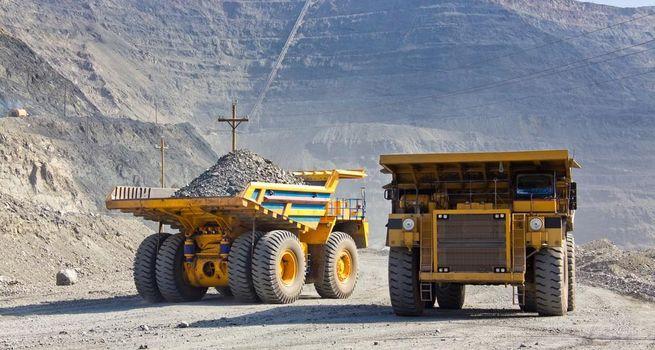
Pilbara Minerals owns 100% of the Pilgangoora Operation in Western Australia's Pilbara region — the world's largest independent hard-rock lithium operation. In the March 2026 quarter, the operation delivered record quarterly production of 232,400 tonnes of spodumene concentrate, a 12% increase on the prior quarter's 208,000 tonnes. On a year-to-date basis for FY26, production was 665,200 tonnes — up 25% on the equivalent period in FY25.
Unit operating costs (FOB) decreased 11% to A$520 per tonne (US$362/t) compared to the prior quarter, driven by the benefits of higher production volumes and capitalised waste. This is an important dynamic: as Pilgangoora scales up production, fixed costs are spread across more tonnes, and the operational learning curve produces measurable efficiency gains. The CIF unit operating cost of A$733/t reflects the additional shipping and logistics costs associated with delivering spodumene concentrate to Chinese converters.
The combination of record production and declining unit costs is the operational sweet spot for any mining company. It means that each additional tonne produced comes at a lower cost and sells at a higher price — the textbook definition of improving operational Leverage.
Pricing: The Crucial Variable
The most consequential data point in PLS's March 2026 Quarterly Report is the 61% increase in average estimated realised price to US$1,867 per tonne (CIF China, approximately SC5.2 basis) — equivalent to US$2,155/t on an SC6 basis. This represents a dramatic price recovery from the US$1,161/t realised in the prior quarter, reflecting an improvement in global lithium market dynamics that has been building through late 2025 and early 2026.
The pricing recovery has been the single most important driver of PLS's financial turnaround. March quarter revenue of A$567 million was 52% higher than the prior quarter's A$373 million, while the cash Margin from operations surged 178% to A$461 million. On a year-to-date FY26 basis, the average realised price of US$1,244/t (US$1,430/t SC6 equivalent) is 78% above the equivalent period in FY25, demonstrating how much of the company's Earnings recovery has been price-driven.
Looking further ahead, investors should note that spodumene pricing is inherently cyclical and subject to the pace of new lithium conversion capacity additions in China, the speed of electric vehicle adoption globally, and inventory build-and-drawdown cycles. The current pricing environment is constructive, but the history of the lithium market suggests that price Volatility remains an enduring feature of the sector.
Balance Sheet: A$1.455 Billion in Cash
One of the most underappreciated aspects of PLS's current position is the strength of its balance sheet. Cash increased 52% during the March 2026 quarter to A$1,455 million, including the receipt of a US$100 million Canmax offtake prepayment. Post quarter-end, the company completed a US$600 million senior unsecured notes issuance — a transaction that significantly strengthens funding flexibility and extends the Debt Maturity profile.
A cash balance of A$1.455 billion, combined with US$600 million in term notes, provides Pilbara Minerals with the financial architecture to fund its growth projects without Equity dilution and to weather future lithium price downturns from a position of strength. This balance sheet configuration distinguishes Pilbara Minerals from many of its global lithium peers and is a key reason why institutional investors have maintained confidence in the stock through the cycle.
Growth Projects: P2000, Colina, and Mid-Stream
Pilbara Minerals has several growth initiatives underway that could meaningfully expand its earnings base over the medium term. The P2000 project — an expansion of Pilgangoora toward 2 million tonnes per annum of ore processing capacity — and the Colina Lithium Project in Brazil are both progressing through feasibility study stages, with updated study timelines provided in the quarterly report.
A potentially transformative development is the Mid-Stream Demonstration Plant milestone achieved during the quarter. The company announced that its Mid-Stream JV had been restructured, with up to A$38.1 million in government grant funding secured, offtake executed, and commissioning commenced. The Mid-Stream initiative aims to produce a partially processed, higher-value lithium product — potentially lithium phosphate or similar — directly at site, capturing additional value in the supply chain beyond raw spodumene. If proven at demonstration scale, this technology could fundamentally alter Pilbara's product mix and revenue quality.
The company's joint venture with POSCO in South Korea, which manufactures battery-grade lithium hydroxide, provides further integration into the Downstream battery supply chain — a strategic hedge against pure spodumene price risk.
Conclusion
Pilbara Minerals' arrival at a 52-week high is the product of exceptional operational execution, a favourable lithium price recovery, and a balance sheet that has been structured to support both growth Investment and cyclical resilience. Record production, a 61% improvement in realised pricing, and a cash balance exceeding A$1.4 billion provide genuine fundamental support for the stock's position at current levels. The near-term variables to watch include the trajectory of spodumene pricing, the progress of the P2000 and Colina feasibility studies, and the performance of the Mid-Stream Demonstration Plant. PLS is, by any measure, operating from a position of considerable strategic strength.


 Nov 13, 2026





 Please wait processing your request...