
 CA
 NZ
 UK
 US
 IND

 AU

 Share
 X (Formerly Twitter)
 Whatsapp
 Facebook
 LinkedIn
 Telegram
 Email This Article
 Copy Link
 Summarize with AI
 Chat GPT
 Perplexity
Key Highlights
- Patagonia Lithium trades at $0.18 with stable price following strong technical update
- Well Six delivers up to 31% specific yield and 39% porosity, indicating strong aquifer quality
- Eight lithium brine zones identified below 88m depth across 462m profile
- Lithium concentration recorded at 412ppm, supporting project potential
- Simulated flow rate of 160,000 litres/hour highlights potential production capacity
Patagonia Lithium Ltd (ASX:PL3) has delivered a technically significant update from its Formentera Lithium Brine Project in Argentina, confirming strong aquifer characteristics and lithium-bearing brine across multiple zones. The results from Well Six provide detailed insight into reservoir quality, a critical factor in assessing the viability of lithium brine operations.
The stock is currently trading at $0.18, unchanged on the day, suggesting a measured market response. While the share price has not reacted sharply, the underlying technical data may have longer-term implications for project valuation, particularly as investors assess the quality of the brine system.
The announcement highlights key parameters such as porosity, specific yield, and flow potential—metrics that are central to lithium brine development. For investors, the focus is shifting toward whether these technical indicators can support a scalable and economically viable operation.
About the Company
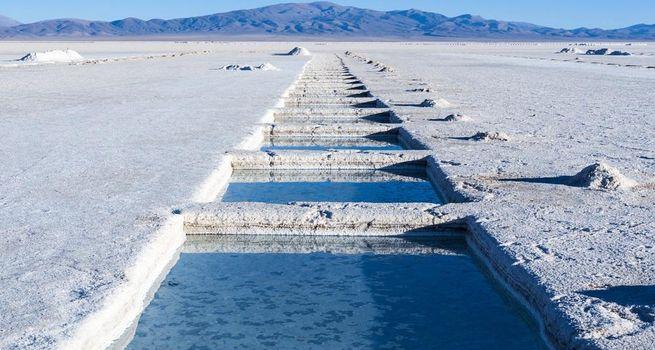
Patagonia Lithium Ltd (ASX:PL3) is an exploration company focused on lithium brine projects in Argentina, a region known for its significant lithium resources within the “Lithium Triangle.” The company’s primary asset is the Formentera Project, which targets lithium-rich brine systems hosted in subsurface aquifers.
The company’s strategy centres on advancing its projects through drilling, testing, and resource definition, with the goal of establishing a commercially viable lithium operation. As a junior explorer, Patagonia Lithium’s valuation is closely linked to exploration outcomes and technical results.
Argentina’s established lithium industry and favourable geology provide a supportive backdrop for the company’s activities.
Stock Price Context and Market Positioning
Patagonia Lithium is currently trading at $0.18, with no change on the day of the announcement. The lack of immediate price movement suggests that the market may be taking a cautious approach, focusing on the need for further validation.
In lithium exploration, particularly in brine systems, technical results such as porosity and flow rates are critical but often require additional drilling and testing to confirm economic potential.
For PL3, the current share price reflects its early-stage status, with future re-rating likely dependent on resource definition and development progress.
Well Six Results and Technical Significance
The results from Well Six provide a detailed understanding of the subsurface aquifer. The borehole magnetic resonance (BMR) survey and gamma logging identified eight distinct brine zones across a depth of 462 metres.
Porosity values averaged 22% across the interval, with a maximum of 39%, indicating a highly porous reservoir. High porosity is essential for lithium brine projects, as it determines the volume of fluid that can be stored and extracted.
Specific yield (Sy), which represents the recoverable portion of the fluid, averaged 8% and reached a maximum of 31% in Zone 7. This high specific yield suggests strong potential for efficient brine extraction.
The resistivity data indicates that the brine zones are located below 88 metres, with low resistivity values consistent with lithium-bearing brines. These characteristics collectively support the presence of a productive aquifer system.
Lithium Grades and Production Potential
Well Six recorded a lithium concentration of 412 ppm, placing it within a range that is considered relevant for brine projects, depending on scale and processing efficiency.
The company has also modelled a production scenario, estimating a theoretical flow rate of 160,000 litres of brine per hour from an 8-inch well. This suggests that the aquifer has the capacity to support meaningful production rates.
The combination of lithium concentration, porosity, and flow potential is critical in determining project economics. While the results are encouraging, further work will be required to confirm consistency across the project area.
Formentera Project and Strategic Positioning
The Formentera Lithium Brine Project is located in Argentina, a key region within the global lithium supply chain. The country is part of the Lithium Triangle, which hosts some of the world’s largest and highest-quality lithium brine deposits.
The project’s geological setting supports the presence of extensive brine systems, with multiple zones identified through drilling and geophysical analysis. The identification of eight brine zones in Well Six highlights the potential scale of the system.
Argentina’s established lithium industry provides access to infrastructure, expertise, and regulatory frameworks, supporting project development.
Industry Trends and Market Context
The lithium market is driven by demand from electric vehicles, energy storage systems, and renewable energy technologies. As global electrification accelerates, demand for lithium is expected to grow.
Brine projects are an important source of lithium supply, often offering lower operating costs compared to hard rock mining. However, they require favourable hydrogeological conditions, including high porosity and permeability.
Market dynamics are influenced by lithium prices, technological developments, and geopolitical factors. Companies that can demonstrate scalable and efficient production are better positioned to benefit from these trends.
Investment Risks and Challenges
Patagonia Lithium faces several risks typical of early-stage exploration companies. Resource definition risk is significant, as further drilling is required to confirm the extent and consistency of the brine system.
Technical risk is also relevant, particularly in translating favourable aquifer characteristics into sustainable production. Variability in porosity, permeability, and lithium concentration may impact outcomes.
Funding requirements represent another challenge, as advancing the project through feasibility studies and development will require capital.
Market risks, including lithium price volatility and changes in demand, may also influence project economics.
Future Growth Drivers and Catalysts
The next phase of development for Patagonia Lithium will involve additional drilling and testing to expand the understanding of the Formentera project. Confirming the continuity of high porosity and lithium grades across multiple wells will be critical.
Resource estimation represents a key milestone, providing a quantitative basis for project valuation. Further metallurgical testing and pilot studies may also be required.
Positive results from these activities could support a re-rating of the stock, particularly if they demonstrate scalability and economic viability.
Long-Term Perspective and Investment Thesis
Patagonia Lithium Ltd (ASX:PL3) offers exposure to the lithium brine sector, with the Formentera project showing promising technical characteristics. The high porosity and specific yield values reported from Well Six are positive indicators for future development.
The bullish case is based on the potential to define a large, productive brine system with favourable extraction characteristics. The project’s location within the Lithium Triangle enhances its strategic appeal.
The bearish case highlights exploration and development risks, including the need for further validation and capital investment.
For long-term investors, PL3 represents an early-stage opportunity within a high-growth sector, but one that requires continued execution.
Conclusion
Patagonia Lithium Ltd (ASX:PL3) has delivered a technically strong update, confirming high porosity, multiple brine zones, and meaningful lithium concentrations at its Formentera project. While the share price remains steady at $0.18, the underlying results provide a foundation for future growth.
The company’s next steps will be critical in determining whether these early indicators can be translated into a scalable resource and development pathway. As exploration progresses, investor focus will remain on consistency, scale, and economic potential.


 Nov 13, 2026





 Please wait processing your request...