
 CA
 NZ
 UK
 US
 IND

 AU

 Share
 X (Formerly Twitter)
 Whatsapp
 Facebook
 LinkedIn
 Telegram
 Email This Article
 Copy Link
 Summarize with AI
 Chat GPT
 Perplexity
Highlights
- Northern Star Resources delivered H1 FY26 Reported NPAT of A$714 million (up 41% on the prior corresponding period), Underlying NPAT of A$760 million (up 49%), Cash Earnings of A$1.1 billion (A77.0 cents per share), and Underlying EBITDA of A$1,876 million (up 34%) — all driven by higher realised gold prices that more than offset increased costs from expanded mining activity and broader inflation pressures.
- The company maintained a strong balance sheet with net cash of A$293 million and cash and bullion of A$1,176 million at 31 December 2025, while the Board declared a fully franked interim dividend of A25.0 cents per share — with the 12-month rolling return on capital employed (ROCE) of 12.9% expected to strengthen materially in the near term as the KCGM mill commissioning in FY27 adds significant processing capacity.
- NST shares declined only 0.859% to A$21.910 on April 2, 2026 — the most resilient of the four stocks in this analysis — with the EODHD/Others Buy rating and A$28.30 target price representing approximately 29.2% implied upside from current levels, reflecting analyst conviction that Northern Star's combination of growing production, improving unit economics, and the KCGM expansion makes it the most compellingly valued major ASX gold producer.
Northern Star Resources Ltd (ASX:NST) stands apart from the three materials sector peers in this analysis in one critically important dimension: while BHP, Rio Tinto, and Fortescue each carry EODHD/Others consensus Hold ratings, Northern Star carries a consensus Buy rating with a target price of A$28.30 — representing approximately 29.2% implied upside from the April 2, 2026 closing price of A$21.910. This distinction reflects not just the quality of Northern Star's recent financial performance but the analyst community's assessment that the company's forward earnings trajectory — driven by the KCGM mill commissioning in FY27 and the broader gold price environment — creates a more compelling near-term risk-reward proposition than its materials sector peers.
Northern Star is Australia's largest ASX-listed gold company by production and market capitalisation, operating a portfolio of mines centred on two world-class Tier-1 gold districts: the Kalgoorlie-Kambalda Goldfields in Western Australia (where its flagship KCGM Super Pit and Carosue Dam operations are located) and the Yandal Goldfields (where the Jundee underground mine has been a consistent cash generator). The company also holds a significant stake in the Pogo mine in Alaska through its US operations.
The April 2, 2026 share price decline of 0.859% to A$21.910 — the smallest of the four declines in this analysis and achieved against broader materials sector selling pressure — is consistent with Northern Star's status as a gold equity (gold prices often move independently of base metals and broader risk asset dynamics) and reflects the relative resilience of gold equities in periods of economic uncertainty when safe-haven gold demand provides price support.
H1 FY26 Earnings: Multiple Records Built on Gold Price Leverage
Northern Star's H1 FY26 financial results demonstrate the extraordinary earnings leverage that a well-run, low-to-moderate cost gold producer experiences when gold prices are elevated. Reported NPAT of A$714 million — equivalent to A50.0 cents per share — grew 41% on the prior corresponding period. Underlying NPAT of A$760 million (A53.2 cents per share) grew an even stronger 49%, with the gap between reported and underlying reflecting adjustments for certain non-recurring items. These growth rates, achieved in a single half-year period, illustrate the direct and powerful relationship between gold price and earnings for a producer of Northern Star's scale.
Underlying EBITDA of A$1,876 million — up 34% on the prior corresponding period — is the most comprehensive measure of Northern Star's operational earnings generation. The growth was 'driven by higher realised gold prices offset by increased costs from mining activity and inflation' — a description that captures the dual dynamic affecting gold producers across the industry in 2025 and early 2026. Gold prices rose substantially in AUD terms (reflecting both USD gold price strength and the AUD/USD exchange rate), while operating costs also increased due to higher mine activity levels as Northern Star ramps up throughput ahead of the KCGM mill commissioning, and due to the broader inflation in mining input costs (labour, consumables, energy) that has affected the entire sector.
Cash Earnings of A$1.1 billion (A77.0 cents per share) is the metric that most directly captures the recurring cash generation capacity of Northern Star's operations — it represents earnings after non-cash charges but before growth capital, providing a clear view of the operational cash production before investment for the future. For a company with a market capitalisation of A$31.62 billion, Cash Earnings of A$1.1 billion for a single half implies an annualised cash earnings yield of approximately 7% — a metric that contributes to the analyst community's Buy assessment of the stock's risk-reward profile at current prices.
Cash Position and Balance Sheet: Strength Amid Growth Investment
Northern Star ended H1 FY26 with net cash of A$293 million and cash and bullion of A$1,176 million at 31 December 2025. The cash and bullion figure includes both cash in bank accounts and gold inventory held on the balance sheet — a form of near-cash for a gold producer that can be realised at any time by selling the metal at prevailing market prices. Total liquidity of A$1,176 million represents a robust financial position for a company simultaneously generating strong operational cash flows and investing in the most ambitious growth programme in its history.
The underlying free cash flow for H1 FY26 was reported as A$(320) million — negative — reflecting A$275 million of tax payments relating to the prior period (a timing item that does not repeat in H2) and significant investment in growth projects. The negative free cash flow in this context is not a concern about the business's ability to generate cash, but rather a reflection of the fact that Northern Star is in a peak capital investment phase ahead of the KCGM mill commissioning. Once the mill is operational and the associated capital programme winds down, free cash flow is expected to inflect sharply positive.
The fully franked interim dividend of A25.0 cents per share demonstrates the Board's confidence in cash generation sustainability despite the negative free cash flow in H1 — a judgement that the operational cash earnings of A$1.1 billion more than support the ongoing dividend programme even during the peak growth investment phase. Australian investors benefit from the full franking, which attaches valuable tax credits representing the corporate tax already paid on the distributed earnings.
ROCE and the KCGM Mill Commissioning: The Forward Earnings Catalyst
The 12-month rolling Return on Capital Employed (ROCE) of 12.9% represents a solid but not exceptional return on the capital Northern Star has deployed in its mining operations. The more important statement in the company's reporting is that ROCE is 'set to strengthen in the near term with KCGM mill commissioning in FY27' — a forward-looking signal that the metric's current level understates the returns the portfolio will generate once the growth investment is complete and contributing.
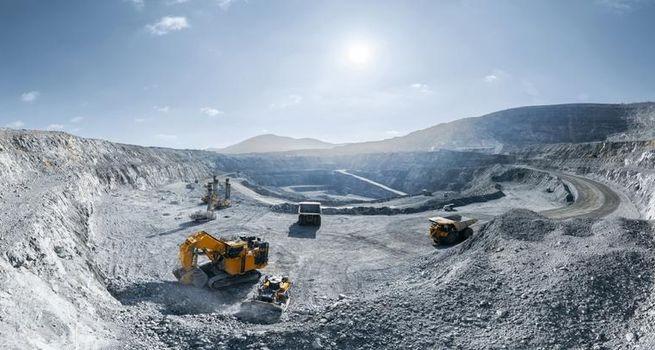
The KCGM mill expansion at the Kalgoorlie Super Pit is the most consequential single capital project in Northern Star's history and the primary catalyst that underpins the analyst consensus Buy rating. KCGM — formerly known as the Super Pit — is one of Australia's largest open-pit gold mines and one of the deepest gold operations globally. Northern Star acquired its half-interest in KCGM from Barrick Gold in 2019 and subsequently acquired the remaining half-interest, giving it 100% ownership of an asset that processes ore through a large carbon-in-leach processing circuit.
The mill expansion project adds significant new processing capacity to the KCGM operation — materially increasing the tonnes of ore that can be processed per day and therefore the ounces of gold that can be produced per year. Mining large-scale open-pit operations like KCGM typically generates more ore than the processing plant can handle, creating a stockpile that accumulates until new mill capacity is available. The commissioning of the expanded mill in FY27 will allow Northern Star to process this stockpiled ore alongside current production, creating a material step-up in gold output that directly translates to higher revenue, EBITDA, and earnings per share.
It is this specific, quantifiable earnings catalyst — an existing operation, an expanded mill being commissioned on a known timeline, and a stockpile of ore ready to be processed — that drives the analyst Buy rating and the A$28.30 target price. The 29.2% implied upside from the current A$21.910 price to the A$28.30 target reflects analysts' expectation that the market will progressively price in the KCGM mill contribution as commissioning approaches and as the production step-up is confirmed.
Gold Market Context and Northern Star's Unhedged Leverage
Northern Star operates as a substantially unhedged gold producer — the company sells the majority of its gold into the spot market rather than locking prices through forward contracts or options. This approach maximises the company's exposure to gold price movements: when gold rises, Northern Star captures the full revenue benefit per ounce; when gold falls, the revenue impact is similarly direct. In the current gold price environment — with both USD gold prices and AUD gold prices at elevated levels — the unhedged position provides maximum earnings leverage.
The AUD gold price has been supported through the H1 FY26 period by the combination of a strong USD gold price (driven by safe-haven demand, central bank gold purchasing, and inflation hedging dynamics) and a relatively subdued Australian dollar. For Australian gold producers reporting in AUD, the exchange rate is a meaningful revenue variable: a weaker AUD against the USD amplifies the AUD-denominated revenue per ounce even if the USD gold price is unchanged. Northern Star's H1 FY26 revenue growth relative to prior periods reflects both commodity price strength and this currency dynamic.
The global gold market context — characterised by persistent central bank gold demand from emerging market economies, ongoing inflation hedging interest from institutional investors, and geopolitical risk factors that sustain safe-haven interest — provides a constructive backdrop for gold equities as an asset class. Northern Star, as the largest and most liquid ASX-listed pure-play gold producer, is the primary vehicle through which institutional investors with mandates for Australian equities access this gold market exposure.
Conclusion
Northern Star Resources delivered an H1 FY26 financial result of genuine quality — 41% Reported NPAT growth, 49% Underlying NPAT growth, A$1.1 billion in Cash Earnings, A$1,876 million EBITDA, and a strong balance sheet with A$1,176 million in cash and bullion. The April 2, 2026 decline of just 0.859% to A$21.910 — in a session where materials sector peers fell 2.5% to 4% — demonstrates both the relative resilience of gold equities and the market's growing appreciation of Northern Star's specific KCGM mill commissioning catalyst. With a EODHD/Others Buy rating and A$28.30 target price implying 29.2% upside, Northern Star stands out from its materials sector peers as the stock where analyst consensus most clearly signals a constructive forward view on the risk-reward profile.


 Nov 13, 2026





 Please wait processing your request...