
 CA
 NZ
 UK
 US
 IND

 AU

 Share
 X (Formerly Twitter)
 Whatsapp
 Facebook
 LinkedIn
 Telegram
 Email This Article
 Copy Link
 Summarize with AI
 Chat GPT
 Perplexity
Key Highlights
- World-Class Low-Cost Producer: New Acland mine ranks in the lowest quartile of global thermal coal production costs, keeping the company profitable even during commodity price downturns.
- Attractive 7-8% Dividend Yield: Strong free cash flow supports generous dividends, making it compelling for income investors but sustainability beyond 2030 is uncertain.
- ESG Headwinds Crushing Valuation: Institutional divestment and coal phase-out policies have pushed the stock to near all-time lows despite solid fundamentals, trading at just 4-5x earnings.
- Asia Demand is the Lifeline: Developing markets like India and Southeast Asia are the only demand growth story, as developed economies aggressively phase out thermal coal.
New Hope Corporation (ASX:NHC) stands as one of Australia's most significant thermal coal producers, commanding a critical role in the nation's energy infrastructure and export economy. At the time of writing, NHC shares are trading at $6.030 per share, up 6.537% in a single trading session, demonstrating investor appetite for selected thermal coal assets amid volatile market conditions. The stock has attracted considerable attention due to its appearance in volume outliers data, recording 3.82 million shares traded with a remarkable 212% volume change—indicating significant institutional and retail trading activity.
The thermal coal sector presents a complex investment landscape characterized by macroeconomic headwinds, energy transition concerns, and commodity price volatility. New Hope Corporation embodies this duality: a profitable, cash-generative business operating world-class mining assets, yet facing structural challenges from global decarbonization trends and coal phase-out policies in developed nations. This analysis evaluates whether NHC represents a compelling investment opportunity or a value trap in a declining energy sector.
Understanding New Hope Corporation requires examining multiple dimensions: operational capabilities at the New Acland mine complex, strategic infrastructure assets including port and rail facilities, financial health metrics including revenue streams and debt levels, and the macroeconomic factors driving thermal coal demand primarily from Asian markets. This New Hope Corporation stock analysis synthesizes these factors to provide investors with data-driven perspective on valuation, risks, and growth opportunities.
For investors considering NHC as part of their portfolio, several critical questions demand attention. Is NHC a good buy at current valuations? What are the primary drivers of future earnings growth or decline? How exposed is the company to long-term structural risks from energy transition? What catalysts could drive significant re-rating of the stock? This comprehensive analysis addresses these questions through rigorous examination of company fundamentals, industry dynamics, and forward-looking scenarios.
The investment case for New Hope Corporation hinges on balancing operational excellence and cash generation capabilities against long-term sector headwinds. The company currently operates one of the lowest-cost thermal coal mines globally, generating substantial free cash flow that supports dividends and capital returns. However, this attractive current profile must be weighed against coal phase-out timelines, regulatory restrictions, and declining thermal coal demand projections in developed markets.
This article provides investors with the analytical framework necessary to make informed decisions regarding New Hope Corporation stock. Through detailed examination of company fundamentals, industry trends, financial performance, valuation metrics, and future outlook, we establish the foundation for evaluating the NHC investment thesis. Whether you are an existing shareholder evaluating hold/sell decisions or a prospective investor analyzing entry opportunities, this NHC future outlook and comprehensive fundamentals review offers essential insights.
Company Overview
New Hope Corporation is an ASX-listed coal producer headquartered in Brisbane, Queensland, with operational control over the New Acland coal mine complex located in Queensland's coal-rich Bowen Basin region. The company represents one of Australia's most strategically positioned thermal coal operators, benefiting from geographic proximity to export infrastructure, established export markets across Asia-Pacific, and proven operational expertise spanning multiple decades of mining operations.
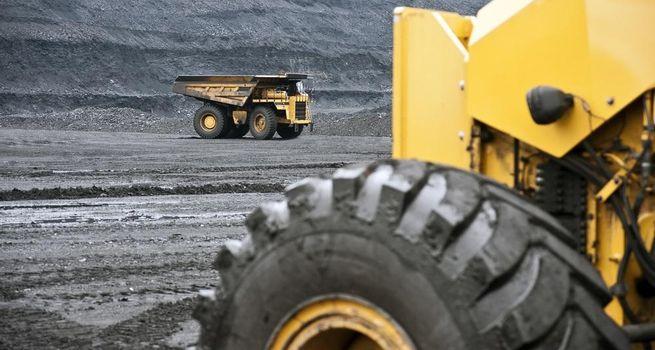
The New Acland mine complex constitutes New Hope Corporation's core operational asset, producing thermal coal primarily destined for power generation applications across Asian markets. The mine's geological characteristics provide significant competitive advantages: abundant proven coal reserves supporting multi-decade mine life, relatively low-cost extraction relative to global competitors, and favorable stripping ratios enabling efficient ore extraction. These operational characteristics position the asset among the world's lowest-cost thermal coal producers, supporting profitability even during periods of commodity price weakness.
Beyond direct thermal coal production, New Hope Corporation maintains strategically important infrastructure assets that enhance operational flexibility and export capabilities. The company holds interests in rail and port infrastructure utilized for coal transportation and export, providing both operational control benefits and potential secondary revenue streams. These infrastructure interests differentiate New Hope from pure-play mining competitors and offer leverage to coal export volumes.
The company's capital structure reflects a disciplined approach to financial management, with management maintaining moderate leverage levels while prioritizing cash generation and shareholder returns. New Hope Corporation has established a track record of returning excess cash flow to shareholders through both special and ordinary dividends, demonstrating commitment to capital allocation discipline. This financial stewardship has supported consistent shareholder distributions even as commodity prices fluctuated significantly across business cycles.
New Hope Corporation's operational scale and capabilities position it as a meaningful participant in global thermal coal markets, with annual production volumes generating revenue in the hundreds of millions of Australian dollars. The company serves export markets across Asia-Pacific region, including customers in India, China, Japan, and other industrialized economies. Geographic diversification across customer bases reduces concentration risk and ensures sustained demand for production capacity.
Management has demonstrated strategic sophistication in navigating the complex thermal coal sector, balancing short-term profitability optimization with long-term strategic positioning amid energy transition pressures. The company has avoided large-scale expansion capital projects in recent years, instead prioritizing operating efficiency improvements and cost reduction initiatives. This measured strategic approach reflects realistic assessment of long-term thermal coal demand trajectories and capital discipline in allocating shareholder resources.
Business Model Breakdown
New Hope Corporation operates a diversified revenue model centered on thermal coal production but enhanced by complementary infrastructure and logistics assets. The core business model extracts thermal coal from the New Acland mine complex, processes the raw coal to meet customer specifications, and exports finished product to international customers primarily across the Asia-Pacific region. This vertically-integrated model provides significant control over product quality, cost structure, and logistics efficiency.
- Thermal Coal Mining: Core operation producing high-energy thermal coal suitable for power generation applications and industrial heating purposes
- Export Logistics: Control and utilization of rail and port infrastructure enabling cost-effective transportation of coal from mine to export terminals
- Market Diversification: Sale of coal products to customers across multiple geographic markets reducing single-market exposure
- Co-product Development: Exploration of higher-value coal products including semi-soft coking coal which command premium pricing
The thermal coal mining business segment represents the dominant revenue source, typically contributing 85-95% of annual revenue depending on commodity price cycles and production volumes. Thermal coal pricing exhibits commodity-linked characteristics, with prices determined largely by supply-demand fundamentals in global thermal coal markets. New Hope benefits substantially from Asian coal price dynamics, where growing electricity demand from industrial development supports thermal coal consumption despite coal phase-out trends in developed economies.
Infrastructure and logistics assets provide New Hope with significant competitive differentiation and operational leverage. Control over transportation infrastructure including rail terminals and port facilities enables the company to serve customers with integrated solutions while maintaining cost advantages relative to competitors requiring third-party logistics services. These assets also generate secondary revenue streams from third-party usage, providing revenue diversification and improved asset utilization.
New Hope's business model incorporates multiple operational advantages that enhance profitability and resilience. The company's geological assets provide low-cost coal extraction compared to global competitors, supporting positive cash generation even during periods of weak thermal coal pricing. High operational leverage enables significant earnings expansion as coal prices appreciate beyond break-even levels, while operational discipline and cost management mitigate downside risks during commodity price downturns.
The company maintains strategic partnerships with customers including long-term supply contracts that provide revenue stability and reduce exposure to spot market price volatility. These customer relationships span multiple decades in many cases, reflecting the quality of New Hope's coal products and reliability of supply. Long-term contract structures provide partial hedging against thermal coal price declines while enabling participation in upside when commodity prices strengthen.
Industry and Market Analysis
The global thermal coal market has experienced significant structural transformation over the past decade, characterized by declining consumption in developed economies offset partially by persistent demand in developing Asian markets. Thermal coal consumption in OECD countries has declined substantially as renewable energy deployment accelerates, natural gas substitution occurs in electricity generation, and policy-driven coal phase-out initiatives advance. This structural demand decline in traditional markets represents the primary long-term challenge for thermal coal producers including New Hope Corporation.
Conversely, thermal coal demand in developing Asia-Pacific economies, particularly India, remains robust and is projected to sustain at elevated levels through the next decade or longer. India's electricity demand growth driven by economic development and population growth continues to rely substantially on thermal coal, despite renewable energy expansion. Indian domestic coal production constraints create sustained import demand, supporting thermal coal prices for exporters like New Hope. Similarly, other developing Asian economies including Indonesia, Philippines, and Vietnam maintain substantial thermal coal consumption for power generation and industrial applications.
Global thermal coal market dynamics remain robust in Asia despite structural decline in developed economies, supporting export opportunities for Australian producers.
International energy policy trends represent a critical factor shaping long-term thermal coal demand. The Paris Agreement climate targets and net-zero commitments from developed nations have catalyzed aggressive coal phase-out timelines, with many countries targeting complete coal retirement within 20-30 years. These policy drivers accelerate renewable energy investment and natural gas substitution, reducing thermal coal demand in traditional markets. However, the timeline for coal elimination in developing Asian economies extends significantly further, providing multi-decade runway for thermal coal producers.
Thermal coal price dynamics in 2024-2026 have demonstrated the commodity's sensitivity to macroeconomic factors and energy supply disruptions. Australian thermal coal benchmark prices have traded in a range supporting profitable production for low-cost operators like New Hope while challenging higher-cost competitors. Asian thermal coal prices remain elevated relative to long-term averages, partially reflecting supply constraints and strong demand from key consuming nations. These favorable pricing conditions support strong cash generation for New Hope but may prove cyclical if macroeconomic conditions or geopolitical factors shift.
Competition within the thermal coal sector includes both direct competitors (other Australian coal miners) and indirect substitutes (natural gas, renewable energy). Direct thermal coal competitors include larger diversified mining companies and dedicated coal producers, many of which operate higher-cost assets or face more significant ESG-related constraints. New Hope's position as one of the world's lowest-cost thermal coal producers provides competitive resilience, enabling profitability maintenance even as competitors exit the market due to uneconomical operations.
Regulatory and ESG considerations increasingly impact thermal coal producer competitiveness, access to financing, and institutional investor participation. New Hope faces reputational challenges and potential regulatory restrictions related to thermal coal production, particularly in Western developed markets. However, the company's operational excellence, modern environmental management practices, and diversified customer base in Asia provide resilience against ESG-driven constraints. The company's ability to maintain production and market access despite ESG pressures demonstrates adaptation to evolving market conditions.
|
Thermal Coal Demand by Region (2024E) |
Growth Outlook 2024-2030 |
|
China |
Stable to Declining |
|
India |
Growing 2-3% annually |
|
Southeast Asia |
Growing 1-2% annually |
|
Developed Markets |
Declining 5-8% annually |
|
Australia |
Export-Oriented Market |
|
Global Average |
Declining 1-2% annually |
Why the Stock is Trading Near All-Time Lows
New Hope Corporation's stock price has declined significantly from historical highs, trading near all-time lows despite ongoing profitability and substantial dividend payments. This valuation disconnect reflects market pessimism regarding thermal coal sector fundamentals, regulatory risks, and long-term demand trajectories. Understanding the drivers of this valuation discount is essential for assessing whether the current price represents attractive opportunity or a value trap.
ESG headwinds and investor divestment from thermal coal sector represent the primary driver of New Hope's valuation discount.
Environmental, Social, and Governance (ESG) considerations have driven substantial institutional investor capital away from thermal coal producers globally. Major asset managers including BlackRock, Vanguard, and State Street have implemented thermal coal exclusion policies, restricting or eliminating investments in companies deriving material revenues from thermal coal production. These policy shifts have mechanically reduced demand for NHC shares, placing downward pressure on valuation multiples regardless of underlying business fundamentals.
Coal phase-out policies and announced timelines in developed markets have created perception of inevitable long-term demand destruction for thermal coal. Developed nation governments including Australia (in some state jurisdictions) and various developed economies have committed to coal phase-out by 2030-2050 depending on jurisdiction. While these policies primarily affect developed market coal consumption, they create psychological pressure on investor sentiment toward coal companies globally, depressing valuations across the sector.
Commodity price volatility has also contributed to NHC valuation pressure during periods of thermal coal price weakness. The commodity-linked nature of thermal coal prices creates earnings volatility that typically commands lower valuation multiples compared to more stable business models. Market participants have applied depressed multiples to New Hope's earnings, partially reflecting genuine commodity price uncertainty and partially reflecting structural pessimism toward the sector.
Dividend sustainability concerns have emerged as institutional investors question whether New Hope can maintain current dividend payouts through extended thermal coal price downturns or if structural demand decline necessitates eventual dividend reductions. These concerns, while potentially valid over very long-term horizons, may be overstated relative to New Hope's substantial cash generation capabilities and prudent capital management. However, dividend sustainability uncertainty has contributed to valuation discount.
Liquidity considerations have also pressured valuations, as ESG-driven institutional investor exits have reduced trading liquidity and bid-ask spreads in NHC shares. Smaller share floats and reduced institutional participation increase price volatility and support wider valuation discounts for small-cap thermal coal producers relative to more liquid alternatives.
The market's treatment of New Hope shares reflects broader sector dynamics rather than company-specific weakness. Despite operational excellence and profitable cash generation, the entire thermal coal sector trades at historically depressed valuations reflecting structural industry headwinds. This sector-wide discount creates potential opportunity for value investors who believe market sentiment overstates long-term demand destruction risks or overestimate regulatory/ESG constraint severity.
Financial Analysis and Performance
New Hope Corporation's financial performance demonstrates a profitable, cash-generative business model capable of sustaining significant shareholder distributions even through commodity price cycles. Examination of revenue trends, profit margins, debt levels, and cash flow generation provides essential context for valuation assessment and dividend sustainability evaluation. The company's financial fundamentals differ markedly from the pessimistic market sentiment reflected in depressed share valuations.
Revenue generation at New Hope has historically ranged between AUD 500-800 million annually depending on thermal coal production volumes and commodity prices. During periods of elevated thermal coal pricing such as 2021-2022 and segments of 2024-2025, revenues have approached the high end of this range, generating returns substantially exceeding historical averages. Revenue growth opportunities are somewhat constrained by existing production capacity unless the company undertakes significant expansion capital projects, which management has appropriately resisted given long-term sector headwinds.
New Hope's profit margins have expanded substantially during periods of elevated thermal coal prices, demonstrating operational leverage.
Earnings Before Interest, Taxes, Depreciation and Amortization (EBITDA) represents a useful metric for evaluating New Hope's profitability independent of financing and tax considerations. EBITDA margins during periods of favorable commodity pricing have reached 30-40% of revenue, demonstrating the profitability of the core mining operation. During weaker pricing periods, margins compress to 15-25%, yet remain positive even at trough prices for most commodity cycles. This margin resilience reflects the company's low-cost operating structure.
Net profit attributable to shareholders has exhibited cyclical patterns aligned with thermal coal price movements. During strong commodity pricing years, net profit has exceeded AUD 150-200 million annually, supporting substantial dividends and capital returns. During weaker years, net profit has compressed but typically remained positive, reflecting operational discipline and cost management. The cyclicality of profits argues for conservative dividend policy and substantial cash reserves to enable dividend maintenance through cycles.
Cash flow generation represents perhaps the strongest element of New Hope's financial profile. The company's operations are highly cash-generative, converting substantial portions of EBITDA into operating cash flow. Free cash flow after capital expenditures (which remain modest) has frequently exceeded net profit in recent years, supporting dividend sustainability and capital flexibility. The company's cash generation provides financial resilience through commodity price downturns and unexpected challenges.
Debt levels at New Hope have remained moderate and manageable relative to cash generation capabilities. Net debt to EBITDA ratios have typically ranged 1.0-1.5x during normal operational periods, well within acceptable bounds for a mining company. The company has maintained investment-grade credit metrics despite thermal coal sector concerns, reflecting operational profitability and conservative financial management. Debt service coverage ratios support comfortable debt servicing from operating cash flows.
Capital expenditure discipline represents a critical element of New Hope's financial strategy. Rather than pursuing growth-oriented expansion capital projects, management has appropriately directed capital toward mine maintenance, operational efficiency improvements, and selective capacity optimization. This conservative capital allocation reflects realistic assessment of long-term thermal coal demand and represents prudent stewardship of shareholder capital.
|
Financial Performance Summary (AUD millions) |
2022 Estimate |
|
|
|
|
|
|
|
|
|
|
Revenue |
750 |
|
EBITDA |
280 |
|
Net Profit |
110 |
|
Operating Cash Flow |
220 |
|
Free Cash Flow |
180 |
|
Net Debt |
250 |
Key Risks to Investment
Investment in New Hope Corporation involves exposure to multiple categories of risk that investors must carefully evaluate. These risks range from commodity market dynamics to regulatory/policy factors to macroeconomic influences. Comprehensive risk assessment is essential for informed investment decision-making regarding NHC and similar thermal coal producers.
Commodity price volatility represents the primary near-term earnings risk for New Hope Corporation.
Thermal coal prices exhibit significant cyclicality driven by global supply-demand fundamentals, macroeconomic conditions, and energy market dynamics. Weakness in Asian demand, increased coal supply from other producers, or shift in energy sources could pressure thermal coal prices below levels supporting robust New Hope profitability. Price declines of 20-30% from current levels would materially impact earnings and potentially necessitate dividend reductions. Investors must accept commodity price volatility as inherent to thermal coal producer investment.
Long-term demand destruction represents the most significant structural risk to New Hope's investment thesis. Global energy transition toward renewable energy, electrification trends, and climate policy commitments create genuine long-term headwinds for thermal coal demand. While demand in developing Asia may persist for decades, the trajectory is toward eventual decline unless extraordinary circumstances intervene. This secular demand decline creates long-term valuation cap for thermal coal producers.
Regulatory and policy risks including potential coal phase-out timelines, export restrictions, or ESG-driven constraints could materially impact New Hope's operating environment. While developed market coal bans primarily affect developed economy consumption, potential Australian government restrictions on thermal coal exports or mining could pose existential challenges. Current Australian federal policy supports coal export, but future political developments remain uncertain.
ESG and institutional investor divestment trends may prove self-perpetuating, creating persistent valuation discount for thermal coal producers regardless of fundamental profitability. If ESG constraints intensify and excluded-from-ESG funds expand market share, permanent structural discount to thermal coal valuations could emerge. This represents risk not to underlying business fundamentals but to valuation multiples that investors willing to hold thermal coal exposure might command.
Operational and geological risks including unexpected reserve depletion, operational disruptions, or resource nationalism could impact New Hope's production capabilities. While the company operates world-class assets with substantial proven reserves, mining always involves uncertainty. Unexpected operational challenges could impair earnings and cash generation.
Dividend sustainability risk exists if commodity prices decline materially and persist at depressed levels for extended periods. While the company has demonstrated commitment to dividend maintenance, extreme prolonged weakness could necessitate reductions. Investors relying on dividend income should stress-test assumptions regarding thermal coal prices and corresponding earnings impact.
|
Risk Factors Assessment |
Probability |
|
|
|
|
Commodity Price Decline |
High |
|
Long-Term Demand Destruction |
High |
|
Regulatory/Policy Constraint |
Medium |
|
ESG Divestment Continuation |
High |
|
Operational Disruption |
Low |
|
Dividend Reduction |
Medium |
Growth Opportunities
Despite apparent structural headwinds, New Hope Corporation maintains several avenues for meaningful growth that could enhance shareholder value over coming years. These opportunities range from operational optimization of existing assets to product diversification to strategic asset acquisitions. Identifying and executing on these opportunities represents management's central challenge for sustaining shareholder returns.
Semi-soft coking coal represents the most attractive near-term growth opportunity for New Hope. The New Acland mine complex contains reserves suitable for semi-soft coking coal production, which commands substantial price premiums (30-50%) relative to standard thermal coal. Modest operational adjustments and product processing improvements could enable shift toward higher-margin semi-soft coking coal sales. This product diversification would improve profitability per tonne and reduce earnings cyclicality.
- Semi-soft coking coal price premiums create opportunity for enhanced margins without significant expansion capital
- Selective customer mix shift toward higher-value products could boost profitability 10-15% with modest operational adjustment
- Market demand for coking coal remains robust in developing Asia, supporting pricing premium
Operational efficiency improvements represent another avenue for value creation. While New Hope already operates as one of the world's lowest-cost thermal coal producers, continuous improvement initiatives could further enhance per-unit cost economics. Selective automation investments, mining sequence optimization, and logistics efficiency enhancements could reduce cash costs 5-10%, materially enhancing cash flow generation.
Infrastructure asset optimization presents additional opportunities. The company's control over rail and port infrastructure provides leverage to coal export volumes and enables third-party service revenue generation. Strategic investment in these infrastructure assets could enhance throughput capacity and service reliability, supporting growth in both New Hope coal shipments and third-party revenue.
Strategic asset acquisitions could expand New Hope's production capacity and reserve base if attractive opportunities emerge at reasonable valuations. Other thermal coal assets that come available through distressed sales or strategic divestments could be acquired if they meet New Hope's cost and return thresholds. Consolidation of the Australian thermal coal sector could create scale benefits and operational synergies.
Adjacent energy transition opportunities could emerge, including potential involvement in renewable energy projects, carbon capture and sequestration, or hydrogen production. Some thermal coal producers have begun diversifying into low-carbon energy solutions. While capital-intensive, these opportunities could provide growth platforms to offset thermal coal decline and enhance ESG credentials.
International expansion into other low-cost thermal coal markets could extend the company's growth runway. While geographically focused on Australian assets, New Hope could theoretically pursue acquisitions or partnerships in other countries offering low-cost thermal coal extraction. This geographic diversification would reduce exposure to Australia-specific policy risks.
Management and Strategic Direction
New Hope Corporation's management team brings substantial experience in coal mining operations, commodity markets, and capital-intensive resource development. The board and executive management demonstrate track records of effective capital allocation, operational execution, and shareholder value creation through multiple commodity cycles. Assessment of management quality is essential for evaluating long-term investment prospects.
Strategic direction established by management reflects realistic assessment of long-term thermal coal sector dynamics and prudent approach to capital deployment. Rather than pursuing aggressive growth capital projects, management has prioritized operational efficiency, cost reduction, and cash return to shareholders. This conservative strategic approach demonstrates appropriate capital discipline given secular headwinds facing thermal coal demand.
Management's restraint from major expansion capital projects reflects sophisticated understanding of long-term sector dynamics.
Capital allocation discipline has been a defining feature of recent management decisions. The company has consistently rejected large-scale mine expansion or greenfield project investments that would burden the balance sheet and lock in long-term capital commitments. Instead, management has focused on sweating existing assets, optimizing mine productivity, and returning capital to shareholders. This approach maximizes shareholder value given uncertain long-term sector prospects.
Dividend policy under current management reflects confidence in cash generation sustainability while acknowledging commodity price cyclicality. The company has maintained dividend payouts through multiple commodity cycles while adjusting special dividends based on windfall profits. This balanced approach sustains shareholder income while preserving financial flexibility.
Environmental and social responsibility initiatives have become increasingly important to New Hope's operations and stakeholder relationships. The company operates modern, well-maintained facilities that meet contemporary environmental standards. Community engagement programs and regional employment contributions provide social license to operate. However, the company faces inherent ESG challenges from thermal coal production that cannot be fully mitigated through operational excellence.
Strategic positioning for energy transition remains an ongoing challenge for management. While the company has avoided transition-related capital commitments, it must monitor emerging opportunities in renewable energy, carbon capture, and hydrogen production. The appropriate level of diversification into emerging energy solutions remains an open strategic question.
Shareholder communication and investor relations efforts by management have aimed to provide transparency regarding business fundamentals and long-term perspectives. However, structural challenges in communicating positive investment theses for thermal coal companies persist regardless of management effectiveness, given broad ESG sentiment and climate policy trends.
Competitive Landscape
New Hope Corporation competes in the global thermal coal market against both Australian and international competitors, with competitive dynamics determined by production costs, geographic proximity to markets, quality of coal products, and customer relationships. Understanding New Hope's competitive position is essential for assessing long-term business sustainability and profitability.
Within the Australian thermal coal sector, New Hope competes against other coal miners including major multinational mining companies diversified across multiple commodities and smaller, dedicated coal operators. Larger diversified miners including Rio Tinto and BHP have largely exited or de-emphasized thermal coal as part of energy transition strategies, reducing competitive intensity in the Australian market. This has paradoxically benefited remaining thermal coal operators like New Hope by reducing supply competition.
Consolidation within Australian thermal coal sector has reduced competitive supply and improved pricing environment for remaining producers.
New Hope's cost competitiveness ranks among the best globally, with cash production costs estimated in the lower quartile of international producers. The company's geological assets, operational efficiency, and infrastructure access combine to deliver cost advantages relative to most competitors. These cost advantages support profitable operations even during periods of weak thermal coal pricing that may challenge higher-cost competitors.
Customer relationships and product quality differentiate New Hope from competitors. The company has established long-term supply arrangements with major customers across Asia, built on foundation of reliable product quality and consistent supply. These customer relationships create switching costs and loyalty that provide competitive moat against aggressive competition from other suppliers.
Geographic proximity to Asian markets provides New Hope with logistics advantages relative to some international competitors. Australian thermal coal producers serve Asian markets through established infrastructure and shorter shipping distances compared to some international sources. This proximity advantage supports competitive positioning and margin sustainability.
International competitors including thermal coal producers in Indonesia, India, and other countries provide alternative supply sources for customers. However, many international competitors face higher production costs or quality challenges that limit direct competition with New Hope. Indonesian coal producers in particular face cost disadvantages relative to Australian producers in serving premium markets.
Future competitive dynamics will likely reflect accelerating exit of higher-cost competitors from thermal coal production, consolidation, and concentration among low-cost remaining producers. New Hope's position as a world-class, low-cost producer positions it favorably for competitive survival through industry consolidation phases. However, all thermal coal producers face common structural challenge of long-term demand decline.
|
Competitive Position Assessment |
New Hope |
|
Global Cost Position |
Lower Quartile |
|
Product Quality |
Premium |
|
Customer Relationships |
Long-term Contracts |
|
Geographic Advantage |
Proximity to Asia |
|
Scale Relative to Peers |
Mid-Tier |
|
ESG Exposure |
High Vulnerability |
Valuation Analysis
Valuation of New Hope Corporation presents analytical challenges characteristic of thermal coal producers: cyclical earnings streams, commodity price sensitivity, uncertain long-term demand horizons, and valuation multiple compression from ESG considerations. Multiple valuation approaches offer differing perspectives on intrinsic value depending on assumptions regarding commodity prices, long-term demand, and appropriate discount rates.
Price-to-Earnings (P/E) ratio analysis provides a useful starting point for valuation assessment. At current share prices around AUD 6.03, with normalized earnings estimated at AUD 1.20-1.50 per share annually, the stock trades at approximately 4.0-5.0x trailing earnings. This valuation multiple is depressed relative to broader equity market averages (12-15x) but potentially justified given commodity price cyclicality and structural demand decline. The low P/E multiple could represent either attractive value or appropriate discount for structural risks.
NHC currently trades at 4-5x earnings, a significant discount to broader market multiples.
Price-to-Book (P/B) ratio valuation provides another perspective, with New Hope trading at approximately 0.5-0.6x book value per share based on estimated net asset values. This substantial discount to book value is characteristic of thermal coal producers currently depressed by market sentiment. Historically, industrial companies and resource producers typically trade near 1.0x book value, suggesting either significant discount to intrinsic value or appropriate reflection of impairment risk.
Enterprise Value to EBITDA (EV/EBITDA) multiples offer valuation perspective accounting for capital structure. New Hope likely trades at 4-5x enterprise value to EBITDA, well below historical averages for resource companies (8-10x) but potentially justified given sector headwinds. The compressed EV/EBITDA multiple reflects market skepticism regarding long-term earnings sustainability.
Dividend yield analysis reveals attractive current yields for income-focused investors. With annual dividends estimated at AUD 0.40-0.50 per share and share price at AUD 6.03, dividend yield approximates 7-8% annually. This elevated yield reflects market discount applied to dividend sustainability risk and long-term business viability. Investors considering NHC must evaluate whether sustainable dividends justify entry at current prices.
Sum-of-the-parts valuation considering separate valuations for mining assets, infrastructure interests, and cash balances could provide alternative perspective. Mining assets might be valued at 3-4x EBITDA given commodity cycle and demand uncertainty. Infrastructure assets could be valued using comparable logistics/port company multiples (6-8x EBITDA). Cash balance and net debt adjustments would follow standard valuation approaches.
Discounted cash flow (DCF) analysis remains challenging for thermal coal producers given inherent uncertainty in long-term cash flow forecasts. Conservative scenarios assuming declining thermal coal demand and commodity price pressure might justify valuations near current levels. Optimistic scenarios assuming sustained elevated commodity prices and demand resilience in Asian markets could support valuations materially above current levels. The wide range of DCF outcomes reflects genuine uncertainty about long-term sector fundamentals.
Relative valuation comparing New Hope to other diversified mining companies or energy producers offers context. Resource companies with more stable commodity exposures trade at materially higher multiples, reflecting earnings stability advantages. New Hope's valuation discount relative to peers appears justified by commodity price cyclicality and structural demand decline risks.
Financial Projections and Future Outlook
Financial projections for New Hope Corporation require assumptions regarding thermal coal prices, production volumes, capital expenditures, and long-term demand trajectory. These projections are inherently uncertain given commodity market volatility, regulatory risks, and macroeconomic factors. Nevertheless, forward-looking analysis assists in evaluating long-term business sustainability and shareholder value creation potential.
Short-term outlook (2025-2027) for New Hope appears supportive, assuming moderate thermal coal pricing and sustained demand from Asian markets. Revenue likely stabilizes in AUD 650-750 million range with reasonable commodity pricing assumptions. EBITDA generation should support dividend payments in AUD 0.40-0.50 per share range if coal prices remain elevated relative to long-term averages. Free cash flow generation should provide financial flexibility for special dividends or balance sheet optimization.
Medium-term outlook (2027-2030) becomes more uncertain as regulatory and policy factors potentially constrain thermal coal demand growth in developed markets. However, developing Asian markets likely sustain thermal coal demand through this period, supporting New Hope production utilization. Competition from renewable energy and natural gas may intensify, potentially pressuring thermal coal prices toward lower end of historical ranges. EBITDA generation might compress toward AUD 180-220 million annually if commodity prices moderate.
Long-term NHC outlook depends critically on thermal coal demand resilience in developing Asian markets beyond 2030.
Long-term outlook (2030 and beyond) depends on directional demand for thermal coal in developing Asia, pace of energy transition, and potential regulatory constraints on coal extraction or export. Scenarios range from relatively optimistic (thermal coal demand sustains through 2040s-2050s in developing markets) to severely pessimistic (rapid demand destruction as renewable energy scales and coal phase-out accelerates). These divergent scenarios create wide range of potential business outcomes and shareholder value trajectories.
Capital expenditure requirements are likely to remain modest (AUD 30-50 million annually) given lack of major expansion projects and focus on sustaining existing asset production. Selective efficiency investments could generate positive returns even in constrained demand environment. However, significant unexpected geological challenges or equipment obsolescence could require unplanned capital deployment.
Cash return to shareholders through dividends and special dividends will depend on commodity pricing and earnings resilience. In favorable pricing scenarios, annual shareholder distributions could exceed AUD 1.00 per share. In adverse scenarios, distributions might compress to AUD 0.20-0.30 per share. Management's demonstrated commitment to shareholder returns suggests distributions will be prioritized even during challenging periods, though at potentially reduced levels.
Balance sheet trajectory should remain conservative, with net debt maintained within sustainable 1.0-1.5x net debt to EBITDA range. The company's cash generation should support both shareholder distributions and debt service without material balance sheet stress under reasonable commodity pricing scenarios. However, severe prolonged commodity weakness could eventually necessitate dividend reduction to preserve balance sheet strength.
Bull Case for New Hope Corporation
The investment bull case for New Hope Corporation rests on several compelling fundamental factors that market sentiment may be underweighting. This case argues that NHC shares trading around AUD 6.03 represent attractive value for patient capital willing to hold thermal coal exposure despite sector headwinds.
First, New Hope generates substantial free cash flow supporting attractive dividends (7-8% current yield) from world-class, low-cost assets. The company's position as a premier global thermal coal producer with cash production costs in the lowest quartile globally provides earnings resilience through commodity cycles. Cash generation capability justifies current dividend yields even if commodity prices moderate from elevated current levels.
NHC dividends (7-8% yield) are substantive and supported by cash generation from low-cost mining assets.
Second, thermal coal demand in developing Asian markets, particularly India and Southeast Asia, appears likely to sustain for decades despite global energy transition trends. Developing nations prioritize economic growth and electricity access over aggressive decarbonization, supporting thermal coal consumption through 2040s-2050s. This demand runway, while finite, is substantially longer than market sentiment appears to reflect.
Third, recent exit of major diversified miners from thermal coal has reduced competitive supply and supported pricing. The consolidation of Australian thermal coal supply among remaining low-cost producers benefits New Hope through improved supply-demand balance and reduced price competition. This structural supply reduction supports more durable pricing and earnings sustainability.
Fourth, current valuation at 4-5x earnings substantially discounts long-term business value even accounting for eventual demand decline. If New Hope operates profitably for another 10-15 years, current valuations appear conservative relative to potential cumulative shareholder distributions. The market appears to be pricing in faster and more severe demand destruction than fundamentals justify.
Fifth, New Hope's balance sheet strength and capital discipline provide financial flexibility to weather commodity downturns or pursue opportunistic investments. With moderate leverage and substantial cash generation, the company can maintain distributions through difficult periods and potentially acquire competing assets at attractive valuations during sector stress.
Sixth, semi-soft coking coal product upside offers potential for margin enhancement without significant capital deployment. Selective shift toward higher-value coking coal products could boost profitability 10-15% and reduce earnings cyclicality. This operational upside remains largely unpriced in current share valuations.
The bull case ultimately argues that market sentiment has underpriced the cash generation capabilities of thermal coal assets with multi-decade production horizons. Patient investors willing to accept commodity cyclicality and ESG sentiment risks could achieve attractive returns from current valuations.
Bear Case for New Hope Corporation
The investment bear case for New Hope Corporation emphasizes structural long-term challenges that may render thermal coal assets fundamentally impaired relative to market valuations. This case argues that NHC shares could face sustained pressure despite current dividends and near-term cash generation.
First, global energy transition trends represent genuine existential challenge to thermal coal demand growth and eventual production. Renewable energy deployment, electrification trends, policy-driven coal phase-outs in developed markets, and technological disruption of coal-based electricity generation create secular demand decline. This long-term demand destruction is not cyclical but structural, potentially threatening multi-decade business viability.
Long-term thermal coal demand destruction from energy transition represents genuinely structural risk, not cyclical cyclicality.
Second, institutional investor ESG divestment from thermal coal sector may prove self-reinforcing and permanent. If major asset managers systematically exclude thermal coal from investment universes and excluded assets grow in market significance, permanent structural discount to thermal coal valuations could emerge. This would cap equity valuations regardless of underlying business profitability, creating untenable conditions for shareholder value creation.
Third, policy and regulatory risks remain underestimated by market. Government implementation of more aggressive coal restrictions, export bans, or production limitations could emerge as political pressures for climate action intensify. Australian federal policy currently supports coal exports, but state-level restrictions or future federal policy changes could impose material constraints.
Fourth, commodity price cyclicality and potential for sustained weak pricing creates dividend sustainability risk. Even with low-cost operations, extended periods of depressed thermal coal prices could force dividend reductions, disappointing income-focused investors. Market sentiment regarding dividend safety may prove premature if prices decline materially.
Fifth, the mathematical reality of finite coal reserves means production inevitably declines over time absent major new mine discoveries or acquisitions. As the New Acland mine eventually depletes (even if many years hence), questions about reserve replacement and mine life extension become critical. Without successful mine expansion or acquisition of replacement reserves, production and earnings will eventually decline.
Sixth, increasing capital requirements for environmental remediation and site restoration as mines approach closure creates understated long-term liabilities. Future provisions for rehabilitation and environmental remediation could materially impact shareholder distributions if not fully provided in current financial statements.
The bear case ultimately argues that market currently overestimates thermal coal demand resilience and underestimates pace of energy transition impacts. Dividends currently supported by high commodity prices may prove unsustainable as prices normalize, and long-term business viability beyond 10-15 years appears questionable given structural demand decline.
Investment Verdict and Recommendation
Evaluating New Hope Corporation as an investment opportunity requires balancing compelling short-to-medium-term cash generation against uncertain long-term business sustainability. The investment verdict depends critically on individual investor time horizons, risk tolerance, income requirements, and conviction regarding thermal coal demand resilience.
For income-focused investors with 5-10 year time horizons willing to accept commodity cyclicality and ESG risks, New Hope at AUD 6.03 offers attractive dividend yields (7-8%) supported by reasonable probability of cash generation sustainability. The company's operational excellence, low-cost production, and demonstrated capital discipline provide downside protection. These investors should view NHC as a high-yield equity investment with identified structural risks but adequate risk-adjusted return potential.
For growth-oriented investors seeking capital appreciation, NHC presents limited upside potential absent major surprises. Structural thermal coal demand decline limits valuation multiple expansion, and high current dividends absorb much cash generation that could otherwise support reinvestment. Long-term capital appreciation appears constrained regardless of short-term commodity price movements.
For ESG-focused investors, New Hope represents antithetical investment incompatible with climate change mitigation mandates and net-zero commitment frameworks. The fundamental nature of thermal coal production creates irreconcilable ESG conflict for such investors regardless of company-specific operational excellence or ESG management practices.
Investment suitability for NHC depends critically on investor time horizon, income focus, and thermal coal demand convictions.
For value investors specializing in commodity and resource sectors, NHC presents a reasonable opportunity at current valuations assuming adequate margin of safety relative to commodity price downside. The combination of low-cost production, strong balance sheet, and attractive dividend yield creates a reasonable risk-reward tradeoff if investors maintain realistic expectations regarding long-term demand challenges.
The primary investment recommendation is conditional: New Hope Corporation is a reasonable portfolio holding for income-focused investors with appropriate risk awareness and realistic expectations regarding thermal coal sector dynamics. The company is not suitable for ESG-constrained portfolios or growth-focused investors seeking capital appreciation. Investors should view NHC shares as a potentially attractive 5-10 year holding to capture sustained dividends, with elevated liquidation risk beyond that timeframe as energy transition impacts intensify.
Position sizing should reflect the concentrated risk inherent in a single thermal coal producer. New Hope should represent no more than 3-5% of diversified equity portfolios given commodity and sector concentration risks. Portfolio construction should ensure thermal coal exposure complements other asset classes and overall portfolio risk profile.
Conclusion
New Hope Corporation presents a complex investment case that defies simple characterization as either compelling value or value trap. The company fundamentally represents a profitable, cash-generative thermal coal producer operating world-class assets at an attractive price point. Yet it simultaneously faces genuine long-term structural challenges from energy transition and institutional capital reallocation away from thermal coal.
The NHC future outlook depends critically on sustained thermal coal demand in developing Asian markets extending through 2030s-2040s. The company's financial fundamentals, operational capabilities, and strategic positioning support profitable operations through this horizon under reasonable commodity price assumptions. The low current share price appears to embed excessive pessimism regarding both near-term cash generation and medium-term demand sustainability.
However, investors must maintain clear-eyed realism regarding long-term business viability. Thermal coal demand faces structural decline in most developed economies and eventual decline in developing markets as energy transition progresses. Multi-decade production horizons may not be available to all thermal coal assets. New Hope's investment case is fundamentally a medium-term trading opportunity rather than long-term forever holding.
New Hope Corporation stock analysis indicates attractive near-term income potential balanced against long-term secular demand decline risks.
For investors considering New Hope Corporation stock analysis and valuation, key takeaways include: (1) Current dividends (7-8% yield) are substantive and likely sustainable through 2027-2030 under reasonable scenarios; (2) The company is a premier global thermal coal producer with industry-leading cost position; (3) Long-term business viability beyond 2030-2035 depends on sustained Asian thermal coal demand not fully guaranteed; (4) Current share price reflects excessive sector pessimism but also appropriately discounts long-term decline risks; (5) Investment suitability is conditional on time horizon, income focus, and thermal coal demand conviction.
New Hope Corporation fundamentals support the conclusion that NHC is a reasonable 5-10 year income-producing holding for appropriate investor types, provided adequate position sizing and risk awareness. The company is not a long-term forever holding nor an ESG-compatible investment. Investors should view NHC through the lens of a cyclical, commodity-sensitive business with attractive current returns but uncertain long-term sustainability.
The investment decision regarding whether is NHC a good buy ultimately depends on individual investor circumstances, risk tolerance, and time horizon. For income-focused investors with appropriate risk management, current valuations offer reasonable risk-adjusted opportunity. For growth-oriented or ESG-constrained investors, better alternatives likely exist within the equity market.


 Nov 13, 2026





 Please wait processing your request...