
 CA
 NZ
 UK
 US
 IND

 AU

 Share
 X (Formerly Twitter)
 Whatsapp
 Facebook
 LinkedIn
 Telegram
 Email This Article
 Copy Link
 Summarize with AI
 Chat GPT
 Perplexity
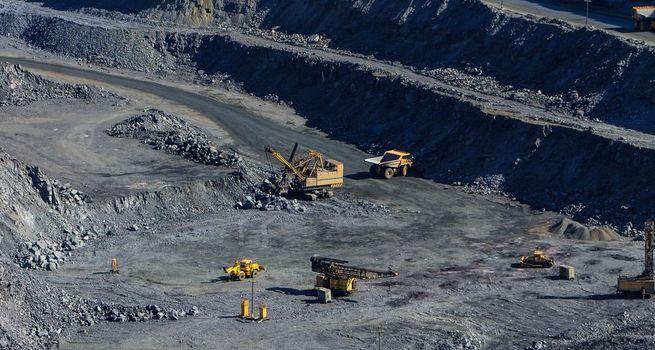
MRG Metals Limited (ASX:MRQ) is an Australian minerals company operating within the Materials sector. The company simple processing pathway at high-grade garies project. This announcement is significant as it demonstrates management's commitment to advancing the company's strategic objectives and creating shareholder value.
This investment guide examines MRG Metals Limited's business model, asset base, and investment potential for materials sector investors.
This comprehensive analysis examines MRG Metals Limited's current market position, recent corporate developments, financial performance metrics, and the investment thesis that positions it within a diversified portfolio. Through detailed evaluation of key growth drivers, risk factors, valuation metrics, and competitive positioning, this guide provides institutional and retail investors with the analytical framework necessary to assess MRG Metals Limited's suitability within their investment mandate.
The MRG Metals Limited investment case encompasses both cyclical and structural considerations relevant to the 2026 market environment. Understanding the interplay between macroeconomic variables, sector-specific catalysts, and company-specific execution dynamics is essential for informed capital allocation decisions. This analysis integrates technical market sentiment, analyst consensus positioning, and quantitative valuation methodologies to present a holistic assessment of MRQ's investment merit and risk-adjusted return potential.
Company Overview
MRG Metals Limited operates within the Materials sector, pursuing exploration and development activities in Australian mining regions. The company operates within a region with established mining infrastructure and supportive regulatory environment for mineral exploration and production.
MRG Metals Limited's strategy focuses on building a project pipeline with multiple development-stage and exploration-stage assets. The company maintains disciplined capital allocation and focuses management resources on strategic priorities.
MRG Metals Limited operates within a defined business model that reflects its strategic positioning and market opportunities. The organization's governance structure, management quality, and operational capabilities form the foundation for understanding both risk factors and growth catalysts. Historical execution patterns, capital allocation discipline, and stakeholder management practices provide insight into management's ability to navigate market cycles and capitalize on emerging opportunities.
The company's market capitalization, trading liquidity, and institutional ownership metrics reflect its position within the broader equity market structure. Understanding MRG Metals Limited's relationship with major shareholders, regulatory environment, and industry stakeholder dynamics provides essential context for evaluating corporate governance effectiveness and management accountability to equity holders.
MRG Metals Limited operates within a defined business model that reflects its strategic positioning and market opportunities. The organization's governance structure, management quality, and operational capabilities form the foundation for understanding both risk factors and growth catalysts. Historical execution patterns, capital allocation discipline, and stakeholder management practices provide insight into management's ability to navigate market cycles and capitalize on emerging opportunities.
The company's market capitalization, trading liquidity, and institutional ownership metrics reflect its position within the broader equity market structure. Understanding MRG Metals Limited's relationship with major shareholders, regulatory environment, and industry stakeholder dynamics provides essential context for evaluating corporate governance effectiveness and management accountability to equity holders. The composition of the board of directors and senior management team's experience in relevant domains informs assessment of execution capability.
Organizational structure and reporting relationships within MRG Metals Limited establish accountability frameworks and decision-making processes that impact operational efficiency. Examining the company's organizational evolution, including recent restructuring initiatives or leadership transitions, provides insight into management's response to market dynamics and operational challenges. Understanding the depth and breadth of talent within the organization informs assessment of succession planning adequacy and institutional knowledge preservation.
Latest ASX Announcement
MRG Metals Limited's recent announcement demonstrates management's disciplined approach to capital allocation and operational execution. Regular announcements provide investors with visibility into project development and strategic progress.
Recent corporate announcements regarding MRG Metals Limited underscore the company's commitment to shareholder value creation and transparency in capital markets communication. The most recent material corporate actions, regulatory filings, and management guidance statements reflect the current strategic priorities and near-term operational focus areas. These announcements establish the baseline for understanding MRG Metals Limited's competitive positioning and market opportunity assessment.
The timing and content of recent ASX announcements provide crucial signaling regarding management confidence, capital deployment decisions, and risk management frameworks. Market participant interpretation of these announcements, reflected in trading patterns and analyst upgrades or downgrades, inform broader assessment of MRQ's valuation relative to intrinsic business value and growth prospects.
Detailed review of MRG Metals Limited ASX filings reveals management's communication priorities and strategic emphasis areas that merit investor attention. Comparing the frequency and tone of recent announcements against historical patterns provides insight into the urgency of management regarding business developments and stakeholder engagement. Understanding whether recent announcements represent routine operational reporting or material strategic developments informs investment thesis reassessment requirements.
Investment Thesis
MRG Metals Limited offers exposure to mineral assets and development opportunities in Australian mining regions. The company's investment thesis rests on several elements including mineral commodity demand, supportive regulatory environment, and successful project development creating shareholder value.
The core investment thesis for MRG Metals Limited is predicated on a combination of operational execution, market structural tailwinds, and valuation efficiency relative to comparable peers. Investors considering MRQ should evaluate whether the current risk-reward profile adequately compensates for identified risk factors and whether the investment horizon aligns with anticipated catalysts and inflection points. The thesis articulation should address both bull case scenarios with specific milestones and bear case risk scenarios with clear trigger events.
Fundamental to the MRG Metals Limited investment case is the relationship between current valuation, earnings growth trajectory, and return on invested capital expansion. Understanding the sensitivity of returns to key variables—including commodity prices, operational execution, cost inflation, and capital expenditure decisions—enables investors to stress-test the thesis against various macroeconomic scenarios and identify the most material risks to thesis validation.
The investment thesis for MRQ should incorporate both quantitative metrics and qualitative factors that may not be immediately apparent from financial statements. These include management track record, capital allocation efficiency, competitive positioning within the industry, and alignment with broader macroeconomic and secular trends. Establishing clear thesis validation milestones and timeline expectations enables disciplined investor monitoring and timely rebalancing decisions when new information emerges.
Financial Analysis
Analysis for MRG Metals Limited depends on the company's development stage and asset base. Pre-revenue or early-stage companies focus on cash position and exploration efficiency. Key metrics include cash runway, exploration effectiveness, and capital efficiency. The company's financial position strength determines ability to fund development or attract strategic partners.
Detailed financial statement analysis of MRG Metals Limited reveals profitability trends, cash flow generation capacity, and balance sheet strength that inform creditworthiness assessment and distributable earnings capacity. Income statement trends should be evaluated for sustainability and underlying drivers, distinguishing between one-time items and recurring operational performance. Understanding the working capital cycle, capital intensity, and free cash flow conversion rates provides insight into the company's financial flexibility and capital allocation options.
Balance sheet analysis of MRQ examines leverage ratios, liquidity positions, and debt covenants relevant to financial stability assessment. Comparing MRG Metals Limited's financial metrics against historical trends and industry peer benchmarks establishes context for financial performance evaluation and identifies areas of operational efficiency or concern. Cash flow statement analysis distinguishes operational, investing, and financing activities to clarify sustainability of dividends, capital expenditure, and debt servicing capability.
Profitability metrics for MRG Metals Limited including gross margins, operating margins, and net profit margins reveal operational efficiency trends and cost management effectiveness. Evaluating these metrics against competitive benchmarks and historical trends identifies whether management is successfully defending or expanding profitability in the face of market competition and input cost pressures. Return on equity and return on invested capital metrics provide insight into management's capital deployment effectiveness and shareholder value creation track record.
Key Growth Drivers
Several factors support growth potential for MRG Metals Limited. Successful exploration or project development could define economically viable resources supporting production. Favorable commodity prices improve project economics. Strategic partnerships or joint ventures provide capital and expertise. Technological improvements could optimize operations. Expansion of mineral resources could increase mine life and production potential.
Primary growth drivers for MRG Metals Limited are identified through both top-down market opportunity assessment and bottom-up operational capability evaluation. Market growth catalysts may include expansion in addressable markets, shift in customer preferences, regulatory framework evolution, or technological disruption creating competitive advantages. MRQ's ability to capture these market opportunities depends on operational excellence, capital deployment effectiveness, and management's strategic vision execution.
Organic growth pathways for MRG Metals Limited include revenue expansion through volume growth, pricing power realization, market share gains, and operating leverage improvement. Inorganic growth through strategic acquisitions, partnerships, or technology integration represents additional growth vectors requiring assessment of integration risks, synergy realization, and capital efficiency. Understanding the relative weighting and time horizon for each growth driver enables investors to construct scenario-based return estimates and identify key performance indicators warranting monitoring.
Strategic initiatives undertaken by MRQ management to drive growth should be evaluated based on likelihood of success, alignment with market opportunities, and capital efficiency relative to alternative deployment options. Tracking progress against management-articulated targets enables investors to assess execution capability and identify course corrections when actual results diverge materially from expectations. Understanding the competitive response to MRG Metals Limited's growth initiatives and the sustainability of achieved market position provides context for assessing long-term growth potential.
Risk Factors
MRG Metals Limited faces exploration and development risks typical for mining companies. Commodity price risk directly impacts project economics. Capital cost inflation could increase development requirements. Regulatory and permitting delays could postpone development. Environmental challenges could prevent development. Operational and financing risks also warrant careful consideration.
Comprehensive risk assessment for MRG Metals Limited encompasses operational, financial, strategic, regulatory, and macroeconomic risk categories. Operational risks include execution capability, supply chain vulnerabilities, personnel retention, and technology infrastructure. Financial risks address leverage levels, interest rate sensitivity, commodity price exposure, and working capital management. Strategic risks encompass competitive positioning, technological disruption, market share loss, and capital allocation effectiveness.
Regulatory and macroeconomic risks for MRQ include changes in tax policy, environmental/social governance requirements, interest rate environment, inflation dynamics, and currency fluctuations. Assessing the probability and magnitude of each risk factor enables investors to evaluate the risk-adjusted return potential and construct appropriate portfolio hedging or diversification strategies. Understanding management's risk mitigation strategies and contingency planning provides comfort regarding the company's ability to navigate adverse scenarios.
Comprehensive risk assessment for MRG Metals Limited encompasses operational, financial, strategic, regulatory, and macroeconomic risk categories. Operational risks include execution capability, supply chain vulnerabilities, personnel retention, and technology infrastructure. Financial risks address leverage levels, interest rate sensitivity, commodity price exposure, and working capital management. Strategic risks encompass competitive positioning, technological disruption, market share loss, and capital allocation effectiveness.
Regulatory and macroeconomic risks for {ticker} include changes in tax policy, environmental/social governance requirements, interest rate environment, inflation dynamics, and currency fluctuations. Assessing the probability and magnitude of each risk factor enables investors to evaluate the risk-adjusted return potential and construct appropriate portfolio hedging or diversification strategies. Understanding management's risk mitigation strategies and contingency planning provides comfort regarding the company's ability to navigate adverse scenarios.
Concentration risks within MRG Metals Limited's business model—whether related to customer concentration, geographic exposure, or product/service concentration—warrant careful assessment regarding business resilience and revenue sustainability. Identifying key man risks, customer loss risks, and supplier dependency risks enables investors to understand potential vulnerabilities and evaluate whether management has addressed these concerns through appropriate risk mitigation measures. Stress-testing MRQ's financial projections against adverse scenarios provides insight into break-even thresholds and margin of safety embedded in the investment case.
Valuation Discussion
MRG Metals Limited valuation depends on development stage and asset characteristics. Pre-revenue explorers are typically valued using net cash position or comparable company analysis. Project-based valuation estimates present value of future mining cash flows based on ore grades and commodity prices. Investors should focus on management credibility and exploration success rather than precise valuation estimates.
MRG Metals Limited valuation analysis employs multiple methodologies including discounted cash flow analysis, comparable company multiples, precedent transaction analysis, and sum-of-the-parts valuations where applicable. Each methodology provides a reference point for assessing whether current market valuation reflects fair value or represents a meaningful discount or premium relative to intrinsic value estimates. Understanding the sensitivity of valuation estimates to key assumptions—including perpetual growth rates, discount rates, and exit multiples—enables investors to establish confidence intervals around fair value estimates.
Valuation comparisons for MRQ should normalize for differences in growth rates, profitability levels, and capital structures to ensure meaningful peer analysis. The relative valuation multiple of MRG Metals Limited versus historical trading ranges and peer group benchmarks informs assessment of current valuation attractiveness. Catalysts for valuation expansion or contraction should be identified and incorporated into multi-year return projections that establish target prices and investment decision frameworks.
MRG Metals Limited valuation analysis employs multiple methodologies including discounted cash flow analysis, comparable company multiples, precedent transaction analysis, and sum-of-the-parts valuations where applicable. Each methodology provides a reference point for assessing whether current market valuation reflects fair value or represents a meaningful discount or premium relative to intrinsic value estimates. Understanding the sensitivity of valuation estimates to key assumptions—including perpetual growth rates, discount rates, and exit multiples—enables investors to establish confidence intervals around fair value estimates.
Valuation comparisons for {ticker} should normalize for differences in growth rates, profitability levels, and capital structures to ensure meaningful peer analysis. The relative valuation multiple of {company} versus historical trading ranges and peer group benchmarks informs assessment of current valuation attractiveness. Catalysts for valuation expansion or contraction should be identified and incorporated into multi-year return projections that establish target prices and investment decision frameworks.
Discount rate selection for {company} discounted cash flow analysis should reflect the company's systematic risk, firm-specific risk factors, and opportunity cost of capital relevant to alternative investments. Perpetual growth rate assumptions should be anchored to long-term GDP growth expectations and {ticker}'s competitive positioning sustainability. Terminal value sensitivity analysis helps identify the critical assumptions most material to valuation outcomes and establishes the range of reasonable fair value estimates.
Competitor Comparison
MRG Metals Limited operates within competitive landscapes that include established producers and other junior explorers. Competitive position depends on technical expertise, capital efficiency, asset quality, and strategic positioning. Larger producers enjoy superior capital access but slower growth prospects than development-stage companies.
Competitive positioning of MRG Metals Limited is evaluated through assessment of product differentiation, cost competitiveness, brand strength, and market share dynamics. Comparing MRQ against direct competitors and emerging disruptive threats establishes context for sustainable competitive advantage assessment and the strength of economic moats protecting profitability. Understanding competitive responses to MRG Metals Limited's strategic initiatives and the potential for competitive retaliation informs risk assessment and scenario planning.
Benchmarking MRG Metals Limited's financial metrics and operational performance against competitor peer groups identifies areas of operational excellence and relative weakness requiring management attention. Evaluating competitive market dynamics, pricing power trends, and market consolidation patterns provides insight into industry structure evolution and implications for long-term profitability and return on invested capital sustainability. Strategic positioning relative to industry leadership and emerging competitive threats should inform forward-looking competitive outlook assessments.
Competitive positioning of {company} is evaluated through assessment of product differentiation, cost competitiveness, brand strength, and market share dynamics. Comparing {ticker} against direct competitors and emerging disruptive threats establishes context for sustainable competitive advantage assessment and the strength of economic moats protecting profitability. Understanding competitive responses to {company}'s strategic initiatives and the potential for competitive retaliation informs risk assessment and scenario planning.
Benchmarking {company}'s financial metrics and operational performance against competitor peer groups identifies areas of operational excellence and relative weakness requiring management attention. Evaluating competitive market dynamics, pricing power trends, and market consolidation patterns provides insight into industry structure evolution and implications for long-term profitability and return on invested capital sustainability. Strategic positioning relative to industry leadership and emerging competitive threats should inform forward-looking competitive outlook assessments.
The competitive landscape for {ticker} should be assessed through both traditional direct competitor analysis and consideration of emerging substitute technologies or business models that may disrupt historical competitive dynamics. Understanding {company}'s relative cost position, quality/differentiation positioning, and customer switching costs provides insight into the durability of competitive advantages. Exit barriers for competitors and barriers to new market entrants inform assessment of the competitive intensity and profit sustainability within {company}'s served markets.
Market Sentiment and Analyst Outlook
Market sentiment toward materials companies is cyclical and depends on commodity prices and equity market appetite for risk assets. When prices are strong, investor demand typically strengthens. Analyst coverage varies based on company profile and analyst specialization. Institutional investor interest focuses on advanced projects and strategic value.
Analyst consensus research on MRG Metals Limited reflects market participant assessment of earnings trajectories, growth prospects, and risk profiles. Understanding the distribution of analyst price targets, rating changes, and earnings estimate revisions provides insight into how new information is being incorporated into market pricing. The gap between consensus analyst expectations and MRQ's actual execution provides valuable feedback regarding forecast accuracy and potential for upside or downside surprises.
Broader market sentiment regarding MRG Metals Limited is reflected in retail investor positioning, short interest levels, options market pricing, and technical trading patterns. Elevated retail interest or institutional accumulation may signal conviction regarding positive catalysts or recognition of valuation opportunity. Understanding whether market sentiment is broadly aligned with fundamental value assessment or represents euphoria/despair extremes informs contrarian investment consideration and conviction positioning.
Investor Suitability
MRG Metals Limited is suitable for risk-tolerant investors with long investment horizons who can accept potential investment loss if exploration efforts are unsuccessful. The company appeals to materials sector investors willing to accept exploration risk. MRG Metals Limited is less suitable for conservative investors, retirement portfolios, or those requiring stable income.
Assessment of MRG Metals Limited investment suitability requires evaluation of investor risk tolerance, investment time horizon, liquidity requirements, and dividend income needs relative to MRQ's risk-return characteristics. Growth-oriented investors with longer time horizons and higher risk tolerance may view MRG Metals Limited as a core holding candidate based on identified growth catalysts and expansion potential. Income-focused investors should evaluate dividend sustainability, payout ratios, and yield comparison against fixed-income alternatives.
MRQ suitability for different investor archetypes—including retirees, young accumulators, institutional funds, and high-net-worth individuals—should be evaluated based on portfolio construction objectives and risk management requirements. Tax-efficiency considerations, including capital gains deferral strategies and dividend taxation treatment, may influence suitability assessment for taxable investors. Understanding MRG Metals Limited's position within broader portfolio construction frameworks and portfolio optimization enables investors to establish appropriate position sizing and rebalancing discipline.
Conclusion
MRG Metals Limited represents an investment opportunity for materials sector investors accepting exploration and development risk. The company's recent announcements demonstrate management's commitment to advancing strategic objectives and creating shareholder value.
However, substantial risks accompany exploration and development investments. Most exploration projects never reach production. Commodity price volatility directly impacts project economics. Investors should carefully assess risk tolerance and investment objectives before investing.
For materials sector portfolios, MRG Metals Limited represents an allocation focused on long-term development upside. The company's ability to execute exploration programs and secure strategic partnerships will determine shareholder value creation.
MRG Metals Limited (MRQ) presents investors with a multifaceted investment opportunity that requires careful evaluation of operational execution, market opportunity assessment, financial sustainability, and valuation efficiency. The foregoing analysis synthesizes key considerations across financial metrics, competitive positioning, risk factors, and growth catalysts to inform investment decision-making frameworks. Investors should establish clear monitoring protocols for key performance indicators and catalyst validation to enable timely investment thesis reassessment.
The investment decision regarding MRQ should reflect individual investor circumstances, risk tolerance, investment objectives, and conviction regarding MRG Metals Limited's ability to execute strategic initiatives and capitalize on identified growth opportunities. Regular reassessment of the investment case as new information becomes available ensures that investment positioning remains aligned with underlying fundamentals and market opportunity assessment. Ultimately, MRG Metals Limited represents a compelling opportunity for disciplined investors who have conducted thorough due diligence and established clear decision frameworks for position adjustments as the investment thesis evolves.
{company} ({ticker}) presents investors with a multifaceted investment opportunity that requires careful evaluation of operational execution, market opportunity assessment, financial sustainability, and valuation efficiency. The foregoing analysis synthesizes key considerations across financial metrics, competitive positioning, risk factors, and growth catalysts to inform investment decision-making frameworks. Investors should establish clear monitoring protocols for key performance indicators and catalyst validation to enable timely investment thesis reassessment.
The investment decision regarding {ticker} should reflect individual investor circumstances, risk tolerance, investment objectives, and conviction regarding {company}'s ability to execute strategic initiatives and capitalize on identified growth opportunities. Regular reassessment of the investment case as new information becomes available ensures that investment positioning remains aligned with underlying fundamentals and market opportunity assessment. Ultimately, {company} represents a compelling opportunity for disciplined investors who have conducted thorough due diligence and established clear decision frameworks for position adjustments as the investment thesis evolves.
Ongoing monitoring of {company}'s quarterly earnings releases, ASX announcements, and management guidance updates enables investors to refine their understanding of business trajectory and update return expectations accordingly. Establishing trigger-based decision rules for position increases, holds, or exits promotes discipline in portfolio management and reduces behavioral bias in investment decisions. By synthesizing the analyses presented in this guide and maintaining vigilance regarding developments affecting {ticker}'s business model and market positioning, investors can make informed decisions aligned with their long-term financial objectives.


 Nov 13, 2026





 Please wait processing your request...