
 CA
 NZ
 UK
 US
 IND

 AU

 Share
 X (Formerly Twitter)
 Whatsapp
 Facebook
 LinkedIn
 Telegram
 Email This Article
 Copy Link
 Summarize with AI
 Chat GPT
 Perplexity
Key Highlights
- LTR trading at A$1.38, down 4.33% on March 20, 2026, amid shareholder dilution and strategic partner exit concerns
- H1 FY2026 statutory loss of A$184 million despite 91% revenue growth to A$130 million; underlying EBITDA negative A$8 million
- Kathleen Valley mine successfully transitioned to underground mining with 227% YoY surge in underground ore production to 533kt
- Analyst consensus mixed: average price target A$1.47 with 8 sell ratings vs 2 hold ratings; Goldman Sachs downgraded on cash concerns
- 4 Mtpa expansion study underway as lithium market tightens; global oversupply narrowing from 141,000 mt (2025) to 109,000 mt (2026)
Liontown Limited (ASX:LTR) presents a tale of operational progress clouded by market headwinds and shareholder sentiment concerns. Trading at A$1.38 on March 20, 2026—down 4.33% that day—the lithium producer remains caught between achievement and adversity.
While Kathleen Valley lithium mine executes a technically impressive transition to underground production and the broader market shows early signs of recovery, investor confidence has been battered by rising dilution, strategic partner exits, and analyst downgrades.
This analysis examines whether Liontown's operational achievements justify its depressed valuation or if the current selling pressure reflects genuine structural concerns ahead.
About the Company
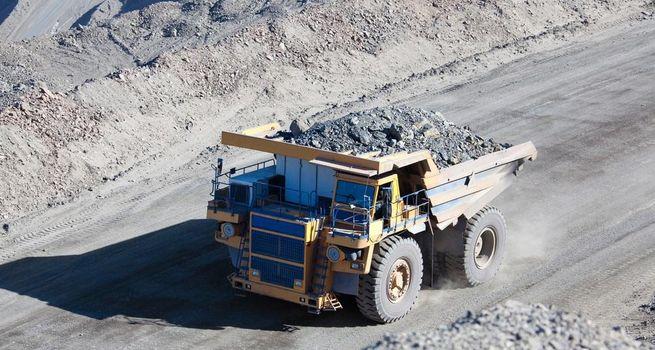
Liontown Limited (formerly Liontown Resources Limited) operates Australia's largest underground lithium mine at Kathleen Valley in Western Australia. The company transitioned its name in November 2025, reflecting its evolution into a pure-play lithium producer.
Kathleen Valley commenced spodumene concentrate production on July 31, 2024, and currently targets annual output of 500,000 tonnes of six-percent spodumene concentrate—equivalent to approximately 6% of global lithium supply.
The operation combines high-grade ore deposits with advanced underground mining methodology, positioning it as a low-cost, low-carbon producer. However, Liontown remains a single-asset company with no geographic diversification, making it highly exposed to lithium market cyclicality and operational execution risk at Kathleen Valley.
Why the Stock Is Falling
Liontown's 4.33% decline reflects multiple concurrent pressures. The immediate catalyst was LG Energy Solution's announcement to divest its 7.5% stake via block trade on February 25, 2026, raising questions about the strategic investor's confidence at a pivotal operational moment.
The H1 FY2026 results revealed a A$184 million statutory loss, though primarily non-cash, alongside a revenue miss of A$130 million against A$149 million guidance. More significantly, underlying EBITDA turned negative at minus A$8 million compared to positive A$11 million in the prior half-year, signaling margin compression from lower spodumene prices.
LG Energy's conversion of its convertible note into 239 million shares at A$1.62 per share diluted existing shareholders while eliminating debt, but the company's subsequent decision to exit has unnerved the market. Additionally, Goldman Sachs downgraded LTR, citing cash concerns despite the company holding A$390 million.
Board uncertainty surrounding Lead Independent Director Ian Wells' March 31 resignation adds governance questions. Fundamentally, lithium market weakness—with spodumene prices remaining depressed versus 2022 highs—constrains Liontown's pricing power despite rising production.
Industry Trends
The global lithium market is undergoing a significant rebalancing in early 2026. After years of structural oversupply—141,000 metric tonnes of lithium carbonate equivalent (LCE) in 2025—the market is tightening faster than anticipated.
S&P Global forecasts the 2026 surplus to narrow to just 109,000 mt LCE, setting up potential price recovery by late 2026 if demand accelerates. Battery-grade lithium carbonate spot prices rebounded to approximately A$24,086 per metric ton as of early March 2026, though sentiment remains cautious following underwhelming EV sales reports and geopolitical concerns affecting energy storage deployment in the Middle East.
The industry is transitioning from cost-cutting to growth-focused strategies. Major producers are advancing expansions and exploring battery-making partnerships to capture value chains beyond raw materials. Long-term, energy storage represents untapped demand—Fastmarkets data suggests stationary battery demand could triple by 2030—potentially absorbing Liontown's planned production increases.
Financial Performance
Liontown's H1 FY2026 financials reveal a company investing heavily for growth amid near-term margin pressure. Revenue of A$130 million represented strong 91% growth year-over-year but missed guidance of A$149 million, primarily due to lower realized lithium prices.
Production increased 21% to 105,000 tonnes, while sales jumped 45% to 112,000 tonnes, indicating better inventory management and customer fulfillment. However, the realized price per tonne averaged A$1,365, up 28% YoY but still substantially below the A$2,000+ prices of 2022.
The company swung to a statutory loss of A$184 million, though A$155 million derived from non-cash impairments and foreign exchange impacts. Underlying EBITDA was negative A$8 million, a significant deterioration from A$11 million in the prior half, reflecting depressed realized prices and underutilized production capacity during the underground mining transition.
Positively, all-in sustaining costs fell 17% to A$847/tonne, demonstrating operational efficiency gains. The cash position strengthened to A$390 million at period end from A$156 million, providing a 2+ year runway at current burn rates. However, this cash accumulation masks underlying operational weakness: Liontown generated negative free cash flow during H1, relying on working capital improvements rather than profitable operations.
Investment Risks
Liontown faces four primary risks. First, lithium commodity price risk remains acute: even modest declines below A$1,000/tonne would push the company into operating losses despite full capacity utilization. The company's 2 Mtpa nameplate capacity targets A$500+ million annual EBITDA at A$1,500/tonne pricing—a 35% margin improvement from current levels.
Second, single-asset concentration: Kathleen Valley represents 100% of production. Operational disruptions—major equipment failures, ore grade declines, or processing efficiency setbacks—have no offset from other operations. Early production data show lithium recovery at 61%, trending upward but still below optimal levels; sustained underperformance could reduce output by 10-15% versus nameplate.
Third, capital intensity and funding risk: the planned 4 Mtpa expansion study suggests A$2-3 billion additional capex. While Liontown holds A$390 million cash, major expansion would require equity or debt financing—problematic if commodity prices deteriorate or the company's cost of capital rises.
Fourth, geopolitical and regulatory risk: as China controls 65% of global lithium refining capacity, any tariffs or supply restrictions could disrupt Liontown's offtake economics. Western governments may mandate local processing, requiring additional capex or partnership arrangements.
Future Growth Drivers
Liontown's medium-term growth hinges on three factors. First, the Kathleen Valley ramp to 2.8 Mtpa nameplate capacity by June 2027 represents the core value driver. Current progress shows underground ore production at 308kt in Q3 (December 2025), tracking toward the 1.5 Mtpa target by March 2026 and 2.8 Mtpa by June 2027.
As capacity utilization rises and fixed costs are spread across higher output, EBITDA margins should expand significantly. At 90% utilization and A$1,500/tonne pricing, the company could generate A$900+ million annual EBITDA by FY2027, supporting shareholder returns.
Second, the global energy storage boom presents enormous demand upside. Stationary battery capacity is expected to triple from 2024 levels to over 1,500 GWh by 2030, consuming 300,000+ tonnes of lithium carbonate annually—equivalent to 15% of current global production. Liontown's capacity expansion to 4 Mtpa would directly capture this growth.
Third, potential strategic partnerships or M&A. The company has discussed battery-making partnerships and has LG Energy Solution's recent exit as evidence of M&A interest. A vertically integrated stake from an OEM or battery manufacturer could unlock higher valuations and provide strategic customer support.
Finally, spodumene price recovery: even a modest rebound to A$1,500-1,700/tonne on tightening fundamentals would substantially improve unit economics and cash generation.
Analyst Outlook
Analyst consensus remains deeply divided. Of 11 analysts covering LTR, 8 maintain sell ratings, 2 hold, and just 1 buy—a stark bearish tilt. Average price targets cluster around A$1.47, implying 6% downside from current levels, though the range spans A$0.52 to A$2.49, indicating low conviction.
Goldman Sachs downgraded the stock on cash concerns despite Liontown's A$390 million balance sheet, a puzzling call suggesting analysts doubt free cash flow generation even as the ramp accelerates. More constructively, consensus revenue CAGR projections of 43% for the next three years reflect confidence in Liontown's production ramp.
The disconnect between bullish growth forecasts and bearish price targets suggests analysts are heavily discounting commodity price assumptions or questioning management's execution. Some brokers are waiting for evidence of sustained profitability before upgrading; the company needs to demonstrate H2 FY2026 improvement as underground production scales.
Notably, several analysts have revised FY2027 EBITDA forecasts upward following the H1 results, hinting that as ramp progress becomes visible, ratings may shift. The consensus reflects transitional sentiment: skepticism now, potentially upside later.
Long-Term Perspective
Over a 3-5 year horizon, Liontown has compelling structural tailwinds despite current headwinds. The lithium market deficit is expected to reach 300,000+ tonnes LCE by 2028-2029, requiring aggressive supply growth. Liontown's planned 4 Mtpa capacity would produce approximately 750,000 tonnes of spodumene concentrate equivalent—equivalent to 150,000 tonnes of lithium content—critical to closing the supply gap.
The company's low-cost underground operation and Australian location (low political risk, strong permitting framework) are valuable assets. From a valuation standpoint, if Liontown achieves 2.8 Mtpa by FY2027 at A$1,500/tonne pricing, normalized EBITDA could reach A$1.2 billion, supporting an A$3-4 per share valuation at 3-4x EBITDA multiples typical for pure-play lithium producers.
The current A$1.38 price implies a highly stressed valuation: approximately 0.5x FY2027 consensus EBITDA on a 5-year DCF basis. This suggests significant upside if execution succeeds and commodity prices recover modestly.
Risk-adjusted, investors with a 3+ year horizon and high conviction in lithium fundamentals may find value, but near-term volatility is likely as sentiment swings between commodity price movements and production data.
Questions Investors Are Asking About Liontown Resources
Q: Is Liontown Resources a good investment right now?
A: It depends on your time horizon and risk tolerance. For long-term investors (3+ years), Liontown offers exposure to lithium supply growth at what many view as a depressed valuation. However, near-term headwinds—negative EBITDA, share dilution, and analyst downgrades—make it a speculative holding. The stock is appropriate only for investors comfortable with a 12-24 month period of underperformance while waiting for the production ramp to demonstrate profitability.
Q: Why is LTR down 4.33% today (March 20, 2026)?
A: The immediate decline reflects LG Energy Solution's announcement to exit its 7.5% stake via block trade, raising concerns about confidence from a strategic investor. More broadly, persistent lithium market weakness, shareholder dilution from LG's convertible conversion, and negative EBITDA in H1 FY2026 have weighed on sentiment. The stock has been range-bound in A$1.35-1.80 for months as investors await proof of profitability.
Q: What is Liontown's Kathleen Valley mine producing?
A: Kathleen Valley commenced production on July 31, 2024, and is targeting 500,000 tonnes of six-percent spodumene concentrate annually at full capacity (2.8 Mtpa by June 2027). H1 FY2026 production was 105,000 tonnes. The mine uses underground extraction, a lower-cost and lower-carbon methodology than traditional open-pit operations used by competitors.
Q: What are the key operational milestones ahead?
A: The company targets a 1.5 Mtpa run rate by end of March 2026 and 2.8 Mtpa by June 2027. Underground ore production has ramped impressively—227% growth to 533kt in H1 FY2026. A 4 Mtpa expansion study is underway, which if approved would double capacity and require significant capex. Management is also targeting lithium recovery above 61%, with gains to continue as the ore body is sequenced optimally.
Q: How is Liontown funded and what is its cash position?
A: Liontown held A$390 million in cash at H1 FY2026. Operating cash flow is currently negative, offset by a strong balance sheet from prior capital raises. LG Energy Solution converted its US$250 million convertible note into equity, improving the balance sheet but diluting shareholders. A 4 Mtpa expansion would likely require A$2-3 billion capex, necessitating external financing or asset partnerships. The company is currently self-funding through cash reserves.
Q: What do analysts think about LTR?
A: Analysts are divided. Of 11 covering analysts, 8 have sell ratings, 2 hold, and 1 buys. Average price target is A$1.47, with a range of A$0.52-A$2.49. Goldman Sachs downgraded to sell citing cash burn concerns despite the balance sheet strength. The consensus reflects caution on near-term profitability but implicit bullishness on longer-term production growth.
Q: How does spodumene pricing affect Liontown's profitability?
A: Spodumene pricing is critical. H1 FY2026 realized prices averaged A$1,365/tonne, up 28% YoY but well below 2022 peaks of A$2,000+. Every A$100/tonne change impacts full-year EBITDA by approximately A$50-60 million. The company break-even is estimated around A$900-1,000/tonne, so sustained weakness below A$1,200 would result in operating losses. Upside could be significant if prices recover to A$1,500-1,700 as the market tightens.
Q: Is lithium oversupply still a problem?
A: Oversupply is narrowing rapidly. Global lithium carbonate equivalent surplus was 141,000 mt in 2025 and is forecast to shrink to 109,000 mt in 2026 per S&P Global. By 2028-2029, the market is expected to swing to deficit as EV and energy storage demand outpace supply additions. This structural shift is highly favorable for new producers like Liontown coming into production.
Q: What happens if Liontown fails to ramp to 2.8 Mtpa?
A: Sustained underperformance vs. ramp targets would delay profitability and extend cash burn. At 2 Mtpa vs. 2.8 Mtpa, annual EBITDA would be 20-25% lower, potentially insufficent to fund the 4 Mtpa expansion and weakening near-term investor confidence. The stock would likely face further downward pressure. Management has signaled high confidence in the ramp based on H1 progress, but execution risk remains.
Q: Should I buy LTR on this dip?
A: LTR at A$1.38 offers value for long-term contrarian investors with high conviction in lithium fundamentals. The stock could easily reach A$3-4 by FY2027 if execution succeeds and lithium prices normalize. However, the 12-month outlook remains uncertain: further declines to A$1.0-1.15 are plausible if lithium prices fall or the ramp slows. A dollar-cost-average approach over 6-12 months may be preferable to committing all capital at current levels.
Conclusion
Liontown Resources stands at a critical juncture. Operationally, the company has delivered on its most important promise: Kathleen Valley is ramping production on schedule with underground mining transitions executed successfully. The path to 2.8 Mtpa by June 2027 appears achievable, which would place Liontown among the world's top lithium producers and position it as a multibagger from current levels if commodity prices normalize.
However, near-term headwinds are real. Negative EBITDA, shareholder dilution, strategic partner exits, and analyst skepticism create a treacherous trading environment. The stock's 4.33% decline on March 20 reflects broader malaise about lithium's near-term outlook and Liontown's profitability timeline.
For investors, the key question is whether to focus on current operational challenges (negative EBITDA, margin compression) or future production capacity and commodity market recovery. Evidence suggests the market is pricing in a delayed recovery scenario or structural demand disappointment. This creates both a risk (further downside if lithium prices weaken materially) and an opportunity (substantial upside if the market re-rates the company as it approaches full-capacity profitability in 2027).
A 2-3 year investor with conviction in EVs and energy storage may view A$1.38 as a compelling entry point; a momentum trader should wait for evidence of positive EBITDA and analyst upgrades before increasing exposure.
Disclaimer: This article is for informational purposes only and does not constitute financial advice. Investors should conduct their own research and consult with a qualified financial advisor before making investment decisions. Past performance is not indicative of future results.


 Nov 13, 2026





 Please wait processing your request...