
 CA
 NZ
 UK
 US
 IND

 AU

 Share
 X (Formerly Twitter)
 Whatsapp
 Facebook
 LinkedIn
 Telegram
 Email This Article
 Copy Link
 Summarize with AI
 Chat GPT
 Perplexity
KEY HIGHLIGHTS
- LTR stock surged 6.67% to $1.55 today, gaining $0.090 on improved market sentiment
- Kathleen Valley mine successfully transitioned to underground operations with 227% YoY surge in production
- Global lithium carbonate surplus is shrinking from 141,000 mt (2025) to 109,000 mt (2026), favoring new producers
- H1 FY2026 revenue grew 107% to A$207.5 million; underlying EBITDA at A$7.7 million negative
- Company holds A$390 million cash reserves; NRFC committed $50 million for ramp-up support
Liontown Resources (ASX:LTR) demonstrated strong momentum today, climbing 6.67% to A$1.55on 24 March 2026, as the lithium market shows signs of stabilizing after months of volatility. The surge reflects growing investor confidence in the company's ability to navigate a challenging commodity cycle and capitalize on its world-class Kathleen Valley asset.
For investors tracking lithium equities, today's move signals a potential inflection point as supply constraints begin to outweigh oversupply concerns. This analysis examines the fundamental drivers behind LTR's strength, production progress, and medium-term growth prospects.
ABOUT THE COMPANY
Liontown Limited (formerly Liontown Resources) operates one of Australia's most significant hard rock lithium deposits. The company rebranded in November 2025, signaling a transition to fully-fledged producer status.
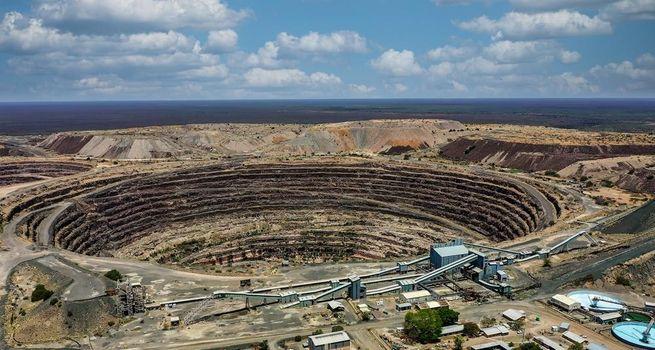
The Kathleen Valley Project located 680 kilometers north-east of Perth, Western Australia, commenced commercial spodumene concentrate production on July 31, 2024. Designed as Australia's first underground lithium mine, the operation positions Liontown as a low-cost producer with multi-decade mine life potential.
With production capacity of 500,000 tonnes of spodumene concentrate annually and expansion upside, Liontown supplies world-leading vehicle and battery manufacturers including Tesla, Ford, and LG Energy Solution.
WHY THE STOCK IS MOVING (UP 6.67%)
Today's 6.67% rally reflects a confluence of positive catalysts:
- Market Sentiment Shift: Recent recovery in lithium carbonate prices and forecasts showing a market swing to deficit by 2028-2029 have bolstered investor confidence in new producers.
- Production Momentum: Underground mining ramp-up at Kathleen Valley posted a 227% YoY surge in production during H1 FY2026, demonstrating operational excellence and de-risking the transition.
- Financial Stability: Despite near-term losses, the company's A$390 million cash position and A$50 million NRFC commitment provide substantial runway for operations.
- Market Positioning: With global lithium surplus shrinking from 141,000 mt to 109,000 mt year-over-year, Liontown's cost structure becomes increasingly attractive.
INDUSTRY TRENDS: LITHIUM AND EV BATTERY DEMAND
The lithium market is experiencing a structural rebalancing. After several years of oversupply driven by rapid capacity additions from lower-cost producers, market dynamics are shifting in favor of established producers with strong cost profiles.
Global lithium carbonate equivalent surplus contracted to 109,000 mt in 2026 from 141,000 mt in 2025. Projections now indicate the market will swing to deficit by 2028-2029, driven by accelerating EV adoption and energy storage deployment worldwide.
For hard rock producers like Liontown, this shift removes pricing pressure and improves visibility on returns. The company's low-carbon footprint and Australian provenance also appeal to battery manufacturers seeking ESG-compliant supply chains.
FINANCIAL PERFORMANCE
H1 FY2026 Results provided a mixed picture:
- Revenue surged 107% to A$207.5 million, reflecting production ramp-up and customer shipments.
- Statutory loss of A$184 million reflects depreciation, amortization, and finance costs on the A$3+ billion capital investment in Kathleen Valley.
- Underlying EBITDA was marginally negative at A$7.7 million, indicating operations are approaching cash-positive status.
- Cash balance of A$390 million provides comfortable cushion for working capital and discretionary investments.
INVESTMENT RISKS
While LTR offers compelling medium-term prospects, material risks warrant careful consideration:
- Commodity Price Volatility: Lithium prices remain subject to supply-demand shocks. A sustainable recovery in Chinese production could extend oversupply and compress margins.
- Operational Execution: Underground mining is technically demanding. Delays in ramp-up or cost overruns could stress cash flow and attract analyst downgrades.
- Customer Concentration: Reliance on major battery and automaker customers introduces revenue concentration risk.
- Capital Requirements: Expansion projects may require additional financing, potentially diluting shareholders or constraining returns.
FUTURE GROWTH DRIVERS
Liontown's medium-term value creation hinges on several key drivers:
- Production Ramp-Up: Full-year 2026 and 2027 guidance assumes further underground production acceleration, targeting nameplate capacity of 500,000 tpa.
- Cost Reduction: As operations mature and throughput increases, unit costs should decline materially, improving EBITDA conversion.
- Buldania Project: The company's second asset, Buldania, remains in advanced development. Bringing this into production would more than double lithium output by the early 2030s.
- Price Recovery: Global market rebalancing toward deficit by 2028-2029 should support materially higher lithium prices, enhancing project returns.
LONG-TERM INVESTMENT PERSPECTIVE
For patient, high-conviction investors with a 3-5 year time horizon, Liontown presents a compelling asymmetric risk-reward opportunity.
The company operates a world-class asset with demonstrated technical and operational capability. As Kathleen Valley reaches steady-state production and underlying EBITDA inflects decisively positive, earnings visibility should improve sharply.
Peak valuation multiples for lithium producers trading on normalized EBITDA imply significant upside from current levels, particularly if lithium prices sustain above $800/tonne (lithium carbonate equivalent). Near-term volatility is likely, but medium-term fundamentals support accumulation on weakness.
CONCLUSION
Liontown Resources' 6.67% surge today reflects growing recognition that the company has successfully navigated the critical transition from development to production. With Kathleen Valley now operating at scale and the global lithium market shifting toward structural deficit, LTR's growth prospects have markedly improved.
The investment case rests on three pillars: (1) world-class, low-cost lithium assets with multi-decade lives; (2) improving commodity fundamentals with supply deficit expected by 2028-2029; and (3) capable management delivering on operational milestones.
Risks remain material, particularly around near-term profitability timing and commodity price volatility. However, for investors with conviction in long-term lithium demand and patience for operational ramp-up, Liontown presents a compelling opportunity to gain exposure to one of Australia's most significant mineral assets at reasonable entry valuation.
Today's rally suggests the market is beginning to price in this inflection. Accumulation on any weakness remains tactically attractive.
QUESTIONS INVESTORS ARE ASKING ABOUT LIONTOWN RESOURCES
Q1: Is Liontown Resources a good investment?
A: LTR suits investors seeking exposure to long-term lithium supply growth with conviction in Liontown's operational delivery. Near-term profitability timing remains uncertain, but asset quality is world-class. Current valuation offers reasonable entry for long-term holders.
Q2: When will Liontown reach profitability?
A: Underlying EBITDA is approaching breakeven. Full-year 2026 production ramp-up should deliver materially positive underlying EBITDA, assuming lithium prices remain above $500/tonne. Statutory profitability follows as depreciation burden stabilizes.
Q3: What is Liontown's competitive advantage?
A: Low-cost hard rock production, underground mining expertise, long mine life (30+ years), Australian provenance, and ESG credentials. Kathleen Valley's all-in cash cost is competitive versus spodumene alternatives.
Q4: What are the risks to the investment thesis?
A: Commodity price collapse, operational delays, customer concentration, capital requirements for expansion, and currency headwinds (AUD strength). Mining execution risk is material in next 12-18 months.
Q5: How does lithium supply/demand trend support Liontown?
A: Global surplus is contracting. Market is forecast to swing to deficit by 2028-2029, creating favorable pricing environment for established producers. EV adoption and energy storage growth underpin sustained lithium demand.
Q6: Does Liontown pay a dividend?
A: No dividend currently. Capital is retained for operations and potential Buldania development. Dividends may commence once EBITDA stabilizes and debt is managed down.
Q7: How does LG Energy Solution's stake sale affect Liontown?
A: The February 2026 divestment of 7.5% by LG was portfolio-driven, not strategic. LG remains a key customer. The sale did not signal loss of confidence, though it created near-term sentiment headwinds.
Q8: What is the Buldania Project and when will it produce?
A: Buldania is Liontown's second major hard rock lithium deposit in Western Australia. Development is underway; production could commence in the early 2030s, potentially doubling total lithium output and extending mine life significantly.
Q9: How much cash does Liontown have, and how long will it last?
A: As of H1 FY2026, Liontown held A$390 million. With underlying EBITDA approaching breakeven and A$50 million NRFC support committed, cash runway extends through full production ramp-up and into positive operating cash generation.


 Nov 13, 2026





 Please wait processing your request...