
 CA
 NZ
 UK
 US
 IND

 AU

 Share
 X (Formerly Twitter)
 Whatsapp
 Facebook
 LinkedIn
 Telegram
 Email This Article
 Copy Link
 Summarize with AI
 Chat GPT
 Perplexity
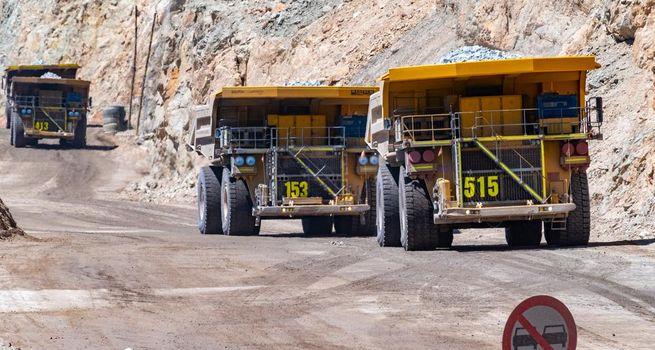
The Australian Securities Exchange (ASX) market hosts thousands of listed companies, from blue-chip industrials to early-stage explorers. Within this landscape, small-cap and micro-cap mineral exploration companies represent some of the highest-risk, highest-reward opportunities available to retail investors.
At its core, Legacy Minerals is a New South Wales-focused copper and gold explorer with a strategically important partnership with Rio Tinto Exploration, one of the world's largest and most technically sophisticated mining companies. This partnership—structured as a farm-in agreement valued at up to $25 million in exploration expenditure—represents a significant validation of LGM's exploration assets and technical team. Unlike many junior explorers that struggle to fund their exploration programs through dilutive capital raises, Legacy Minerals benefits from Rio Tinto's commitment to fund the next phase of exploration work on the flagship Thomson Copper-Gold Project.
As of early April 2026, Legacy Minerals stock has demonstrated remarkable momentum, with daily gains approaching 31%, capturing the attention of retail investors, small-cap traders, and institutional allocators with conviction in the junior minerals space. This performance reflects growing recognition that the company's asset portfolio, combined with strategic partnerships and near-term exploration catalysts, positions LGM for potentially transformative developments.
This comprehensive analysis examines Legacy Minerals from multiple angles: the company's project portfolio and geological context, the strategic rationale for Rio Tinto's partnership, financial implications of farm-in arrangements, near-term catalysts expected through 2026 and beyond, valuation methodology appropriate for micro-cap explorers, risk factors that must be understood before investing, and the role LGM might play in a diversified investment portfolio. Whether you are a seasoned small-cap investor or new to the minerals exploration space, this report provides the foundational analysis needed to assess Legacy Minerals as an investment opportunity.
The thesis underlying this analysis is straightforward: in a commodity environment characterized by growing demand for copper due to renewable energy transition and electrification, combined with strong precious metals demand, Legacy Minerals offers portfolio exposure to exploration-stage assets in a stable jurisdiction with significant geological potential. The Rio Tinto partnership de-risks the exploration program while maintaining upside optionality for shareholders. Nevertheless, exploration is inherently high-risk, and investors must maintain appropriate position sizing and risk management discipline.
2. Company Overview
2.1 Corporate History and Market Position
Legacy Minerals Holdings Limited operates as a mineral exploration company listed on the Australian Securities Exchange under the ticker code LGM. The company was established with a strategic mandate to consolidate prospective mineral exploration licenses in New South Wales, Australia, focusing on copper, gold, and nickel-cobalt opportunities. LGM represents the modern manifestation of junior explorers that have become increasingly important in the minerals value chain, undertaking the high-risk, high-cost initial exploration phase that often precedes major discoveries and subsequent development by larger mining companies.
The company's management team brings together geologists, mining engineers, and capital markets professionals with combined decades of experience in mineral exploration, project evaluation, and ASX operations. This mix of technical and commercial expertise is essential for navigating the complex landscape of exploration permitting, geophysical surveying, drilling programs, and capital management that characterize the junior exploration sector.
LGM's corporate strategy reflects a deliberate geographic focus on New South Wales, an Australian state with world-class mineral endowment, experienced exploration community, and mature regulatory framework for mining and exploration licensing. Within NSW, the company targets specific geological provinces—namely the Lachlan Fold Belt and New England Fold Belt—known to host significant copper-gold deposits and offering the potential for large-scale discoveries.
2.2 NSW Mineral Province Context and Geological Setting
To appreciate the strategic importance of LGM's projects, it is essential to understand the geological and political context in which they operate. New South Wales comprises multiple major geological provinces, each with distinctive mineral-bearing characteristics and exploration history. The Lachlan Fold Belt, extending across central NSW, has historically produced significant copper-gold deposits, including the Cadia district near Orange and numerous smaller deposits. This fold belt is characterized by Ordovician and Silurian-aged rock sequences intruded by granitic plutons, creating the structural and chemical conditions favorable for porphyry copper-gold mineralization and epithermal gold systems.
The New England Fold Belt, located in northern NSW, similarly hosts prospective copper-gold, gold, and base metal deposits within a distinctive structural setting. These geological provinces are not only resource-rich but operate within Australia's mature mining regulatory framework, providing permitting certainty and access to infrastructure, power, and skilled labor that would be unavailable in frontier regions.
For explorers like LGM, this geographic positioning offers significant advantages: deposits within these provinces, once discovered and delineated, benefit from existing technical knowledge, established infrastructure corridors, and regulatory pathways that reduce the time and cost from discovery to economic studies. Furthermore, the NSW government has maintained a generally supportive stance toward mineral exploration, recognizing its economic contribution and the distinction between exploration-phase disturbance and long-term mining operations.
2.3 Project Portfolio Overview
Legacy Minerals maintains a diversified portfolio of mineral exploration projects, each at different stages of development and targeting different commodity exposures. This diversification provides multiple shots on goal for the discovery of economically significant deposits, while enabling the company to allocate capital and technical resources to the most promising opportunities. Below, we detail each major project:
Thomson Copper-Gold Project
The Thomson Copper-Gold Project represents Legacy Minerals' flagship asset and the centerpiece of its exploration strategy. Located west of Bourke, New South Wales, the project encompasses approximately 5,500 square kilometers of prospective exploration ground, making it a substantial land package by Australian standards. The project area straddles the Lachlan Fold Belt geological province, with potential to host both porphyry copper-gold deposits and associated epithermal gold mineralization.
The Rio Tinto Exploration partnership focuses on the Thomson Project, with Rio Tinto committing to fund a substantial phased exploration program. The initial option agreement provided Rio Tinto with the right to earn a 75% interest in the project by funding $5 million in exploration expenditure over a defined period, with optional phase extensions allowing Rio Tinto to increase its stake to 80% by contributing an additional $25 million. This structure reflects Rio Tinto's assessment that the Thomson Project warrants systematic, well-funded exploration to test the geological potential.
In 2026, Legacy Minerals and Rio Tinto have planned a comprehensive geophysical survey program, a critical step in exploration maturation. Specifically, the program includes 19 induced polarization (IP) survey lines designed to identify subsurface mineralization signatures consistent with porphyry copper-gold systems. Induced polarization surveys measure the electrical properties of rock and mineralization, making them particularly effective for detecting the disseminated sulfide mineralizations characteristic of porphyry deposits. The 2026 geophysical program represents a major catalyst, with results potentially transforming the project from early-stage exploration to a portfolio of defined drill targets.
The geological similarities between the Thomson Project and the Paterson Province in Western Australia—a region known to host world-class copper deposits including Telfer and Nifty—reinforce the prospectivity assessment. While the Paterson Province's tier-one status reflects decades of discovery and development, the same geological mechanisms that created those deposits may operate in analogous settings like Thomson.
Mt Carrington Project
The Mt Carrington Project, located in NSW, represents Legacy Minerals' advanced precious metals exploration asset targeting silver and gold mineralization. The project has progressed beyond the initial assessment phase, with drilling campaigns already underway. Recently, the company has secured approval for an 8-hole diamond drilling program totaling approximately 4,000 meters of drilling, representing a substantial capital commitment to testing the Mascotte prospect and other high-priority targets within the license area.
The approved drilling program reflects confidence in near-term discovery potential at Mt Carrington. Diamond drilling, while more expensive than reverse-circulation drilling, provides several technical advantages: it yields core samples that preserve mineralization textures and structures, enabling more precise interpretation of ore genesis and controls on mineralization geometry. For a silver-gold project where both vein geometry and metal grades control project economics, these advantages justify the additional cost.
The Mascotte prospect, which has received particular attention in the drilling program, represents a defined silver-gold target based on previous exploration work. The approved 4,000-meter program will systematically test this target at multiple locations and depths, with the goal of defining a mineral resource estimate and assessing economic viability. Successful drilling at Mt Carrington could establish a significant silver-gold project, complementing the copper upside from Thomson.
Bauloora Project
The Bauloora Project is located approximately 130 kilometers northwest of Canberra within the New England Fold Belt, NSW. This project area hosts prospective copper-gold mineralization in a geological setting recognized for historical mining and exploration success. Importantly, Bauloora benefits from a farm-in partnership with Newmont Mining, one of the world's largest gold production companies.
Similar to the Rio Tinto relationship on Thomson, the Newmont farm-in on Bauloora represents third-party validation of the project's exploration merit. Major mining companies conduct rigorous technical and economic evaluation before committing exploration capital, and Newmont's participation signals confidence in the prospectivity of the license area. The farm-in structure also enables Legacy Minerals to conserve cash while allowing systematic exploration to advance the project through key technical milestones.
NiCo Young Project
The NiCo Young Project represents Legacy Minerals' exposure to the nickel-cobalt commodity complex, materials critical for battery production and renewable energy infrastructure. The project is governed by a Memorandum of Understanding with Cobalt Blue Holdings, a company focused on developing cobalt assets in Australia. This MOU structure provides LGM optionality: should cobalt or nickel markets tighten, or should exploration at NiCo Young uncover particularly prospective mineralization, the company can activate the exploration program with committed partner support.
The nickel-cobalt exposure diversifies Legacy Minerals beyond copper-gold, acknowledging the structural growth in battery materials demand driven by electric vehicle adoption and grid-scale energy storage deployment globally.
3. Investment Thesis and Strategic Rationale
The bull case for Legacy Minerals rests on converging positive factors across geology, corporate partnerships, commodity markets, and technical catalysts. Understanding these factors in detail is essential for forming an informed investment view.
3.1 Rio Tinto De-Risking and Validation
Rio Tinto Exploration's partnership with Legacy Minerals on the Thomson project carries significant weight in any investment analysis. Rio Tinto, a global mining major with annual revenues exceeding $50 billion, operates with rigorous technical and economic discipline. The company does not commit exploration capital lightly; it does so only after thorough geological, geochemical, and geophysical assessment of a prospect's potential.
The Rio Tinto partnership effectively de-risks the Thomson project from both technical and financial perspectives. Technically, Rio Tinto's involvement implies that independent experts at one of the world's premier exploration teams have assessed the project and judged it worthy of multi-million-dollar investment. Financially, the farm-in structure ensures that the exploration program will be fully funded by Rio Tinto up to agreed spending targets, eliminating the risk that LGM shareholders face dilution from future capital raises to fund exploration work.
This dynamic is powerful: retail investors in small-cap explorers often face scenarios where initial enthusiasm about a project fails to translate into funding for next-phase work, resulting in shareholder dilution or asset sales at unfavorable terms. The Rio Tinto partnership substantially mitigates this risk for Thomson. LGM shareholders can anticipate that exploration will proceed according to a professional, well-funded program, with the upside optionality that successful exploration could attract downstream interest from other major mining companies or lead to accelerated development discussions with Rio Tinto itself.
3.2 Multi-Project Portfolio and Diversification
Legacy Minerals is not a single-asset company betting everything on one project. Instead, the company maintains a balanced portfolio with multiple projects at different development stages and targeting different commodities. This structure provides genuine diversification benefits: if exploration at Thomson encounters unforeseen geological challenges, progress at Mt Carrington or Bauloora could provide offsetting catalysts and value creation.
Moreover, the portfolio mix—spanning copper-gold (Thomson, Bauloora), silver-gold (Mt Carrington), and nickel-cobalt (NiCo Young)—provides exposure to multiple commodity price scenarios. In a macro environment characterized by uncertainty about which commodity complex will outperform, this diversification reduces single-commodity risk while maintaining exposure across materials critical for the energy transition.
The portfolio approach also enables capital allocation flexibility. As projects mature and investor interest shifts, management can allocate capital and technical resources dynamically to maximize shareholder value. A portfolio structure also provides option value: if market conditions or geological results favor one project over others, the company can accelerate development while deprioritizing other assets.
3.3 Newmont Partnership and Institutional Validation
Beyond Rio Tinto, Legacy Minerals benefits from a farm-in partnership with Newmont Mining on the Bauloora project. Newmont, the world's largest gold producer by production volume, brings similar de-risking and validation benefits to Bauloora as Rio Tinto brings to Thomson. This pattern of major mining company partnerships is not coincidental; it reflects the quality and prospectivity of LGM's asset base.
Two separate partnerships with tier-one global mining companies—Rio Tinto and Newmont—constitute powerful validation signals. Retail investors often discount the views of company management (rightfully, given incentive misalignment), but third-party validation from major mining companies with independent economic incentives carries substantial weight. These companies have spent billions developing technical expertise in mineral exploration; they do not squander capital on speculative prospects lacking sound geological foundation.
3.4 Copper-Gold Commodities and Structural Demand Growth
From a macroeconomic perspective, the commodities underlying Legacy Minerals' projects face structural demand tailwinds. Copper demand is growing substantially due to electrification and renewable energy transition; each electric vehicle requires significantly more copper than traditional vehicles, and renewable energy infrastructure (wind turbines, solar installations, grid transmission) is highly copper-intensive. Industry forecasts project decades of above-trend copper demand growth.
Gold, traditionally a safe-haven asset and store of value, maintains strong investment demand, particularly in environments characterized by currency instability or geopolitical uncertainty. Additionally, gold continues to find industrial demand in electronics and specialized applications. The precious metals market remains robust, supporting attractive exploration risk-reward for projects like Mt Carrington.
Nickel and cobalt, underlying the NiCo Young project, represent the materials of energy storage. As electric vehicle adoption accelerates globally and grid-scale battery storage deploys at utility scale, demand for battery-grade nickel and cobalt will accelerate substantially. These commodities face potential supply constraints, supporting long-term price expectations.
For a multi-project explorer like Legacy Minerals, positioning across these commodity complexes provides exposure to secular demand trends that should support commodity prices across the exploration and development cycle.
4. Financial Analysis and Farm-In Economics
4.1 Farm-In Structure and Exploration Economics
Understanding the financial mechanics of farm-in arrangements is essential for accurately assessing Legacy Minerals' balance sheet and cash flow dynamics. In a typical farm-in transaction, the junior explorer (in this case, LGM) retains rights to a mineral exploration project. A major mining company (Rio Tinto) enters into an agreement to fund exploration expenditure in exchange for the right to earn an increasing interest in the project.
For Legacy Minerals, the Rio Tinto farm-in is structured as follows: Rio Tinto holds an option to earn 75% of the Thomson Project by funding $5 million in exploration over the defined Phase 2 period. Subsequently, Rio Tinto can increase its stake to 80% by funding an additional $25 million during Phase 3. This structure is economically advantageous for LGM shareholders because exploration is funded through Rio Tinto capital rather than through dilutive share issuances.
Consider the alternative scenario without a farm-in partner: LGM would need to raise $5-30 million through capital markets to fund the exploration program. Such a capital raise, depending on market conditions and investor sentiment, might result in 20-40% shareholder dilution or more. Additionally, small-cap explorers raising capital often do so at substantial discounts to recent trading prices, further eroding shareholder value. The Rio Tinto farm-in effectively avoids this dilution entirely while ensuring that exploration proceeds according to a professional, well-funded program.
From Rio Tinto's perspective, the structure provides a call option on discovery upside: Rio Tinto will fund exploration only if geological results justify continued investment, but retains the optionality to increase its stake as the project matures and geological knowledge improves. This alignment of incentives—both companies benefit if exploration is successful—provides confidence that the exploration program will be executed at high technical standards.
4.2 Cash Position and Funding Requirements
As a junior explorer, Legacy Minerals maintains a modest cash position typically supplemented by capital raises and supplementary cash flow from options or warrant exercises. The Rio Tinto farm-in significantly reduces the company's funding requirements relative to peers pursuing similar exploration programs without partner capital. Additionally, option agreements with Rio Tinto include upfront payments—in the Thomson case, Rio Tinto paid $400,000 upfront with additional $50,000 due within six months, providing near-term cash inflow to LGM.
This cash inflow supports general corporate costs, project administration, and pre-development work. The financial structure enables LGM to operate with a lean balance sheet, minimizing the need for dilutive capital raises while maintaining optionality across its asset portfolio.
4.3 Share Structure and Ownership Dynamics
Understanding LGM's share structure is important for assessing dilution risk and per-share value implications of future corporate actions. As a micro-cap, early-stage explorer, LGM likely has a relatively straightforward share structure with common equity, options, and potentially performance shares. The company may issue options or performance shares as part of employee compensation or strategic incentives, creating potential future dilution.
However, the Rio Tinto and Newmont farm-in partnerships effectively mitigate the risk that future dilution will occur through equity raises to fund exploration. This represents a significant advantage relative to peers without partnership capital commitments. Investors should monitor disclosure of option exercises and any new capital raises, but the partnership structure provides confidence that near-term exploration funding will not require shareholder capital.
5. Near-Term Growth Drivers and Catalysts
5.1 2026 Geophysical Program and Drilling Results
The most significant near-term catalyst for Legacy Minerals is the comprehensive geophysical survey program planned for 2026 on the Thomson Project. The 19-line induced polarization survey represents a systematic effort to map subsurface conductivity variations associated with disseminated sulfide mineralization typical of porphyry copper-gold deposits.
Induced polarization surveys generate data that, when processed and interpreted by skilled geophysicists, can define targets for drilling. High-quality IP anomalies consistent with porphyry mineralization signatures provide confidence to drilling programs and reduce exploration risk. The 2026 IP program should generate a portfolio of drilling targets that Rio Tinto can test in subsequent phases, potentially leading to discovery-stage results through 2026 and 2027.
Additionally, the Mt Carrington drilling program (8 holes, 4,000 meters) will generate direct geological evidence regarding silver-gold mineralization at the Mascotte prospect and other targets. Drilling is the most direct mechanism for delineating mineralization and establishing resource potential. Successful drilling—defined as intersecting significant thicknesses of grades approaching ore-grade metal content—could establish Mt Carrington as a credible silver-gold project, attracting downstream interest and potentially sparking re-rating of the stock.
5.2 Rio Tinto Spending Program and Phased Deployment
Rio Tinto's commitment to fund exploration to defined spending levels creates a predictable exploration program that should drive catalysts over a multi-year horizon. The initial $400,000 option payment is due immediately, with $50,000 due within six months. The Phase 2 commitment ($5 million over the defined term) should fund the 2026 geophysical program and subsequent drilling work. Later phases, conditional on geological results, could deploy an additional $25 million toward delineating major discoveries.
This phased approach creates multiple potential catalysts: completion of the geophysical survey (expected late 2026), interpretation and target definition (early 2027), drilling campaign results (mid-to-late 2027), and potential advancement to Phase 3 spending depending on exploration results. Each milestone provides an opportunity for newsflow that could move the stock price, particularly if results indicate discovery-scale potential.
5.3 Copper Cycle Strength and Renewable Energy Demand
Beyond company-specific catalysts, Legacy Minerals benefits from a favorable macro backdrop for copper demand. Global copper inventories remain historically low, supporting long-term price expectations. Renewable energy deployment continues accelerating, with annual solar and wind installations reaching record levels globally. Each installation requires substantial copper; a typical 2-megawatt wind turbine contains approximately 1 metric ton of copper.
Additionally, electric vehicle adoption continues accelerating, with EV sales growing 30%+ annually in most developed markets despite macroeconomic headwinds. EVs contain 3-4 times the copper of internal combustion vehicles, driving structural copper demand growth. As electric vehicle penetration increases, copper demand will accelerate further, supporting commodity prices and exploration success.
Strong copper prices strengthen the economics of exploration success, increasing the likelihood that discoveries at Thomson will be economically viable. For a copper-gold explorer like Legacy Minerals, an extended period of firm copper pricing represents a powerful tailwind.
6. Risks and Challenges
6.1 Exploration Risk and No Guarantee of Discovery
Exploration is inherently high-risk. Legacy Minerals' projects remain in the exploration stage, with no guarantee that systematic exploration will result in economically significant discoveries. Porphyry copper-gold deposits, while common globally, are distributed unpredictably and their discovery requires luck alongside scientific methodology. The Rio Tinto partnership de-risks funding but does not eliminate geological risk.
Exploration programs may encounter unforeseen geological complexity, unexpected mineralogy changes, or other technical challenges that complicate project development. The Mt Carrington drilling program, while well-planned, may intersect mineralization grades or geometries less favorable than anticipated. The Thomson geophysical survey may identify fewer or weaker IP anomalies than hoped. Investors must maintain realistic expectations regarding exploration outcomes and be prepared for disappointment.
Additionally, many junior explorer equities decline substantially if exploration results disappoint investor expectations. Stock prices sometimes reflect over-optimistic expectations regarding discovery, making downside risk material. Investors should ensure position sizing reflects exploration risk appropriately.
6.2 Commodity Price Risk
While structural demand for copper, gold, nickel, and cobalt appears robust, short-term commodity prices can move sharply due to macroeconomic cycles, supply shocks, or investor sentiment shifts. A significant copper price decline would reduce the economic viability of projects and potentially trigger write-downs or project de-prioritization. Gold prices, while historically more stable, can decline during periods of USD strength or risk appetite.
For exploration-stage companies, commodity prices influence not only project economics but also investor appetite and capital markets funding. A prolonged commodity downturn could make capital raises expensive or impossible, constraining exploration programs. Investors must be comfortable with commodity price volatility as an inherent aspect of exploration company investing.
6.3 Partner Dependency and Farm-In Risks
While the Rio Tinto and Newmont partnerships are positive, they create dependency on major mining company decision-making. Rio Tinto may decide to de-prioritize Thomson if exploration results are disappointing or if global copper markets deteriorate. The farm-in agreement, while committing Rio Tinto to fund exploration, does not guarantee that they will exercise options to increase their stake beyond the initial commitment levels.
If Rio Tinto withdraws or reduces exploration spending, Legacy Minerals would need to secure alternative funding or reduce exploration scope. This represents a material risk, particularly if the stock price declines, making capital raises expensive. Investors should review the fine print of farm-in agreements to understand Rio Tinto's rights to reduce spending or withdraw under various scenarios.
6.4 Dilution and Capital Raise Risk
Despite farm-in partnerships funding exploration, Legacy Minerals may require additional capital raises to fund corporate costs, acquire additional acreage, or accelerate exploration programs. Any capital raise, depending on market conditions, could result in shareholder dilution. Dilution is particularly material for micro-cap explorers where funding often occurs at discounts to recent trading prices.
Additionally, options and performance shares granted to employees and consultants will eventually dilute existing shareholders. While option dilution is typically modest relative to discovery upside in successful explorers, it represents a real cost to shareholders. Investors should monitor option issuance and exercise activity.
6.5 Regulatory and Permitting Risk
While Australia maintains a mature mining regulatory framework, exploration permitting can face challenges from environmental advocacy, Indigenous consultation requirements, or regulatory changes. NSW government policy toward mineral exploration, while currently supportive, could shift due to political changes. Environmental regulations could become more stringent, increasing exploration costs or restricting activities.
Additionally, Indigenous engagement and free, prior, and informed consent (FPIC) represent increasingly important components of Australian mineral exploration. Projects must maintain strong relationships with Indigenous communities and respect Indigenous rights. Failure in community engagement could delay or prevent permitting of exploration programs. Investors should monitor regulatory and permitting developments that could affect project timelines.
6.6 Timeline and Execution Risk
Exploration programs often encounter delays due to weather, equipment availability, permitting, or logistical challenges. The 2026 geophysical program and Mt Carrington drilling program may slip into 2027 or beyond, delaying catalysts. Delays can be frustrating for investors and may trigger stock price weakness if markets interpret delays as reduced confidence.
Additionally, interpretation of geophysical data or drilling results may take longer than anticipated, extending the timeline from data acquisition to market-moving announcements. Investors should maintain patience and realistic expectations regarding exploration program execution timelines.
7. Valuation Framework for Early-Stage Explorers
7.1 Exploration Company Valuation Methodology
Valuing early-stage mineral explorers presents challenges absent in mature companies: no revenue, speculative assets, and high execution risk make traditional discounted cash flow analysis inappropriate. Instead, investors rely on alternative valuation frameworks: net asset value (NAV) approaches, peer comparison multiples, and more qualitative assessments of asset quality and partnering strength.
Net Asset Value (NAV) approaches attempt to assign economic value to exploration assets based on comparable project valuations and discovery potential. A project in a world-class jurisdiction with strong geological merit might be valued at $5-10 million, while a more speculative property might be valued at $500K-2 million. Summing valuations across projects and subtracting debt yields estimated NAV. This approach is inherently subjective but provides a floor estimate of enterprise value.
Peer comparison involves assessing how markets value other explorers with similar geology, stage, and partnering. If comparable explorers with single projects trade at $5-10 million market capitalizations, a multi-project explorer with better partnering might command a 50-100% premium. This approach provides market-based pricing discipline while acknowledging that early-stage explorer valuations reflect sentiment and capital markets conditions as much as fundamental analysis.
Investors should recognize that early-stage explorer valuations can move substantially based on relatively modest newsflow, and sentiment can shift rapidly. Valuation discipline is essential for managing risk.
7.2 NAV Approach Applied to Legacy Minerals
Applying NAV analysis to Legacy Minerals: the Thomson Project, with Rio Tinto backing and 5,500 km2 of prospective ground in a tier-one jurisdiction, might be conservatively valued at $15-25 million. Mt Carrington, with drill-supported evidence of silver-gold mineralization, might be valued at $5-10 million. Bauloora, with Newmont partnership, at $5-8 million. NiCo Young, at early stage, at $1-2 million. Summing these estimates and adjusting for corporate overhead and dilution yields estimated NAV in the range of $25-45 million.
Legacy Minerals' market capitalization and fully diluted share count will determine whether the stock trades at a discount or premium to NAV. Investors discovering that LGM trades at a significant discount to conservatively estimated NAV may view the stock as undervalued, particularly if exploration catalysts are anticipated. Conversely, if the stock trades at a premium to NAV, investors should be cautious unless convinced that near-term discoveries could substantially increase valuation.
These NAV estimates are illustrative and should be refined based on more detailed asset quality assessment and comparable company analysis.
8. Competitive Positioning vs. Peer Explorers
Legacy Minerals operates within a competitive landscape of other ASX-listed and privately-held mineral explorers. Key competitors include junior explorers pursuing similar copper-gold targets in eastern Australia, as well as explorers targeting precious metals and nickel-cobalt. Understanding LGM's relative positioning is valuable for assessing its competitive strengths and potential value capture.
Key competitive advantages for Legacy Minerals include: (1) Multi-project portfolio providing diversification and multiple shots on goal; (2) Rio Tinto and Newmont partnerships representing significant validation and de-risking; (3) Quality geology in the Lachlan Fold Belt and New England Fold Belt with direct major company interest; (4) Stage diversity enabling flexible capital allocation and multiple catalysts; (5) Management team with combined mineral exploration and capital markets expertise.
Disadvantages relative to some peers include potentially smaller individual project footprints, lack of historical resource estimates (competitors with previous discoveries offer investors greater geological certainty), and the inherent uncertainty of exploration-stage assets. Additionally, LGM's dependence on partner decisions creates some execution risk relative to fully-funded explorers.
On balance, Legacy Minerals' combination of quality projects, major company partnerships, and diversified portfolio position it competitively among micro-cap explorers. The Rio Tinto and Newmont partnerships distinguish LGM from single-project explorers lacking equivalent validation.
9. Market Sentiment and Stock Price Dynamics
As of early April 2026, Legacy Minerals stock has demonstrated significant momentum, with daily gains approaching 31%. This price action reflects a confluence of positive factors: exploration program announcements, positive market sentiment toward small-cap explorers and commodity stocks, retail investor enthusiasm for under-followed micro-cap opportunities, and technical momentum from accelerating volume.
Stock price momentum in micro-caps is often driven by retail investor attention and social media discussion as much as by fundamental analysis. A relatively small amount of buying volume can drive substantial percentage gains in thinly-traded stocks, creating the appearance of institutional conviction when retail demand is primarily driving the move. Investors should be cautious about extrapolating recent momentum into forward returns; micro-cap stocks are prone to sharp reversals as attention waxes and wanes.
Volume metrics are important indicators of sustainability: is the stock trading increasing volume on price increases, suggesting sustained interest, or does volume spike temporarily and then revert, suggesting temporary enthusiasm? Increasing average trading volume on price advances typically suggests more sustainable interest, while declining volume on a price advance suggests the move may be vulnerable to reversal.
Additionally, understanding whether institutional investors are accumulating or distributing shares is valuable. Institutional accumulation at rising prices suggests conviction in longer-term upside; institutional distribution suggests caution. Retail investors should consider balancing micro-cap enthusiasm with appropriate position sizing and stop-loss discipline to manage downside risk effectively.
10. Investor Suitability and Risk Profile
Legacy Minerals stock is appropriate for investors with specific risk characteristics and portfolio construction approaches. Before investing, prospective shareholders should honestly assess whether they fit the profile of suitable investors for micro-cap mineral explorers:
High Risk Tolerance: Early-stage explorers represent high-risk investments with potential for substantial losses. Investors must be comfortable with the possibility of losing their entire investment if exploration fails to identify economic mineralization. If losing 50-100% of an investment would materially damage your financial plan or create significant emotional distress, exploration stocks are likely inappropriate for your portfolio.
Long Time Horizon: Exploration typically requires 3-7 years from initial exploration through resource definition and preliminary economic assessment. Investors must be comfortable holding positions through extended periods without revenue-generating events or regular corporate announcements. Short-term traders focused on quarterly earnings announcements will be frustrated by the pace of exploration development.
Diversified Portfolio: Exploration stocks should represent a small allocation within a diversified portfolio, not a core holding. Typical allocation guidance suggests limiting speculative micro-cap stocks to 5-15% of portfolio equity allocation, depending on overall risk tolerance. This allocation level provides meaningful upside exposure while limiting overall portfolio risk.
Volatility Comfort: Micro-cap stocks experience substantial price volatility, potentially declining 30-50% over days or weeks in response to minor news or market sentiment shifts. Investors must be comfortable with this volatility and possess the discipline to avoid panic-selling during normal corrections and drawdowns.
Commodity Understanding: Investors should understand commodity cycles and the positive/negative scenarios that could drive long-term success or failure. This commodity knowledge informs realistic return expectations and helps investors maintain conviction through inevitable cycles.
Active Monitoring: Explorers require active monitoring of exploration results, management changes, and capital market dynamics. Investors cannot simply buy-and-hold-indefinitely without periodically reviewing company status, exploration programs, and market developments that could affect value.
Investors meeting these criteria may find Legacy Minerals to be an appropriate allocation as a speculative position within a broader portfolio. Investors not meeting these criteria should consider alternative investments better aligned with their risk profile and financial circumstances.
12. Conclusion
Legacy Minerals Holdings' combination of quality projects in tier-one NSW geology, strategic partnerships with Rio Tinto and Newmont, and near-term exploration catalysts (2026 geophysical programs, Mt Carrington drilling) position LGM for potentially transformative developments over the next 2-3 years.
The investment thesis is straightforward: exploration success at Thomson or Mt Carrington could establish significant mineral resources in world-class jurisdictions, potentially unlocking substantial shareholder value. Rio Tinto partnership substantially de-risks the exploration program while preserving upside optionality. Multi-project portfolio provides genuine diversification and multiple shots on goal. Commodity fundamentals for copper, gold, nickel, and cobalt appear supportive of long-term prices.
However, investors must maintain realistic expectations regarding exploration risk. Discovery is not guaranteed; exploration programs encounter unexpected challenges; commodity prices fluctuate; partner decisions could impact momentum. Stock prices in micro-cap explorers experience substantial volatility, and careful position sizing and risk management are essential for long-term success.
Legacy Minerals is not appropriate for conservative investors, those with short time horizons, or those uncomfortable with high volatility and potential losses. Instead, the stock is best suited for experienced small-cap investors seeking exposure to exploration upside within a diversified portfolio structure. For such investors, Legacy Minerals offers an attractive risk-reward profile supported by quality assets, professional partnerships, and identifiable near-term catalysts.
As with any speculative investment, prospective shareholders should conduct thorough due diligence, critically assess all risks, and ensure that their investment allocation aligns with personal objectives and risk tolerance. The exploration sector rewards patient capital and conviction, but punishes overextended positions and inadequate risk discipline. Investors should maintain appropriate position sizing (typically 5-15% of equity allocation), establish stop-loss discipline, and monitor company developments regularly.
This analysis is current as of April 2, 2026, and reflects publicly available information and standard exploration company valuation methodologies. Investment conditions, commodity prices, and company developments may change materially; investors should update their analysis regularly as new information becomes available. This document is provided for informational purposes and should not be construed as investment advice. Always consult with a qualified financial advisor before making investment decisions. May your exploration stock investments yield exceptional returns.


 Nov 13, 2026





 Please wait processing your request...