
 CA
 NZ
 UK
 US
 IND

 AU

 Share
 X (Formerly Twitter)
 Whatsapp
 Facebook
 LinkedIn
 Telegram
 Email This Article
 Copy Link
 Summarize with AI
 Chat GPT
 Perplexity
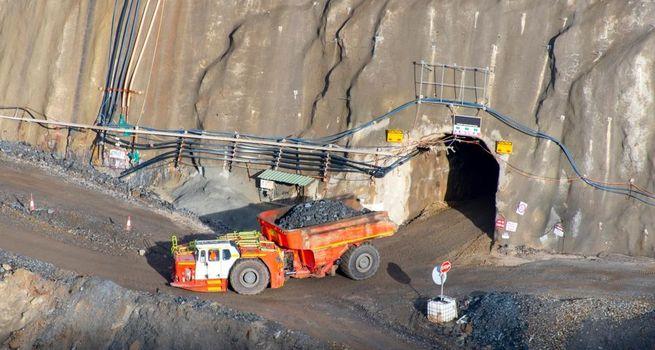
Legacy Minerals Holdings Ltd (ASX:LGM) is trading 5.33% lower at AUD 0.142 during the session on 5 May 2026, with the stock down approximately 31% over the past year. The prolonged decline suggests investor sentiment has remained cautious, even as market participants continue to monitor developments across the company’s exploration and project advancement activities.
Legacy Minerals is an Australia-based exploration company focused on gold, copper and base metal projects, primarily located in New South Wales. The company holds a broad portfolio of exploration assets spanning multiple prospective mineral belts, including projects such as Bauloora, Rockley, Harden and Drake. These assets cover a range of mineralisation styles, from epithermal gold-silver systems to copper-gold targets within established geological corridors. Through this diversified exploration footprint, Legacy is positioned to pursue discovery opportunities across both precious and base metals, while progressively advancing key projects toward development.
Legacy Minerals has stepped back into the spotlight after releasing study work that points to potentially attractive gold and silver development upside at its Mt Carrington project in northern New South Wales. For ASX small-cap precious metals investors, Mt Carrington offers something of a hybrid story: a brownfield site with a long history, a recognised mineral endowment and a fresh look at how the project might be developed in the current commodity price environment.
Legacy Minerals updates the market on Mt Carrington
Mt Carrington has been the subject of multiple studies and ownership periods over the years, reflecting both the geological promise of the area and the difficulty of moving an Australian mineral development from study to construction. Legacy Minerals’ renewed engagement with the asset is grounded in a more current view of gold and silver prices, modern processing assumptions and a clearer recognition of the strategic significance of New South Wales as a precious metals jurisdiction.
The latest study work appears to validate the case for development on a phased basis, with potential for both gold and silver outputs that could leverage existing data, infrastructure proximity and a manageable project footprint. While the specifics will continue to be refined as further work is completed, the overall message is that Mt Carrington remains a project with credible economic and operational pathways, particularly if precious metal prices stay near current levels.
Project background and history
Location and infrastructure
Mt Carrington is located in the Drake Volcanic Field of northern New South Wales, an area with established access to power, water, transport and skilled mining services. The proximity to existing infrastructure is significant for a small-cap developer because it can substantially reduce capital intensity. Greenfield projects often require significant investment in roads, power transmission, accommodation and other supporting facilities, whereas brownfield projects in mature mining regions can leverage what is already in place.
The location also benefits from operating within a stable Australian regulatory framework. While that does not eliminate permitting complexity, it generally reduces the political and country risk that can affect projects in less-established jurisdictions. Investors who weight jurisdictional considerations highly may view Mt Carrington’s New South Wales setting as a positive feature relative to comparable projects elsewhere.
Past work and current footprint
Mt Carrington has experienced multiple phases of historical mining and exploration, providing Legacy with a substantial existing data set on which to base modern studies. This includes drill results, mining records and metallurgical work that, taken together, support a more confident geological model than would typically be available at a greenfield site. As with many brownfield projects, the challenge is to reconcile historical data with modern requirements for resource estimation, mining design and economic assessment.
Legacy has used recent work to refine its understanding of mineralisation styles, including epithermal-style gold and silver systems that are characteristic of the Drake Volcanic Field. The current footprint of the project includes multiple defined zones with potential for both open pit and selective higher-grade mining, depending on the specific deposit. As studies progress, additional drilling and metallurgical work will likely continue to refine the optimal development sequence.
Inside the development study
Gold and silver resource themes
The study work highlighted by Legacy points to a compelling combination of gold and silver resources. The dual-metal exposure can be advantageous because it provides revenue diversification and may support stronger overall project economics, particularly when silver prices behave differently from gold at various points in the cycle. Investors should note, however, that polymetallic projects also introduce processing complexity, and the metallurgical recoveries for each metal need to be carefully validated.
While the specific resource and study figures sit within the company’s formal disclosures, the qualitative story is that the asset shows resource scale, grade ranges and metallurgical characteristics consistent with a project that could be progressed into the next phase of development studies. Cautious framing is appropriate. Phrases such as “appears to support”, “could underpin” and “may justify” reflect the typical state of evolving study work, where assumptions can be improved or reset as additional information becomes available.
Indicative economics and assumptions
The economics of any mining study depend heavily on assumed commodity prices, costs and capital expenditure. Studies that assume long-term gold and silver prices in line with current spot levels can produce more attractive headline economics than those using more conservative averages. Investors should look at the basis on which figures are presented and ask whether the assumptions are reasonable across cycles, not just at present.
Other key sensitivities include operating cost projections, capital expenditure estimates, metallurgical recoveries, mine schedules and the cost of capital. Each of these can have a material impact on net present value and internal rate of return. As Legacy progresses through subsequent study iterations, including pre-feasibility and definitive feasibility levels, more conservative figures and tighter ranges should become available. The trajectory of those numbers will be a key indicator of how the project’s economics are firming up.
Australian precious metals context
Australia continues to be one of the world’s most active precious metals jurisdictions, with strong support from local capital markets, a deep mining services industry and a stable regulatory framework. Within that, New South Wales has historically had a slightly less prominent profile than Western Australia in terms of headline gold output, but it hosts a growing number of relevant projects across base and precious metals. As capital allocation to ASX-listed precious metals developers has remained selective, projects with credible economics and strong jurisdictional credentials have generally fared better than those without.
Silver as a co-product also offers an interesting industrial dimension. While silver remains a precious metal with significant investment demand, it is also exposed to industrial themes, including solar manufacturing, electronics and various electrification pathways. A project that can deliver meaningful silver production alongside gold may benefit from this dual demand profile, though it also exposes investors to silver-specific cycles.
Investor relevance
For ASX investors who track precious metals, Mt Carrington’s study results may help reposition Legacy Minerals as a development-focused company with a tangible asset to advance. Each step of formal study completion that confirms reasonable economics tends to compress some of the risk premium applied to early-stage developers. Investors should pay attention not just to headline numbers but also to the supporting assumptions, the level of confidence in the resource categories used, the metallurgical work supporting recoveries and the planned development sequence.
The stock’s positioning may also be influenced by potential corporate activity. Mid-tier and larger producers periodically look to acquire well-defined development projects to extend their production profiles, and Mt Carrington’s brownfield characteristics could make it a candidate for strategic interest, depending on how subsequent studies develop. While such outcomes cannot be guaranteed and are not the basis on which investors should make decisions, they form part of the broader optionality embedded in this kind of equity.
Risks and approval pathway
Several risks deserve consideration. Resource and study risks include the possibility that further drilling or metallurgical work could change the economic picture, either positively or negatively. Cost risk is meaningful in the current Australian environment, where labour, energy and consumables remain a focus. Commodity price risk applies on both gold and silver, and the project’s economics could shift materially with sustained price changes.
Approval and permitting risk is particularly relevant in New South Wales, where mining projects are subject to a comprehensive review process that includes environmental, social and heritage considerations. Brownfield status is helpful because it provides existing baseline data and operational context, but new approvals or significant variations to existing approvals will still need to be obtained. Investors should expect the approval pathway to take time, even where the project is technically straightforward, and to involve community consultation and engagement with multiple stakeholders.
Funding risk is another consideration. As studies progress and capital expenditure estimates firm up, Legacy will need to communicate a credible plan for funding development through some combination of equity, debt, streaming or strategic partnership. The chosen mix will affect dilution outcomes and ongoing flexibility, and is one of the more important governance issues for shareholders to monitor over the next phase of the project’s evolution.
What to watch next
Near-term catalysts include further drilling results, ongoing metallurgical work, refined resource and reserve estimates and updated study iterations. As Legacy advances toward a definitive feasibility study, more granular data on capital expenditure, operating costs and project sequencing should become available. Each release provides an opportunity to recalibrate views on the asset’s competitiveness and the company’s progress.
Investors will also be watching for any updates on permitting and stakeholder engagement, including community consultation and regulatory milestones. Visible engagement and a clear pathway through approvals can support investor confidence, while delays or complications can put pressure on the share price even when underlying technical work is progressing well.
Looking further ahead, the bigger questions revolve around financing and execution. Can Mt Carrington be brought into production at the kind of capital cost and timeline implied by current study work? Can Legacy’s management team demonstrate the discipline needed to navigate the technical and commercial complexity of the project? And will commodity prices remain supportive enough to underpin a final investment decision when it is required? Each of these questions will be answered over time, with each disclosure providing a fresh data point.
For ASX investors with an interest in gold and silver development, Mt Carrington appears to be a project that warrants ongoing attention. Its blend of brownfield history, precious metals exposure, jurisdictional strengths and developmental optionality positions it as a relevant case study within the wider Australian small-cap precious metals universe.


 Nov 13, 2026





 Please wait processing your request...