
 CA
 NZ
 UK
 US
 IND

 AU

 Share
 X (Formerly Twitter)
 Whatsapp
 Facebook
 LinkedIn
 Telegram
 Email This Article
 Copy Link
 Summarize with AI
 Chat GPT
 Perplexity
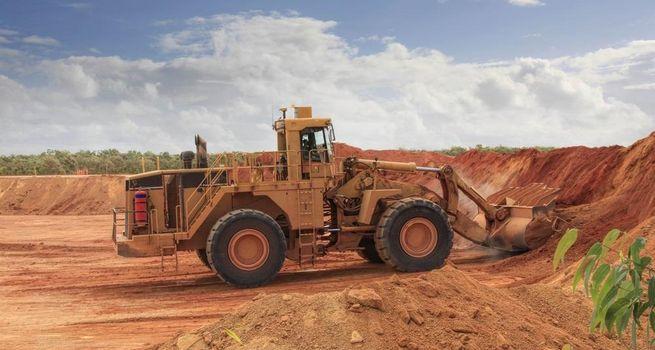
ASX-listed lithium hopeful Kingsland Minerals (ASX:KNG) is preparing to step out of desktop mode and into the field, telling the market it plans to begin maiden drilling at its Lake Johnston Lithium Project. For a junior of this stage, the move from acreage holder to active driller is one of the most consequential transitions in the corporate lifecycle, and it places Kingsland Minerals Lake Johnston lithium aspirations firmly in front of investors who follow Western Australia’s hard-rock lithium scene. With the lithium price cycle still navigating volatility after the post-2022 reset, every maiden drilling decision out of the WA goldfields is being scrutinised through a sharper lens.
The headline news is straightforward. Kingsland is planning a maiden drilling program at Lake Johnston, a recognised greenstone belt that has previously hosted lithium and base metal mineralisation. Specifics on the program itself — including hole counts, total metres planned, target areas, drill type and the start date — will need to be communicated by the company in subsequent updates. What is clear is that the project has progressed to the point where Kingsland is willing to commit capital and drilling time to test its targets, an inflection point the market typically rewards with renewed attention even before any assays are returned.
Why Lake Johnston Matters
Lake Johnston is not a brand-new geological story. The greenstone belt has been mapped and explored for decades and sits in a region of Western Australia that has produced multiple operating mines and significant mineral discoveries. For a junior like Kingsland Minerals, holding ground in Lake Johnston offers the immediate benefit of a known geological framework. The region’s lithium pedigree has grown alongside the broader WA hard-rock story, with neighbouring tenements and historic exploration providing context for any new drilling campaign.
What makes the Lake Johnston address particularly interesting for retail-focused ASX lithium small caps is the combination of two factors. First, infrastructure access in this part of WA is materially better than for fringe-of-frontier exploration projects. Roads, service towns and historical mining bases reduce logistical headaches and keep drilling cost per metre more manageable. Second, the geological prospectivity is well documented in publicly available datasets, even if Kingsland’s specific targets and historical work are matters for the company’s own announcements.
Importantly, the company has not yet released drilling results from Lake Johnston as part of this maiden program — that is the entire point of the upcoming campaign. Investors should treat the move as the start of a new chapter rather than a confirmation of any specific outcome.
Inside the Maiden Drilling Plan
A maiden drilling program is, by definition, a first-of-its-kind exercise on the ground. It is the moment at which a company moves from interpreting surface geochemistry, mapping, geophysics and historical work into testing those interpretations directly with the drill. For Kingsland Minerals, this transition matters because it converts the project from a thesis into a measurable proposition.
In the absence of granular detail provided by the company at this stage, ASX investors will typically watch for the following pieces of information when a maiden drilling program is being prepared:
A clear definition of priority targets and how they were selected, whether through soil sampling, mapping, structural interpretation, geophysics or a combination of techniques. The drilling method chosen — for example, reverse circulation, diamond core, or a blended program — which carries cost and information-quality trade-offs. The proposed metreage and hole layout, which signals how aggressive the campaign is and how broadly the company is testing the system. Timing and contractor availability, particularly given how busy WA drilling rigs have been across multiple commodity cycles. Funding adequacy to complete the planned program plus follow-up if early holes return encouraging signs.
None of these details have been provided in the headline. Kingsland will need to articulate them through future ASX announcements, and the market will calibrate its expectations accordingly. What investors do know is that the company has signalled its intent and now has a concrete deliverable against which it will be measured.
ASX Lithium Sector Context
The broader lithium narrative on the ASX has shifted considerably since the price peaks of 2022. After a period of euphoria in which any junior with a tenement adjacent to a known lithium occurrence could lift its share price on a press release, the market has matured. Investors are now far more discerning, looking beyond proximity and into actual geological evidence, structural settings, host rock chemistry and the credibility of management teams.
Hard-rock lithium projects, especially those in Western Australia, remain firmly inside the global supply mix. Even as direct lithium extraction technologies advance and brine projects in South America scale up, spodumene-bearing pegmatites in WA continue to be a backbone source of lithium chemicals supplied to the battery value chain. The structural rationale for new discoveries has not gone away. What has changed is the bar an explorer must clear to attract sustained investor attention.
Kingsland Minerals is entering this environment as one of many ASX-listed juniors planning to drill in the broader WA lithium province. To stand out, it will need to provide the market with clean technical communication, sensible targeting rationales and a realistic timeline. Maiden drilling at Lake Johnston is the first major test.
What This Means for Retail Investors
For retail shareholders, the most important framing is that maiden drilling is a high-information event. It is one of the few occasions during a junior’s life when a single set of announcements can materially reset perceptions of the project. A handful of well-positioned holes intersecting the target style of mineralisation can transform sentiment. Equally, holes that miss or return weak results can lead to extended periods of consolidation while the company reinterprets and re-targets.
The risk-reward profile in the lead-up to a maiden program is therefore asymmetric and event-driven. Capital is consumed during planning, mobilisation and execution, and value is created (or destroyed) once results come back from the lab. Investors who hold during this phase are essentially backing the geology and the team’s ability to test it sensibly.
For Kingsland Minerals specifically, retail shareholders will want to keep a close eye on capital adequacy. Drilling is expensive, and a maiden program rarely comes in cheaper than budgeted. If Kingsland needs to raise capital before, during or shortly after the program, it will be important to assess the structure of any placement — including the discount, free attaching options, and whether sophisticated or retail investors are participating on equal terms.
Risks for Early-Stage Drillers
Exploration is inherently a low-success-rate business. Across all commodities, a small minority of new programs turn into resources, and an even smaller minority of resources become mines. That is not pessimism; it is simply the geological and economic reality of mineral exploration. Investors in juniors like Kingsland should size their positions with this in mind.
There are several specific risk vectors to watch for in any maiden drilling program. Geological risk relates to whether the targets selected actually contain the style of mineralisation Kingsland is looking for. Operational risk covers everything from rig availability and weather delays to permitting and access agreements. Market risk refers to the possibility that even good early results may be received tepidly if commodity sentiment is weak when assays land.
It is also worth keeping a level head about how strike length, surface samples, and geophysics translate into economic mineralisation. A junior may have a compelling target package on paper that does not deliver in the drillhole, or it may find encouraging mineralisation that requires significant follow-up before the market can size up the opportunity. None of this is unique to Kingsland; it is the texture of the exploration business.
What Investors Should Watch Next
The market will need additional information from future Kingsland Minerals announcements before forming any firm view on Lake Johnston. Specifically, ASX investors will want to see clear disclosure on the scope and design of the maiden drilling program, including target rationales, planned metres and timelines. Updates around contractor engagement and rig mobilisation will also help shareholders gauge how soon meaningful news flow can be expected.
Once drilling commences, the focus will shift to assay results, the timing of laboratory turnarounds and any interim observations Kingsland is willing to share. Investors should look for transparent reporting that includes geological context rather than headline-grade-only releases. The company’s broader corporate position — including cash on hand, exploration commitments and any near-term strategic discussions — will also remain on the watchlist as the maiden program unfolds. As always, retail shareholders should weigh new disclosures alongside existing risks and avoid extrapolating from a single result. The Kingsland Minerals Lake Johnston lithium narrative is now fundamentally about execution, and the next several quarters will determine whether the project graduates to a serious discussion in ASX lithium investor circles.


 Nov 13, 2026





 Please wait processing your request...