
 CA
 NZ
 UK
 US
 IND

 AU

 Share
 X (Formerly Twitter)
 Whatsapp
 Facebook
 LinkedIn
 Telegram
 Email This Article
 Copy Link
 Summarize with AI
 Chat GPT
 Perplexity
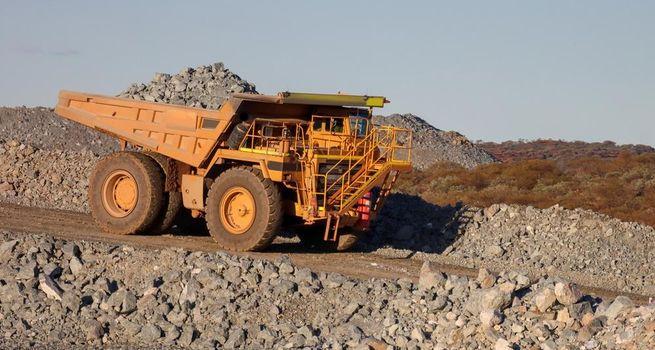
Several macroeconomic variables influence the performance of ASX rare earth companies.
US-China Trade Relations
The trajectory of US-China relations is arguably the single most important macroeconomic variable for the rare earth sector. Escalation of trade tensions — including tariffs, export controls, and investment restrictions — tends to increase demand for non-Chinese rare earth supply and support ASX rare earth company valuations. Conversely, a normalisation of trade relations could reduce the strategic premium embedded in non-Chinese producer valuations.
Interest Rates and Capital Availability
Higher interest rates increase the cost of capital for development-stage companies and can make equity raisings more dilutive. They also increase the discount rates applied in DCF valuations, reducing the present value of future cash flows. The trajectory of Australian and global interest rates is therefore relevant to sector valuations.
Currency Movements
Most rare earth pricing is denominated in US dollars, while ASX companies report in Australian dollars. A weakening Australian dollar relative to the US dollar is generally positive for ASX rare earth companies, as it increases the AUD value of USD-denominated revenue. Conversely, a strengthening AUD can compress margins.
Global Economic Growth
Overall economic growth rates influence demand for the end products that use rare earths, including automobiles, electronics, and industrial equipment. A global recession could slow EV adoption rates and reduce industrial demand, although defence and renewable energy spending may prove more resilient.
Energy Transition Policy
Government policies supporting the energy transition — including EV subsidies, renewable energy targets, and carbon pricing mechanisms — directly influence the demand trajectory for rare earth permanent magnets. Strengthening of these policies supports the rare earth demand thesis; weakening or reversal of policies could slow demand growth.
The interconnection between energy transition policy and rare earth demand creates an interesting political dynamic. Governments that promote aggressive EV adoption targets simultaneously increase their dependence on rare earth supply chains. This dependency, in turn, strengthens the case for domestic rare earth production and government support for companies like those listed on the ASX. The policy loop is self-reinforcing: more ambitious climate targets create more demand for rare earths, which creates more urgency for supply chain security, which justifies more government investment in domestic production.
However, this loop also carries risk. If energy transition policies are scaled back — due to changes in government, shifts in public opinion, economic pressures, or technology developments that reduce the need for rare earth-intensive solutions — the entire chain of logic weakens. Investors should monitor energy policy developments in key demand markets (China, the EU, the US, and Japan) as leading indicators for rare earth demand.
Inflation and Input Costs
Rare earth mining and processing are energy-intensive activities that require significant quantities of reagents, equipment, and skilled labour. Inflationary pressures on these input costs can erode operating margins, particularly for companies operating at the higher end of the global cost curve. The period from 2022 to 2025 saw significant input cost inflation across the global mining industry, affecting project economics and, in some cases, causing capital cost estimates for development projects to be revised upward.
For ASX rare earth companies, input cost inflation is most acutely felt by developers, whose feasibility study economics may have been prepared under different cost assumptions. Investors should check when a company’s feasibility study was completed and whether capital and operating cost estimates have been updated to reflect current input prices. A study completed in 2020 with a capital cost estimate of A$1 billion may now require A$1.3–1.5 billion to deliver the same scope.
Australia’s Competitive Position in Global Mining
Australia’s status as a premier mining jurisdiction provides structural advantages for ASX rare earth companies that extend beyond the geological endowment. These advantages include a stable and well-defined regulatory framework for mining and environmental approvals; a deep pool of skilled mining, engineering, and geological professionals; world-class mining infrastructure including ports, rail, and energy; a transparent legal system that protects property rights and contract enforcement; a sophisticated capital market through the ASX that provides access to equity funding; and strong diplomatic relationships with key demand centres.
These institutional advantages mean that, all else being equal, a rare earth project in Australia carries lower sovereign risk and is more likely to attract investment than a comparable project in a jurisdiction with less established governance. This Australia premium is reflected in the generally higher valuations that ASX rare earth companies attract relative to peers in less established jurisdictions.
However, Australia’s advantages also come with costs. Regulatory compliance is thorough but time-consuming. Labour costs are among the highest in the global mining industry. Environmental standards are rigorous, which is positive for sustainability but adds to project costs and timelines. These cost factors mean that Australian rare earth projects must typically target higher-grade deposits or develop innovative processing approaches to remain competitive with lower-cost jurisdictions.
Sector Trends
Vertical Integration
There is a clear trend among ASX rare earth companies toward vertical integration — controlling multiple stages of the value chain from mine to separated oxide. Lynas pioneered this approach, and Arafura’s Nolans project is designed to follow the same model. Vertical integration reduces exposure to the Chinese processing bottleneck and allows companies to capture more of the value chain margin.
Government Intervention and Critical Minerals Policy
The level of government involvement in the rare earth sector is unprecedented for a commodity market. Governments in Australia, the United States, Japan, Canada, and the European Union are providing direct financial support, including loans, grants, tax incentives, and proposed price floor mechanisms. This government backing reduces project risk but also introduces policy dependency — companies may become reliant on continued government support for their economics to work.
In Australia, the policy architecture supporting the rare earth sector has become increasingly sophisticated. The centrepiece is the A$2 billion Critical Minerals Facility, administered by Export Finance Australia, which provides concessional loans to qualifying critical minerals projects. Iluka’s A$1.65 billion Eneabba loan is the largest single commitment under this facility.
The more recent proposal for a A$1.2 billion Critical Minerals Strategic Reserve introduces a novel approach to rare earth market intervention. Rather than simply stockpiling physical material, the proposed framework uses Contracts for Difference (CfDs) — a mechanism borrowed from renewable energy policy — to provide price floor protection to producers. Under this structure, if market prices fall below an agreed threshold, the government makes up the difference; if prices exceed a ceiling level, the government shares in the upside. This dual-sided hedge is designed to reduce the investment risk for rare earth projects that might not proceed under a purely market-determined pricing regime.
The Australian Government has also granted Major Project Status to several rare earth projects, including Arafura’s Nolans project, which provides dedicated government coordination of regulatory processes across federal, state, and local agencies. While this designation does not guarantee approval, it streamlines the administrative pathway and signals government support.
Internationally, the US-Australia Critical Minerals Framework Agreement creates a formal structure for bilateral cooperation on rare earth supply chains, including potential preferential access to US government procurement programmes for Australian producers. Japan’s long-standing investment in Lynas through JARE demonstrates the willingness of demand-side governments to provide direct financial and commercial support to secure non-Chinese supply.
The European Union’s Critical Raw Materials Act similarly identifies rare earths as strategic materials and establishes benchmarks for domestic European production and processing. While European rare earth projects are less advanced than their Australian counterparts, the EU policy framework creates additional demand assurance for Australian producers who can supply the European market.
For investors, government support is broadly positive for the sector but comes with caveats. Policy frameworks can change with elections and shifting political priorities. Government loans and grants often come with conditions, reporting requirements, and potential clawback provisions. And the very existence of government support may signal that the underlying economics of rare earth production outside China are not yet self-sustaining at market prices — a reality that investors should factor into their assessment of long-term viability.
Consolidation Potential
The fragmented nature of the ASX rare earth sector — with numerous small companies holding early-stage projects — suggests potential for consolidation. Larger companies or international strategic investors may seek to acquire promising projects or companies, particularly if NdPr prices rise and the strategic imperative for non-Chinese supply intensifies.
Processing Technology Innovation
Several ASX companies are pursuing innovative processing approaches, including ionic adsorption extraction (Ionic Rare Earths, Australian Rare Earths) and alternative separation technologies that could reduce costs and environmental impacts compared to conventional solvent extraction. Success in processing innovation could create competitive advantages for early movers.
Increasing ESG Scrutiny
Environmental, social, and governance (ESG) considerations are becoming increasingly important for investors and project permitting. Rare earth projects that can demonstrate lower environmental impact, responsible waste management, and positive community engagement may attract premium valuations and preferential access to capital.
The ESG dimension of rare earth mining deserves particular attention because it cuts both ways. On one hand, rare earths are essential inputs for green technologies — EVs and wind turbines — making the sector a beneficiary of the energy transition. On the other hand, rare earth mining and processing can generate significant environmental challenges, including radioactive waste from thorium and uranium associated with many rare earth ores, chemical waste from solvent extraction processes, and potential impacts on water resources and local ecosystems.
This duality creates what some analysts call the “green paradox” of rare earths: the materials essential for decarbonisation are themselves produced through environmentally challenging industrial processes. Companies that can credibly address this paradox — through responsible waste management, lower-impact processing technologies, strong community engagement, and transparent ESG reporting — are likely to be favoured by institutional investors, government funders, and downstream customers.
Lynas has navigated ESG challenges in Malaysia related to waste management at its LAMP facility, ultimately securing a 10-year licence renewal with stricter conditions. The company’s investment in a permanent disposal facility and its plans to shift more processing to Australia (where regulatory standards are well-established) reflect a proactive approach to ESG risk management.
For investors evaluating smaller ASX rare earth companies, the ESG dimension should be assessed alongside geological and financial fundamentals. Projects in jurisdictions with strong environmental governance (Australia, the United States) may face higher regulatory costs but benefit from greater community and government support. Projects in jurisdictions with less developed regulatory frameworks may face lower upfront costs but carry higher long-term risks from regulatory changes, community opposition, or reputational damage.
Emerging Technology Trends
Several technological developments could reshape the rare earth landscape over the medium to long term.
Magnet recycling technology is advancing through multiple research pathways, including hydrogen decrepitation, acid dissolution, and direct magnet-to-magnet recycling. If commercially viable at scale, recycling could create a meaningful secondary supply source, particularly once the first generation of electric vehicles reaches end-of-life.
Alternative magnet technologies are being researched, including iron-nitride magnets, manganese-based magnets, and grain boundary diffusion techniques that reduce the amount of heavy rare earths needed in conventional NdFeB magnets. While none of these alternatives currently match NdFeB performance, continued progress could gradually reduce rare earth intensity in some applications.
Direct lithium/rare earth extraction (DLE/DRE) technologies are being explored for extracting rare earths from unconventional sources, including coal fly ash, mine tailings, and geothermal brines. If successful, these technologies could unlock entirely new feedstock sources that are currently uneconomic to process.
Artificial intelligence and advanced processing techniques are being applied to optimise rare earth separation processes, potentially reducing costs and improving recovery rates. AI-driven process control could be particularly beneficial for the complex solvent extraction circuits used in rare earth separation.
For investors, these technology trends represent both opportunities and risks. Companies investing in innovative processing technologies could gain competitive advantages, while the broader sector could face demand challenges if substitution technologies advance faster than expected.


 Nov 13, 2026





 Please wait processing your request...