
 CA
 NZ
 UK
 US
 IND

 AU

 Share
 X (Formerly Twitter)
 Whatsapp
 Facebook
 LinkedIn
 Telegram
 Email This Article
 Copy Link
 Summarize with AI
 Chat GPT
 Perplexity
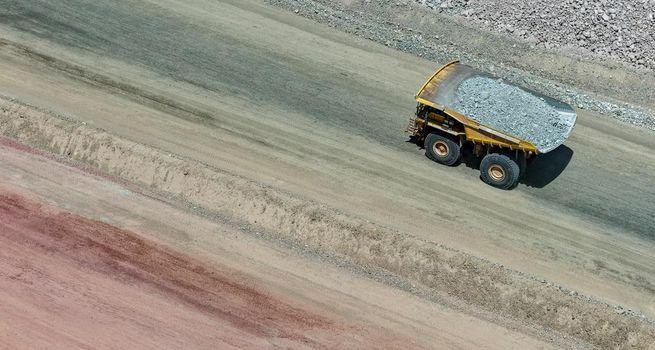
Several macroeconomic forces shape the investment landscape for potash stocks.
Interest Rates and Capital Costs
Higher interest rates increase the cost of debt financing for capital-intensive projects and raise the discount rates applied to future cash flows in NPV calculations. The tightening cycle of 2022–2024 made it harder for resource companies to access affordable capital, contributing to the funding difficulties experienced by several ASX potash companies. A potential easing of monetary policy could improve the environment for project financing.
Exchange Rates
ASX potash companies report in Australian dollars but would sell their product in USD-denominated global markets. A weaker Australian dollar improves the AUD revenue received for each tonne of potash sold, boosting margins. Conversely, a stronger AUD squeezes margins. Exchange rate movements can have a material impact on project economics and should be factored into investment analysis.
Energy Costs
While solar evaporation minimises direct energy costs for brine-based SOP production, energy is still required for pumping, processing, transport, and general operations. Underground mining operations, such as the Ohmgebirge project, are more energy-intensive and therefore more sensitive to energy price fluctuations.
Trade Policy and Sanctions
Sanctions on Belarusian and Russian potash producers have been a major factor in potash markets since 2021. Any escalation or relaxation of these sanctions could significantly affect global potash supply, prices, and trade flows. A resolution of the Russia-Ukraine conflict, for example, could unlock Russian and Belarusian potash supply and put downward pressure on prices.
Agricultural Commodity Prices
Farmers' ability and willingness to apply potash fertilizer is influenced by the prices they receive for their crops. High grain, oilseed, and horticultural prices support strong fertilizer demand, while depressed crop prices can lead farmers to defer potash purchases. The interplay between agricultural commodity markets and fertilizer demand is a key macro variable for potash investors.
Sector Trends
Consolidation and Attrition
The ASX potash sector has been consolidating—not through mergers and acquisitions, but through the attrition of companies that have failed to advance their projects. Kalium Lakes' delisting, Agrimin's exit from potash, and Trigg Minerals' pivot to antimony and tungsten all represent the sector shrinking rather than growing. This pattern suggests that only the strongest and best-funded projects are likely to survive and eventually reach production.
Diversification as a Survival Strategy
Several ASX potash companies have diversified into other commodities as a way to maintain investor interest and access capital. While this dilutes pure potash exposure, it reflects a rational response to the difficulty of funding standalone potash developments in the current market. The trend may continue as companies seek to balance long-term potash optionality with nearer-term revenue opportunities.
Government Support for Critical Minerals
The Australian government has identified potash as a strategically important mineral for domestic food security and agricultural productivity. Major project status designations, streamlined approval processes, and potential co-financing through agencies like the Northern Australia Infrastructure Facility (NAIF) or Export Finance Australia could provide meaningful support to qualifying potash projects.
ESG and Sustainability
Environmental, social, and governance considerations are increasingly important for resource companies. Potash projects must navigate indigenous heritage requirements, environmental impact assessments, water management obligations, and community expectations. Companies that manage ESG effectively may find it easier to secure permits, attract capital from ESG-conscious investors, and build social licence to operate.
For Western Australian potash projects specifically, ESG considerations centre on several themes. Water management is critical because brine extraction affects subsurface hydrology, and regulators require companies to demonstrate that their operations will not harm surrounding ecosystems, pastoral water supplies, or culturally significant water features. Indigenous heritage management is essential given that many salt lake systems are located on Aboriginal land and hold cultural significance for traditional owner groups. Reward Minerals' Indigenous Land Use Agreement with the Martu people for the Lake Disappointment project exemplifies the kind of engagement required.
From a carbon emissions perspective, solar evaporation-based SOP production has a relatively favourable footprint compared to underground mining or chemical processing of MOP. The primary energy input is solar radiation, and the main emissions come from diesel-powered pumping, earthworks, and transport. This potentially positions Australian SOP as a lower-carbon potash product, which could become a marketing advantage as agricultural supply chains face increasing scrutiny from ESG-conscious buyers and regulators.
The Role of Offtake Agreements
Offtake agreements—binding contracts between producers and buyers that commit the buyer to purchasing a specified quantity of product at pre-agreed prices or pricing formulas—are a critical milestone for pre-production potash companies. Offtake agreements serve multiple purposes: they provide revenue certainty that underpins project financing, they validate market demand for the company's product, and they signal to investors that the company has engaged with potential customers and received positive feedback.
BCI Minerals has secured offtake agreements for both salt and SOP from the Mardie project, which is a meaningful de-risking factor. For other ASX potash companies, securing offtake agreements remains an aspiration rather than an achievement, and the absence of committed buyers increases uncertainty about project economics and marketability.
Investors should pay close attention to the terms of offtake agreements, including whether they are binding or non-binding (a "memorandum of understanding" is not the same as a binding contract), the pricing mechanism (fixed prices vs. market-referenced formulas), the duration of the agreement, and the quantity committed relative to total planned production. A company with binding offtakes covering a majority of its planned production is in a materially stronger position than one relying on spot market sales.
The Impact of China and India on Potash Markets
China and India are the two largest potash importing nations and exert outsized influence on global potash markets through their annual contract negotiations with major producers.
China's potash demand is driven by its enormous agricultural sector, which feeds approximately 1.4 billion people from limited arable land. The country has domestic potash production—primarily from Qinghai Province—but imports roughly half of its potash needs. China's annual potash import contract, typically negotiated in the first half of the year, sets a pricing benchmark that influences global MOP prices. Chinese buyers have historically used their purchasing power to extract favourable pricing, and the benchmark contract price is closely watched by the global potash industry.
India is the world's second-largest potash importer and, unlike China, has negligible domestic production. India's potash imports are heavily influenced by government subsidy policies, which determine how much farmers can afford to pay for fertilizer. When subsidy budgets are constrained, Indian potash imports may be deferred or reduced, affecting global demand. Conversely, increases in subsidy allocations can stimulate strong import demand.
For ASX potash companies targeting Asian markets, understanding the dynamics of Chinese and Indian potash procurement is essential. These are price-sensitive buyers who negotiate aggressively and can shift demand between quarters based on pricing expectations and inventory positions.
Technological Innovation
Advances in brine processing, membrane technology, and crystallisation efficiency could improve the economics of brine-based SOP production. Some ASX potash companies have explored novel processing technologies that could reduce capital costs or improve recovery rates. Trigg Minerals, for example, reported success in testing new potash processing technology aimed at reducing development costs, though the company's subsequent pivot away from potash limits the near-term relevance of this work.
Historical Potash Price Analysis
Understanding the historical trajectory of potash prices provides important context for evaluating ASX potash investments. Potash pricing has gone through several distinct phases over the past two decades.
The Pre-2008 Era
Prior to 2008, MOP prices were relatively stable, typically trading in the range of USD 100–200 per tonne. This stability reflected a balanced market in which the major producers—then organised through marketing cartels including Canpotex (the Canadian export consortium) and the Belarus Potash Company (a joint venture between Belaruskali and Uralkali)—managed supply to maintain prices within a profitable range.
The 2008 Price Spike
In 2008, MOP prices surged to over USD 800 per tonne, driven by a confluence of factors including high grain prices, strong demand from China and India, and supply constraints. This spike was short-lived, and prices collapsed back to around USD 300 per tonne by 2009 as the global financial crisis reduced demand. The 2008 spike was instructive because it demonstrated the potential for extreme price volatility in potash markets and attracted a wave of new exploration and development projects—many of which, like some ASX potash companies, were conceived during the high-price environment but struggled to advance as prices normalised.
The 2013 Price War
In 2013, Uralkali withdrew from the Belarus Potash Company joint venture and announced it would prioritise production volumes over prices—effectively breaking the informal pricing cartel that had supported MOP prices. This triggered a sharp decline in MOP prices from around USD 400 to USD 300 per tonne, a "potash price war" that lasted several years and severely impacted the economics of potash projects globally. The price war was eventually resolved, but it demonstrated the vulnerability of potash prices to strategic decisions by major producers.
The 2022 Geopolitical Spike
The most recent and dramatic price spike occurred in 2022, when MOP prices surged above USD 860 per tonne following the imposition of sanctions on Belaruskali and the disruption of Russian potash trade flows due to the invasion of Ukraine. This spike was more sustained than the 2008 event, though prices have since declined substantially—averaging USD 383 in 2023, USD 295 in 2024, and USD 347.50 in 2025.
Lessons for Investors
The historical price record teaches several lessons relevant to ASX potash investors. First, potash prices are more volatile than many investors assume—the commodity's essential nature does not prevent dramatic price swings. Second, price spikes tend to stimulate new supply development, which eventually brings prices back down. Third, the major producers have significant influence over pricing through supply management decisions. And fourth, geopolitical events are an increasingly important driver of price volatility, given the concentration of production in Russia and Belarus.
Investors evaluating ASX potash companies should model project economics at a range of price assumptions—not just current prices or historical peaks—to understand how each company's profitability changes under different scenarios.
Dividend Analys


 Nov 13, 2026





 Please wait processing your request...