
 CA
 NZ
 UK
 US
 IND

 AU

 Share
 X (Formerly Twitter)
 Whatsapp
 Facebook
 LinkedIn
 Telegram
 Email This Article
 Copy Link
 Summarize with AI
 Chat GPT
 Perplexity
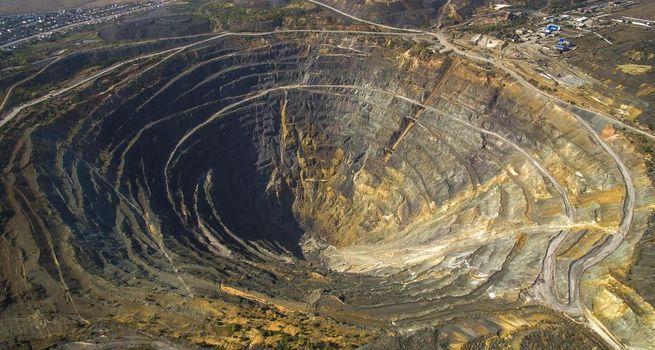
Green & Gold Minerals Limited (ASX:GG1) represents one of Australia's most compelling yet challenging investment stories in the junior mining sector. Trading at approximately 0.140 AUD with a relative trading volume of 1.33, the company sits near its all-time lows, presenting both significant risks and potential opportunities for contrarian investors. This comprehensive analysis examines the fundamental factors driving GG1's current valuation, the strategic assets underlying the company, and the catalysts that could reshape its investment thesis going forward. Green & Gold Minerals is a recently listed Australian gold and critical minerals exploration company that completed its initial public offering in October 2024, raising capital at 20 cents per share before the market subsequently repriced the stock significantly lower. The company's flagship asset, the Chillagoe Gold Project located in northern Queensland, represents one of the more advanced gold exploration opportunities in Australia, featuring a defined JORC-compliant mineral resource and proximity to critical mining infrastructure including the idle Mungana mill.
The broader context of GG1's valuation decline must be understood within the framework of junior mining company performance, equity market conditions, and the specific challenges facing early-stage exploration and development companies. Junior mining companies are inherently volatile investments characterized by high capital intensity, extended development timelines, and significant technical and operational risks. The fact that GG1 has declined substantially from its IPO price despite operating in a favorable gold price environment raises important questions about market sentiment, capital allocation challenges, and the viability of the company's development strategy. For investors considering whether GG1 represents a value opportunity or a value trap, understanding the company's business model, the quality of its assets, the competence of its management team, and the realism of its development timeline becomes essential. This analysis provides investors with the detailed information required to make informed decisions about whether GG1's current valuation offers attractive risk-adjusted returns or should be avoided entirely.
The global investment environment for junior mining companies has become increasingly challenging in recent years, characterized by elevated cost of capital, decreased investor appetite for exploration-stage companies, and intense competition for limited institutional capital. Despite gold trading near historic highs and critical mineral prices remaining elevated due to renewable energy transition demand, junior mining companies have struggled to access capital markets on favorable terms. GG1's steep decline from its IPO price reflects these broad market dynamics combined with company-specific challenges that require careful analysis. The mining sector's capital intensity means that even companies with excellent long-term prospects can face severe liquidity and funding challenges if they fail to maintain investor confidence or achieve development milestones on schedule. GG1's current valuation may reflect legitimate concerns about the company's path to production, the capital requirements for development, the commodity price assumptions underlying its economics, or broader concerns about the viability of Australian gold mining projects in the current regulatory and energy cost environment.
Company Overview: Green & Gold Minerals Limited
Green & Gold Minerals Limited is an Australian-listed mineral exploration and development company incorporated in 2015 with registered offices in Brisbane, Queensland. The company completed its listing on the Australian Securities Exchange in October 2024, raising $5.6 million in capital at an IPO price of 20 cents per share before declining substantially in subsequent trading. Despite the significant post-IPO share price decline, the company retains its fundamental asset base and maintains active exploration and development programs across its project portfolio. The company's leadership team includes experienced mining industry professionals with backgrounds in exploration, development, and mine operations, bringing relevant expertise to the challenges of advancing junior mining projects. GG1's strategic positioning as a junior explorer in the gold and critical minerals space reflects a deliberate business model focused on identifying, acquiring, and advancing mineral assets through exploration and resource definition before potential development or divestment.
The corporate structure of Green & Gold Minerals reflects a typical junior mining company model with a lean head office operation focused on strategic direction, capital allocation, and regulatory compliance rather than direct operational activities. The company maintains relatively low corporate overhead costs, which is important for junior miners seeking to preserve capital for exploration and development activities. The board of directors comprises individuals with relevant mining, finance, and corporate governance experience, providing oversight and strategic direction. Management's compensation structure and incentive arrangements are typically tied to achievement of exploration milestones and corporate objectives, theoretically aligning management interests with shareholder value creation. However, the reality in many junior mining companies is that management teams can become divorced from shareholder wealth creation, particularly if development timelines extend significantly beyond initial projections or commodity prices decline sharply. GG1's governance structure and management incentive arrangements warrant careful review by potential investors to ensure that management's interests remain appropriately aligned with delivering value to shareholders.
Green & Gold Minerals operates in the highly regulated Australian mining industry, subject to extensive federal, state, and local regulatory frameworks governing mineral exploration, environmental management, heritage protection, and mine operation. The Queensland regulatory environment, where GG1's primary assets are located, combines relatively mature mining law with increasingly stringent environmental and social standards. The company holds various exploration permits and mining leases across its project portfolio, with tenure requirements including annual work programs, environmental obligations, and community consultation requirements. The regulatory environment for mining in Australia has tightened considerably over the past decade, with increasing emphasis on environmental remediation, climate-related disclosures, and social license to operate. For junior mining companies like GG1, regulatory compliance represents a significant cost center and source of operational risk, as any regulatory changes, permit denials, or adverse determinations by environmental authorities could substantially impair project economics or development timelines.
Business Model Breakdown: Exploration to Development
Green & Gold Minerals operates a typical junior mining company business model focused on identifying promising mineral properties, conducting systematic exploration to define mineral resources, completing feasibility studies, and ultimately either developing projects into operating mines or divesting assets to larger mining companies at a profit. This model requires sustained capital investment over extended periods before any revenue generation occurs, creating significant financial pressure on junior miners. GG1's business model recognizes that the company itself is unlikely to finance and construct large-scale mining operations, as the capital requirements for mine development typically exceed $500 million for a gold project of significant scale. Instead, GG1's business model anticipates that successful projects will ultimately be developed in partnership with major mining companies or sold to larger producers capable of funding development and operations. This business model has historically proven successful for many junior miners that have identified world-class mineral deposits, but it requires sustained access to capital, disciplined exploration spending, and significant technical and commercial expertise to identify and advance projects that ultimately prove economically viable.
The exploration and development lifecycle followed by GG1 involves progression through distinct phases, each characterized by increasing capital intensity, advancing technical knowledge, and declining geological risk. The initial exploration phase involves property acquisition, geological mapping, rock sampling, and initial drilling to test mineralizing concepts. Successful exploration leads to the resource definition phase, characterized by systematic drilling to delineate mineral resources within the geological framework defined during earlier exploration. Resource definition requires substantial capital investment and typically consumes several years. Following resource definition, successful projects advance to the development phase, which includes engineering studies ranging from conceptual through pre-feasibility to definitive feasibility, environmental and social impact assessment, permitting, and ultimately construction and commissioning of mining operations. GG1's Chillagoe Gold Project has progressed to the resource definition stage but remains some distance from advanced development. The company's business model assumes that external capital, either in the form of joint venture partnerships or strategic acquisitions, will fund the substantial capital requirements to advance projects toward production.
Financial returns for junior mining companies like GG1 are realized through capital appreciation rather than dividends or operating cash flows. Successful junior miners typically generate returns through one or more of the following mechanisms: discovery of significant mineral resources that increase project value and stock price; progression of projects to resource definition that reduces technical risk and increases value; farm-in arrangements or joint ventures with major mining companies; strategic acquisitions by larger mining companies; or dividend payments following transition to cash-generative operations. GG1's current business model implicitly assumes that shareholder value will be created primarily through capital appreciation as the Chillagoe Gold Project advances toward development milestones and technical and commodity price risks are progressively de-risked. However, the company's current stock price decline suggests that market participants harbor significant doubts about the achievability of these value-creation milestones or the ultimate economics of the project. For investors considering GG1, careful analysis of the probabilities and timelines associated with achieving key development milestones becomes critical to assessing the investment's risk-return profile.
Industry & Market Analysis: Gold Market Dynamics
The global gold market presents a complex and multifaceted context for evaluating junior gold exploration companies like GG1. Gold trades near historic highs due to a combination of factors including elevated geopolitical tensions, concerns about currency stability and central bank policies, sustained institutional and central bank demand, and the investment thesis that gold provides portfolio diversification and inflation protection. From the perspective of junior gold mining companies, the gold price environment is critical because it determines project economics, influences capital availability for financing development, and drives acquisition valuations. Current gold prices in the range of $2000-2100 AUD per troy ounce represent historically elevated levels that theoretically support the development of gold projects with higher-cost structures. However, the reality facing junior gold miners is that gold price strength has not translated into improved access to development capital or increased M&A activity in the sector.
The Australian gold mining industry represents one of the world's most mature and competitive gold mining regions, with well-established operating mines, significant historical production, and extensive geological knowledge. Major Australian gold producers including Newcrest Mining, Evolution Mining, and Resolute Mining operate large-scale, low-cost gold mining operations that benefit from scale, operational expertise, and access to capital. In this competitive environment, junior exploration companies must demonstrate significant competitive advantages such as exceptional resource grades, advantageous mining conditions, superior location relative to infrastructure, or exceptional discovery potential. GG1's Chillagoe Gold Project offers some positive attributes including proximity to the idle Mungana mill facility and location in an established mining district with existing infrastructure. However, the gold industry's structural economics have become increasingly challenging for junior developers, as construction and operating costs have trended upward while ore grades available for development have declined. For gold projects to achieve development, they typically require either exceptional geology, significant cost advantages, or unique strategic positioning relative to potential acquirers.
Exploration success rates in gold mining are notoriously low, with industry studies suggesting that perhaps one in 5000 grass-roots exploration programs ultimately results in a producing mine. GG1's position as a junior explorer with defined resources but significant development hurdles ahead places the company in a precarious position within this success probability hierarchy. The company must execute flawlessly on exploration and development activities, maintain investor confidence sufficient to secure capital for ongoing programs, and navigate a complex regulatory environment. Simultaneously, management must maintain discipline on capital spending and avoid the classic junior miner trap of overcommitting to projects that consume capital without proportionate advancement. The gold exploration business is characterized by high variability of outcomes, with success concentrated among a small number of companies that discover exceptional deposits or successfully execute development projects. GG1's opportunity to become a successful gold development company remains plausible based on the quality of its primary assets, but the probability of ultimate success remains uncertain given the company's stage of development and current market conditions.
Why GG1 Stock is Trading at All-Time Lows: Fundamental Drivers
Green & Gold Minerals' decline from its October 2024 IPO price of 20 cents to current levels around 14 cents represents a substantial negative return for investors and raises fundamental questions about the drivers of this valuation reset. Understanding the factors contributing to GG1's all-time low valuation is essential for determining whether the stock represents a value opportunity or continues to face structural headwinds. The most immediate and obvious factor explaining GG1's decline is the challenging equity market environment facing junior mining companies. Junior mining companies worldwide have faced declining investor interest as institutional capital has shifted toward renewable energy, battery metals, and established mining companies rather than exploration-stage ventures. The financing environment for junior miners has deteriorated significantly, with capital raising costs increasing and investor bases becoming more selective regarding which projects and management teams receive capital support.
Beyond broad market dynamics, GG1's specific circumstances likely contributed to share price weakness. The company's substantial capital requirements to advance the Chillagoe Gold Project represent a critical challenge. Even modest development and exploration budgets for a gold project of GG1's scale would likely require annual spending in the $2-4 million range, consuming a significant portion of the company's current market capitalization each year. The IPO proceeds of $5.6 million provide only limited runway before the company must return to capital markets to fund ongoing activities. In the current capital markets environment, raising capital becomes increasingly difficult and dilutive as share prices decline and investor sentiment weakens. This creates a vicious cycle wherein share price weakness reduces capital-raising capacity, which forces greater capital discipline and smaller exploration budgets, which in turn reduces the pace of asset advancement and further weakens investor sentiment. GG1 may be caught in this negative feedback loop, with each quarter of slower exploration progress and capital constraints reinforcing doubts about the company's ability to advance its projects to meaningful milestones.
The timing of GG1's IPO in October 2024, while gold prices remained elevated, paradoxically highlighted the disconnect between gold market conditions and equity capital availability for junior miners. The company raised capital at a 20-cent IPO price, yet the market immediately repriced the stock significantly lower despite no apparent deterioration in the underlying asset base or gold market conditions. This repricing reflects several possible scenarios: the market viewed the IPO valuation as excessively optimistic, institutional investors lost interest after overallocating to the IPO, early investors exited positions to lock in losses, or fundamental challenges specific to GG1's assets or management strategy emerged post-listing. The fact that the stock failed to hold IPO value and continued declining suggests that market concerns likely extend beyond simple junior mining sector sentiment to company-specific factors. These might include doubts about the quality of GG1's resources, concerns about the realistic development timeline for the Chillagoe project, uncertainty about management's execution capability, or concerns about capital-raising ability in a challenging market. Investors analyzing GG1 must carefully determine which of these factors are driving the share price decline and whether the current valuation appropriately reflects these risks or has overshot to the downside.
Financial Analysis: Revenue, Profitability, and Cash Position
Green & Gold Minerals, as an exploration-stage company, currently generates no revenue from mining operations. The company's financial structure is characteristic of junior mining explorers, wherein cash reserves decline gradually due to exploration spending, corporate overhead, and other operating costs until either the company achieves development milestones that attract acquisition offers or must undertake capital raising. GG1's most recent reported financial position indicated cash reserves of approximately $5.6 million at the time of IPO completion in October 2024, representing the net proceeds from the capital raise after transaction costs. This cash balance constitutes the company's primary financial asset and the critical resource required to fund operations over the coming period. At typical exploration spending rates for a gold project of GG1's stage and scale, the company's existing cash reserves might sustain operations for approximately 12-18 months, after which additional capital raising would become necessary. This timeline creates urgency around advancing exploration results and demonstrating that the Chillagoe Gold Project warrants sustained investor interest.
The company's cash burn rate and capital spending priorities represent critical metrics for evaluating GG1's viability. Exploration companies typically allocate capital toward activities that reduce technical and commercial risk and bring forward definition of mineral resources and project economics. For GG1, capital spending is likely focused on infill and resource definition drilling at the Chillagoe project, metallurgical studies to define ore processing characteristics, baseline environmental and social impact studies, and corporate administration. The company's ability to execute an effective exploration program that maintains investor interest becomes critical to long-term viability. Companies that maintain disciplined spending while achieving meaningful exploration results often succeed in raising additional capital on reasonable terms, while companies that burn cash without demonstrating progress typically see share prices collapse. GG1's exploration budget for the current financial year and near-term budget forecasts warrant careful review by investors, as does management's track record of delivering exploration results relative to budgeted timelines and spending levels.
Beyond the immediate question of cash sufficiency, GG1's long-term financial viability depends on three critical factors: successful achievement of exploration and development milestones that maintain investor interest; access to capital markets for periodic funding rounds at reasonable valuations; and ultimately, successful development of economically viable mining operations or strategic acquisition at favorable terms. The company currently exhibits negative cash flow from operations and zero revenue, making it dependent on external capital. This creates inherent vulnerability to equity market conditions and investor sentiment. If capital markets close to junior mining companies or investor focus shifts away from gold exploration, GG1 could face severe liquidity challenges despite the merit of its underlying assets. Conversely, if the company achieves significant exploration success or becomes an acquisition target for a major mining company, shareholder returns could be substantial. The extreme binary nature of junior mining investments means that financial analysis requires focus not merely on current cash position but on the probability of achieving key value-creation milestones and the likely outcomes if milestones are either achieved or missed.
Key Risks Facing GG1 Investors
The investment in Green & Gold Minerals presents multiple overlapping and significant risks that investors must carefully evaluate. Capital risk represents the most fundamental concern, as exploration-stage mining companies regularly face complete loss of equity value if exploration programs fail to define economic resources or if capital becomes unavailable before development milestones are achieved. GG1 currently has limited financial resources, placing the company in a vulnerable position if capital markets remain closed or investor sentiment toward junior miners continues deteriorating. Exploration risk is inherent in the business model, as no amount of geological knowledge or technical expertise can guarantee that exploration programs will define mineral resources of economic significance. Even the company's flagship Chillagoe project could ultimately prove to contain mineral resources that cannot be economically mined at relevant commodity prices or in light of operating cost structures. Commodity price risk represents another critical consideration, as gold prices could decline substantially from current levels, undermining project economics and potentially rendering mineralization uneconomic. A significant decline in gold prices would likely trigger share price declines and substantially worsen GG1's capital-raising prospects.
Regulatory and permitting risks represent substantial additional concerns. GG1's projects are located in Queensland and potentially other Australian jurisdictions, subject to complex regulatory frameworks governing exploration, environmental protection, and mine development. Changes to mining regulations, increased environmental standards, heritage protection requirements, or unfavorable determinations by regulatory authorities could substantially increase project costs or prevent development entirely. Australia's regulatory environment for mining has tended toward increased stringency in recent years, and political pressure regarding climate change and environmental protection could drive further regulatory changes that negatively impact mining projects. Social license to operate represents an additional risk factor, as communities and indigenous populations increasingly assert influence over mining activities. Opposition from local communities or indigenous groups could delay or prevent development of projects that lack broad community support. Operational and execution risks include the possibility that management fails to deliver on exploration programs, that ore processing proves more complex than anticipated, or that development costs prove significantly higher than projected.
Market and valuation risks are also significant. Even if GG1 achieves exploration and development milestones successfully, the market may not revalue the stock appropriately, potentially leaving shareholders with inadequate returns relative to the risks undertaken. Dilution risk from future capital raising presents another concern, as investors can anticipate that additional share issuances will be required to fund development, potentially substantially diluting existing shareholders. Liquidity risk is present given GG1's status as a small-cap stock with limited trading volume, which can result in substantial bid-ask spreads and difficulty executing large positions. Finally, management risk encompasses the possibility that the team lacks necessary experience or competence to successfully advance a complex mining project, or that internal conflicts, poor decisions, or ethical breaches undermine shareholder value. Collectively, these risks create an environment in which GG1 represents a highly speculative investment suitable only for investors with substantial risk tolerance and ability to sustain potential total loss of capital.
Growth Opportunities: Potential Catalysts and Upside Drivers
Despite the substantial risks and current challenged valuation, Green & Gold Minerals possesses several potential catalysts that could substantially re-rate the stock upward if realized. The most obvious growth opportunity is successful expansion of the Chillagoe Gold Project's resource base through exploration drilling that expands known mineralization or identifies new mineralized zones. The current JORC resource estimate at Mt Wandoo indicates 32,000 ounces of gold and 387,000 ounces of silver in the inferred category, representing a foundation for potential mine development. If exploration drilling expands this resource substantially, particularly into the indicated or measured categories, the project's economic potential would improve significantly and likely trigger investor re-engagement. Resource expansion would also enhance GG1's attractiveness as a potential acquisition target for larger mining companies evaluating strategic additions to portfolio. Success in resource definition becomes critical to the company's value trajectory, making exploration results the primary catalyst for potential stock appreciation.
Strategic acquisition by a larger mining company represents another meaningful upside scenario. Major mining companies periodically acquire junior explorers as a mechanism to gain control of prospective projects, acquire technical talent, or gain strategic positioning in geographic regions of interest. If GG1's Chillagoe project becomes attractive to a major gold producer as a strategic addition, an acquisition at a significant premium to current share price becomes plausible. The magnitude of potential acquisition premiums varies widely depending on the acquirer's assessment of project value, but historical precedent suggests acquisition multiples of 1.5x to 3.0x current trading prices for projects with defined resources. A successful acquisition could deliver substantial returns to long-term investors despite the company's current challenges. Similarly, farm-in or joint venture arrangements with larger mining companies could provide GG1 with capital for exploration and development while reducing execution risk and capital requirements. These strategic arrangements represent more conservative optionality than full acquisition but could still deliver meaningful shareholder value.
Favorable external conditions could also drive valuation re-rating. A sustained increase in gold prices from current levels would improve project economics and likely trigger investor re-engagement with the gold exploration sector. A general recovery in equity capital markets and increased appetite for junior mining companies could reduce GG1's cost of capital and improve capital-raising prospects. Success in developing lower-capital, near-term production pathways from the Chillagoe project, such as through artisanal or small-scale mining operations, could generate near-term cash flow and demonstrate project viability. Policy changes at the Australian or Queensland level supporting domestic gold mining through subsidies, permitting acceleration, or reduced regulatory burden could improve project development timelines and economics. While these external catalysts remain somewhat uncertain, investors must recognize that significant upside potential exists if favorable conditions materialize and GG1 successfully executes against available opportunities.
Management & Strategy Assessment
The quality and competence of Green & Gold Minerals' management team represents a critical factor in assessing the company's prospects for success. Effective management in junior mining companies must combine technical expertise in mineral exploration and development with commercial acumen, capital discipline, and the ability to maintain investor confidence through multiple market cycles. GG1's board and management team include individuals with backgrounds in exploration, mining operations, and corporate development, providing relevant experience. However, the track record of the specific management team in successfully advancing mining projects to development or achieving successful exits through acquisition requires careful evaluation. Investors should examine the career history of key management personnel, previous successes and failures, and whether compensation incentives align management interests with long-term shareholder value creation rather than short-term capital raising. Management's strategic vision for the company and communication of that vision to investors also influences investor sentiment and capital-raising ability.
GG1's strategy reflects a focused approach on the Chillagoe Gold Project as the primary value driver, combined with earlier-stage exploration of the Cosgrove rare earths project. This focused portfolio approach is generally preferable to companies with scattered, unfocused project portfolios, as it allows concentration of capital and management attention on projects with highest potential value. The strategy of targeting gold in an established mining district with existing infrastructure represents pragmatic thinking, as proximity to processing infrastructure can substantially reduce development capital requirements compared to remote locations. The company's emphasis on resource definition and the stated intention to pursue development or strategic partnership represents a reasonable approach for a junior miner with limited capital. However, the realism of timelines and capital requirements implicit in the strategy requires careful scrutiny, as junior mining companies historically have optimistic timelines and cost estimates that require substantial revision as projects advance.
Competitive Landscape: GG1 vs. Industry Peers
The competitive landscape for junior gold exploration companies in Australia is substantial and intensely competitive. GG1 competes for investor capital, listing stage against numerous other junior mining companies pursuing gold exploration, other metal exploration, or mineral sands opportunities. Major competitors in the Australian gold exploration space include established junior miners with multi-project portfolios, better-funded exploration programs, and stronger track records of achievement. Factors that determine competitive success in this environment include the quality and prospectivity of exploration targets, the stage of advancement of projects, management team track record, capital availability, and investor positioning and sentiment toward the company. GG1's Chillagoe project offers some competitive advantages including defined resources and proximity to existing infrastructure, but the company's limited capital and recent IPO status represent competitive disadvantages relative to better-established junior miners with larger exploration budgets and broader investor bases.
GG1 also faces competition from established mining companies that dominate gold mining in Australia and globally. Producers like Newcrest, Evolution Mining, and Resolute Mining operate at scales substantially larger than any project GG1 is likely to develop independently, providing them with cost advantages, operational expertise, and financial resources that junior developers cannot match. This competitive pressure means that GG1's Chillagoe project would need to offer substantially superior economics or unique characteristics to compete for development capital or to attract acquisition interest from major producers. The competitive intensity in the gold exploration and development space reinforces that GG1 represents a high-risk investment in which success depends on execution and favorable external circumstances rather than inherent competitive advantages.
Valuation Analysis: Is GG1 Cheap or Cheaply Priced?
Valuation of early-stage exploration companies like GG1 presents substantial analytical challenges, as the companies generate no revenue or earnings and the values of assets depend critically on uncertain future commodity prices, development success, and capital availability. Traditional equity valuation methodologies based on earnings multiples or cash flow discounting provide limited utility for exploration companies. More appropriate valuation frameworks include resource-based approaches that estimate the value of mineral resources in the ground, comparable transaction analysis examining acquisition prices for similar resources, and risk-adjusted probability analysis of alternative scenarios. Applying these frameworks to GG1 requires estimating the value of the Chillagoe mineral resource in the ground, adjusting for development risks and commodity price assumptions, and comparing the implied value to current market capitalization and share price.
The Chillagoe mineral resource estimated at 32,000 ounces of gold and 387,000 ounces of silver, if valued at current market prices and adjusted for development and recovery risks, suggests that the resource contains meaningful value. However, translating this ore body value into equity value for the company requires subtracting estimated development costs, exploration costs to complete resource definition, environmental remediation obligations, and providing appropriate discount for development and commodity price risks. Detailed financial modeling would be required to establish fair value for GG1, but order-of-magnitude analysis suggests that GG1's current market capitalization of approximately $11.63 million represents either: a deeply discounted valuation of the underlying resource, reflecting severe concerns about development feasibility or commodity prices; or a reasonably valued recognition of development risk and capital requirements to advance projects. The all-time low share price suggests the former, but only detailed analysis of project economics and risk probabilities can determine conclusively whether GG1 is genuinely cheap or whether the market is appropriately pricing the risks inherent in the business.
Comparable transaction analysis examining acquisition prices paid for junior gold exploration companies provides limited guidance, as transaction prices vary dramatically depending on resource quality, market conditions at time of transaction, and specific characteristics of acquirer. Historical precedent suggests that junior gold explorers with defined resources typically trade at values corresponding to $10-50 per resource ounce depending on ore grade, location, and development status. Applying these benchmarks to GG1's 32,000-ounce gold resource suggests potential valuations in the $320,000 to $1.6 million range for the gold resource alone, before considering silver or applying adjustments for specific characteristics. The company's current market capitalization suggests the market is valuing the gold resource at perhaps $360 per ounce, below typical benchmarks but potentially appropriate given the company's limited capital, early development stage, and uncertain development pathway. Whether this represents genuine value or a value trap depends critically on whether GG1 successfully achieves exploration and development milestones and maintains investor confidence to secure necessary capital.
Future Outlook: Short-term and Long-term Scenarios
The near-term outlook for GG1 over the next 12-24 months will be shaped primarily by the company's ability to successfully conduct exploration drilling and maintain investor confidence while managing limited capital resources. Near-term catalysts likely include quarterly or semi-annual exploration results from the Chillagoe project, any announcements regarding strategic partnerships, farm-in arrangements, or acquisition discussions, and capital raising announcements. The company faces a critical test regarding whether its current cash reserves prove sufficient to fund meaningful exploration programs that demonstrate continued progress on the Chillagoe project or whether additional capital raising becomes necessary. If near-term exploration results prove disappointing or if the company must undertake capital raising at substantially lower valuations, the share price could decline further. Conversely, if exploration drilling expands resources or identifies new mineralization, investor sentiment could improve substantially and the stock could recover from current all-time low levels. The short-term outlook is highly dependent on execution against the exploration program and external equity market conditions for junior mining companies.
The long-term outlook for GG1 depends on whether management can successfully advance the Chillagoe Gold Project toward development or achieve a strategic transaction at attractive terms to shareholders. Over a 5-10 year timeframe, successful execution would likely involve: completion of comprehensive resource definition drilling that expands the resource and enables feasibility study development; completion of preliminary and definitive feasibility studies establishing technical and economic viability; completion of environmental and permitting requirements enabling mine development; and ultimately either securing development capital and constructing a mine or negotiating an acquisition or joint venture with a larger mining company capable of funding development. This pathway requires sustained execution, achievement of technical milestones, and favorable commodity price and capital markets conditions. Realistically, the long-term success probability for GG1 remains uncertain, with plausible scenarios ranging from: successful development into a profitable mine operating at substantial scale; strategic acquisition by a major mining company at a meaningful premium; continued operation as a perpetual exploration company with limited shareholder returns; or bankruptcy and complete loss of shareholder value if capital becomes unavailable and projects prove non-viable. The wide range of plausible outcomes reinforces that GG1 represents a speculative investment with highly uncertain prospects.
Bull vs. Bear Case: Investment Thesis Summary
The bull case for GG1 emphasizes the quality of the Chillagoe Gold Project's location, defined resources, and proximity to existing mining infrastructure. Proponents argue that the all-time low valuation substantially undervalues the underlying resource base, particularly given current elevated gold prices. The bull thesis assumes that GG1 will successfully expand resources through exploration drilling, advance feasibility studies, and either develop the project independently or attract acquisition interest from a larger mining company. From this perspective, current valuations offer exceptional value to investors willing to accept development risk and uncertainty, with potential returns of 5-10x or higher if the project successfully advances to development. The bull case further notes that management is experienced in mining, that capital raising should become progressively easier as exploration de-risks the project, and that the gold price environment remains favorable for project development.
The bear case emphasizes the substantial capital requirements to advance the Chillagoe project, the limited resources currently available to the company, and the challenging capital markets environment for junior miners. The bear thesis argues that GG1 faces a high probability of requiring capital at increasingly unattractive valuations, leading to severe shareholder dilution. This perspective views all-time low valuations as justified given the company's precarious capital position, the binary nature of exploration success, and the extended timeline to potential value realization. The bear case further contends that even if exploration proves successful, the company may face insurmountable capital constraints preventing development or may ultimately require sale at depressed valuations if capital becomes unavailable. From this perspective, GG1's current valuation is appropriate or possibly still optimistic, and investors should avoid the stock pending demonstration of material capital resources and committed strategic partners. The bear case emphasizes the poor track record of junior miners in delivering shareholder returns and the high probability of total capital loss.
Conclusion: Investment Verdict for GG1 Stock
Green & Gold Minerals (ASX: GG1) represents a highly speculative investment in a junior gold exploration company trading at all-time lows following its October 2024 IPO. The company possesses legitimate assets in the form of defined mineral resources at the Chillagoe Gold Project, an experienced management team, and a reasonable strategic focus on a prospective project in an established mining district. However, the company faces substantial challenges including limited capital resources, the binary outcomes inherent in exploration investing, uncertain pathways to value realization, and challenging equity market conditions for junior mining companies. Current valuations around 0.140 AUD appear to reflect severe market concerns about the company's capital adequacy and the probability of successfully advancing projects to meaningful development milestones. Whether these concerns are justified or represent an excessive repricing requires detailed analysis of project economics, exploration results, and management's realistic development timelines and capital strategies.
For risk-tolerant investors with sophisticated understanding of junior mining companies and ability to sustain potential total loss of capital, GG1 may offer asymmetric risk-return characteristics at current valuations. However, the stock is not suitable for conservative investors, retirees, or those unable to sustain permanent capital loss. Potential investors should conduct detailed due diligence examining exploration results, management backgrounds, capital requirements, and realistic development pathways before committing capital. The investment case for GG1 depends critically on near-term achievement of meaningful exploration results demonstrating continued project advancement, successful capital raising on reasonable terms, and management's demonstrated ability to execute against strategic objectives. Without evidence of these factors, GG1 should be avoided. Investors currently holding GG1 shares should monitor exploration results, capital situation, and management execution closely, being prepared to exit if conditions deteriorate or if alternative investments offer superior risk-adjusted returns.
────────────────────────────────────────────────────────────
Disclaimer: This article is for informational purposes only and does not constitute financial advice. Investors should conduct their own due diligence and consult with a licensed financial advisor before making any investment decisions. Past performance is not indicative of future results.


 Nov 13, 2026





 Please wait processing your request...