
 CA
 NZ
 UK
 US
 IND

 AU

 Share
 X (Formerly Twitter)
 Whatsapp
 Facebook
 LinkedIn
 Telegram
 Email This Article
 Copy Link
 Summarize with AI
 Chat GPT
 Perplexity
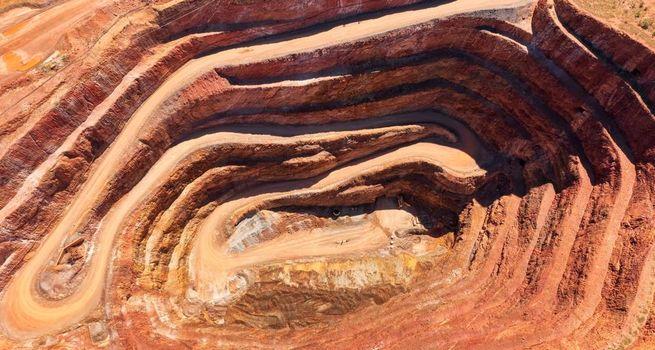
Great Boulder Resources Ltd (ASX:GBR) is trading 15.91% higher at AUD 0.10 during the morning session on 5 May 2026, while remaining up 45.71% over the past year. The stock continues to remain under investor focus, with market participants closely tracking developments across its gold exploration and development portfolio, particularly as the company advances its transition toward a production-oriented strategy.
Capital Raise and Strategic Acquisition
Great Boulder has announced firm commitments to raise $40 million through a two-tranche placement to institutional and sophisticated investors. The capital raising is closely linked to the company’s planned acquisition of the Peak Hill Gold Project in Western Australia, a move that significantly expands its gold asset base. The placement, priced at $0.085 per share, attracted strong participation from both domestic and international investors, reflecting market support for the company’s strategic direction.
The acquisition of Peak Hill, combined with the successful placement, is expected to strengthen Great Boulder’s financial position, with a pro-forma cash balance of around $25 million. This funding provides the company with flexibility to accelerate development activities while maintaining balance sheet strength as it integrates the newly acquired asset into its broader portfolio.
Accelerated Exploration and Development Plans
Following completion of the transaction, Great Boulder is planning an extensive drilling program across both the Peak Hill and Side Well gold projects, with up to six rigs targeting approximately 60,000 metres of drilling. The company is also progressing engineering studies and pre-production activities, with the aim of advancing Peak Hill toward a potential low-capital-intensity production pathway.
Management has indicated that the next 6–12 months could be milestone-rich, including a potential updated mineral resource estimate for Peak Hill within six months. In parallel, collaboration opportunities and processing pathways, including alignment with nearby infrastructure, may support a faster transition from exploration to development, reinforcing the company’s broader production-focused strategy.
Great Boulder Resources (ASX:GBR) is sharpening its identity as an emerging Western Australian gold developer with the addition of the Peak Hill project to its portfolio. For ASX small-cap gold investors, the move signals a clear pivot from being recognised primarily as a polymetallic explorer to actively pursuing a low-cost gold production pathway. The rationale is straightforward: Peak Hill brings historical mining and processing infrastructure, established geology and a defined gold theme, all of which can shorten the runway from acquisition to potential production.
Great Boulder reshapes its gold portfolio
Great Boulder has long been associated with its Side Well project, which has delivered both base and precious metals exposure across various drill programs. The acquisition of Peak Hill represents a deliberate strategic step that brings additional gold-focused tenure into the portfolio and tightens the company’s production-oriented narrative. Rather than simply broadening the asset base, the move appears to reflect a desire to align all corporate activity behind a defined commodity thesis at a time when the gold price environment remains supportive for ASX-listed developers.
The strategic clarity is important. ASX small-cap mining companies that lack a clear focus often struggle to attract sustained investor support, particularly during periods when capital is more selective. By committing to a low-cost gold production thesis through Peak Hill, Great Boulder is also signalling to financiers, off-takers and potential corporate partners that it intends to operate as a developer with discipline around capital and timeline. Whether the Peak Hill thesis can be realised in line with that ambition is a question the market will continue to test as further data is published.
The Peak Hill acquisition explained
Asset profile
Peak Hill is a historical gold mining centre in Western Australia, with a long production history and existing infrastructure that has supported various gold campaigns over many decades. While the precise scope of the deal in terms of tenements, plant and equipment will be fully detailed in the company’s formal documentation, the broad asset profile of Peak Hill includes prospective gold mineralisation across multiple structural settings and remnants of supporting infrastructure that may shorten the lead time to recommencing operations.
For investors, the appeal of acquiring a brownfield asset is straightforward: the geological and operational risk profile is typically lower than that of greenfield exploration, since past production validates that gold can be mined and processed from the area. The challenge is that historical workings can also leave behind complexity, including disturbed ground, legacy environmental obligations and partial geological data sets that need to be modernised. How Great Boulder integrates Peak Hill into its existing technical workflow will likely determine how quickly the asset begins to contribute to the corporate narrative.
Strategic rationale
The strategic rationale for the Peak Hill acquisition appears to rest on three pillars. First, it consolidates the company’s exposure to gold at a time when gold price strength has supported margins for Australian producers. Second, it brings tenure with historical production into the portfolio, potentially reducing both geological and operational risk relative to greenfield projects. Third, it provides Great Boulder with optionality on production approaches, including potentially refurbishing or upgrading existing infrastructure rather than building new facilities from scratch.
The decision to pursue Peak Hill also reflects a wider trend in the Australian gold sector, where consolidation of historical districts has produced several success stories over recent years. While the specifics of each project vary, the general principle is that bringing modern exploration techniques and operating practices to historically productive ground can unlock value that earlier operators were unable to capture. Investors will be watching to see how Great Boulder applies that same playbook.
A low-cost production thesis
Cost drivers in regional WA gold
Costs in Western Australian gold mining are influenced by a familiar set of variables, including labour availability, energy prices, fuel costs, equipment supply, geotechnical complexity, ore grade, strip ratios for open pit mining and metallurgical recoveries. In recent years, labour markets have been tight, particularly for skilled trades and operating roles, while energy and consumables have been subject to global price pressures. Despite these pressures, projects that can leverage existing infrastructure, modest haulage distances and reasonable grades have continued to operate within manageable cost bands.
Peak Hill’s profile, with historical infrastructure and established mineralisation, may allow Great Boulder to focus more on the cost levers that matter most for new operations: ore grade, throughput and processing recoveries. If the company can build a development plan that takes advantage of the brownfield setting while introducing modern mining and processing efficiencies, it has the potential to land at a competitive position on the broader Australian gold cost curve. That outcome is not assured, but the building blocks appear to be present.
How Peak Hill could fit
Great Boulder has framed Peak Hill as a foundation for its low-cost gold production thesis, but the specifics of how the asset is brought into production matter. Possible approaches include refurbishing existing processing infrastructure, considering tolling arrangements with nearby mills, defining staged development that progresses from open pit to underground, or focusing on smaller, higher-grade starter pits to fund subsequent expansion. Each path has different capital, schedule and risk implications.
For investors, the most useful future disclosures will likely be those that articulate a defined development sequence, supported by metallurgical work, mining studies and a credible capital cost estimate. Where details remain to be confirmed, cautious language is appropriate, with phrases such as “may support”, “could enable” and “appears consistent with” being more accurate than firm production claims at this stage of the project’s life cycle.
ASX gold market context
The ASX gold sector has been underpinned by relatively strong gold prices and a continued investor preference for hard-asset exposure during periods of macro uncertainty. Within that environment, junior gold developers have been treated unevenly, with capital flowing more readily to projects that combine clear geological merit with credible paths to production and management teams that have prior development experience. Companies that lack one or more of these elements have generally struggled to attract sustained interest.
Great Boulder’s pivot fits this contemporary investor frame. By consolidating around gold and pursuing an asset with brownfield characteristics, the company may improve its ability to compete for investor attention against peers that are more dispersed. At the same time, it places greater pressure on the management team to deliver tangible progress at Peak Hill, since the strategic narrative now hinges substantially on this asset moving forward.
Investor relevance
For shareholders and prospective investors, the most relevant questions revolve around the path to value realisation. These include the speed at which Peak Hill can be advanced, the degree of dilution required to fund development, the form of any debt or alternative financing, and the eventual production profile of the asset. Each of these elements feeds into how the equity is valued and how it may behave through the development cycle.
Strategic alignment is also worth observing. If Great Boulder can attract supportive cornerstone investors, structured offtake or technical partners, the perceived risk on the project may decline. Equally, the management’s track record in capital allocation, both in this acquisition and in subsequent decisions, will become a more visible determinant of how the market values the company. Investors will likely place increasing weight on the consistency between communicated milestones and delivered outcomes as the project matures.
Risks and integration challenges
The risks associated with the Peak Hill acquisition fall into several categories. Acquisition and integration risk is fundamental, as it can take time to bring a new asset into a coherent development plan, particularly when historical data sets need to be reconciled with modern requirements. Resource and reserve risk remains relevant, since brownfield ground can still surprise on grade, continuity or recovery. Cost risk is also material in the current environment, particularly for smaller projects that may have less buffer against unexpected variances.
Permitting and approvals introduce additional complexity. While brownfield sites often benefit from existing approvals, restarting or expanding operations can still trigger fresh review processes, especially where environmental, water or heritage matters are concerned. Investors should not assume that brownfield status automatically translates into a faster permitting outcome, although it can certainly help in many cases.
Dilution is a particular concern for any small-cap developer at this stage of the cycle. Funding development typically requires either equity, debt, streaming or hybrid arrangements, and the ultimate mix will affect the equity story. A funding plan that minimises unnecessary dilution while securing the capital required is generally seen as a positive signal of management discipline. Investors should also be aware of the broader macroeconomic environment, including gold price volatility, currency movements and inflationary pressures on operating costs.
What to watch next
In the near term, the most informative updates from Great Boulder will likely include further technical detail on Peak Hill, integration timelines, exploration and infill drilling results, and any updated resource statements. As more granular data becomes available, investors will be better placed to assess the relative merits of the asset and its fit within the broader portfolio.
Beyond that, the market will be watching for the company’s chosen development sequence and whether it can be supported by a credible capital plan. The level of board and management commentary about offtake discussions, processing partnerships or strategic interest from larger producers will also be informative. Each of these data points contributes to the overall judgement on whether Great Boulder can convert the Peak Hill acquisition into a meaningful step toward low-cost gold production.
For now, the addition of Peak Hill represents a significant pivot for Great Boulder Resources. It brings clarity to the gold-focused narrative, introduces brownfield characteristics and reinforces the company’s intent to pursue a low-cost production pathway. Whether that intent is realised in practice will depend on disciplined execution, supportive market conditions and ongoing investor support. ASX small-cap gold investors who follow this story will have a useful test case for the broader question of how brownfield consolidations are progressed in a competitive Western Australian environment.


 Nov 13, 2026





 Please wait processing your request...