
 CA
 NZ
 UK
 US
 IND

 AU

 Share
 X (Formerly Twitter)
 Whatsapp
 Facebook
 LinkedIn
 Telegram
 Email This Article
 Copy Link
 Summarize with AI
 Chat GPT
 Perplexity
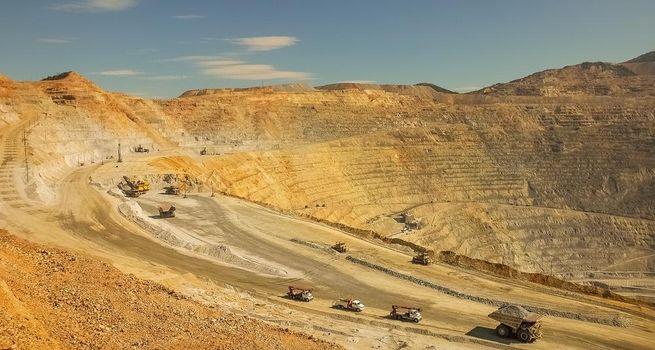
The global potash market is a multi-billion-dollar industry fundamental to world agriculture. Market sizing estimates vary depending on scope and methodology, but credible research firms place the 2025 global potash market at approximately USD 67–79 billion, with projections reaching USD 97–106 billion by the mid-2030s. Growth is expected at a compound annual growth rate of 4.8–5.3% over the coming decade, driven primarily by rising food demand from population growth, increasing per-hectare fertilizer application rates in developing nations, and the expansion of commercial agriculture.
Supply Concentration
Potash production is one of the most geographically concentrated commodity markets in the world. Canada, Russia, and Belarus together account for the majority of global MOP output, with four companies—Nutrien (Canada), Belaruskali (Belarus), Uralkali (Russia), and The Mosaic Company (United States)—holding approximately 70–75% of global potash production capacity.
Nutrien alone accounted for roughly 20% of global potash nameplate capacity in 2023, making it the world's single largest producer. Belaruskali and Uralkali each held approximately 14% market shares. Mosaic, K+S (Germany), ICL (Israel), and EuroChem (Switzerland) round out the list of major producers.
This concentration has significant implications for pricing power and supply security. When sanctions were imposed on Belaruskali following the political crisis in Belarus in 2020–2021, and when Russia's invasion of Ukraine in 2022 disrupted trade flows from Uralkali, global potash prices spiked dramatically. MOP prices surged from around USD 200–250 per tonne in 2020 to over USD 860 per tonne at the peak in 2022 before settling to approximately USD 295 in 2024 and recovering to USD 347.50 in 2025.
The SOP Sub-Market
The SOP market is significantly smaller than the MOP market, representing roughly 8–10% of total potash production. Primary SOP production—where potassium sulphate is extracted directly from mineral or brine sources—is limited and insufficient to meet global demand. The balance is supplied by secondary production, in which MOP is reacted with sulphuric acid or other chemicals to produce SOP. This manufacturing step adds cost and is a key reason for SOP's persistent price premium over MOP.
The world's largest SOP producers include K+S (Germany), Compass Minerals (United States), Tessenderlo (Belgium), and several Chinese producers. Australian brine-based SOP projects, if successfully developed, would enter this market as primary producers with potentially competitive cost structures due to the solar evaporation approach and abundant brine resources.
Australian Context
Australia is both a significant agricultural nation and a net importer of potash. Domestic potash consumption is modest by global standards, but Australian farmers use potash in cropping, horticulture, and pastoral applications. The country has no current domestic potash production, meaning all potash is imported—primarily from Canada, Russia, and Jordan.
This import dependency has motivated government support for Australian potash projects. The Federal Government has granted major project status to several potash developments, and Western Australian state agencies have worked with companies to facilitate environmental approvals and access to land and water resources. The strategic argument for Australian potash production rests on reducing import dependency, creating regional employment, and capturing the premium pricing available to SOP products.
Growth Drivers
Several structural and cyclical factors could drive growth for ASX potash companies over the medium to long term.
Population Growth and Food Demand
The United Nations projects global population to reach approximately 9.7 billion by 2050, an increase of roughly 2 billion from current levels. Feeding this larger population will require a significant increase in crop production, which in turn will require more fertilizer. Potash, as one of the three essential macronutrients, stands to benefit directly from this demand growth.
Increasing Fertilizer Application Rates
Many of the world's most populous agricultural regions—including large parts of Africa, South Asia, and Southeast Asia—currently apply potash at rates well below agronomic recommendations. As these regions develop economically and invest in agricultural productivity, potash application rates are expected to increase, creating additional demand.
Geopolitical Supply Disruptions
The sanctions on Belaruskali and the complications affecting Uralkali's trade flows have removed or constrained significant potash supply from the global market. While some of this supply has been redirected rather than eliminated (Belaruskali now routes much of its output through China), the disruption has created uncertainty and raised the strategic importance of developing potash supply in geopolitically stable jurisdictions like Australia.
SOP Demand Growth
The SOP sub-market is expected to grow faster than the broader MOP market, with forecasts suggesting a CAGR of approximately 5.85% through 2031. This reflects the increasing cultivation of high-value, chloride-sensitive crops in regions such as China, India, and the Middle East, as well as growing awareness of the agronomic benefits of chloride-free fertilizers.
BHP's Jansen Project as Market Validation
BHP's commitment of US$8.4 billion to the Jansen potash mine in Canada is arguably the strongest validation of long-term potash demand from any source. BHP is one of the world's most sophisticated resource investors, and its decision to allocate capital at this scale signals a conviction that potash prices will remain at levels that justify greenfield development. While Jansen will add significant new MOP supply, the endorsement of potash as a commodity worth investing in may indirectly benefit ASX potash companies by attracting investor attention and capital to the sector.
Infrastructure Development in Western Australia
The Western Australian government's investment in Pilbara infrastructure—including port facilities, roads, and power supplies—benefits projects like BCI Minerals' Mardie, which can leverage existing regional infrastructure rather than building everything from scratch.
Key Risks
Investing in ASX potash companies carries a distinct set of risks that investors must carefully weigh against the potential rewards.
Funding and Dilution Risk
This is the single most important risk for pre-revenue potash companies. Building a potash mine or processing facility requires hundreds of millions to billions of dollars in capital. Most ASX potash companies will need to raise this capital through equity placements, which dilute existing shareholders, or through debt, which requires servicing costs and may include restrictive covenants. The failure to secure adequate funding is the most common reason potash projects stall or are abandoned—as demonstrated by Kalium Lakes' collapse and Agrimin's withdrawal from Mackay.
Commodity Price Risk
Potash prices are cyclical and subject to significant volatility. The spike to USD 860 per tonne in 2022 was followed by a decline to USD 295 in 2024, a range that would profoundly affect the economics of any potash project. Companies that commit to construction during a high-price period may find their projects uneconomic if prices subsequently decline.
Construction and Execution Risk
Building a potash operation is technically complex and subject to cost overruns, delays, and engineering challenges. BHP's Jansen project has already experienced cost increases from its original budget, and Kalium Lakes' Beyondie project encountered fatal execution problems. Even well-managed construction projects routinely exceed their original budgets and timelines.
Permitting and Regulatory Risk
Potash projects require multiple layers of government approval, including mining leases, environmental permits, water access licenses, and (for indigenous land) heritage agreements. These processes can take years and are subject to political, community, and environmental objections that may delay or ultimately prevent project development.
Technology and Processing Risk
Brine-based SOP production, while conceptually straightforward, involves complex chemistry and process engineering. Achieving target recovery rates, product purity, and production volumes at commercial scale is not guaranteed. Laboratory and pilot-scale results do not always translate to full-scale operations.
Weather and Climate Risk
Solar evaporation projects are inherently dependent on dry, sunny conditions. Abnormal rainfall events, cyclones, or prolonged cloud cover can disrupt the evaporation cycle, delay production, and damage infrastructure. Climate change may alter weather patterns in ways that affect long-term evaporation rates.
Competition from Global Majors
The entry of BHP into potash production through Jansen, combined with potential expansion by Nutrien, Mosaic, and others, could significantly increase global potash supply over the coming decade. If supply growth outpaces demand growth, prices could come under sustained pressure, squeezing the margins of higher-cost producers—which is likely to include most ASX potash companies in their early years of operation.
Risk Summary Table
|
Risk Category |
Severity |
Probability |
Mitigation |
|
Funding and dilution |
High |
High |
Strong feasibility studies, strategic partnerships, offtake agreements |
|
Commodity price volatility |
High |
Medium |
SOP premium provides buffer; long-term contracts |
|
Construction and execution |
High |
Medium |
Experienced management, conservative budgeting |
|
Permitting delays |
Medium |
Medium |
Early and proactive engagement with regulators |
|
Technology/processing risk |
Medium |
Medium |
Pilot testing, phased development |
|
Weather and climate |
Medium |
Low-Medium |
Pond design, contingency planning |
|
Competition from global majors |
Medium |
High |
Focus on SOP niche, Asian market access |
Potash and the Australian Mining Regulatory Framework
Retail investors unfamiliar with the Australian resources sector should understand the regulatory framework that governs potash project development, as it directly affects timelines, costs, and project viability.
State-Level Approvals
In Western Australia, where most ASX potash projects are located, mining projects require a mining lease from the Department of Mines, Industry Regulation and Safety (DMIRS), along with environmental approval from the Environmental Protection Authority (EPA). The state assessment process evaluates the project's potential impacts on biodiversity, groundwater, air quality, heritage values, and other environmental factors. The EPA may recommend conditions that the project must satisfy—such as monitoring requirements, offset obligations, or management plans—which are imposed by the Minister for Environment.
The state approval process can take two to four years or longer, depending on the complexity of the project and any public objections. Companies often begin the approval process in parallel with feasibility studies to avoid adding unnecessary time to the development schedule.
Federal-Level Approvals
Projects that may have a significant impact on matters of national environmental significance—including listed threatened species, ecological communities, water resources, or World Heritage properties—require assessment and approval under the Environment Protection and Biodiversity Conservation (EPBC) Act 1999. The federal assessment process is administered by the Department of Climate Change, Energy, the Environment and Water and can run concurrently with or independently of the state process.
Federal approval has been a meaningful milestone for several ASX potash projects. Reward Minerals' Lake Disappointment project, for example, has achieved approval under both state and federal environmental legislation, a distinction that was noteworthy because it was the first Australian SOP project to clear both regulatory hurdles.
Indigenous Heritage
Projects located on Aboriginal or Torres Strait Islander land must comply with heritage protection legislation at both state and federal levels. In practice, this means engaging with traditional owner groups, negotiating Indigenous Land Use Agreements (ILUAs) under the Native Title Act 1993, and obtaining heritage clearances before ground-disturbing activities can commence.
Indigenous heritage management is not merely a regulatory compliance exercise—it is a matter of social licence. Companies that engage respectfully and transparently with traditional owners, and that share the economic benefits of their projects with local communities, are more likely to maintain the social licence necessary for long-term operations. Conversely, companies that approach heritage as a box-ticking exercise risk delays, legal challenges, and reputational damage.
Water Licensing
Water is a critical input for brine-based potash production, and water extraction licences are required from state water agencies. The licensing process assesses whether the proposed water extraction is sustainable—that is, whether it can continue over the life of the project without depleting the aquifer or harming other water users and ecosystems.
In arid regions of Western Australia, where groundwater resources are limited and ecologically sensitive, water licensing can be a significant permitting challenge. Companies must conduct extensive hydrogeological investigations to characterise the brine aquifer, model the impacts of long-term pumping, and demonstrate that their extraction rates are sustainable.
Implications for Investors
The multi-layered regulatory framework means that potash projects in Australia face a lengthy and sometimes uncertain permitting pathway. Investors should evaluate each company's permitting status carefully, distinguishing between companies that have secured all necessary approvals (a significant de-risking milestone) and those that are still navigating the process. Permitting delays are one of the most common causes of project slippage and should be factored into any investment timeline.


 Nov 13, 2026





 Please wait processing your request...