
 CA
 NZ
 UK
 US
 IND

 AU

 Share
 X (Formerly Twitter)
 Whatsapp
 Facebook
 LinkedIn
 Telegram
 Email This Article
 Copy Link
 Summarize with AI
 Chat GPT
 Perplexity
Highlights
- Rio Tinto is exiting diamonds entirely, with the closure of Diavik Diamond Mine in 2026 marking its final step.
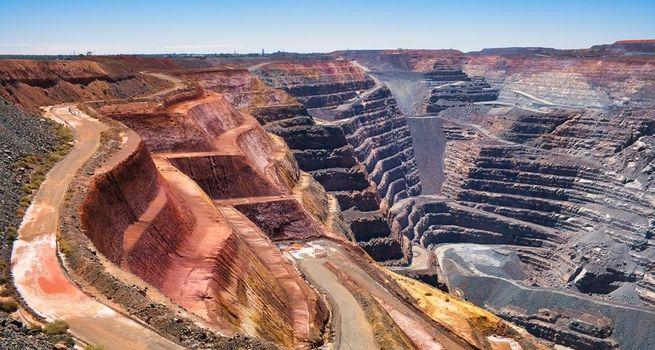
- The legendary Argyle Diamond Mine produced over 865 million carats and supplied more than 90% of the world’s pink diamonds.
- Argyle’s closure removed 10–14 million carats annually and triggered 15–25% post-closure price gains in rare pink diamonds.
- Diamonds contributed less than 2% of Rio Tinto’s revenue, with investment focus now firmly on iron ore, copper and lithium.
- Smaller ASX players like Astro Resources and DevEx Resources offer only indirect or minimal diamond exposure.
- The ASX diamond sector remains extremely limited, with few pure-play options and declining investor capital amid lab-grown competition.
- Argyle’s legacy highlights key risks in diamond investing, including finite mine life, capital intensity and dependence on rare high-quality stones for long-term value.
Rio Tinto (ASX:RIO)
Rio Tinto Limited is one of the world's largest and most diversified mining companies, listed on the ASX, the London Stock Exchange, the New York Stock Exchange and several other exchanges globally. While Rio Tinto's diamond operations have historically been significant, the company is in the process of exiting the diamond business entirely, making this chapter as much about legacy and context as it is about current investment exposure.
For retail investors who own Rio Tinto shares, it is important to understand that diamond exposure through this company is now minimal and shrinking to zero. Rio Tinto's share price and investment case are driven overwhelmingly by iron ore, aluminium, copper and increasingly lithium, with diamonds representing less than two per cent of total revenue even before the final exits.
The Argyle Legacy
The Argyle Diamond Mine in the East Kimberley region of Western Australia was Rio Tinto's crown jewel in the diamond world and arguably the most significant diamond mine in Australian history. Discovered in October 1979 by geologist Maureen Muggeridge, the Argyle pipe transformed both the global diamond industry and the remote Kimberley region.
Argyle commenced alluvial mining in 1983 and underground operations in 1985. Over its 37-year operational life, the mine produced more than 865 million carats of diamonds, a staggering figure that made it the world's most prolific diamond mine by volume at various points during its operation. At its peak in 1994, Argyle produced approximately 42 million carats, the equivalent of roughly 8,400 kilograms of diamonds in a single year.
However, what truly set Argyle apart was not its volume but its coloured diamonds. The mine was the world's only significant source of natural pink and red diamonds, producing over 90 per cent of the global supply. These rare stones, formed by unique geological conditions that distorted the diamond crystal lattice and produced their characteristic colour, became among the most sought-after gemstones on Earth. A single carat of Argyle pink diamond could sell for hundreds of thousands or even millions of dollars.
Argyle also produced significant quantities of champagne (brown), cognac and rare blue diamonds, establishing Australia's reputation as a source of distinctive, naturally coloured stones. The annual Argyle Pink Diamonds Tender, a curated sale of the mine's finest pink and red diamonds, was one of the most anticipated events in the global diamond calendar.
The mine's gem-quality percentage was relatively low, at approximately five per cent of total production, with the majority of output being near-gem or industrial quality. This is a common characteristic of lamproite-hosted deposits. The sheer volume of production, however, meant that even five per cent gem quality translated into millions of carats of gem-quality diamonds over the mine's life.
The Closure of Argyle
Argyle ceased operations in November 2020, after 37 years of continuous production. The primary driver of closure was the depletion of economically viable ore reserves. Despite the enormous demand for Argyle's pink and red diamonds, the remaining ore body had been mined to the point where continued extraction was no longer economically sustainable.
The closure of Argyle had several significant consequences for the global diamond market. Most obviously, it removed approximately 10 to 14 million carats of annual production from the global supply pipeline. More critically, it eliminated the world's primary source of pink and red diamonds, creating what amounts to a permanent supply gap in this ultra-luxury segment.
The effect on pink diamond prices has been dramatic. Prices for Argyle pink diamonds had already increased approximately 500 per cent between 2000 and 2020. Since the mine's closure, prices have accelerated further, rising an estimated 15 to 25 per cent as the reality of permanent supply scarcity has taken hold. For holders of Argyle pink diamonds, this price appreciation has been transformative. For the market more broadly, the closure has reinforced the investment credentials of rare coloured diamonds.
As of 2026, the Argyle site is undergoing rehabilitation and decommissioning, with completion expected during the year. This process involves removing mining infrastructure, landform profiling and site revegetation to return the area to as close to its pre-mining state as possible. Rio Tinto continues to carefully manage the sale of its remaining cache of rare Argyle diamonds, placing them strategically to maintain value.
The Diavik Mine and Final Exit
Rio Tinto's last remaining diamond asset is its 60 per cent stake in the Diavik Diamond Mine, located in the Northwest Territories of Canada. Diavik has been a significant producer, but it too is reaching the end of its life. Final production was completed in March 2026, marking the end of Rio Tinto's involvement in diamond mining.
The closure of Diavik means that Rio Tinto will no longer be a diamond producer in any meaningful sense. The company may continue to sell remaining inventory of Diavik and Argyle diamonds for some time, but new production has ceased. This strategic exit reflects Rio Tinto's decision to focus its capital and management attention on commodities with larger addressable markets and stronger alignment with the energy transition, particularly copper and lithium.
Investment Considerations
For retail investors, Rio Tinto's relevance to the diamond investment thesis is now primarily historical and contextual. The company's market capitalization (in the hundreds of billions of dollars), diversified operations and focus on iron ore, aluminium and other commodities mean that even significant movements in diamond prices would have negligible impact on the overall share price.
However, Rio Tinto's exit from diamonds is itself an important signal for the sector. When one of the world's largest and most sophisticated mining companies decides to leave a commodity, it says something about the perceived risk-reward profile of that commodity. In Rio Tinto's case, the decision reflects a combination of mine depletion, lab-grown competition concerns, and the availability of higher-return investment opportunities in other commodities.
For investors seeking genuine diamond exposure on the ASX, the smaller pure-play companies discussed elsewhere in this guide offer much more direct and concentrated exposure than Rio Tinto.
Astro Resources NL (ASX:ARO)
Astro Resources is a diversified mineral explorer headquartered in Sydney, incorporated in 1983. While primarily focused on heavy mineral sands development through its Governor Broome Mineral Sands Project in Western Australia (which holds an indicated resource of 52 million tonnes at 4.6 per cent heavy minerals in the Nannup region), the company also maintains diamond assets that provide secondary exposure to the sector.
Astro's diamond interests include the Lower Smoke Creek Diamond Project, located southwest of Lake Argyle in Western Australia, and the East Kimberley diamond project. The company has indicated plans for a potential IPO of its diamond assets, which would spin off these projects into a separate, dedicated diamond vehicle. This spin-off, if executed, could provide a more focused investment opportunity for diamond-specific investors.
The company also holds the Needles Gold Project in Nevada, USA, which has seen strong drilling progress. Astro's diversified approach means that diamond exposure is a secondary consideration for investors, with the mineral sands and gold assets likely to drive nearer-term value creation. The potential diamond asset IPO is worth monitoring as a catalyst that could unlock value from what are currently somewhat overlooked exploration assets.
For retail investors, Astro Resources represents an indirect and relatively diluted form of diamond exposure. The diamond assets are exploratory in nature and do not generate revenue. However, the proximity of the Lower Smoke Creek project to the historic Lake Argyle diamond province adds geological credibility, and the potential spin-off creates an interesting structural catalyst.
DevEx Resources (ASX:DEV)
DevEx Resources, based in West Perth, is primarily a uranium explorer with secondary interests in copper, gold, diamonds and base metals. The company holds over 14,000 square kilometres of prospective ground in the Northern Territory uranium province, including the flagship Nabarlek and Murphy West uranium projects and the Kennedy rare earth element project.
DevEx is backed by Tim Goyder, a prominent figure in the Australian mining industry, who holds an approximately 17 per cent cornerstone position and serves as Chairman. Goyder's involvement lends credibility and industry connections to the company, though his primary interest is clearly in the uranium and rare earth assets rather than diamonds.
Diamond exploration represents a very minor component of DevEx's overall activity. The company's diamond interests should be viewed as incidental rather than strategic, and the stock would not be appropriate for investors seeking meaningful diamond exposure. However, DevEx does illustrate the broader point that diamond prospectivity exists across multiple regions of the Northern Territory, providing a geological backdrop that supports the exploration efforts of more focused diamond companies like Lucapa at its Merlin project.
The Broader Landscape
Beyond the companies discussed in detail above, the ASX landscape for diamond exposure is remarkably thin. Unlike gold, lithium, copper or iron ore, which are represented by dozens of ASX-listed companies at various stages from exploration to production, diamonds are served by a very small number of listed vehicles.
This scarcity reflects several structural factors. The global diamond mining industry is dominated by a small number of large players (De Beers, ALROSA, Petra Diamonds) who tend to be listed on other exchanges, particularly London. Australia's diamond mining infrastructure has contracted dramatically following Argyle's closure, reducing the local pipeline of new diamond projects and the pool of diamond-specialist professionals.
The rise of laboratory-grown diamonds has also dampened investor appetite for new diamond mining ventures. Capital allocation in the resources sector has shifted decisively toward battery minerals, copper and other commodities aligned with the energy transition, leaving diamond exploration and development relatively starved of investment.
For retail investors, this scarcity means that options for ASX diamond exposure are limited. Those seeking diversified diamond exposure may need to consider international markets, exchange-traded products or indirect exposure through diversified miners with residual diamond assets.
The Argyle Legacy and Australian Diamond Heritage
Discovery and Development
The story of Argyle is the story of Australian diamonds. Before the discovery of the Argyle lamproite pipe in 1979, Australia was not considered a significant diamond province. Small alluvial diamonds had been found by gold prospectors since the nineteenth century, but no volcanic source deposits had been identified. The discovery by geologist Maureen Muggeridge, who identified diamond indicator minerals in the Lennard River floodplain and traced them back to their source, ranks among the most significant mineral discoveries in Australian history.
The development of Argyle proceeded with remarkable speed. Within four years of discovery, alluvial mining had commenced. By 1985, the open-pit mine was in full operation. The scale of the deposit was extraordinary, and for several years in the late 1980s and 1990s, Argyle was the single largest diamond mine on the planet by volume of carats produced.
The mine's development transformed the remote East Kimberley region, bringing employment, infrastructure and economic activity to one of Australia's most isolated areas. At its peak, Argyle employed over 800 people directly and supported a much larger number of jobs in its extensive supply chain. The mine also pioneered engagement with local Aboriginal communities, negotiating agreements that provided employment, training, royalties and environmental protections.
Coloured Diamond Phenomenon
Argyle's most enduring contribution to the global diamond industry was its production of naturally coloured diamonds. The unique geological conditions within the Argyle lamproite pipe produced diamonds with colours ranging from champagne and cognac browns through to rare pinks, purples, reds and blues. These colours result from specific distortions of the diamond crystal lattice caused by intense pressure and heat during the stone's formation and emplacement.
The Argyle Pink Diamonds Tender, established in 1984, became one of the most exclusive and anticipated events in the luxury goods calendar. Each year, a carefully curated selection of the mine's finest pink and red diamonds was offered to a small group of invited bidders. Prices at the tender escalated dramatically over the decades, with individual stones selling for millions of dollars and demonstrating consistent year-on-year appreciation.
The scientific understanding of why Argyle produced coloured diamonds in such quantities remains incomplete. The prevailing theory involves the intense plastic deformation of the diamond crystal during its volcanic transport to the surface, which creates structural defects that selectively absorb light and produce colour. Whatever the mechanism, no other deposit on Earth has replicated Argyle's coloured diamond output, making its closure a genuinely irreplaceable loss to the global coloured diamond market.
Post-Closure Impact
The closure of Argyle in November 2020 has had lasting impacts on both the global diamond market and the Australian mining sector. On the global stage, the removal of the world's primary pink and red diamond source has created a supply vacuum that has driven significant price appreciation. Pink diamond prices, which had already risen approximately 500 per cent during the mine's operational life, have continued to appreciate strongly post-closure.
For the Australian diamond sector, Argyle's closure left a significant void. The mine was the anchor of Australian diamond production and its closure meant that, for the first time in decades, Australia was effectively not producing diamonds at any meaningful scale. This reality has created both challenges and opportunities for the smaller ASX-listed diamond companies discussed in this guide, particularly Lucapa's Merlin project which could become Australia's next operating diamond mine.
The Argyle site rehabilitation process, on track for completion in 2026, demonstrates the mining industry's commitment to environmental responsibility. The process involves extensive earthworks, revegetation with native species, and ongoing monitoring to ensure the site returns to a sustainable environmental state. This rehabilitation effort, while less commercially exciting than active mining, represents an important part of the Argyle story and sets standards for responsible mine closure in Australia.
Lessons for Investors
The Argyle story offers several important lessons for investors considering ASX diamond stocks. First, diamond mines are finite assets with defined lives. Even the most prolific deposits eventually deplete, and investors must consider mine life when assessing valuations. Second, the quality and type of diamonds produced matters enormously for long-term value. Argyle's coloured diamonds have appreciated dramatically precisely because they cannot be easily replaced, while the mine's more common brown and near-gem stones were always subject to greater competitive pressure.
Third, the regulatory and community engagement aspects of diamond mining in Australia are important and should not be overlooked. Argyle's partnerships with Aboriginal communities set precedents that any future Australian diamond mine will need to follow. Fourth, and perhaps most sobering, even the world's most famous diamond mine was ultimately closed when the economics no longer worked. Diamond mining is a capital-intensive, geologically constrained activity, and no amount of brand prestige can overcome the fundamental economics of depleting ore bodies.


 Nov 21, 2026





 Please wait processing your request...