
 CA
 NZ
 UK
 US
 IND

 AU

 Share
 X (Formerly Twitter)
 Whatsapp
 Facebook
 LinkedIn
 Telegram
 Email This Article
 Copy Link
 Summarize with AI
 Chat GPT
 Perplexity
Highlights
- Stage 1 stockpile inventory reached approximately 27,371 tonnes at a weighted average grade of 28.64% Mn.
- High-grade manganese stockpile totalled 4,984 tonnes grading 49.38% Mn.
- In-situ pit sampling returned ultra high-grade results of up to 60.22% Mn.
- Mining campaign was completed over approximately 42 operating days without blasting.
- Mineralisation remains open at depth and along strike, with further IP and resistivity surveys planned for late May or early June 2026.
- Shipment preparation and export approval processes are progressing as Estrella advances toward potential DSO exports.
- Resource modelling work continues at the Werumata Limestone Project, with a maiden JORC limestone Mineral Resource Estimate expected in the near term.
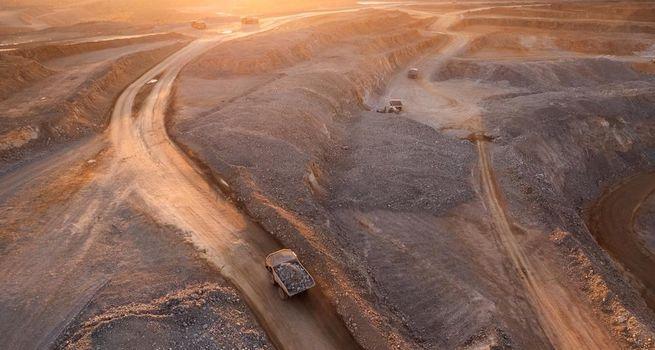
Estrella Resources Limited (ASX:ESR) has completed its Category B market appraisal extraction programme at the Ira Miri Manganese Project in Timor-Leste, marking a significant operational milestone as the Company advances toward potential direct shipping ore (DSO) exports and future mining licence applications.
The programme delivered a surveyed Stage 1 stockpile inventory of approximately 27,371 tonnes of manganese ore at a weighted average grade of 28.64% Mn, remaining within the approved 30,000-tonne Category B extraction limit. Importantly, the inventory includes approximately 4,984 tonnes of high-grade manganese ore grading 49.38% Mn, while pit sampling returned ultra high-grade in-situ results of up to 60.22% Mn.
The announcement also highlighted that mineralisation remains open below the current pit floor and into the surrounding pit walls, with several high-priority Induced Polarisation (IP) geophysical targets at depth yet to be tested.
What was announced
Estrella reported the successful completion of its Category B market appraisal extraction programme at Ira Miri, where mining activities produced a substantial manganese stockpile classified into high-grade, medium-grade, medium-low grade and low-grade categories.
The Company clarified that the surveyed stockpile inventory is intended for product classification, shipment planning and quality control purposes, rather than serving as a JORC-compliant Mineral Resource estimate.
Mining activities provided important geological insights into the structure of the deposit. Pit exposure confirmed a complex Noni Formation host sequence containing folded, faulted and boudinaged manganese pods. According to the Company, direct exposure within the pit revealed a larger cumulative Volume of dense manganese mineralisation than previously interpreted from drilling alone.
Lower-density clay-rich manganiferous material was separately stockpiled as mineralised waste, totalling approximately 6,291 tonnes grading 20.78% Mn.
Operationally, the mining programme was completed over roughly 42 operating days using a predominantly local workforce. Approximately 108,000 tonnes of waste material were removed during the campaign, and mining was conducted without blasting.
While wet-season conditions affected lower-pit access toward the end of operations, groundwater inflow was reportedly limited and the current pit floor remains within mineralisation.
Estrella also confirmed that shipment preparation work is progressing, including stockpile management, logistics planning and trans-shipment arrangements for offshore bulk vessels. Additional work is underway to ensure compliance with International Maritime Solid Bulk Cargoes (IMSBC) requirements, alongside pre-shipment quality assurance and quality control procedures.
Looking ahead, the Company plans to undertake larger-scale IP and resistivity Geophysical surveys during late May or early June 2026 to test the depth extent and continuity of the manganese system. The surveys are expected to support follow-up drilling and, ultimately, a future Category A Mining Licence application.
Separately, Estrella reiterated that resource modelling continues at the Werumata Limestone Project, where a maiden JORC limestone Mineral Resource Estimate is expected in the near term.
Why the announcement matters
The announcement represents a notable step forward for Estrella because it moves the Ira Miri project beyond early-stage exploration and into the delivery of a physically mined and surveyed manganese inventory that can potentially be marketed and exported.
The completion of mining and stockpiling activities within a single wet-season campaign demonstrates the Company’s operational capability in Timor-Leste, a Jurisdiction still emerging within the global mining industry.
The presence of nearly 5,000 tonnes of high-grade manganese material grading close to 50% Mn, combined with in-situ sampling results above 60% Mn, suggests the potential for commercially attractive product specifications, although final customer requirements and shipment specifications are still being assessed through ongoing sizing and Yield studies.
The update is also important in the context of Timor-Leste’s broader mining sector development. Estrella positions itself as an early mover in the country’s modern minerals industry, and the successful completion of a government-approved Category B extraction programme may strengthen confidence in the regulatory pathway for future mining projects.
Equally significant is the indication that mineralisation remains open both at depth and within the pit walls. Combined with untested IP anomalies, this supports the possibility that the current extraction area represents only part of a larger manganese system.
Strategic context
The Ira Miri project forms part of Estrella’s wider exploration footprint across Timor-Leste, which includes additional manganese prospects such as Lalena/Daudere, Soru and Sica, alongside regional targets prospective for manganese, gold and copper.
The Company’s broader strategy centres on leveraging its early-mover position, local partnerships and operational experience to progress projects from discovery through to market appraisal extraction and eventually full mining licences supported by formal Mineral Resource estimates.
The current programme aligns with that strategy by demonstrating the ability to extract, classify and prepare manganese material for potential export while simultaneously expanding geological understanding of the system.
Manganese itself remains strategically important due to Demand from both traditional steelmaking and battery technologies. The metal is widely used as a steel alloying component and is also increasingly utilised in certain Lithium-Ion Battery cathode chemistries.
Although Estrella has not yet disclosed offtake agreements or pricing assumptions, the classification of stockpiles into multiple grade categories indicates the Company is preparing for potential engagement with a range of customer specifications.
The Company also highlighted the potential value of lower-grade and clay-rich material, which may be suitable for future beneficiation or screening processes aimed at improving manganese grades and overall product quality.
Market interpretation
Investors taking a positive view of the announcement may focus on Estrella’s ability to rapidly progress from discovery drilling to a physically mined and surveyed manganese inventory within approximately nine months.
The confirmation of high-grade material, including in-situ assays exceeding 60% Mn, together with the open-ended nature of mineralisation and upcoming geophysical surveys, supports a growth-oriented exploration narrative.
The operational progress toward shipment preparation and export approvals may also be interpreted as evidence that the project is advancing steadily toward potential commercialisation.
A more neutral interpretation would acknowledge that the stockpile inventory is not a JORC Mineral Resource estimate and that considerable technical and commercial work remains before Ira Miri can be considered a producing mining operation.
Key milestones still include further drilling, resource definition, metallurgical testing, customer qualification processes and shipment execution.
Investors may also note that pre-shipment QA/QC work, sizing studies and product yield assessments remain ongoing, meaning final product specifications and commercial outcomes are not yet confirmed.
A more cautious view would focus on execution risks associated with logistics, export approvals, freight arrangements and manganese price Volatility. Commercial outcomes from any maiden shipment will depend on product quality, prevailing manganese prices, freight costs and customer acceptance.
There are also broader risks linked to operating in Timor-Leste, including permitting, regulatory, infrastructure and weather-related challenges.
Risks, caveats, and missing information
Estrella explicitly noted that the surveyed stockpile inventory should not be considered a JORC Mineral Resource estimate. While the inventory confirms the presence of significant manganese material, the project still requires additional drilling and technical evaluation before formal resource classification can occur.
The Company has not yet disclosed any offtake counterparties, sales agreements or expected realised pricing for its manganese products. Shipment timelines also remain subject to ongoing logistics and regulatory approvals.
In addition, the costs associated with mining, stockpiling, shipment preparation and future development activities were not outlined in the announcement, nor was any estimate provided for the Capital required to advance toward a Category A Mining Licence.
Further uncertainty remains around final product specifications, customer acceptance criteria and beneficiation performance, as sizing and yield studies are still underway.
Other key risks include manganese price volatility, foreign exchange exposure, wet-season operational disruptions and the funding requirements associated with ongoing exploration, geophysical surveys and future drilling programmes.
Investors should also consider the joint venture structure underpinning the Ira Miri concessions, which are held through Estrella Murak Rai — a Partnership between Estrella Resources Representação Permanente and Murak Rai Timor.
Investor takeaway
Estrella Resources has achieved an important operational milestone at the Ira Miri Manganese Project, successfully completing a Category B extraction programme that produced a substantial manganese stockpile, including high-grade material approaching 50% Mn and ultra high-grade in-situ assays exceeding 60% Mn.
The results strengthen the Company’s position as an emerging manganese developer in Timor-Leste and support its broader strategy of advancing projects toward commercial shipment and eventual mining licence applications.
At the same time, the announcement makes clear that Ira Miri remains at a transitional stage between exploration and potential production. The stockpile inventory is not yet a formal Mineral Resource estimate, and additional work is required across drilling, geophysics, metallurgy, logistics and customer qualification before sustainable operations can be established.
Near-term investor focus is likely to remain on shipment preparation, pre-shipment QA/QC outcomes, planned IP and resistivity surveys, follow-up drilling results and the eventual timing of a maiden Mineral Resource Estimate. The expected maiden JORC limestone resource at the Werumata Limestone Project may also provide an additional catalyst for the Company in the coming months.


 Nov 13, 2026





 Please wait processing your request...