
 CA
 NZ
 UK
 US
 IND

 AU

 Share
 X (Formerly Twitter)
 Whatsapp
 Facebook
 LinkedIn
 Telegram
 Email This Article
 Copy Link
 Summarize with AI
 Chat GPT
 Perplexity
Key Takeaways
- Capstone Copper operates four producing assets across the Americas, spanning Arizona, Mexico and Chile.
- Mantoverde's sulphide project ramp-up is the most significant near-term operational catalyst for the company.
- Earnings are heavily leveraged to copper prices and unit operating costs at each mine in the portfolio.
- The ASX foreign-exempt listing provides Australian investors with local access to a copper producer with no domestic mines.
- The peer set spans BHP, Freeport-McMoRan, First Quantum, Antofagasta, Southern Copper and Australian mid-caps.
- Key risks include country-specific regulatory change, ramp-up variability, currency effects and copper price cyclicality.
Copper has quietly become one of the most talked-about commodities in global markets. Electrification, grid expansion, data centre build-out and vehicle powertrain change all feed into the same thesis: a structurally higher need for refined copper over the coming decades, against a supply side constrained by declining grades, permitting timelines and geopolitical complexity. Capstone Copper (ASX:CSC) is one of the companies attempting to translate that macro backdrop into incremental production growth.
Listed primarily on the Toronto Stock Exchange, Capstone Copper added an ASX foreign-exempt listing in 2023, opening the story to Australian investors who prefer local market access. The company operates four copper assets across the Americas, spanning the United States, Mexico and Chile, and is executing a strategic ramp-up that is central to the near-term investment outlook.
This article sets out the portfolio, evaluates the ramp-up at Mantoverde, places Capstone within a broader peer set, and considers the risks that frame any serious ASX stock analysis. The focus is on structure and drivers rather than point estimates.
How to Read Capstone Copper
Capstone Copper is best understood as a focused Americas-oriented producer, without the diversification into iron ore, coal, oil and gas, or precious metals that characterises many larger mining houses. That focus is a deliberate strategic choice. It allows the group to concentrate engineering, commercial and corporate resources on copper and on jurisdictions within two regional corridors: Latin America and North America.
The company's ASX foreign-exempt listing, added in 2023, is an important structural feature for Australian investors. It gives local exposure to a pure-play copper name without the currency and platform frictions associated with trading on a primary North American exchange. The Capstone Copper share price is therefore tracked on the ASX in Australian dollars, even though the underlying earnings are predominantly in United States dollars.
Reading the company therefore requires more than looking at a single operating mine or a single commodity print. The portfolio contains different orebody types, different cost structures, different jurisdictional regimes and different positions on their own operating life cycles. Each of those factors feeds the group's overall risk and return profile across the commodity cycle.
The Four Operating Assets
Capstone's portfolio consists of four operating assets plus development optionality. Understanding each in turn gives the most accurate picture of the group's production base and cost profile.
Pinto Valley, Arizona
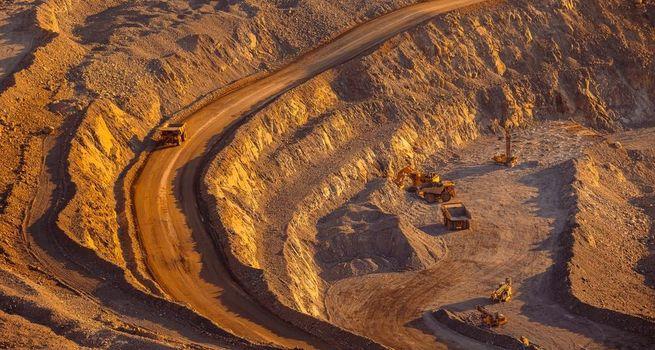
Pinto Valley is an open-pit copper operation in Arizona with decades of operating history. It is a long-life asset with well-defined reserves, established processing infrastructure and a workforce accustomed to large-scale mining. For the group, Pinto Valley provides steady United States-denominated cash flow in a mature jurisdiction.
The operation is sensitive to input cost inflation and grade sequencing, both of which are typical features of long-life open-pit copper mines. Ongoing work to optimise mine planning, recovery and throughput forms part of the everyday management task.
Cozamin, Mexico
Cozamin is an underground copper mine in Zacatecas, Mexico, with silver and zinc credits. It is a smaller but high-quality asset, known for its disciplined cost profile and a long mine-life extension that has reinforced its role in the portfolio.
Underground operations of this type are more sensitive to ground conditions and development rates than open pits. Cozamin's track record, however, is consistent and provides a reliable contribution to group cash flow.
Mantos Blancos, Chile
Mantos Blancos is a Chilean operation historically focused on oxide copper, with a sulphide concentrator expansion that has been progressively ramping through its design capacity. The project transforms a mid-life oxide mine into a longer-life sulphide producer, extending the asset's relevance within the group.
Ramp-ups of this nature are rarely linear, and management attention is typically focused on achieving stable recoveries, consistent throughput and targeted unit costs. Mantos Blancos remains a cornerstone of Capstone's South American presence.
Mantoverde, Chile
Mantoverde is the single most important near-term catalyst. The historically oxide-focused operation has been expanded with a sulphide development project, adding a large concentrator and associated infrastructure. The ramp-up of that sulphide project is pivotal to the group's production growth profile.
Successful ramp-up would materially lift copper output, improve cost metrics and strengthen free cash flow generation. Investors tracking the Capstone Copper share price tend to pay particularly close attention to Mantoverde quarterly production and cost indicators, because the asset's execution is closely tied to the broader investment outlook.
Copper Price Leverage and Financial Performance
Capstone's financial performance is, like most pure-play copper producers, highly leveraged to the copper price. Small movements in realised prices can translate into meaningful changes in margin, especially when combined with incremental production from a ramping asset like Mantoverde. This leverage is attractive to investors seeking copper exposure, and challenging to investors who prefer smoother cash flow profiles.
Unit costs across the four assets vary considerably, reflecting orebody characteristics, processing complexity and by-product credits. Group-level cost metrics therefore smooth together quite distinct mine-level economics. For a deeper read, it is usually more informative to follow cost trajectories asset by asset rather than relying on a single group-level figure.
Capital allocation discipline is central to the story. As Mantoverde moves through its ramp-up, management decisions on dividends, debt reduction and potential mergers and acquisitions activity will shape how the value of higher copper output flows through to shareholders. Balance sheet management also influences resilience in the event of a softer copper cycle. Investors tracking the Capstone Copper share price through the cycle will watch for signals on whether management prioritises shareholder returns or balance sheet strength as cash flow accelerates.
Industry Position and Peer Comparison
Copper is one of the most strategically important metals globally, and the producer universe is diverse. At the top end sit diversified majors such as BHP, whose Escondida and Olympic Dam assets make it one of the world's largest copper producers. Freeport-McMoRan is a major pure-play, with large operations including Grasberg in Indonesia. First Quantum, Antofagasta and Southern Copper each bring significant exposure, with their own jurisdictional and asset-specific profiles.
On the ASX, Capstone's mid-cap peer group includes Sandfire Resources, with operations in Australia and overseas, and 29Metals, focused on base metals in Queensland. These peers offer differing balances of copper purity, scale and country exposure. Hudbay Minerals is another North American peer worth noting in broader comparisons for investors building a diversified view.
Relative to this field, Capstone's profile is distinctive because of its four-asset Americas focus, its ramp-up optionality at Mantoverde and its dual-listed status. Each attribute has both advantages and trade-offs, and investors tend to use peer comparisons to stress test assumptions about valuation, capital structure and growth prospects over various phases of the cycle.
Risks and Opportunities Behind the Thesis
Country risk is a central factor. Chile, Mexico and the United States each have their own regulatory, taxation and community engagement regimes. Policy changes relating to royalties, water rights, labour frameworks or environmental permitting can meaningfully alter project economics. Capstone's diversification across three countries softens this, but does not eliminate it.
Operational ramp-up risk remains important in the near term, particularly at Mantoverde. Mill throughput, recoveries, concentrate quality and unit cost trajectories will all influence how the expansion translates into group results. Variability during ramp is normal and not necessarily a sign of structural problems, but it can move sentiment meaningfully over short windows.
The opportunity side is equally clear. Structural demand growth for copper, driven by electrification and grid investment, provides a supportive long-term backdrop. A focused, Americas-centred producer with ramping production is a direct way to participate in that thesis, assuming operational execution lines up with the macro narrative. Balancing risks and opportunities at this level requires a clear view of both commodity trends and management delivery. For investors treating copper as a long-duration theme, a stock like Capstone offers one accessible expression, though one that should still be sized with cyclical volatility in mind.
A Pure-Play Lens on Copper's Decade
Capstone Copper brings together a focused Americas copper portfolio, a meaningful operational ramp-up and direct exposure to one of the most discussed long-duration commodity themes. For Australian investors, its ASX foreign-exempt listing makes that exposure easier to access than is often the case for international producers of similar scale.
The investment case hinges on more than the macro story. It requires the four assets to perform consistently, Mantoverde to ramp toward its design parameters, and management to allocate capital intelligently through different phases of the copper cycle. Each of these elements can be monitored over time, and each will influence the Capstone Copper share price as results emerge through the reporting calendar.
Viewed in that way, Capstone is less a single-catalyst story and more a cumulative one. Incremental delivery on mining, processing, costs and cash flow builds into a track record that either validates the structural thesis or exposes weaker links. That is the appropriate lens for long-term investors working through their own investment outlook for the copper sector.


 Nov 13, 2026





 Please wait processing your request...