
 CA
 NZ
 UK
 US
 IND

 AU

 Share
 X (Formerly Twitter)
 Whatsapp
 Facebook
 LinkedIn
 Telegram
 Email This Article
 Copy Link
 Summarize with AI
 Chat GPT
 Perplexity
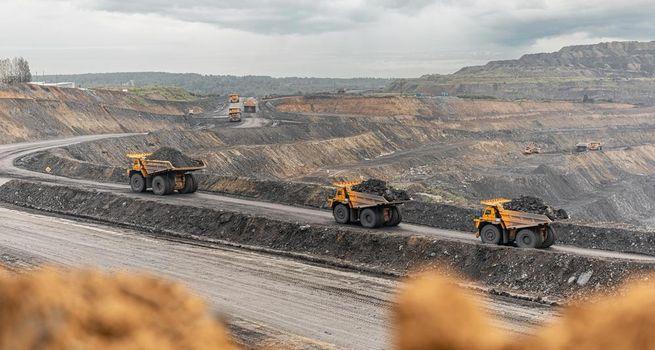
Australia’s role in the global rare earth supply chain extends beyond its geological endowment. The country’s strategic importance is a function of several interconnected factors: resource quality, geopolitical alignment, policy support, and growing processing capability.
Resource Base
Australia holds substantial rare earth reserves, with deposits spread across Western Australia, the Northern Territory, Queensland, and South Australia. These range from world-class hard-rock deposits like Mt Weld to emerging ionic clay discoveries and mineral sands-hosted monazite. The diversity of deposit types provides a pipeline of projects at varying stages of development.
Policy and Government Support
The Australian Government has identified rare earths as a priority within its broader critical minerals strategy. Key policy measures include:
- Critical Minerals Strategic Reserve ($1.2 billion allocation) prioritising rare earths, gallium, and antimony
- $1.65 billion non-recourse loan to Iluka Resources for the Eneabba refinery
- National Reconstruction Fund commitments to Arafura’s Nolans project
- Export Finance Australia support for multiple rare earth companies
- Tax incentives for critical mineral exploration through the Junior Minerals Exploration Incentive
Geopolitical Alignment
Australia’s position as a member of the Five Eyes intelligence alliance, a key US strategic partner in the Indo-Pacific, and a close economic partner of Japan and South Korea gives it unique standing. Australian rare earth supply is viewed by Western governments as “friendly” and strategically reliable, commanding potential premium pricing from buyers seeking to diversify away from Chinese dependence.
The AUKUS security pact and the Quad (comprising the US, Japan, India, and Australia) both include critical minerals cooperation as a priority area. This diplomatic architecture creates demand-side pull for Australian rare earth products, beyond what market fundamentals alone would generate.
Japan’s relationship with Australian rare earth producers deserves particular attention. Japan is the world’s third-largest consumer of rare earth magnets, and its industrial strategy has long prioritised supply diversification. The Japan Australia Rare Earths (JARE) partnership with Lynas, recently extended through 2038, is a cornerstone of this strategy. Japanese government-backed entities, including JOGMEC (Japan Oil, Gas and Metals National Corporation), have provided technical and financial support to multiple Australian rare earth projects, creating a bilateral supply chain that benefits both nations.
The European Union is also increasingly engaged. The EU Critical Raw Materials Act sets ambitious targets for domestic sourcing and processing of strategic minerals, and European development finance institutions like KfW are actively investing in non-Chinese rare earth projects. Arafura’s funding from KfW is a direct reflection of European strategic interest in Australian rare earth supply.
Processing Capability
The most significant gap in Australia’s rare earth supply chain has been the absence of domestic separation and refining capacity. The Iluka Eneabba refinery, expected to commission in 2027, will be transformational in this regard. Once operational, it will enable Australia to produce finished rare earth oxides domestically for the first time, reducing dependence on Chinese processing and capturing more of the value chain.
Over time, additional processing capacity from projects like Arafura’s Nolans (which includes an integrated hydrometallurgical plant) could further strengthen Australia’s position as a full-chain rare earth supplier.
Workforce and Skills Development
A practical challenge for Australia’s rare earth ambitions is the availability of skilled workers. Rare earth processing requires specialised chemical engineering, hydrometallurgical, and radiation safety expertise that is in short supply domestically. The Australian Government and several universities are investing in training programmes to build this capability, recognising that workforce development is a prerequisite for sustaining a domestic rare earth industry. Companies like Lynas and Iluka are also investing in internal training and knowledge transfer, drawing on international expertise where necessary.
Indigenous and Community Engagement
Many Australian rare earth projects are located on or near land with Indigenous cultural significance. Effective community engagement and benefit-sharing arrangements are essential for maintaining social licence to operate. Arafura’s formal compensation agreement with the pastoral lease holder at Nolans is one example of this engagement in practice. Companies that invest genuinely in community relationships, employ Indigenous workers, and share economic benefits from resource development will be better positioned for long-term operational stability.
Bull Case vs Bear Case for ASX Rare Earth Stocks
The Bull Case
The bullish argument for investing in ASX rare earth stocks rests on several structural tailwinds that are unlikely to reverse in the medium term.
First, demand growth is not speculative. The electrification of transport and the expansion of renewable energy are locked-in policy commitments across virtually every major economy. These transitions require rare earth permanent magnets at scale, and there are no commercially viable substitutes for NdPr-based magnets in high-performance applications.
Second, supply constraints are real and growing. Building new rare earth mines and processing facilities takes 7 to 15 years from discovery to production. The current pipeline of non-Chinese projects is insufficient to meet projected demand growth, suggesting a structural supply deficit is likely to emerge by the late 2020s.
Third, geopolitical urgency is creating new sources of demand. Government stockpiling programmes, defence procurement requirements, and onshoring mandates are adding demand layers that did not exist five years ago. These buyers are often willing to pay premium prices for supply security.
Fourth, Australian companies are uniquely positioned. With government support, established mining expertise, and geopolitical credibility, ASX-listed rare earth companies stand to capture a disproportionate share of non-Chinese supply growth.
The Bear Case
The bearish argument centres on several legitimate risks that investors must weigh carefully.
First, China retains the ability to influence global rare earth prices. By increasing its own production or releasing stockpiles, China can suppress prices to levels that make non-Chinese projects uneconomic. This has happened before — in the 2014–2020 period, depressed pricing delayed or cancelled numerous rare earth projects outside China.
Second, technology substitution is a long-term risk. While there are no near-term substitutes for NdPr magnets, ongoing research into ferrite-based motors, induction motors, and recycling technologies could eventually reduce rare earth intensity per unit of output.
Third, project execution risk is substantial. The history of rare earth development is littered with projects that failed to meet production targets, exceeded capital budgets, or encountered insurmountable technical challenges. Rare earth metallurgy is notoriously complex, and each deposit has unique characteristics.
Fourth, ESG and environmental concerns could constrain development. Rare earth processing generates radioactive waste (thorium and uranium), toxic effluents, and significant carbon emissions. Regulatory and community opposition to new projects is a persistent risk, particularly in Australia where environmental standards are high.
Finally, investor sentiment in the small-cap mining space is fickle. Many ASX rare earth stocks are thinly traded and prone to sharp price movements driven by market sentiment rather than fundamentals.
Historical Precedent: Lessons from the 2010–2012 Rare Earth Bubble
Investors considering ASX rare earth stocks should study the 2010–2012 rare earth price bubble for important lessons. In that period, China’s temporary export restrictions caused NdPr prices to spike more than tenfold, triggering a rush of new exploration and development projects globally. Dozens of ASX-listed companies raised capital on the promise of rare earth riches.
When China eased its restrictions and increased its own production, prices collapsed by over 80 per cent. Most of the projects launched during the boom proved uneconomic, and the vast majority of the companies that raised capital during that period either failed or pivoted away from rare earths entirely. Lynas was one of the very few non-Chinese producers to survive that cycle, and it did so only after extensive restructuring.
The current cycle is different in important respects. Demand growth is driven by structural economic transitions (electrification and renewable energy), not speculative hoarding. Government policy support is far more substantial and sustained. And the geopolitical imperative for supply diversification is more deeply entrenched. However, the lesson that rare earth prices can be volatile and that Chinese supply policy can rapidly alter the economics of non-Chinese projects remains highly relevant.
Investors should be cautious about extrapolating current price trends indefinitely and should stress-test their investment theses against scenarios where rare earth prices decline significantly. Companies with lower cost structures, strong balance sheets, and committed offtake agreements are better positioned to weather price downturns than highly leveraged, pre-revenue developers.
Future Outlook: Rare Earth Sector 2026–2030
The period from 2026 to 2030 is shaping up to be a defining era for the global rare earth industry and for ASX-listed companies in particular.
Demand Trajectory
Consensus forecasts suggest that global NdPr demand will grow at 8 to 12 per cent annually through 2030, driven primarily by EV adoption and wind energy expansion. Heavy rare earth demand for dysprosium and terbium is expected to grow even faster, as high-performance magnet applications expand. By 2030, the rare earth permanent magnet market alone could be worth in excess of US$30 billion annually.
Beyond the headline numbers, the composition of demand is shifting in ways that favour non-Chinese producers. Western automakers are under increasing pressure from their governments and customers to demonstrate supply chain transparency and reduce reliance on Chinese inputs. The European Union’s Battery Regulation and the US Inflation Reduction Act both include domestic content requirements that incentivise sourcing from allied nations. This regulatory architecture creates structural demand for rare earths produced in countries like Australia, regardless of whether Chinese alternatives are cheaper.
Supply Response
The non-Chinese supply pipeline is gradually filling, but significant gaps remain. Lynas is expanding production, Iluka’s Eneabba refinery should be operational by 2027, and Arafura’s Nolans project could reach first production by the late 2020s. Projects in Canada (Vital Metals), the United States (MP Materials), and Greenland are also advancing. However, the cumulative output of all non-Chinese projects under development is unlikely to close the supply gap entirely, suggesting that NdPr pricing should remain structurally supported.
Price Outlook
Rare earth oxide prices are influenced by a complex interplay of supply, demand, Chinese policy, and speculative activity. NdPr prices have recovered from the lows of 2023 and are expected to trend higher through the remainder of the decade as demand growth outpaces supply additions. However, short-term price volatility is likely to persist, particularly around Chinese export policy announcements and macroeconomic inflection points.
Consolidation and M&A
The ASX rare earth space is ripe for consolidation. Larger companies with processing capabilities may seek to acquire exploration-stage companies with high-quality deposits to secure long-term feedstock. International mining majors and Asian trading houses could also emerge as acquirers, seeking to lock in rare earth supply through strategic investments or outright acquisitions.
Several potential consolidation scenarios are worth considering. Iluka, once the Eneabba refinery is operational, will need diverse feedstock sources beyond its initial monazite stockpile. Acquiring or partnering with companies that hold monazite-rich mineral sands deposits could secure long-term feed. Similarly, Japanese trading houses like Sumitomo, Mitsui, and Sojitz have historically invested in upstream rare earth assets to secure supply for Japan’s magnet and electronics industries. Any of these entities could emerge as strategic investors in or acquirers of ASX-listed rare earth companies.
For shareholders in junior rare earth companies like BRE or MEI, a takeover by a larger player at a premium to the current share price represents one of the most attractive potential outcomes. However, investors should also consider the risk that consolidation does not eventuate, or that it occurs at a price below expectations, particularly if rare earth prices soften or project milestones are delayed.
Regulatory Evolution
Environmental and social governance requirements for rare earth projects are likely to become more stringent over the next five years. Companies that invest in cleaner processing technologies, community engagement, and transparent ESG reporting will be better positioned to secure government support, attract institutional capital, and maintain social licence to operate.
In Australia specifically, the regulatory framework for rare earth projects is evolving. The Environmental Protection and Biodiversity Conservation Act, state-level mining approvals, and Indigenous heritage protections all create a rigorous permitting landscape. While this adds time and cost to project development, it also creates a quality threshold that ensures Australian rare earth products carry an implicit ESG credential valued by discerning international buyers.
The Role of ESG in Rare Earth Investment
Environmental, social, and governance (ESG) considerations are becoming increasingly important for rare earth investors. The environmental footprint of rare earth processing — including radioactive waste management, chemical effluent treatment, and carbon emissions — is a legitimate concern that can affect project permitting, community acceptance, and institutional investor appetite. Companies that proactively invest in cleaner processing technologies, transparent ESG reporting, and meaningful community engagement will be better positioned to attract the growing pool of ESG-conscious capital.
For ASX-listed rare earth companies, adherence to Australian environmental standards provides a natural advantage over Chinese competitors, where environmental enforcement has historically been less rigorous. This “green premium” could become an increasingly valuable competitive differentiator as downstream customers face pressure from their own stakeholders to demonstrate responsible sourcing practices.
Investment Strategies for the Rare Earth Sector
Investors approaching the ASX rare earth sector can consider several strategies depending on their risk appetite and investment objectives. A conservative approach would focus on Lynas as a core holding, supplemented by Iluka for its diversified revenue base. A balanced approach might add Arafura for its development-stage catalyst potential. An aggressive growth strategy could include positions in Brazilian Rare Earths and Meteoric Resources for their early-stage discovery upside. Dollar-cost averaging into positions can help manage the volatility inherent in small-cap mining stocks.
Portfolio sizing is also critical. Rare earth stocks, particularly those at the exploration and development stages, should typically represent a modest allocation within a diversified portfolio. Position sizes of one to five per cent per stock are generally appropriate, with aggregate sector exposure capped at a level consistent with the investor’s overall risk tolerance.
Key Milestones to Watch
- Lynas: Production volume growth, US defence contract deliveries, and Vietnam JV progress
- Arafura: Financial close and construction commencement at Nolans
- Iluka: Eneabba refinery commissioning and ramp-up to nameplate capacity
- Brazilian Rare Earths: Maiden JORC resource, pilot plant results, and pathway to feasibility
- Meteoric Resources: DFS completion, permitting progression, and offtake negotiations


 Nov 13, 2026





 Please wait processing your request...