
 CA
 NZ
 UK
 US
 IND

 AU

 Share
 X (Formerly Twitter)
 Whatsapp
 Facebook
 LinkedIn
 Telegram
 Email This Article
 Copy Link
 Summarize with AI
 Chat GPT
 Perplexity
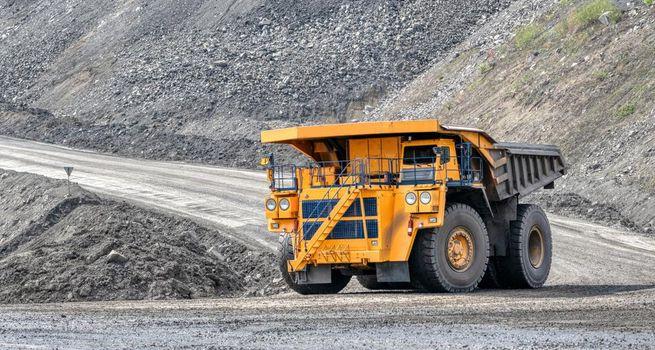
Auric Mining Limited (ASX:AWJ) has delivered a stellar performance at its Munda Starter Pit, substantially exceeding production forecasts and generating impressive cash reserves that position the company for accelerated exploration and development. The 8,886 ounces of gold produced during the second mining campaign represents a remarkable 46% outperformance against the budgeted 6,100 ounces, validated by a reconciled head grade of 2.46 g/t versus the predicted 1.80 g/t. With gold sold at an average price of A$7,178 per ounce, Auric has established a net cash position of A$43.5 million (excluding GST) as of 23 March 2026—a transformational achievement for a company transitioning from exploration into production.
The successful completion of the Munda Starter Pit marks more than just operational triumph; it serves as definitive proof-of-concept for the broader Munda Main Pit resource, which geological data now suggests is substantially larger and higher-grade than previously anticipated. This paradigm shift in deposit understanding has immediate implications for shareholder value and the company's capacity to achieve its strategic ambition of becoming an integrated, sustainable, and significant gold producer.
- Company Overview and Strategic Context
Auric Mining Limited (ASX:AWJ) is headquartered in East Perth, Western Australia, with Managing Director Mark English guiding the company through a pivotal phase of growth. Founded with an explicit mandate to identify and develop gold assets in prospective Australian jurisdictions, Auric represents a compelling case study in disciplined capital allocation and geological insight, having transformed exploration concepts into cash-generative operations within a remarkably tight timeframe.
The company's strategic vision centres on establishing a sustainable, integrated gold production platform. Unlike junior explorers that remain perpetually capital-constrained, Auric's successful Starter Pit campaign has established a financial fortress—net cash of A$43.5 million—that permits the company to pursue its Munda Main Pit opportunity without equity dilution or debt constraints. This financial flexibility is a material competitive advantage in the current precious metals market environment.
- The Munda Starter Pit Achievement
Executed between late January and mid-February 2026, the Munda Starter Pit second mining campaign consolidated Auric's operational credentials and delivered extraordinary financial results. The 8,886 ounces produced vastly exceeded the budgeted 6,100 ounces—a 46% outperformance that reflects superior geological interpretation, optimised extraction practices, or both.
The reconciled head grade of 2.46 g/t stands 37% above the predicted 1.80 g/t, indicating that the actual mineralisation within the Starter Pit was materially richer than modelled. Simultaneously, recovery efficiency reached 89.5% against the forecast 83.3%, demonstrating competent metallurgical performance and optimal processing parameters. These dual outperformances—in both grade and recovery—compound to explain the substantial production surplus.
Bullion realisation at an average price of A$7,178 per ounce reflects a balanced market environment and effective hedging or sales management. Over the 8,886 ounces produced, this price realisation generated approximately A$63.8 million in gross revenue before processing and administrative costs—substantially funding the company's operational and corporate expenditure whilst simultaneously building reserves.
- Metallurgical Processing Partnership
Gold extracted from the Munda Starter Pit was processed through the Lakewood Mill, operated by Black Cat Syndicate Ltd (ASX:BC8). This strategic third-party processing arrangement enabled Auric to avoid the substantial capital expenditure required to construct and commission its own milling infrastructure whilst maintaining operational flexibility and cost efficiency.
The utilisation of established processing capacity represents prudent capital stewardship, particularly for a company in its initial production phase. However, medium-term integration—either through acquisition of dedicated milling assets or through long-term strategic partnerships—may enhance margins and operational control as Auric's scale increases. The 89.5% recovery rate achieved at Lakewood suggests the partnership arrangement is functioning optimally.
- Fortress Balance Sheet and Cash Generation
As of 23 March 2026, Auric's financial position comprises cash at bank plus amounts due from Black Cat Syndicate totalling A$43.5 million (excluding GST). This represents net cash available for operational, exploration, and development purposes without recourse to equity dilution or debt financing—a material advantage in capital allocation strategies.
The generation of A$43.5 million in a single mining campaign is extraordinary for a company at this stage of development and underscores both the grade quality and operational execution of the Munda deposit. This cash fortress permits Auric to execute its strategic pipeline—principally the Munda Main Pit development and exploration of adjacent prospects—without external funding pressure.
From an investor perspective, the absence of cash drag from interest-bearing debt and the presence of substantial net cash enhance free cash flow and reduce financial risk. Depending on the company's capital expenditure requirements for the Munda Main Pit, shareholder distributions—either through dividends or capital returns—become feasible options in the medium term.
- Geological Implications and the Munda Main Pit Opportunity
The Starter Pit results carry profound implications for the Munda Main Pit resource. The 46% production outperformance, driven by both higher-than-predicted head grades and superior recovery characteristics, indicates that Auric's geological models may have been conservative. If the Munda deposit exhibits consistent mineralisation characteristics across its broader footprint, the Main Pit resource—substantially larger in mineable tonnage—could deliver proportionally or super-proportionally greater production than originally estimated.
Auric has explicitly acknowledged that results indicate the Munda deposit hosts a larger and higher-grade opportunity than previously modelled. This geological confirmation removes a material source of project uncertainty and enhances the confidence profile for Main Pit development. In particular, the demonstrated recovery rate of 89.5% and grade consistency suggest that future production phases may achieve similar or improved efficiency metrics.
The Munda Main Pit represents the company's principal value driver. If the deposit is indeed larger and higher-grade than pre-production estimates, the scale of the economic opportunity expands materially, potentially supporting extended production timelines, higher annual output, or improved mine economics—all factors that drive equity valuation multiples upward.
- Production Metrics and Operational Excellence
The production of 8,886 ounces from the Starter Pit—completed in less than two months of actual mining activity—demonstrates material operational competence. The annualised equivalent run-rate, extrapolating the Starter Pit campaign, would suggest annual production capacity significantly exceeding typical junior gold producer benchmarks.
Key performance indicators merit emphasis: (1) Head grade of 2.46 g/t places the Munda deposit in the mid-to-upper quartile of Australian gold operations, competitive with many existing producing mines; (2) Recovery of 89.5% is industry-standard to slightly above-standard, indicating well-controlled metallurgical processes; (3) Production surplus of 46% above budget suggests either conservative initial estimates or superior operational execution—either scenario is favourable for future performance.
For investors evaluating Auric Mining, these metrics establish a track record of reliable, efficient gold production rather than mere exploration success or pilot-scale trials.
- Gold Price Realisation and Market Dynamics
The realisation of A$7,178 per ounce for Auric's bullion production reflects prevailing gold market conditions in early 2026. Spot gold prices have remained elevated relative to long-term historical averages, supported by persistent inflation concerns, geopolitical uncertainties, and central bank policy accommodations. This pricing environment has provided a tailwind to precious metals producers.
Price realisation is material to cash generation. At A$7,178 per ounce, each additional 1,000 ounces produced generates approximately A$7.2 million in gross revenue. As Auric scales to Main Pit production, which may encompass 20,000+ ounces annually (or potentially higher, given deposit size revisions), the revenue base scales correspondingly. Gold price sensitivity—a key risk factor—warrants monitoring, as lower prices would compress margins and cash generation.
- Capital Efficiency and Cost Structure
The execution of the Starter Pit campaign—producing 8,886 ounces with net cash generation of A$43.5 million—suggests operational costs well-controlled and aligned with industry benchmarks. Whilst detailed cost breakdowns are not disclosed in the announcement, the scale of cash generation implies all-in sustaining costs (AISC) considerably below the A$7,178 realisation price, likely in the range of A$1,500–A$3,500 per ounce depending on allocation of corporate overhead.
For future production campaigns, economies of scale—particularly as the Main Pit permits larger, more efficient excavation and processing programmes—should drive AISC downward, enhancing per-ounce profitability and free cash flow generation. This operational leverage is a key bull case for AWJ equity.
- Strategic Growth Pathways and Development Priorities
With A$43.5 million in net cash and demonstrated production capabilities, Auric faces strategic optionality. The immediate priority is economically justified development of the Munda Main Pit, which the updated geological understanding suggests may be a multi-year, multi-million-tonne resource. Capital expenditure for Main Pit development—comprising mine infrastructure, additional processing capacity or arrangements, and working capital—is material but supportable from the existing cash position and operational free cash flow.
Secondary opportunities include exploration of adjacent prospects and acquisition of complementary gold assets. The company's stated ambition to become an integrated, sustainable, significant gold producer implies a development pathway encompassing multiple assets and extended production horizons. The current financial position permits such strategic acquisitions without debt or material equity dilution.
- Material Risk Factors and Challenges
Despite the compelling recent results, Auric Mining faces material risk factors inherent to precious metals production. (1) Gold price volatility: should spot prices decline materially, cash generation and project economics contract proportionally; (2) Operational and geological risks: future mining campaigns may encounter grade variability, recovery shortfalls, or operational disruptions that depress production below expectations; (3) Regulatory and environmental compliance: gold mining operations face stringent permitting, environmental, and social responsibilities that could constrain development timelines or increase costs; (4) Funding and capital requirements: whilst the company has generated cash, substantial capital may be required for Main Pit development, requiring either operational cash flow or external financing.
Additionally, as a junior producer scaling operations, Auric faces typical small-cap risks: executive continuity, key person dependencies, and operational execution challenges at larger scale.
- Competitive Positioning in the Gold Market
In the context of the Australian gold mining industry, Auric Mining occupies a compelling niche. The company operates a high-grade, low-tonnage asset (consistent with 2.46 g/t head grades) in a favourable Western Australian jurisdiction with established mining infrastructure and skilled labour. Cost competitiveness, grade quality, and jurisdictional credentials position Auric favourably relative to peer junior and intermediate producers.
The Munda deposit's grade and metallurgical characteristics align with premium Australian gold operations, offering competitive returns on capital. As the company scales to Main Pit production, competitive positioning should strengthen, driven by per-ounce cost reduction and operational leverage.
- Investment Thesis and Valuation Considerations
The investment thesis for Auric Mining rests on several substantive pillars: (1) demonstrated production capability with 8,886 ounces delivered on 46% outperformance; (2) fortress balance sheet with A$43.5 million net cash supporting growth without dilution; (3) expanded geological understanding suggesting Munda is materially larger and higher-grade than pre-production models; (4) strategic pathway to becoming a mid-tier gold producer with multiple assets and extended production horizons; (5) operational excellence in extraction and metallurgy, validating management competence.
Valuation methodologies appropriate to Auric include: (1) net asset value (NAV) of the Munda deposit, utilising updated resource estimates and discounted cash flow modelling; (2) production multiple analysis, comparing Auric's equity value to peers on a cost-per-ounce-in-situ basis; (3) free cash flow yield, capitalising the company's estimated sustainable annual cash generation.
A conservative NAV approach, incorporating updated Munda geology and Main Pit economics, could justify material equity appreciation from current levels, particularly if gold prices remain supportive and the company delivers on Main Pit development timelines.
- Conclusion and Investment Perspective
Auric Mining Limited has executed a transformational milestone in the Munda Starter Pit campaign, delivering production substantially above budget whilst establishing a net cash position of A$43.5 million. The company has progressed from exploration-phase company to demonstrated gold producer with validated operational and geological competencies.
The updated understanding that Munda hosts a larger, higher-grade deposit than previously modelled removes significant project risk and expands the economic opportunity. With financial flexibility, demonstrated execution capability, and a clear strategic pathway to integrated production, Auric Mining presents a differentiated opportunity within the Australian junior/intermediate gold producer cohort.
Investors should monitor: (1) timing and scope of Main Pit development announcements; (2) updated resource estimates for Munda reflecting the revised geological understanding; (3) quarterly production and cost metrics as the company scales operations; (4) gold price movements and their impact on project economics.
For equity investors seeking exposure to a high-grade gold asset with validated production credentials, established management, and significant development optionality—coupled with fortress financial position—Auric Mining (ASX: AWJ) merits serious consideration as part of a diversified precious metals exposure.


 Nov 13, 2026





 Please wait processing your request...