
 CA
 NZ
 UK
 US
 IND

 AU

 Share
 X (Formerly Twitter)
 Whatsapp
 Facebook
 LinkedIn
 Telegram
 Email This Article
 Copy Link
 Summarize with AI
 Chat GPT
 Perplexity
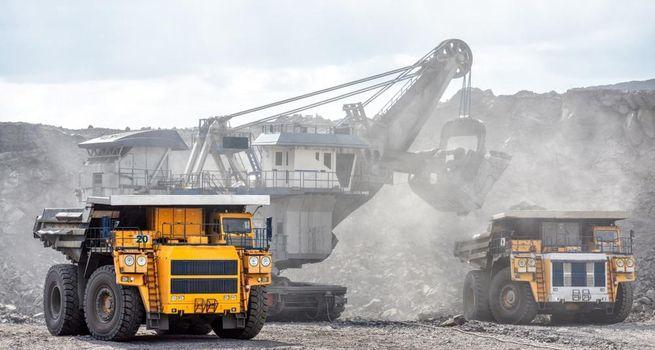
Auric Mining (ASX:AWJ) has formally appointed Gareth Solly as Chief Executive Officer and executive director, with the company describing the move as a Leadership upgrade ahead of a multi-pronged growth phase. According to the source brief and public reporting, Solly’s appointment took effect from 18 May 2026, with a planned transition to Managing Director on 1 December 2026. Founder Mark English will move to an executive and finance director role.
The market context for the appointment is operational: bringing the Burbanks plant back online is described as a key priority, alongside the restart of the Munda gold mine and continued resource growth across the company’s broader Widgiemooltha portfolio. Auric says it is investigating Options to lift Burbanks beyond its current nominal 180,000 tonnes per annum (tpa) capacity to potentially 500,000tpa.
What was announced
The headline event is the CEO transition. Solly brings recognised West Australian gold operating experience to the role, and his appointment is being read by the market as a signal of intent on operational execution. Public reporting indicates he has been positioned to drive the Burbanks plant rebuild, resource growth and the Munda restart.
The company says it has built a A$43 million treasury comprising cash, bullion and listed investments, providing flexibility to fund both operations and growth initiatives. The exact cash split between bullion, cash and listed equities is not disclosed in the source brief and should be verified through the most recent ASX disclosure.
Burbanks: from 180ktpa to potentially 500ktpa
The Burbanks gold processing plant sits at the heart of Auric’s integrated mine-to-mill strategy. According to public reporting, the company is investigating options to lift throughput from 180,000 tonnes per annum to as much as 500,000tpa. That would be a step-change for the operation and would require careful planning around Capital cost, schedule, ore-feed availability and approvals.
For investors, the key questions around a Burbanks expansion will be the timing of any final Investment decision, the indicative capex range, the additional ore feed required to justify the scale-up, and the operational and metallurgical work programmes that underpin the larger plant. These specifics are not disclosed in detail in the source brief and should be tracked through Auric’s ASX announcements.
Munda restart and Lakewood toll treatment
Munda is one of Auric’s key satellite gold Assets. According to public reporting, mining operations at Munda continued into January following a brief pause, with ore haulage to the Lakewood Mill commencing on 10 January and toll processing expected to begin around 27 January. The Munda restart story is therefore an active, near-term cashflow lever, and one of the operational drivers behind the Burbanks rebuild thesis: ore feed from Munda and other satellites would help underpin a larger central mill.
Why the leadership change matters
In small-cap gold, the difference between operational success and stop-start production often hinges on operator experience. A CEO with depth in West Australian gold operations is generally well-placed to navigate the practicalities of bringing a smaller plant back online, scaling it sustainably and integrating multiple satellite ore feeds.
For Auric, the move also marks an evolution from a founder-led structure to a CEO-led operating model with the founder retained in a finance and strategy role. That can be helpful at the stage where the company shifts from project assembly to production execution.
Balance Sheet and growth flexibility
The A$43 million treasury figure is large relative to Auric’s historical scale and provides flexibility for the planned operational ramp-up and corporate growth activity. Cash, bullion and listed investments can be drawn upon in different ways: cash funds immediate capex and Working Capital, bullion provides a partial hedge against gold price moves, and listed equities can be liquidated subject to market conditions.
Investors should track the company’s next quarterly Appendix 5B for clarity on the composition of the treasury and the deployment pace of these assets against operations and growth.
Sector context: WA gold consolidation
The broader Western Australian gold sector has seen significant consolidation and capacity expansion activity over the past two years. Mid-tier producers have looked to expand mill throughput, sometimes by acquiring or partnering with neighbouring asset owners. A scaled-up Burbanks plant could potentially position Auric as either a stand-alone scaled producer or a participant in regional consolidation conversations.
Why it matters
For Auric shareholders, the Solly appointment sets the operational tone for the next phase of the company’s development. With a meaningful treasury, an operating asset at Munda and a clear capacity-expansion thesis at Burbanks, the company has the pieces in place to translate strategy into output.
For the wider ASX gold sector, the news is a marker of how mid-cap and junior producers are increasingly emphasising operational leadership and mill capacity — not just exploration — as the most credible levers for valuation re-rating.
Key facts
- Company: Auric Mining Limited (ASX: AWJ).
- CEO appointment: Gareth Solly named CEO and executive director from 18 May 2026.
- Transition: Solly to become Managing Director from 1 December 2026.
- Founder Mark English to assume executive and finance director responsibilities.
- Burbanks processing plant: current nominal capacity 180ktpa; expansion options to potentially 500ktpa under investigation.
- Munda gold mine restart: mining operations resumed; ore haulage to Lakewood Mill referenced in public reporting.
- Treasury: A$43 million in cash, bullion and listed investments.
- Region: Widgiemooltha district, Western Australia.
- Indicative timing for an FID on any Burbanks expansion: not disclosed in the source brief.
- Operational guidance, AISC and production targets for FY26-FY27: verify on ASX announcements.
What investors should watch next
Investors should look for further updates from the new CEO on operational priorities, including a definitive plan for the Burbanks plant rebuild and any expansion scoping work. The pace and consistency of ore haulage from Munda and the cash Margin generated through Lakewood toll treatment will be useful operational tells.
On the corporate side, the deployment of the A$43 million treasury will be informative, along with any updates on M&Amp;A activity, regional consolidation, or new ore feed agreements that could support a larger Burbanks mill.
Balanced risk view
Operational risk is the primary near-term consideration. Restarting and rebuilding a small-scale gold mill involves engineering complexity, Supply-chain constraints and labour market pressures.
Gold-price risk remains relevant. While prices have been firm, AISC management at restart and ramp-up phases can be challenging, and any material drop in gold prices would compress margins.
Funding and capital allocation risk applies. The A$43 million treasury is meaningful but not unlimited; if Burbanks expansion capex exceeds initial expectations or production timing slips, additional capital may be required, with dilution potential.


 Nov 13, 2026





 Please wait processing your request...