
 CA
 NZ
 UK
 US
 IND

 AU

 Share
 X (Formerly Twitter)
 Whatsapp
 Facebook
 LinkedIn
 Telegram
 Email This Article
 Copy Link
 Summarize with AI
 Chat GPT
 Perplexity
Highlights
- Burgundy Diamond Mines is betting heavily on the Ekati mine and the Fox Deep expansion to transform into a long-life producer.
- Lucapa stands out for recovering rare, high-value diamonds, but faces extreme financial stress and revenue volatility.
- Newfield Resources has transitioned to production at Tongo, delivering grades up to 38% above forecasts with 80% gem-quality output.
- Gibb River Diamonds offers near-term production potential at Blina while maintaining a rare debt-free position among juniors.
- Across the sector, share prices have fallen 70%–88% over the past year, reflecting weak diamond prices and structural pressures.
- Vertical integration and premium-stone strategies offer upside, but capital intensity, funding risk, and market softness remain key concerns.
Burgundy Diamond Mines (ASX:BDM)
Burgundy Diamond Mines Limited is one of the most significant pure-play diamond companies listed on the ASX. Formerly known as EHR Resources, the company has established itself as a vertically integrated diamond producer, meaning it controls the entire process from mining through to polishing and sales. This vertical integration is a relatively unusual model in the diamond industry and offers both advantages (greater control over margins and product quality) and challenges (higher capital requirements and operational complexity).
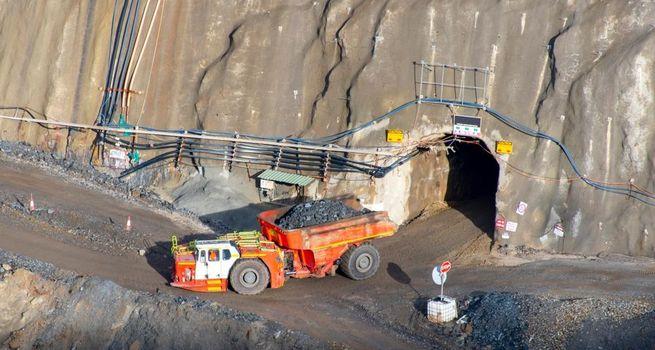
The centrepiece of Burgundy's operations is the Ekati Diamond Mine, located in the Lac de Gras region of Canada's Northwest Territories. Ekati holds a special place in Canadian mining history as the country's first surface and underground diamond mine. Burgundy acquired 100 per cent ownership of Ekati, giving it full control over one of the world's most established diamond mining operations.
The Ekati Diamond Mine
Ekati is situated approximately 300 kilometres northeast of Yellowknife, in one of the most remote and climatically challenging mining environments on Earth. Winter temperatures can plunge below minus 40 degrees Celsius, and the mine is accessible by road only during a brief ice-road season. Despite these challenges, Ekati has been a prolific producer since commercial production commenced in 1998.
The mine's current active operations centre on the Sable and Misery underground pits. The Misery pit, originally scheduled for closure in 2026, has been extended through 2027 following successful operational optimisation. Additionally, the Point Lake open pit has been prepared for production, though open-pit operations have experienced some suspensions due to market conditions.
Looking further ahead, Burgundy has outlined an ambitious expansion plan centred on the Fox Deep underground development. Construction is scheduled to commence in mid-2026, with first output expected in the second quarter of 2029. The Fox Deep expansion has the potential to yield an estimated 11.6 million carats through to 2040, providing Ekati with a substantial production runway that could extend operations by more than a decade beyond current plans.
The Fox Deep project represents a critical juncture for Burgundy. If successfully developed, it would transform the company from a late-stage miner approaching end-of-life into a long-duration producer with over a decade of future production ahead. However, the capital requirements are significant, and the success of the project depends heavily on diamond prices remaining at or above current levels.
Financial Position
Burgundy's financial position reflects the challenges facing the broader diamond industry. As of early 2026, the company's share price stood at approximately AUD 0.039, representing an 87.86 per cent decline over the preceding 12 months. The market capitalization was approximately AUD 93.5 million, making it one of the larger ASX-listed diamond pure-plays but still modest by broader mining sector standards.
The company has benefited from significant government support, securing AUD 60 million in additional federal funding to supplement AUD 115 million announced in December 2024. This government backing reflects the importance of the Ekati mine to the economy of the Northwest Territories and the broader Canadian diamond industry. However, reliance on government support also signals the financial pressures the company faces in the current diamond market environment.
Analyst coverage of Burgundy is limited, as is typical for small-cap ASX diamond stocks. The average 12-month price target from available estimates is approximately AUD 0.05, suggesting modest upside from current levels but well below historical trading ranges. Investors should note that analyst coverage for stocks of this size can be irregular and targets should be treated with appropriate caution.
Vertical Integration Strategy
Burgundy's vertical integration strategy sets it apart from most other diamond miners. By controlling the cutting, polishing and sales of its diamonds, the company aims to capture a greater share of the value chain than would be possible by simply selling rough stones to intermediaries. This approach allows Burgundy to build direct relationships with end customers, including luxury retailers and private collectors, and to market its diamonds under its own brand.
The benefits of this strategy are most apparent when diamond prices are strong, as the company retains margins that would otherwise accrue to middlemen in the traditional rough diamond supply chain. However, vertical integration also means the company must bear the costs and complexities of maintaining cutting and polishing capabilities, managing inventory of finished goods, and marketing to end consumers. In a weak market, unsold inventory of polished diamonds can tie up significant working capital.
Other Assets
Beyond Ekati, Burgundy holds a 40 per cent interest in the Naujaat Diamond Project in Nunavut, Canada, operated by North Arrow Minerals. Naujaat is an exploration-stage project that offers long-term upside potential. The company also holds an 18 per cent interest in the La Victoria gold-copper project in Peru, providing modest diversification beyond diamonds.
Investment Considerations
For retail investors considering Burgundy Diamond Mines, several key factors warrant careful assessment. On the positive side, the company owns a well-established, long-life mine with defined expansion potential, operates a differentiated vertical integration model, and has secured meaningful government financial support. The Fox Deep expansion, if successfully executed, could provide production visibility well into the 2030s.
On the risk side, the severe share price decline reflects genuine market concerns. The company faces exposure to diamond price weakness and lab-grown competition, operates in an extremely remote and high-cost jurisdiction, and has significant capital requirements for its expansion plans. The reliance on government funding, while supportive, also indicates that the company's economics are challenging at current diamond prices. Investors should carefully weigh these factors and consider the speculative nature of the investment before committing capital.
Lucapa Diamond Company (ASX:LOM)
Lucapa Diamond Company Limited is a pure-play diamond producer that has built its reputation on the recovery of exceptionally large, high-value diamonds. Listed on the ASX under the ticker LOM, Lucapa operates across multiple jurisdictions including Angola, Lesotho and Australia. The company's strategy focuses on targeting deposits known for producing large, gem-quality stones, particularly the highly prized Type IIa diamonds that represent the chemically purest form of natural diamond.
Type IIa diamonds are exceptionally rare, accounting for less than two per cent of all diamonds mined globally. They are notable for their exceptional optical transparency and lack of nitrogen impurities. Many of the world's most famous diamonds, including the Cullinan and the Koh-i-Noor, are Type IIa stones. Lucapa's ability to consistently recover these rare diamonds from its Lulo operation in Angola has been a key differentiator, attracting attention from collectors and investors alike.
The Lulo Diamond Project, Angola
The Lulo Diamond Project is Lucapa's flagship operation, located in the Lunda Norte province of Angola. The project comprises an alluvial diamond mining operation that has gained worldwide recognition for producing some of the largest and most valuable diamonds recovered anywhere on Earth in recent years.
In 2024, the Lulo operation achieved diamond sales of AUD 54.5 million at an average price of AUD 1,980 per carat. Rough diamond resources stood at approximately 249,000 carats, representing a nine per cent increase from the prior year. Processing capacity has been established at 1.1 million tonnes per annum using advanced X-Ray Transmission (XRT) recovery technology, which is particularly effective at identifying and recovering larger stones.
The list of notable diamonds recovered from Lulo reads like a who's who of modern diamond discoveries. These include the 404-carat 4th February Stone, the 170-carat Lulo Rose, and over 35 diamonds exceeding 100 carats. In August 2024, a 203-carat diamond was recovered, the fifth-largest stone ever found at the operation. This consistent delivery of large, headline-grabbing stones provides Lucapa with regular positive news flow that few other junior miners can match.
However, the alluvial nature of the Lulo operation means that production is inherently variable. Alluvial deposits are, by definition, secondary concentrations of diamonds that have been transported from their original kimberlite source by ancient river systems. While these deposits can contain exceptional stones, their grade and distribution are less predictable than primary kimberlite or lamproite deposits. Quarter-to-quarter revenue can swing significantly depending on whether large, high-value stones are recovered during the reporting period.
Lucapa has been working to identify the primary kimberlite source of the Lulo alluvial diamonds, which would represent a transformative discovery. Finding the source pipe could unlock access to a much larger resource base and enable more predictable, large-scale mining operations. Exploration continues, with the company employing advanced geophysical techniques and systematic sampling programs to narrow down potential source locations.
The Mothae Mine, Lesotho
Lucapa's Mothae kimberlite diamond mine in Lesotho provides important diversification beyond the Lulo alluvial operation. Unlike alluvial mining, kimberlite mining involves extracting diamonds from their primary geological source, the volcanic pipes through which they were originally brought to the Earth's surface.
Mothae has been undergoing capacity expansion to increase throughput and improve recovery rates. The mine targets high-value production, consistent with Lucapa's overall strategy of focusing on quality over quantity. Lesotho is known in the diamond industry for producing exceptionally large, valuable stones, with several other high-profile mines in the country, including the Letseng mine operated by Gem Diamonds, which regularly achieves among the highest revenue-per-carat figures in the industry.
The Mothae operation complements Lulo by providing exposure to a different geological setting and a different country risk profile. While Lesotho's small, landlocked economy presents its own challenges, the country has a well-established legal framework for diamond mining and a supportive government policy environment.
The Merlin Diamond Project, Australia
Perhaps the most intriguing element of Lucapa's portfolio for Australian investors is the Merlin Diamond Project, located in the Northern Territory. Acquired for AUD 8.5 million in 2021, Merlin is a historic diamond project that was originally mined by Rio Tinto and Ashton Mining in the late 1990s and early 2000s.
Merlin holds a special place in Australian diamond history. It was the site of the largest diamond ever found on Australian soil, a remarkable 104.73-carat stone. Historically, approximately 65 per cent of diamonds recovered from Merlin were classified as gem quality, a significantly higher proportion than the five per cent gem-quality rate typical of the Argyle mine.
Lucapa has outlined a two-phase restart plan for Merlin. The first phase involves an 18-month pit excavation program, followed by a two-year ore extraction phase focusing initially on the Gawain pipe, one of several known kimberlite bodies on the property. The planned restart represents the return of diamond mining to Australian soil following the closure of Argyle, and has attracted interest from investors and industry watchers who see it as a potential new chapter for the country's diamond sector.
However, restarting a previously mothballed mine is never straightforward. Infrastructure requires refurbishment, environmental approvals must be secured, and the economics must stack up in the current diamond price environment. Lucapa has indicated that production at Merlin was planned for 2025, though timelines for mining projects are frequently subject to revision.
The Brooking Exploration Project
Lucapa also holds the Brooking lamproite diamond exploration project in Western Australia. Lamproite is the same type of volcanic rock that hosted the Argyle diamond deposit, making Brooking an intriguing exploration target. While still at an early stage, the project provides additional longer-term upside potential and leverages Lucapa's diamond exploration expertise.
Financial Position
Lucapa's financial position is the most constrained of the ASX diamond pure-plays. As of early 2026, the share price stood at approximately AUD 0.01, having declined approximately 85.57 per cent over the preceding 12 months. The market capitalisation was approximately AUD 6.45 million, a remarkably low figure for a company that generated over AUD 54 million in diamond sales from its Lulo operation alone in 2024.
The company was loss-making on a trailing 12-month basis, with earnings per share of negative AUD 0.08. No dividends have been paid. This deep discount relative to the operational scale of the business reflects a combination of factors: the capital-intensive nature of maintaining multiple mine sites, the variability of alluvial diamond revenue, concerns about the broader diamond market, and potential balance sheet pressures.
For speculative investors, the extreme discount between Lucapa's market capitalisation and its annual revenue generation could represent an opportunity, but it is essential to understand the risks. Small-cap mining companies at these valuation levels are vulnerable to dilutive capital raisings, liquidity challenges and potential restructuring. Any investment in Lucapa should be sized appropriately within a diversified portfolio.
Investment Considerations
Lucapa offers investors a unique combination of characteristics within the ASX diamond space. The company's track record of recovering world-class large diamonds from Lulo is genuinely exceptional and provides regular positive news catalysts. The Merlin restart represents a potential re-entry point for diamond mining in Australia, and the company's focus on high-value, large stones positions it in a segment less vulnerable to lab-grown competition.
Against these positives, the extremely depressed share price and market capitalisation signal significant financial stress. The variability of alluvial mining revenue, the capital requirements of maintaining operations across multiple countries, and the challenges of the current diamond market all weigh on the investment case. Investors should also consider the liquidity of the stock at current price levels, as very low-priced shares can be subject to wide bid-ask spreads and volatile trading.
Newfield Resources (ASX:NWF)
Newfield Resources Limited is an ASX-listed diamond mining company that has achieved the significant milestone of transitioning from explorer to producer. Headquartered in North Fremantle, Western Australia, and founded in 2011, Newfield has focused its efforts on the Tongo Diamond Project in Sierra Leone, West Africa. This journey from greenfield exploration through feasibility studies to commissioned production represents a relatively rare achievement in the junior diamond mining sector.
The company's listing on the ASX provides Australian investors with direct exposure to one of the world's most promising kimberlite diamond deposits. Newfield's success in bringing Tongo into production demonstrates the management team's ability to execute on a complex mine development program in a challenging operating environment.
The Tongo Diamond Project
The Tongo Diamond Project covers approximately 134 square kilometres in eastern Sierra Leone and hosts what has been independently assessed as one of the highest-grade kimberlite diamond deposits in the world. The project carries a JORC-compliant resource of 8.3 million carats, providing a substantial inventory of diamonds for future recovery.
What makes Tongo particularly noteworthy is the quality of its diamonds. Approximately 80 per cent of stones recovered from the project are classified as gem quality, a remarkably high proportion that places Tongo among the world's premier diamond deposits by quality. Gem-quality diamonds command significantly higher prices per carat than industrial-grade stones, meaning that Tongo's revenue potential is disproportionately high relative to its carat output.
The mine has been exceeding its production forecasts since commissioning. Actual mining grades have been running approximately 38 per cent above forecast levels on average, while recovered process grade has reached 2.7 carats per tonne, some 22 per cent higher than the resource grade estimates. Recovered process stones have reached sizes of up to 9.6 carats. These operational outperformance metrics are encouraging for investors, as they suggest that the geological model may be conservative and that the true value of the deposit could exceed initial estimates.
Operational Details
Tongo operates as a kimberlite mining operation, extracting diamonds from their primary volcanic source. This contrasts with alluvial operations like Lucapa's Lulo, where diamonds are recovered from secondary river deposits. Kimberlite mining generally offers more predictable grade and production profiles than alluvial mining, though it requires higher upfront capital investment for mine development and processing infrastructure.
The mine's processing plant has been designed and built to handle the specific characteristics of the Tongo kimberlite ore. Diamond recovery is achieved through a series of crushing, screening and dense media separation stages, followed by X-ray sorting to identify and recover individual diamond crystals. The high gem-quality percentage of the recovered diamonds means that a greater proportion of the total carat output contributes meaningfully to revenue compared to deposits with lower gem-quality ratios.
Sierra Leone, while challenging from an infrastructure and logistics perspective, has a long history of diamond mining and a regulatory framework that accommodates international mining companies. The government is generally supportive of responsible mining development, recognising its contribution to employment, infrastructure development and government revenue through royalties and taxes.
Financial Structure and Funding
Newfield has secured its production ramp-up through a combination of equity and project-level financing. The company entered into an AUD 55 million equity funding facility with SBC Global Investment Fund (L1 Capital Global Opportunities Master Fund), providing a 36-month drawdown facility for ongoing mine expansion and working capital requirements.
As of early 2026, Newfield's share price was approximately AUD 0.089, with a market capitalisation of around AUD 83.72 million. The stock had declined approximately 70.57 per cent over the preceding 12 months, reflecting the challenging broader diamond market and the typical de-rating that occurs as mine development companies transition to producers and investors assess actual versus projected performance.
Trailing 12-month revenue was AUD 2.06 million with a net loss of AUD 136.52 million. The significant net loss reflects the ongoing investment in mine development, start-up costs and the ramping up of production capacity. Investors should expect financial performance to improve as the mine reaches steady-state production levels, though the timeline and magnitude of this improvement remain subject to uncertainty.
Growth Potential
The 8.3 million carat JORC resource at Tongo provides a substantial foundation for long-term production growth. As the mine ramps up and the company generates increasing revenue from diamond sales, the focus is expected to shift toward optimising operations, expanding processing capacity, and potentially developing additional kimberlite pipes on the broader tenement package.
The 134 square kilometre project area offers significant exploration upside beyond the currently defined resources. Kimberlite deposits frequently occur in clusters, and the identification of additional pipes could meaningfully extend the project's mine life and production potential. However, any such expansion would require additional capital investment and should be viewed as a medium to long-term opportunity rather than a near-term catalyst.
Investment Considerations
Newfield Resources represents the classic emerging producer profile within the ASX diamond space. The company has successfully transitioned from explorer to producer, operating one of the world's highest-grade diamond deposits. Operational performance has exceeded forecasts, which is a positive indicator of the deposit's quality and the management team's competence.
However, the investment carries meaningful risks. The company is still in the early stages of its production ramp-up, meaning that the financial profile is not yet mature. The large trailing net loss reflects development-stage economics that should improve but have not yet done so. Sierra Leone, while supportive of mining, presents sovereign risk that investors accustomed to Australian or Canadian-listed miners should carefully consider. Diamond market conditions remain challenging, and the company will need to demonstrate sustained profitable production before the market fully re-rates the stock.
Gibb River Diamonds (ASX:GIB)
Company Overview
Gibb River Diamonds Limited is a Perth-based exploration and development company that provides investors with exposure to diamond projects in the iconic Kimberley region of Western Australia. Listed on the ASX since 2008, the company has assembled a portfolio of diamond and multi-commodity projects that offer a mix of near-term development potential and longer-term exploration upside.
The Kimberley region holds a special significance in the Australian diamond story. It was here that the Argyle diamond pipe was discovered in 1979, leading to the establishment of what would become the world's largest diamond mine by volume. While the Kimberley's diamond prospectivity has been well established, the region remains underexplored relative to its potential, and companies like Gibb River are working to unlock value from known deposits and new discoveries.
The Ellendale Diamond Project
Gibb River's lead project is the Ellendale Diamond Project, located in the West Kimberley region of Western Australia. Ellendale has a rich history in Australian diamond mining. The Ellendale diamond field was historically mined for its highly prized fancy yellow diamonds, which were regarded as some of the finest canary yellow diamonds in the world. The previous Ellendale mine, operated by Kimberley Diamond Company, was at one time the world's primary source of fancy yellow diamonds before it was placed into care and maintenance.
Gibb River holds 100 per cent ownership of the Ellendale project, giving it full control over the asset. The project represents an opportunity to resume diamond production from a well-known and well-characterised diamond field. However, restarting operations at a previously mined deposit requires careful assessment of remaining economic resources, updated feasibility studies, and potentially significant capital investment in processing infrastructure.
The Blina Alluvial Diamond Project
Perhaps the most immediately actionable asset in Gibb River's portfolio is the Blina Alluvial Diamond Project, also located in the West Kimberley near Ellendale. Gibb River holds 100 per cent ownership of Blina and describes the project as shovel ready, meaning that the necessary permits and approvals are in place and major processing plant equipment has been purchased.
The company has been advancing the project through a milling campaign at its Lakewood facility. As of January 2026, approximately 70,520 dry metric tonnes of blended ore had been processed, with the campaign expected to reach completion in late January 2026. First cash proceeds from this initial campaign were anticipated in February or March 2026.
An important advantage for Gibb River is that the company operates debt-free, a relatively unusual position among junior diamond miners. The absence of debt provides financial flexibility and reduces the risk of dilutive capital raisings or liquidity crises during periods of market weakness. However, it also means the company's growth is constrained by its ability to generate internal cash flow or attract equity investment on favourable terms.
Multi-Commodity Diversification
Unlike the other ASX diamond pure-plays discussed in this guide, Gibb River has adopted a multi-commodity approach. In addition to its diamond projects, the company holds the Edjudina Gold Project in Western Australia (100 per cent owned), the Highland Plains Phosphate Project in Western Australia, and the Erongo and Kunene projects in Namibia targeting uranium.
This diversification strategy reflects a pragmatic approach to managing the risks inherent in the diamond sector. By maintaining exposure to gold, phosphate and uranium, Gibb River can potentially generate revenue or attract investment from multiple commodity cycles. However, diversification at the junior mining level can also be a double-edged sword, as it may dilute management focus and make it harder for investors to understand and value the company's primary diamond exposure.
Financial Position
As of late 2025, Gibb River's share price was approximately AUD 0.060, with a market capitalisation of around AUD 16 million. The 52-week trading range of AUD 0.025 to 0.077 illustrates the volatility typical of junior mining stocks at this capitalisation level. No dividends have been paid, consistent with the company's development-stage profile.
The small market capitalisation means that the stock's liquidity is limited. Daily trading volumes may be low, and bid-ask spreads can be wide. Investors considering a position in Gibb River should be aware of these liquidity constraints and size their investments accordingly.
Investment Considerations
Gibb River Diamonds offers ASX investors exposure to the Kimberley region's diamond potential, with the added diversity of gold, phosphate and uranium exploration projects. The Blina project's near-term production potential and the company's debt-free balance sheet are positive features that distinguish it from some of its more leveraged peers.
However, the very small market capitalisation, limited liquidity, and the challenges of operating in the remote Kimberley region all present significant risks. The company's multi-commodity approach may appeal to investors seeking diversified junior mining exposure but could also complicate the investment thesis for those seeking pure diamond exposure. The imminent completion of the initial Blina milling campaign and resulting cash flow generation will be important milestones for validating the company's near-term strategy.


 Nov 13, 2026





 Please wait processing your request...