
 CA
 NZ
 UK
 US
 IND

 AU

 Share
 X (Formerly Twitter)
 Whatsapp
 Facebook
 LinkedIn
 Telegram
 Email This Article
 Copy Link
 Summarize with AI
 Chat GPT
 Perplexity
Highlights
- Almonty Industries is set to join the Russell 1000® and Russell 3000® indexes effective June 29, 2026, following the annual Russell reconstitution.
- The company continues advancing its Sangdong tungsten mine in South Korea while expanding its strategic role in Western critical mineral Supply chains.
- Investor focus has increasingly shifted toward Almonty’s exposure to defense-linked tungsten Demand and growing institutional market visibility.
Almonty Industries Inc. (Nasdaq:ALM) (TSX:AII) (ASX:AII) is preparing to enter a new phase of market visibility following its expected inclusion in the Russell 1000® index and Russell 3000® Index at the conclusion of the 2026 Russell indexes reconstitution.
The preliminary addition, announced by FTSE Russell, places Almonty among the largest publicly traded companies ranked by market Capitalization in the United States. The inclusion is expected to become effective at the opening of trading on June 29, 2026.
The announcement represents a notable milestone for the tungsten producer as investor interest in strategic minerals, defense-linked commodities, and non-China supply chains continues to expand. Almonty’s market profile has evolved considerably over the past year as the company progressed toward production at its flagship Sangdong tungsten mine in South Korea while simultaneously strengthening its North American Capital Markets presence.
The company’s share performance has increasingly reflected investor positioning around critical minerals and geopolitical supply chain Diversification themes, particularly as tungsten gains greater strategic importance among Western governments and defense manufacturers.
Russell Index Inclusion May Expand Institutional Ownership
Russell indexes are widely followed by institutional investors, Exchange-traded funds, pension funds, and benchmark-focused asset managers. Membership in the Russell 3000 automatically places Almonty within the large-cap Russell 1000 index due to its market capitalization ranking.
This inclusion can materially increase a company’s visibility among institutional investors because many index-tracking funds and passive Investment vehicles are required to purchase shares in newly added companies. According to FTSE Russell, approximately $12.2 trillion in Assets were benchmarked against Russell US indexes as of June 2025.
For Almonty, the development could support broader trading Liquidity and increase participation from long-term institutional shareholders. The company’s management framed the index inclusion as recognition of operational and financial progress achieved during the past year.
Chairman and Chief Executive Officer Lewis Black highlighted the company’s expanding role in Western tungsten supply security, the operational advancement of the Sangdong Mine, and the relocation of corporate headquarters to the United States as central developments supporting the company’s strategic positioning.
The market often views Russell inclusion as a signal of increasing scale and market relevance, particularly for companies operating within sectors attracting structural investment trends.
Tungsten Market Dynamics Continue to Shape Investor Interest
Almonty’s recent market momentum has been closely tied to evolving geopolitical and industrial demand dynamics surrounding tungsten.
Tungsten is considered a strategic critical mineral due to its applications in defense systems, aerospace components, electronics Manufacturing, industrial cutting tools, and high-performance alloys. The metal’s hardness and heat resistance make it difficult to substitute in several advanced manufacturing processes.
Investor attention toward tungsten intensified following export restrictions and broader trade measures involving China, which remains the dominant global supplier of tungsten products. At the same time, Western governments have increasingly prioritized domestic and allied supply chain security for critical minerals tied to defense readiness and advanced technologies.
This backdrop has positioned Almonty as one of the few publicly listed Western-focused tungsten producers with near-term production expansion capacity.
The company has consistently emphasized its role as a supplier of conflict-free tungsten concentrate to Western markets. That positioning has become more relevant as supply diversification becomes a strategic policy objective across North America, Europe, and allied economies in Asia.
Sangdong Mine Remains Central to Long-term Growth
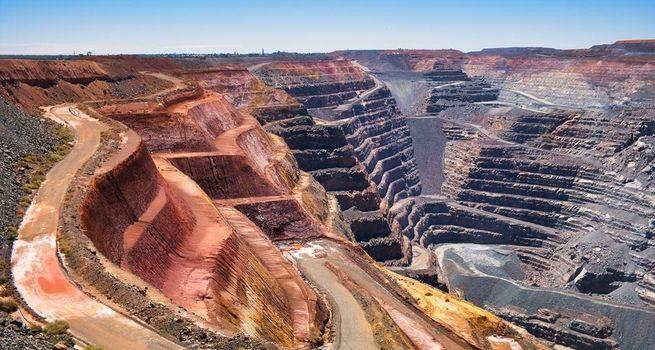
The Sangdong tungsten mine in South Korea remains the cornerstone of Almonty’s long-term operational strategy.
Historically regarded as one of the world’s largest and highest-grade tungsten deposits, Sangdong is expected to contribute a significant share of non-China tungsten supply once fully operational. The project has attracted attention because of its scale, location within a strategically aligned Jurisdiction, and relevance to industrial supply resilience.
Management indicated that Sangdong is now coming online, marking a major operational milestone after years of development activity.
The project is particularly important given rising concerns over concentrated global tungsten supply. As geopolitical tensions continue influencing industrial procurement decisions, investors have increasingly assessed Almonty through the lens of strategic resource security rather than purely traditional Mining sector metrics.
The company’s operations in Portugal, combined with development-stage projects in Spain and the United States, further support its broader positioning as a diversified Western tungsten supplier.
Institutional Focus on Critical Minerals Continues to Increase
The broader investment landscape for critical minerals has evolved significantly in recent years. Institutional investors are increasingly incorporating supply chain security, geopolitical exposure, and resource nationalism into their investment frameworks.
This shift has benefited companies involved in minerals considered essential to defense technologies, electrification infrastructure, semiconductors, and industrial manufacturing.
Tungsten occupies a unique position within this group because of its defense applications and relatively concentrated global production profile.
As governments and corporations seek alternative supply sources outside China, companies such as Almonty may continue attracting investor attention due to their geographic diversification and production exposure.
The company’s expected Russell inclusion could therefore coincide with broader structural investment themes that extend beyond the mining sector itself.
Conclusion
Almonty Industries enters the second half of 2026 with increasing institutional visibility, expanding operational relevance, and growing exposure to strategic mineral investment trends. The company’s expected inclusion in the Russell 1000 and Russell 3000 indexes represents an important market milestone that may broaden Shareholder participation and improve liquidity. At the same time, Almonty’s progress toward production at the Sangdong Mine positions the company within a global conversation focused on tungsten supply security and defense-linked critical minerals. As geopolitical considerations continue reshaping industrial supply chains, investor focus is likely to remain on Almonty’s operational execution, production growth, and role within the evolving Western critical minerals ecosystem.


 Nov 21, 2026





 Please wait processing your request...