
 CA
 NZ
 UK
 US
 IND

 AU

 Share
 X (Formerly Twitter)
 Whatsapp
 Facebook
 LinkedIn
 Telegram
 Email This Article
 Copy Link
 Summarize with AI
 Chat GPT
 Perplexity
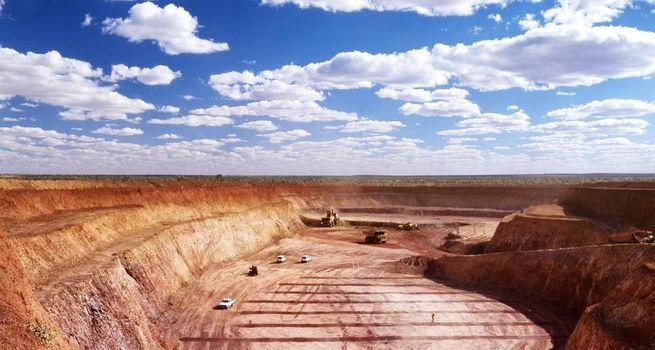
Fortescue (ASX:FMG) has long been a darling of the ASX 200 materials sector, with its share price often acting as a leveraged play on iron ore. As iron ore prices have softened on weaker Chinese Demand, the FMG share price has come under pressure, prompting investors to ask whether the stock is in a deeper downtrend or presenting a contrarian buying opportunity.
Fortescue is also unique among major iron ore producers for its energy transition pivot, including investments in green hydrogen, electrolyser Manufacturing and renewable energy. This dual identity has reshaped the Investment narrative, adding new sources of potential value but also additional execution risks.
In this article, we examine the recent FMG share price action, the macro and company-specific drivers, the broader iron ore and energy transition context, and the risks, opportunities and outlook investors should consider.
Fortescue also stands out among major iron ore producers for its founder-led strategic vision. The company’s public commitments to green hydrogen, renewable energy and decarbonisation have been ambitious by industry standards, generating both admiration and scepticism.
For Australian investors, Fortescue’s share price moves can also serve as a real-time gauge of expectations around China’s economic policy. Sharp moves in the stock often precede or accompany shifts in iron ore market sentiment more broadly.
Share Price / index Performance Overview
FMG’s share price has slipped meaningfully from recent highs, broadly in line with the decline in iron ore prices. The stock’s high Beta to iron ore means that even moderate moves in Commodity prices can produce sharper share-price swings, both up and down.
On a relative basis, FMG often trades with more sensitivity to iron ore than diversified miners like BHP and Rio Tinto, given its more concentrated exposure to a single Commodity. Investors expressing strong views on iron ore therefore often use FMG as a vehicle for that thesis.
Trading volumes in FMG remain elevated, with active participation from both retail and institutional investors. The stock’s Dividend track record and ASX 200 status make it a popular core holding, while its Volatility makes it a frequent target for tactical positioning.
On 29 April 2026, FMG shares were trading 0.20% higher at AUD 20.15 per share, and has jumped 23.09% in an year.
Main Drivers Behind the Move
Iron ore prices are the dominant driver of FMG’s Earnings and share price. Higher prices significantly expand margins given Fortescue’s relatively low-cost asset base, while lower prices compress them. The stock is therefore extremely sensitive to Chinese steel production, infrastructure spending and broader global growth.
Production volumes and unit costs are critical company-specific factors. Fortescue’s ability to maintain shipping volumes, control unit costs and manage strip ratios at its Pilbara operations directly affects free Cash Flow generation. Operational consistency is a key part of the Investment thesis.
Capital allocation between traditional iron ore operations, the Iron Bridge magnetite project and green energy investments via Fortescue Energy is a major focus for investors. The right balance between dividends, growth capex and transition investments shapes long-term returns.
The Chinese economy and policy mix matter enormously. Stimulus targeted at infrastructure, property completion and Manufacturing tends to support iron ore Demand, while shifts toward services-led growth or property tightening can pressure prices.
Currency and global macro factors round out the picture. A weaker AUD typically boosts Fortescue’s Earnings in Australian dollar terms, while a stronger AUD can offset iron ore weakness. Global risk sentiment, US bond yields and energy prices also influence sector valuations.
A further driver is the price differential between standard 62% Fe iron ore and lower-grade products. Steel mill profitability often determines the willingness to use lower-grade ore, which directly affects realised prices for FMG’s product mix.
Government policy on energy transition projects also matters. Subsidies, tax credits and infrastructure Investment in green hydrogen-rich economies can materially affect the Economics of Fortescue Energy’s pipeline.
A further driver is shipping freight rates and logistics costs. As one of the world’s largest seaborne iron ore exporters, Fortescue is influenced by the cost and availability of bulk shipping capacity, which can vary with global trade flows and regulatory changes.
Sector and Market Context
Fortescue sits within the ASX 200 materials sector, which is dominated by iron ore producers BHP, Rio Tinto and Fortescue, alongside other Commodity-focused names. The sector is highly cyclical, tied to global Commodity prices and Chinese Demand in particular.
Globally, iron ore is one of the most-watched commodities, with prices set in highly liquid international markets. Australian producers benefit from low-cost operations, scale and proximity to key Asian customers. However, Supply growth from competitors, including Brazilian and African producers, remains a long-term consideration.
Fortescue’s energy transition strategy adds a unique twist. Few major Commodity producers have committed as publicly to green hydrogen and renewable energy at scale, raising both the upside potential and the execution risks. The market’s view of these initiatives can shift between sceptical and enthusiastic.
Investor Sentiment
Investor sentiment toward FMG is divided between traditional iron ore investors who focus on Cash Flow, dividends and disciplined Capital management, and thematic investors who view Fortescue as an emerging energy transition play. Reconciling these two views remains an ongoing challenge for the market.
Retail investors continue to hold FMG widely, often for its Dividend yield and exposure to the Australian Commodity story. Institutional sentiment can swing more dramatically based on Commodity price expectations, Capital allocation choices and management commentary.
Analyst opinions are wide-ranging, reflecting both the cyclicality of iron ore and the divergent views on green energy investments. The dispersion in analyst price targets is often greater for FMG than for more diversified peers like BHP.
Sentiment toward FMG can swing rapidly between optimism around dividends and scepticism around capex. Investors continue to debate the relative weight that should be placed on near-term cash returns versus long-term transition investments.
Sentiment toward FMG also reflects views on management succession, governance and strategic clarity, particularly given the founder-led culture of the Business. Investors increasingly scrutinise board composition and Capital allocation processes alongside operational metrics.
Risks to Watch
- Sharper-than-expected falls in iron ore prices.
- Slower Chinese property and infrastructure activity.
- Capital cost overruns on green energy initiatives.
- Operational disruptions or production issues.
- Currency Volatility affecting reported Earnings.
- Regulatory and environmental policy changes.
Opportunities to Watch
- Recovery in iron ore prices on Chinese stimulus.
- Disciplined Capital management supporting dividends.
- Successful ramp-up of magnetite and other projects.
- Long-term value creation from Fortescue Energy initiatives.
- Lower unit costs improving margins.
- Re-rating potential as energy transition narrative matures.
What Investors May Watch Next
Investors should monitor iron ore prices closely, including signals from Chinese steel output, port inventories and property data. Any policy moves out of Beijing, including stimulus packages or property reforms, will be major share-price catalysts.
Company-specific watchpoints include quarterly production reports, Capital allocation updates, Dividend announcements and progress on Fortescue Energy projects. Any commentary from management about capex priorities or strategic shifts will be closely scrutinised.
Macro factors such as the AUD/USD rate, global growth and risk sentiment will continue to influence the stock. Energy prices and broader Commodity trends can also affect input costs and the relative attractiveness of green energy investments.
Investors should monitor strip ratios, port and rail throughput, and any announcements relating to magnetite production from the Iron Bridge project, all of which influence longer-term unit costs and product mix.
Outlook
The medium-term outlook for FMG depends on the interaction of iron ore prices, operational execution and the trajectory of energy transition investments. A scenario where iron ore stabilises, costs are well controlled and green energy projects make measurable progress could support a stronger share price.
A more challenging scenario involves persistent iron ore weakness, capex pressure on green projects and slower Chinese Demand. In that case, FMG could underperform peers, despite its low-cost iron ore operations and Balance Sheet strength.
For long-term investors, FMG offers a unique blend of high-quality iron ore exposure and energy transition optionality. For more cautious investors, position sizing and Diversification remain key, given the inherent Volatility of Commodity stocks.
For long-term investors, Fortescue’s combination of iron ore cash flows and energy transition ambitions presents a unique Investment proposition on the ASX. As always, alignment with personal goals and disciplined position sizing are essential.
Long-term investors who maintain a position in FMG often do so as part of a broader thesis on Australian commodities, Dividend income and the energy transition. The stock’s evolution over coming years will provide an important test of how well a major iron ore producer can navigate both cyclical and structural change.
Conclusion
Fortescue’s recent share price weakness reflects a combination of softer iron ore prices, Chinese Demand worries and ongoing debate about its energy transition strategy. Whether FMG is facing more pressure or a buying opportunity depends on each investor’s view of these underlying drivers.
The company’s scale, low-cost asset base and ambitious transition plans make it a stock to watch closely on the ASX. As always, decisions about FMG exposure should be grounded in personal goals, time horizon and a careful assessment of both opportunities and risks.


 Nov 13, 2026





 Please wait processing your request...