
 CA
 NZ
 UK
 US
 IND

 AU

 Share
 X (Formerly Twitter)
 Whatsapp
 Facebook
 LinkedIn
 Telegram
 Email This Article
 Copy Link
 Summarize with AI
 Chat GPT
 Perplexity
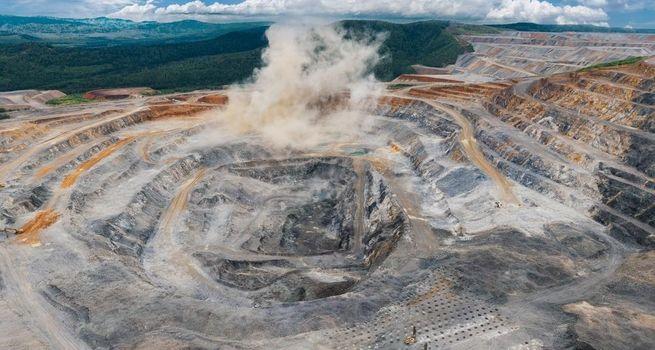
Toro Energy Limited (ASX:TOE) fell 5.36% to AUD 0.530 on 10 April 2026, extending the choppy trading pattern that has characterised Australian uranium explorers and developers in recent months. With a market capitalisation of approximately AUD 64.35 million, Toro sits firmly in the small-cap end of the ASX uranium cohort, a segment where share prices tend to move sharply on uranium spot price movements, news flow from peer developers and broader sentiment around nuclear energy demand. Today's decline is notable because it has come on a day where there was no obvious catalyst at the company-specific level, suggesting the move reflects broader sector positioning rather than a single identifiable event.
On the fundamentals, Toro Energy reports a trailing twelve-month diluted EPS of negative AUD 0.08. This is consistent with the typical profile of a pre-production uranium developer that is funding study work, permitting, tenement holding costs and corporate overheads from equity capital. The magnitude of the loss, when set against a market capitalisation of just over AUD 64 million, indicates a meaningful cash burn relative to the company's size, and raises legitimate questions about the pace and scale of future capital raises that investors need to consider when assessing the story.
This article provides a comprehensive look at Toro Energy's business model, the most plausible drivers behind today's move, a fundamental review, sector comparison, technical picture, key risks and catalysts, and a balanced outlook. Where specific current operational details cannot be independently verified, the content is clearly flagged as inferred so that readers can distinguish between data that has been confirmed today and reasonable sector-based interpretation.
Company Overview: Toro Energy and Australian Uranium Development
Toro Energy Limited is an Australian uranium exploration and development company that has historically been best known for its Wiluna uranium project in Western Australia. [Inferred from publicly known Toro Energy positioning; specific current project status, including feasibility study updates, permitting progress and any recent financing activities, should be verified from the company's most recent ASX announcements.] The Wiluna project has been the subject of multiple studies over the years aimed at assessing the viability of producing uranium oxide concentrate from a cluster of shallow, calcrete-hosted uranium deposits in central Western Australia.
Business Model
Toro Energy's business model centres on advancing its uranium assets through the exploration and development pathway with the aim of either bringing them into production or monetising them through partnership, sale or joint venture. At the company's current stage, revenue is minimal and the focus is on completing technical studies, maintaining tenement commitments, advancing environmental approvals and positioning the asset base to benefit from any upward move in uranium prices. The business is therefore heavily reliant on equity capital markets to fund its ongoing work programmes.
Project Profile
The Wiluna project is notable for its shallow nature, which historically has been positioned as a potential advantage from a capital cost perspective compared with deeper or more complex uranium deposits. [Inferred] Key considerations for investors include the size of the in-situ resource, the metallurgical recovery rates from processing, the projected all-in sustaining cost relative to prevailing uranium prices, and the nature of any permitting constraints that may apply to uranium mining in Western Australia.
Uranium Market Context
Uranium has seen a significant rerating in recent years on the back of renewed interest in nuclear power as a low-carbon base load energy source. Several factors have supported the theme, including government commitments to extend the life of existing reactors, the approval of new reactors in certain jurisdictions, growing interest in small modular reactors, and concerns about supply from major producing regions. For a small developer like Toro Energy, a sustained higher uranium price environment improves the potential economics of its projects and can support the case for further technical work and eventual development decisions.
From a governance and strategy perspective, the most important questions an investor can ask about Toro Energy today relate to the clarity of the path to production or monetisation, the level of funding runway available, the credibility of any project-level studies, and the company's exposure to the evolving regulatory environment for uranium in Australia. [Inferred, as specific details depend on the latest board composition, guidance and filings, which should be reviewed directly.]
Why Is Toro Energy (ASX: TOE) Share Price Down Today?
Toro Energy's 5.36% decline on 10 April 2026 did not appear to be driven by a major company-specific announcement based on the information used to prepare this article. Instead, a combination of sector-level and stock-specific factors likely contributed to the move. [Inferred, as the exact cause would need to be confirmed against the day's ASX announcements and news flow.]
Possible Driver 1: Uranium Spot Price Softness
ASX uranium developers often correlate strongly with the uranium spot price. Any softness in spot uranium, even on a short-term basis, can weigh on sentiment towards developers whose economics are highly sensitive to the assumed selling price of uranium oxide. [Inferred] If the global uranium market experienced a quieter session or pulled back from recent highs, that could easily translate into a 5% move in a small-cap developer like Toro Energy.
Possible Driver 2: Profit Taking After Sector Rally
Uranium equities have at various points over the past couple of years delivered sharp rallies, often followed by equally sharp consolidations. A 5.36% decline in a name like Toro Energy is consistent with profit taking after a recent advance, particularly in a segment that is dominated by retail and momentum-oriented investors who are quick to rebalance when technical signals turn.
Possible Driver 3: Rotation Within the Uranium Cohort
Investors seeking exposure to uranium often rotate between producers, near-term developers and earlier stage explorers depending on the stage of the cycle and the relative attractiveness of each category. If capital moved on the day towards producers or the largest developers, smaller names like Toro Energy can underperform even without any negative news specific to the stock.
Possible Driver 4: Funding Concerns
A negative EPS and ongoing cash burn mean that pre-production uranium developers are generally considered likely to return to the market for additional funding at some point. Market participants will often price in a degree of dilution risk ahead of formal capital raising announcements, and any increase in perceived likelihood of a near-term raise can weigh on the share price. [Inferred, as no specific capital raising event has been confirmed here.]
Possible Driver 5: Broader Small-Cap Risk-Off Move
On days when the ASX small ordinaries or emerging resources indices are under pressure, the highest-beta names in the speculative resources space tend to underperform materially. [Inferred] If broader risk appetite was weaker on 10 April 2026, this alone could account for much of the decline in TOE without any stock-specific driver.
Collectively, the most plausible explanation is that today's move reflects a combination of uranium price sensitivity, profit taking and broader small-cap risk sentiment, rather than a single negative event. Investors looking to understand the exact catalyst should cross-check the ASX announcements platform, uranium price trackers and broader market commentary for the trading session.
Deep Fundamental Analysis: Valuation, Balance Sheet and Capital Strategy
The fundamentals of Toro Energy are characteristic of a small-cap uranium developer rather than a producing business. The trailing twelve-month diluted EPS of negative AUD 0.08 and market capitalisation of around AUD 64 million highlight the importance of non-earnings-based valuation approaches.
Valuation Approach
With no positive earnings, traditional price-earnings ratios are not meaningful. Investors in Toro Energy typically focus on enterprise value relative to in-ground resources, the ratio of market capitalisation to net tangible asset backing, and how the implied value per pound of uranium resources compares to peers. A narrower spread to peers often signals that the market is crediting Toro for its development potential, while a wider discount may reflect perceived technical or funding risk. [Inferred, as the exact per-pound valuation depends on the most recent disclosed resource statements.]
Balance Sheet and Cash Runway
[Inferred] For any uranium developer, the critical fundamentals are cash on hand, quarterly cash burn, and the absence or presence of significant debt. A stronger balance sheet allows the company to advance work programmes without frequent equity issuance, while a weaker position increases the likelihood of near-term dilution. Investors should carefully review the company's most recent quarterly cash flow statement to assess how many quarters of runway the business has at its current burn rate.
Shareholder Dilution
Historical dilution is a key consideration for any long-term holder of a development-stage resources company. Tracking the evolution of the share count over time, together with any options and performance rights on issue, provides a realistic picture of the true cost of advancing the asset base. For small-cap uranium developers in particular, the cumulative impact of multiple capital raises can be significant, which is why market participants tend to value progress towards self-funding milestones such as offtake agreements and project-level financing highly.
Ownership Structure
[Inferred] The shareholder register of a uranium developer can include a mix of institutional investors, high net worth retail investors, and strategic holders. A stable register with committed long-term investors is generally considered a positive indicator, while heavy retail concentration and short-dated share price momentum can make the stock more prone to sharp intraday moves of the kind seen today.
Sector Comparison: Toro Energy vs ASX Uranium Peers
The ASX uranium cohort spans a wide range of company stages, from producers with operating mines to earlier-stage explorers. Toro Energy generally sits in the middle of this spectrum as a developer with a well-known flagship project but no current production. [Inferred]
Relative to Uranium Producers
Established uranium producers benefit from active revenue streams, proven operational track records and, often, existing customer relationships. They also typically trade at higher market capitalisations and with greater liquidity. Toro Energy's appeal compared to these names is the higher potential leverage to a rising uranium price, but this comes at the cost of execution risk, funding risk and the absence of near-term cash generation.
Relative to Advanced Developers
Advanced uranium developers that have completed definitive feasibility studies and secured key permits typically trade at a premium to earlier-stage names. Toro's position within this spectrum depends on the state of its technical studies, approvals and financing conversations, which would need to be confirmed against its latest disclosures. [Inferred] The gap in valuation between Toro and the most advanced developers reflects the additional work that still needs to be completed before a construction decision can be made.
Relative to Uranium Explorers
Pure uranium explorers typically trade on much smaller market capitalisations, with valuations driven by exploration optionality and drilling results rather than defined resources or studies. Toro Energy's relative maturity, with an established resource and historical study work, typically commands a premium relative to these explorers. [Inferred] This relative position helps explain why Toro is generally viewed as a leveraged play on the uranium price within a defined, previously-studied asset base, rather than as a pure exploration story.
Risks and Catalysts
Investors considering Toro Energy at current levels need to weigh both the downside risks and the potential upside catalysts that could shape the stock's trajectory over the next twelve to twenty-four months.
Key Risks
The most significant risks facing Toro Energy include a meaningful pullback in the uranium price, which would reduce the economic attractiveness of its projects, and the possibility of further equity dilution to fund ongoing work programmes. Regulatory risk around uranium mining in Australia is another key consideration, as state government policies can change and affect the pathway to production. Operational and technical risks are also present, as even well-studied projects can experience cost and timeline pressures during detailed engineering, construction and commissioning.
Macroeconomic Risks
The broader macroeconomic environment can have a significant impact on uranium developers. Higher interest rates increase the discount rate applied to long-dated project cash flows, reducing implied valuations. A stronger Australian dollar against the United States dollar, which is the currency used to price uranium globally, can also compress potential margins. Any slowdown in global economic growth that reduces electricity demand or shifts the policy focus away from nuclear energy would be an additional headwind.
Potential Catalysts
On the upside, Toro Energy could benefit from a sustained move higher in the uranium spot price, positive updates on project studies, new offtake discussions, strategic investments, or confirmation of any meaningful progress in permitting or financing arrangements. Broader catalysts for the uranium sector, such as policy announcements supporting nuclear energy or unexpected supply disruptions at major global producers, can also lift the entire cohort and benefit names like Toro that offer leverage to the uranium price. [Inferred as to specific upcoming events, which should be verified against the company's investor relations calendar.]
Outlook: Where Does TOE Go From Here?
The near-term outlook for Toro Energy is a function of the interaction between the uranium price, the company's own news flow and broader small-cap risk appetite. Given the stock's sensitivity to sentiment, another choppy trading pattern in the weeks ahead should be expected, with the share price likely to respond to any shifts in the broader uranium complex.
Over the medium term, the key questions for investors are whether Toro can successfully advance its flagship asset through the remaining development milestones, whether it can do so without excessive dilution, and whether the uranium market provides a supportive price environment. A positive outcome on all three fronts would materially change the investment case. [Inferred, as these outcomes depend on factors that are outside the scope of today's price action.]
In the longer term, the opportunity for Toro Energy lies in its potential leverage to a structurally tighter uranium market. If global nuclear capacity continues to grow, and if supply from legacy sources continues to tighten, developers with sizeable, well-studied uranium resources could find themselves in an increasingly strong position. However, this outcome is far from guaranteed and depends on a wide range of political, economic and operational factors.
Monitoring Checklist: What to Watch for TOE
For investors holding or considering Toro Energy Limited, a disciplined monitoring framework is the single most effective defence against surprise losses. The following checklist summarises the most important areas to track in the days and weeks following today's 10 April 2026 decline, in order of their likely importance for the share price outlook.
Near-term monitoring points
First, any ASX announcement released in the 24 to 48 hours after today's move should be read carefully. Companies are required to disclose material information promptly, and a timely announcement could clarify whether the decline reflects a specific catalyst or broader sentiment. Second, investors should watch the next scheduled quarterly cash flow or activity report, which provides the most granular operational and financial data available between full-year results. Third, any sustained volume increase in the shares — whether on the buy or sell side — is an important signal of institutional interest or distribution. Fourth, independent news flow about the company's sector, key commodity prices or regulatory environment should be monitored for contextual drivers.
Medium-term monitoring points
Over a longer horizon, investors should track the company's progress against its stated strategic milestones, its cash runway relative to planned spend, and any changes in management, board composition or substantial shareholders. The substantial shareholder notices filed under the Corporations Act are a particularly valuable source of information, because they disclose when large holders are buying or selling. Reading these alongside the company's own announcements is often the best way to distinguish between sentiment-driven noise and genuine shifts in institutional conviction.
Conclusion: Is the TOE Share Price Decline a Buying Opportunity?
Toro Energy's 5.36% decline on 10 April 2026 is most likely the result of a combination of uranium price sensitivity, profit taking and broader small-cap sentiment rather than any identifiable negative catalyst at the company level. The company remains a leveraged small-cap exposure to the uranium theme, with a well-known flagship project, a negative earnings profile typical of pre-production developers, and a market capitalisation that leaves it firmly in the high-volatility, high-leverage segment of the ASX resources sector.
Whether the current level represents a buying opportunity depends heavily on an individual investor's view on the uranium price outlook, their tolerance for dilution and execution risk, and their time horizon. Investors who are constructive on nuclear energy as a long-term energy source and who are comfortable with the volatility inherent in speculative developers may find today's move a reasonable entry point. Those with a lower risk tolerance are likely better served by focusing on larger, producing uranium names with established cash flow and more visible near-term earnings profiles.
As always, readers should validate the company-specific data points cited in this article against the most recent ASX announcements and their own research before making any investment decision.


 Nov 12, 2026





 Please wait processing your request...