
 CA
 NZ
 UK
 US
 IND

 AU

 Share
 X (Formerly Twitter)
 Whatsapp
 Facebook
 LinkedIn
 Telegram
 Email This Article
 Copy Link
 Summarize with AI
 Chat GPT
 Perplexity
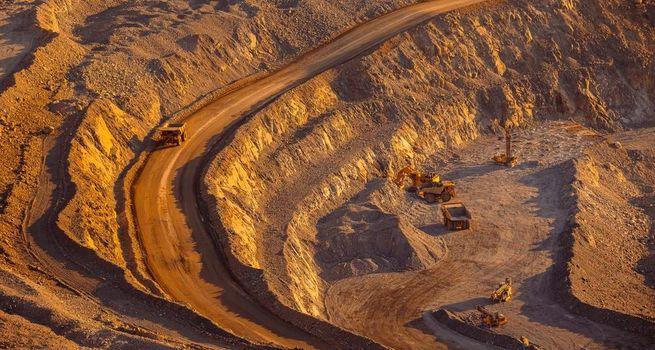
Highlights
- Q3 FY26 production of 1.29 million pounds U3O8, up 5% from the previous quarter, driven by strong processing plant performance at the Langer Heinrich Mine in Namibia.
- FY26 production guidance range upgraded to 4.5-4.8 million pounds U3O8, reflecting year-to-date outperformance against the original guidance range.
- Environmental Impact Statement (EIS) approval received from the Government of Saskatchewan for the development of the Patterson Lake South (PLS) Project — a significant regulatory milestone for the company's Canadian growth Assets.
Paladin Energy Ltd (ASX:PDN) released its third-quarter FY26 management discussion and analysis on 13 May 2026, covering the three months ended 31 March 2026.
Paladin is a globally significant independent uranium producer with a 75% ownership interest in LHM, a long-life uranium mine that was successfully restarted in 2024 following a period of care and maintenance dating back to 2018. In late 2024, Paladin acquired Canadian company Fission Uranium Corp., gaining exposure to the high-grade Patterson Lake South (PLS) project in Saskatchewan and the Michelin Project in Newfoundland and Labrador. The combined portfolio positions Paladin as a credible mid-tier uranium producer with a near-term producing asset and a pipeline of development-stage assets in Tier-1 jurisdictions.
PDN shares were trading 10.5% down at $11.36, at the time of writing on 13 May 2026.
Production and Operational Performance
LHM produced 1.29 million pounds U3O8 in Q3 FY26, a 5% increase from the 1.23 million pounds produced in the prior quarter, driven by strong processing plant performance. This result continues the trajectory of progressive ramp-up at LHM since the restart of commercial production in 2024, and the compounding of quarterly production gains has prompted management to revise the full-year production guidance range upward.
FY26 production guidance was upgraded to 4.5-4.8 million pounds U3O8, from the previous range, as a direct result of the strong year-to-date performance across the first three quarters of the financial year. This guidance upgrade is a meaningful signal: it indicates that the processing plant is operating reliably and that the geological performance of the ore bodies is broadly in line with or ahead of expectations. For uranium production assets, consistent plant performance and grade delivery are the primary determinants of quarterly and annual output variability.
Sales Performance and Pricing
Sales volumes in Q3 FY26 were 1.03 million pounds U3O8, at an average realised price of US$68.3 per pound. Revenue for the quarter decreased 31% from the prior quarter, primarily due to lower sales volumes compared to the 1.43 million pounds sold in Q2 FY26, and a lower average realised price versus the US$71.8 per pound achieved in the prior quarter. The lower realised price in the quarter reflects a higher proportion of sales into base-escalated contracts, which tend to price at a discount to spot market rates.
Paladin has consistently emphasised that quarterly sales volumes and revenue are not representative of annual performance due to the timing of customer deliveries and the mix of contract pricing mechanisms. The company's contract portfolio includes a blend of fixed-price, base-escalated, and market-related contracts, meaning the average realised price will fluctuate materially from quarter to quarter depending on which contracts generate deliveries in a given period. This is an important context for investors interpreting the quarterly revenue decline.
Patterson Lake South: Environmental Approval Secured
One of the most strategically significant events of the quarter was the approval of the Environmental Impact Statement (EIS) for the Patterson Lake South Project from the Government of Saskatchewan. PLS is a shallow, high-grade uranium deposit with characteristics that lend it to low-cost extraction methods. The EIS approval is a critical regulatory milestone in the project's development pathway, clearing a major hurdle on the road to a final Investment decision (FID).
Exploration at PLS continued during the quarter, with a focus on further defining the highly prospective Saloon East trend. The company has been deploying Capital from its September 2025 Equity raising specifically to advance PLS through front-end engineering and design (FEED) and detailed design work ahead of an FID. As of 31 March 2026, $9.8 million of the allocated $113 million for PLS Project Development had been deployed, reflecting the early stage of capital deployment against a multi-year development programme.
Balance Sheet and Liquidity
Paladin ended the quarter with cash and investments of US$219.5 million and an undrawn US$70 million revolving Credit Facility, providing total liquidity of approximately US$289.5 million. This balance sheet position is adequate to fund both the LHM operating requirements and the advancing capital deployment for PLS development, though the company will need to manage the pace of development expenditure carefully given the multi-year nature of the PLS investment programme.
During the quarter, the company recorded an Impairment of US$3.3 million related to the surrender of certain exploration tenements as part of its ongoing Portfolio Management process. This is a routine activity for resource companies with large exploration portfolios and does not represent a change in the company's core strategic direction.
Safety Performance
Paladin reported a Total Recordable Injury Frequency (TRIF) of 3.0 per million hours worked on a 12-month basis. Safety performance is a critical operational metric for Mining companies and a key element of Paladin's environmental, social, and governance (ESG) reporting commitments. The company has articulated a clear commitment to safety and sustainability as integral to its operating framework across LHM and its broader asset portfolio.
Conclusion
Paladin Energy's Q3 FY26 result is characterised by operational momentum at LHM and strategic progress on the Canadian development pipeline. The 5% quarter-on-quarter production increase and the resulting guidance upgrade reflect genuine improvement in processing plant performance and ore delivery at Namibia's most significant uranium operation. The EIS approval for Patterson Lake South removes a key regulatory hurdle for one of the more attractive development-stage uranium projects in North America. With a solid cash position, an undrawn credit facility, and a strong share price performance reflecting both operational delivery and favourable uranium market sentiment, Paladin is navigating this phase of its growth with increasing confidence.


 Nov 12, 2026





 Please wait processing your request...