
 CA
 NZ
 UK
 US
 IND

 AU

 Share
 X (Formerly Twitter)
 Whatsapp
 Facebook
 LinkedIn
 Telegram
 Email This Article
 Copy Link
 Summarize with AI
 Chat GPT
 Perplexity
Views Expressed Disclaimer:
You are reading a free article with opinions that may differ from the recommendation given by Kalkine in its paid research reports. Become a Kalkine member today to get access to our research reports, in-depth technical and fundamental research.
Highlights
- Viva Energy Group Limited shares fell 6.69% as investors focused on a $556 million retail site impairment and ongoing statutory losses despite a stronger second half.
- Full-year FY25 EBITDA declined 6.4% as refining margin volatility, integration costs and higher depreciation weighed on profitability.
- The Geelong refinery continues to face below-breakeven margin periods, with benefits from the ULSG upgrade yet to fully materialise.
- Convenience and Mobility showed improving momentum, but delays in the retail conversion programme highlight execution and integration risks.
Viva Energy Group Limited (ASX:VEA) shares dropped 6.58% today to $1.75 (25 Feb, 1:35 pm GMT+11) per share as investors continued to digest the company’s full-year 2025 results. While the FY25 earnings report released on 24 February 2026 initially sparked an 8.67% rally on the back of a strong second-half recovery, the euphoria has quickly given way to a more sober assessment of the structural challenges facing Australia’s second-largest fuel refiner and retailer.
The sharp reversal suggests that after the initial reaction to headline improvements in the second half, investors are now focusing on the more troubling elements of the report: a massive $556 million non-cash impairment on retail sites, ongoing losses at the group level, and a refining margin environment that remains challenging.
A Year of Two Halves Masks Deeper Issues
Viva Energy’s FY25 results told a story of contrasts. Full-year EBITDA on a replacement cost basis declined 6.4% to $701 million, reflecting the accumulated pressures from refining margin volatility, integration costs, and the broader transition challenges facing the business. However, the second half delivered a significant improvement, with EBITDA reaching $396 million, representing a 30% increase from the first half and 33% higher than the prior corresponding period.
Underlying net profit after tax on a replacement cost basis was $184 million for the full year, reflecting higher depreciation and finance costs following the Liberty Convenience acquisition and a full-year contribution from OTR. However, the statutory result painted a far grimmer picture due to $664 million in pre-tax significant items, the vast majority of which were non-cash in nature.
The $556 Million Impairment Elephant in the Room
The largest and most eye-catching item in VEA’s results was a $556 million non-cash impairment relating to retail sites. Chief Financial Officer Carolyn Pedic explained that this impairment primarily reflected the application of accounting standards to individual retail site valuations, rather than a fundamental collapse in the value of the convenience and mobility business as a whole.
Importantly, VEA emphasised that there was no impairment at the Convenience and Mobility business level, and that accounting standards required the impairment modelling to exclude future improvements or management initiatives. However, for many investors, the sheer size of the write-down raises uncomfortable questions about the value that VEA actually derived from its acquisitions of the Coles Express convenience retail network and the OTR chain.
The impairment essentially acknowledges that individual retail sites, when assessed on a standalone basis under current market conditions, are worth less than their carrying values on VEA’s balance sheet. While management argues this is a technical accounting outcome rather than a fundamental business issue, it has undeniably dented investor confidence and raised questions about the due diligence conducted prior to these transformative acquisitions. The integration of multiple retail brands with different operating models, technology platforms, and customer bases has proven more challenging than management initially communicated to the market.
Beyond the impairment, the results also included $97.5 million of transition, integration, and restructuring costs, covering IT system implementation and corporate function rationalisation. A further $29 million related to prior-period OTR impacts after the company identified inventory costs that had been historically capitalised when they should have been expensed. Together, these items suggest that the integration of VEA’s acquired retail businesses has been more complex and costly than initially anticipated.
Refining Margins Remain Under Pressure
Viva Energy’s Geelong Refinery, the only remaining crude oil refinery in Victoria, continues to face a challenging margin environment. Management noted that January 2026 started below breakeven from a refining margin perspective, with some improvement into February. The company’s recently commissioned Ultra Low Sulphur Gasoline (ULSG) unit, completed in October 2025, has not yet delivered its full benefit.
The ULSG project was designed to improve the refinery’s product quality and compliance with tightening fuel standards, while also reducing the need for imported refined products. Management stated that the refinery enters 2026 unconstrained by project activity for the first time in several years, which should support improved throughput and utilisation.
However, the global refining environment remains challenging, with overcapacity in Asian refineries and softening demand growth creating persistent headwinds for Australian refiners. The Australian government’s Fuel Security Services Payment (FSSP), which subsidises domestic refinery operations, provides a crucial safety net, but the upcoming review of this programme introduces additional uncertainty.
Convenience Retail Transformation Shows Promise but Remains Uneven
The most encouraging aspect of VEA’s results was the improvement in the Convenience and Mobility segment during the second half. EBITDA for this division reached $123 million in the second half, up from $74 million in the first half, indicating that the retail transformation strategy is gaining traction.
Management cited early January indicators showing ex-tobacco sales up 10% year-over-year across converted sites, with the top 10 stores showing growth exceeding 30%, and fuel volumes lifting significantly. These improvements were attributed to forecourt works and an improved customer offer rather than pricing alone, suggesting genuine operational improvement.
However, management also acknowledged several impediments affecting the conversion programme, including supply chain challenges outside South Australia, the removal of machine coffee from converted sites, and the lack of Flybuys integration. These issues forced VEA to pause its retail conversion programme, with conversions expected to resume in the second half of 2026. This delay introduces additional uncertainty around the timeline for realising the full benefits of the retail strategy.
Dividend and Capital Outlook
The board declared a final fully franked dividend of 3.94 cents per share, representing a 60% payout of net profit after tax on a replacement cost basis from the Convenience and Mobility and Commercial and Industrial segments. While this maintains the company’s dividend commitment, it represents a reduction compared to historical levels.
Capital expenditure is expected to moderate significantly in FY26, with guidance of $350 to $400 million, down from $494 million in FY25. This reduction reflects the completion of major refinery investments and should support improved free cash flow generation.
Operating free cash flow of $542 million in FY25 demonstrated the underlying cash generation capacity of the business, though this included $105 million of one-off transition and integration costs. As these one-off costs diminish, VEA should be able to direct more capital toward balance sheet repair and shareholder returns.
Commercial and Industrial Segment Provides Stability
While much of the market’s focus has been on VEA’s retail challenges and refining margins, the Commercial and Industrial (C&I) segment continues to provide a stable earnings base. This division supplies fuel, lubricants, polypropylene, and specialty hydrocarbon products to commercial customers across aviation, marine, transport, resources, construction, agriculture, and manufacturing.
The C&I segment benefits from long-term customer relationships and relatively sticky demand patterns that are less sensitive to consumer confidence than the retail business. Management has identified organic investment opportunities in aviation and marine markets that could drive incremental growth in this segment, providing a counterbalance to the more volatile refining and retail operations.
Investor Outlook and Key Risks
Today’s 6.69% decline reflects the market’s reassessment of VEA’s near-term prospects after the initial post-result rally. With the stock down over 12% year to date and approximately 24% below its 52-week high of $2.50, investors are clearly pricing in significant execution risk.
The average analyst price target of approximately $2.52 suggests meaningful upside from current levels, with eight analysts maintaining buy recommendations and none recommending selling. However, achieving this target requires VEA to demonstrate sustained improvement in retail conversion, stabilisation of refining margins, and continued progress on integration and cost reduction.
For income-focused investors, the dividend yield of approximately 3.7% at current prices provides some support, but the sustainability of distributions will ultimately depend on the company’s ability to return to a more normalised earnings trajectory. The road ahead for Viva Energy remains challenging, and today’s sell-off suggests the market wants to see more evidence before re-rating the stock.
Energy Transition: Threat or Opportunity?
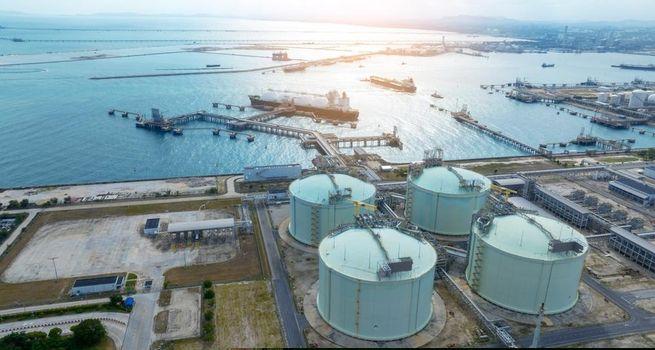
Looking further ahead, Viva Energy faces the existential question confronting all traditional fuel companies: how to navigate the energy transition. The company has made some early moves in this direction, exploring hydrogen and solar projects at its Geelong site and developing a natural gas import terminal. However, these initiatives remain in relatively early stages and are unlikely to replace traditional fuel revenues for many years.
The acceleration of electric vehicle adoption in Australia, while still behind global leaders, poses a medium-term threat to VEA’s core fuel retail business. The company’s strategy of repositioning its service station network toward convenience retail is partly designed to future-proof against declining fuel volumes, but this transformation is proving more complex and costly than initially envisaged.
For investors evaluating VEA today, the stock presents a classic turnaround scenario. The potential for improved retail performance, moderating capital expenditure, and stabilising refining margins provides upside catalysts, while the massive impairment charges, integration challenges, and energy transition uncertainty represent significant downside risks. Today’s decline suggests the market is currently weighing the risks more heavily than the opportunities.
FAQs
Why did Viva Energy (ASX: VEA) shares fall after the FY25 result?
The decline reflects investor concern over the large non-cash impairment, ongoing statutory losses and uncertainty around refining margins and retail integration, which overshadowed the second-half earnings recovery.
Is the retail transformation strategy working?
Second-half EBITDA growth and double-digit ex-tobacco sales at converted sites are encouraging, but supply chain issues and a pause in the rollout have delayed the full benefits.
What are the key catalysts for a recovery in VEA’s share price?
Sustained improvement in retail earnings, stable refining margins, lower capital expenditure, stronger free cash flow and balance sheet repair will be critical for a re-rating.


 Nov 12, 2026





 Please wait processing your request...