
 CA
 NZ
 UK
 US
 IND

 AU

 Share
 X (Formerly Twitter)
 Whatsapp
 Facebook
 LinkedIn
 Telegram
 Email This Article
 Copy Link
 Summarize with AI
 Chat GPT
 Perplexity
Highlights
- Consensus broker rating: BUY with a target price of AUD 34.44, implying upside from the current trading price of AUD 33.68.
- Federal Government Phase 1 FSSP review delivers favourable outcomes for Ampol, including an increase in the collar from 6.4 Acpl to 10.0 Acpl, providing stronger earnings support for the Lytton refinery.
- Ampol defers its planned Turnaround and Inspection (T&I) to August 2026, enabling approximately 300 million litres of additional domestic fuel production during a period of elevated geopolitical risk.
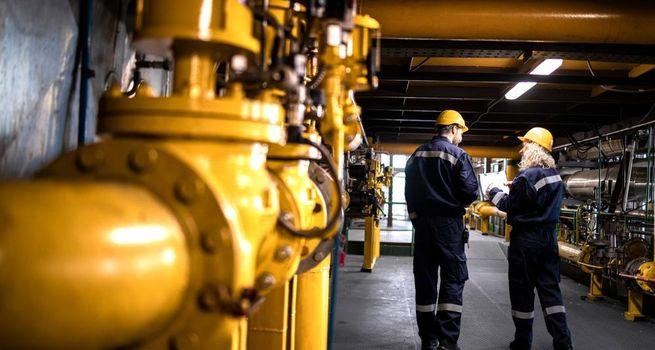
Ampol Limited (ASX:ALD) has found itself at the intersection of two defining forces shaping Australia's energy sector in 2026: the escalating geopolitical tensions in the Middle East and a federal government increasingly focused on domestic fuel security. As the operator of Australia's Lytton refinery in Queensland — one of only two remaining refineries on the continent — Ampol occupies a strategically unique and politically significant position in the national energy infrastructure landscape.
At its last traded price of AUD 33.68, down 0.94% on the day, Ampol's shares are sitting just below the consensus broker target price of AUD 34.44 as derived from EODHD/Others data. With a market capitalisation of approximately AUD 8.10 billion and a traded volume of 1,775,473 shares, the stock is one of the more actively followed large-cap energy names on the ASX. The bid-offer spread of AUD 33.54 to AUD 33.99 reflects a relatively tight and liquid market, consistent with the stock's institutional investor base.
The consensus broker recommendation from EODHD/Others sits firmly at BUY, a rating that encapsulates both the near-term policy tailwinds and the structural role that Ampol plays in Australia's downstream fuel supply chain. This article examines the key developments affecting Ampol's operational and financial profile in the context of the broader geopolitical landscape and Australia's evolving fuel security framework.
The Geopolitical Context: Middle East Tensions and Fuel Supply Implications
The latest wave of geopolitical instability in the Middle East has resurfaced concerns around global crude oil supply chains — concerns that have reverberated across energy markets and, more specifically, Australia's fuel import dependency. Australia imports the vast majority of its liquid fuels, including petrol, diesel, and jet fuel, from refineries in Asia and the Middle East. Disruptions to crude flows, shipping lane security, or regional refining capacity can, therefore, have direct and material consequences for Australian fuel supply.
Ampol, through its management of the Lytton refinery, has emerged as a focal point in Australia's response to this vulnerability. In its 20 March 2026 update, Ampol confirmed that the company was well positioned at the commencement of the Middle East conflict in terms of both crude and product inventory, as well as confirmed orders — a statement that provided some reassurance to markets about near-term supply continuity.
However, the broader concern extends beyond immediate inventory management. The duration and intensity of the conflict, its impact on global crude benchmarks, and the flow-on effects to Singapore refining margins — the benchmark against which Australian fuel import costs are often measured — all remain live variables. These dynamics have intensified the government's focus on ensuring that domestic refining remains economically viable, laying the groundwork for the FSSP amendments that have been directly beneficial to Ampol.
Geopolitical risk is not a new concept for energy investors, but the current episode has drawn renewed attention to the fragility of Australia's fuel supply chain. For Ampol, which straddles both the domestic refining and fuel retailing segments, the situation presents both challenges and opportunities. Rising crude prices can squeeze refinery margins in the short term but can also support the case for government-backed financial cushions like the FSSP, which is precisely what the Phase 1 review has now expanded.
The Fuel Security Services Payment: A Policy Shift That Matters
The FSSP is a federal government scheme established to provide financial support to Australia's domestic refineries when regional refining margins fall below the level required to cover long-term cash breakeven costs. The scheme has been in place since 2021 and has played a meaningful role in sustaining the economic viability of both the Lytton refinery (Ampol) and the Geelong refinery (Viva Energy) during periods of margin compression.
In the 20 March 2026 Phase 1 review outcome, the government delivered a set of amendments that Ampol has publicly welcomed. Most significantly, the collar — the threshold below which the FSSP payment is triggered — has been raised from 6.4 Australian cents per litre (Acpl) to 10.0 Acpl. This adjustment acknowledges that the cost of operating a domestic refinery has risen substantially since the scheme was established, a point Ampol and Viva Energy had both been advocating to the government. The cap payment of 1.8 Acpl remains unchanged, and a favourable amendment to the Government Margin Marker calculation has been made specifically for Lytton.
For Ampol's investors, the significance of this policy update lies in its earnings support mechanism. By raising the collar, the government has effectively broadened the band of market conditions under which Ampol can access FSSP payments. In an environment where Singapore refining margins remain volatile and subject to geopolitical disruption, this provides a more robust financial backstop for the Lytton refinery's operations. The favourable amendment to the Margin Marker calculation for Lytton specifically also suggests that the government has taken into account the particular cost structure and configuration of that facility, further reinforcing its earnings support profile.
Ampol has also noted that it anticipates engaging with the Federal Government on a second phase review, which is expected to be completed during calendar 2026. This second phase is intended to clarify Australia's longer-term ambitions with respect to fuel supply resilience, including the role of domestic refining. The outcome of this review could have further implications for Ampol's capital allocation decisions, operational planning, and the broader strategic positioning of the Lytton facility.
Turnaround and Inspection Deferral: Tactical Flexibility in a Strategic Context
One of the more operationally significant announcements in Ampol's 20 March update was the deferral of its planned refinery major maintenance program, known as a Turnaround and Inspection (T&I), from early June to the start of August 2026. While such deferrals are not uncommon in the refining industry, the timing and rationale in this instance carry particular strategic weight.
By pushing the T&I back by approximately two months, Ampol will be able to maintain higher domestic production volumes during a period when fuel supply concerns — driven by Middle East tensions — are acutely elevated. The company estimates that this deferral will enable approximately 300 million litres of additional domestic production of petrol, diesel, and jet fuel in aggregate. Given that Australia's fuel security debate is centred on the adequacy of domestic supply buffers, this decision serves both a commercial and a public policy purpose.
From a financial perspective, the deferral means that refinery throughput and associated revenue generation will be sustained at higher levels through the June quarter, with the maintenance impact shifted into the August period. The net effect on annual production volumes and earnings will depend on market conditions prevailing during the T&I window, but the decision reflects management's active approach to optimising the refinery's contribution during a period of heightened demand for domestic fuel.
This kind of tactical operational flexibility is consistent with Ampol's broader strategy of maximising the value of its upstream refining asset while managing the practical constraints of maintenance schedules in a commercially disciplined manner. It also underscores the company's awareness of its role as a critical national infrastructure operator, a positioning that has strategic value in the context of the government's ongoing fuel security policy development.
Share Performance and Market Context
Ampol's shares traded at AUD 33.68 as of the most recent data point, representing a decline of AUD 0.32 or 0.94% on the day. The stock has been trading in a range broadly consistent with the consensus broker target of AUD 34.44, suggesting that the market has already priced in a significant portion of the near-term policy and operational tailwinds identified above. With the bid-offer range sitting at AUD 33.54 to AUD 33.99, the immediate trading range is relatively tight.
A daily volume of 1,775,473 shares reflects healthy liquidity, typical for a stock with a market capitalisation of AUD 8.10 billion. Ampol remains one of the more prominent energy names on the ASX, and its institutional shareholder base ensures a degree of price discipline that is consistent with the stock's large-cap status. The relatively modest discount to the broker target price — approximately 2.3% at current levels — suggests that while upside potential exists according to consensus models, the share price is not dramatically dislocated from the market's assessment of fair value.
It is worth noting that the consensus BUY rating from EODHD/Others, which aggregates broker recommendations across multiple research houses, reflects a forward-looking assessment of Ampol's business that incorporates not only current earnings but also the company's exposure to fuel security policy dynamics, the structural importance of the Lytton refinery, and the broader trajectory of downstream energy demand in the Asia-Pacific region. The Phase 1 FSSP outcome and the T&I deferral are recent positive data points that are likely to inform broker model updates in the near term.
Downstream Retail and Network Considerations
Beyond the refining business, Ampol operates one of Australia's largest fuel retail and distribution networks, encompassing service stations and commercial fuel customers across the country. This downstream segment provides a degree of earnings diversification that partially insulates the company from the volatility inherent in refining margins and crude oil prices.
The retail business also benefits from the geopolitical context in a nuanced way. While consumers and commercial operators may face higher fuel prices in an environment of elevated crude costs, Ampol's retail margins are influenced by a different set of dynamics than its refining margins. The integration of refining and retail within a single operating entity provides strategic optionality — in periods where refining margins are compressed, retail margins may provide earnings support, and vice versa.
Additionally, the development of Ampol's non-fuel retail offering, including convenience stores and digital services at service station sites, represents a long-term revenue diversification initiative. As the energy transition progresses and fuel demand profiles evolve, the retail network's ability to adapt its service offering will be an important determinant of long-term earnings resilience. Brokers monitoring Ampol's progress in this area will be watching for updates on convenience revenue growth, site upgrade programs, and the integration of electric vehicle charging infrastructure into the retail network.
Broker View and EODHD/Others Consensus
The consensus broker rating from EODHD/Others for Ampol is BUY, with a target price of AUD 34.44. This target implies a modest premium to the current trading price and reflects the aggregated view of multiple research analysts who cover the stock across Australia's institutional investment community.
The BUY consensus is underpinned by several factors that analysts typically cite: Ampol's unique position as one of only two remaining domestic refiners in Australia; the earnings support provided by the FSSP, which has now been strengthened through the Phase 1 review; the company's solid downstream retail network; and its track record of disciplined capital management. The deferral of the T&I and the confirmed inventory positioning in response to Middle East tensions are near-term positives that are likely to support the earnings narrative as analysts refine their models for the June half of 2026.
The Phase 2 FSSP review, expected to be completed by the end of 2026, represents a potential further catalyst. If the government signals a longer-term commitment to supporting domestic refining — potentially including enhanced financial mechanisms or regulatory certainty for the post-2030 period — this could provide a meaningful re-rating trigger for Ampol's shares. Conversely, any deterioration in the Middle East situation that disrupts crude supply chains more severely than currently anticipated could create near-term earnings pressure, even with the expanded FSSP support in place.
Australia's Fuel Security Policy: A Structural Tailwind
The broader policy environment in Australia has shifted meaningfully in favour of domestic refining over the past several years, a trend that has accelerated in 2026 as geopolitical risks have become more acute. The government's decision to increase the FSSP collar reflects an acknowledgment that the original parameters of the scheme, established in 2021, no longer adequately reflect the cost environment in which Australian refineries operate.
This policy evolution is structurally positive for Ampol. The company has invested significantly in the Lytton refinery to maintain its operability and compliance with evolving fuel quality standards, and the government's commitment to supporting the facility through the FSSP provides a financial underpinning for those capital decisions. The anticipated Phase 2 review, which will address longer-term fuel supply resilience, suggests that the government is thinking about this issue over a multi-year horizon — a positive signal for Ampol's planning certainty.
Australia's vulnerability to global supply chain disruptions has been a recurring theme in national security and energy policy discussions, and the current Middle East situation has brought it into sharp relief. For a country that imports the majority of its liquid fuels and maintains relatively limited strategic reserves by international standards, the case for supporting the domestic refining industry has become more compelling. Ampol's Lytton facility sits at the centre of this debate, and the company's advocacy for a stronger FSSP appears to have been heard by policymakers.
Conclusion
Ampol Limited occupies a strategically important position in Australia's energy landscape at a time when geopolitical tensions and domestic fuel security concerns are reshaping the policy and commercial environment. The Phase 1 FSSP review outcome delivers tangible and near-term positive outcomes for the Lytton refinery's earnings profile, while the T&I deferral demonstrates management's ability to adapt operationally to a challenging external environment. The consensus BUY rating from EODHD/Others, with a target price of AUD 34.44, reflects a view that Ampol's unique combination of domestic refining capability and a broad downstream retail network positions it well relative to the current macro backdrop. The forthcoming Phase 2 FSSP review and the evolving geopolitical situation in the Middle East will be key variables to monitor as investors assess Ampol's trajectory through the remainder of 2026 and beyond.


 Nov 12, 2026





 Please wait processing your request...