
 CA
 NZ
 UK
 US
 IND

 AU

 Share
 X (Formerly Twitter)
 Whatsapp
 Facebook
 LinkedIn
 Telegram
 Email This Article
 Copy Link
 Summarize with AI
 Chat GPT
 Perplexity
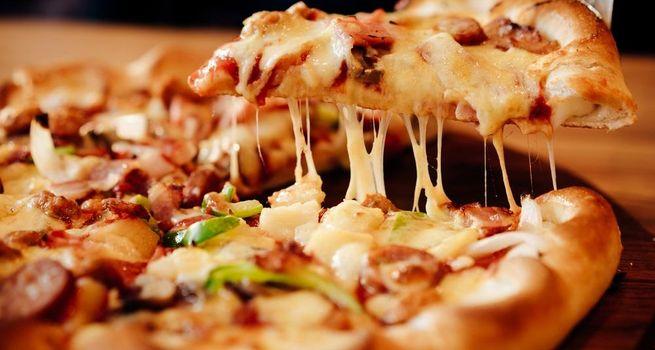
Domino's Pizza Enterprises Limited (ASX:DMP) advanced 4.01% on April 7, 2026, driven by positive management commentary regarding international store expansion acceleration and measurable returns on technology investments substantially enhancing digital ordering penetration and unit-level profitability. The measured rally reflects investor recognition of improving earnings trajectory as the company's global store footprint expands and digital channel contribution increases materially. For quick-service restaurant franchisees globally, Domino's Pizza Enterprises' performance offers crucial insights into scalability of franchise-led expansion models and the competitive advantages derived from technology leadership in pizza delivery distribution. As the world's largest Domino's franchisee, the company operates in developed and emerging market jurisdictions with varying regulatory environments and competitive dynamics. Domino's Pizza Enterprises' strategic positioning emphasizes store growth through capital-light franchise models combined with aggressive digital channel development and technology leadership in delivery logistics optimization. The April update emphasized international unit growth acceleration, particularly across European markets and emerging Asian markets offering substantial addressable markets and limited Domino's penetration.
Company Overview and Market Positioning
Domino's Pizza Enterprises operates as the master franchisee for Domino's Pizza in Australia, New Zealand, Belgium, Denmark, France, Germany, Iceland, Japan, Luxembourg, Netherlands, and Poland. The company operates 2,410+ Domino's Pizza locations generating approximately AUD $3,920 million in system-wide sales (franchisee plus company-operated store sales) during fiscal 2025. As the world's largest Domino's franchisee by store count and sales, the company commands significant leverage with corporate franchisor and benefits from operational best practice transfer across diverse geographies. The company operates through both company-operated stores (approximately 28% of store count) and franchised locations (72% of store count). Company-operated stores in mature markets (Australia, New Zealand) generate revenues primarily from direct consumer sales, while franchised locations generate franchise fees (typically 5-6% of franchisee sales), royalties, and marketing contributions (typically 2-3% of franchisee sales). This blended revenue model provides recurring revenue visibility while limiting operational complexity through franchisee-managed delivery and operations. Domino's Pizza Enterprises maintains competitive positioning through brand recognition, delivery infrastructure investment, digital ordering platform development, and supply chain optimization. The company has invested substantially in proprietary digital ordering platform and logistics optimization, achieving ~70% digital sales penetration across mature markets—substantially exceeding industry averages of 55-60%. Digital sales growth at 22-28% annually substantially exceeds in-store sales growth, suggesting favorable revenue mix shift toward higher-frequency lower-basket digital orders. Geographic diversification provides valuable risk mitigation. Australia and New Zealand represent approximately 60% of sales and highest-margin segments, while European operations (Belgium, Netherlands, France, Germany, Denmark, Poland) represent 32% of sales with varying profitability profiles. Japan operations represent emerging high-growth segment currently representing 8% of sales but growing 18%+ annually.
Recent Developments and News Drivers
Domino's Pizza Enterprises' March 2026 trading update emphasized acceleration in international store development, with net new unit openings reaching 245 locations during fiscal year 2025 (compared to 180 units in prior year). Management guidance indicated continuation of accelerated store development trajectory, targeting 280-320 net new unit openings during fiscal 2026, representing material acceleration relative to historical 120-150 unit growth rates. The company announced successful deployment of next-generation digital ordering platform across 85% of store base, featuring enhanced personalization algorithms, mobile app improvements, and third-party delivery integration optimization. Digital sales penetration increased to 72% of total sales (from 68% prior year), with digital per-order values declining modestly while order frequency increased 12% year-over-year—suggesting improved customer engagement and repeat purchase behavior. International expansion initiatives demonstrated strong momentum, with Japan store count increasing 28% year-over-year and European store count increasing 12% year-over-year. Management attributed acceleration partly to improved franchisee recruitment through enhanced unit economics demonstration and reduced franchisee risk perception following successful implementation of proprietary operating systems. European expansion focused particularly on underperforming markets (France, Germany) where company believes competitive positioning and delivery infrastructure investments enable market share gains. The company announced supply chain optimization initiatives including manufacturing consolidation across regional markets and logistics network improvements expected to deliver AUD $15-20 million in annual cost savings by fiscal 2027. These supply chain efficiencies support margin expansion and improved unit-level economics, enhancing franchisee attraction and system profitability.
Financial Performance Analysis
Domino's Pizza Enterprises reported fiscal 2025 revenues of AUD $630 million, representing 11% year-over-year growth driven by combination of new unit additions and same-store sales growth. Franchise fees and royalties reached AUD $245 million, growing 14% year-over-year as franchised store base expanded and mature market same-store sales improved. Company-operated store revenues reached AUD $385 million, growing 9% year-over-year with modest same-store sales growth in mature markets offset by new unit contribution. EBITDA for fiscal 2025 totaled AUD $185 million, representing 29.4% of revenues—improving from 28.1% in prior year as franchise revenue mix expanded and supply chain efficiencies materialized. Franchise segment EBITDA margins reached 78%, substantially exceeding company-operated store margins of 22%, validating the strategic importance of franchise-led expansion model. Management guided toward consolidated EBITDA margins expanding to 30-31% by fiscal 2027 as franchise revenue mix approaches 52-55% of total. Operating cash flow generation remained robust at AUD $155 million during fiscal 2025, funding AUD $48 million in capital expenditure primarily for digital technology platform development and company-operated store refurbishment. The company improved leverage to 1.7x net debt to EBITDA from 2.1x in prior year through combination of earnings growth and modest debt reduction. Net debt balances of AUD $310 million provide financial flexibility for growth investments or potential shareholder distributions. Return on invested capital metrics improved to 22.1% on an unleveraged basis, reflecting improved earnings quality as higher-margin franchise revenues achieve scale. Franchisee unit economics remain compelling, with average unit volumes (AUVs) of AUD $1,450,000-1,650,000 across mature markets. Typical franchisee pre-tax margins of 12-16% on AUVs generate 8-10 year capital payback periods at current franchising terms, supporting continued franchisee recruitment and system expansion.
Risks and Challenges
Primary downside risks center on franchisee economic pressures. Labour cost inflation, rent escalation, and commodity cost inflation could depress franchisee profitability and deter prospective franchisees from entering system. Elevated franchisee churn could create downward pressure on franchise fee revenues and complicate network coordination required for digital and technology initiatives. Competitive intensity in pizza delivery and QSR categories presents ongoing competitive challenges. Emerging competitors with technology-native platforms and alternative cuisine offerings compete aggressively for market share. Commoditization of delivery logistics (through third-party delivery platforms like DoorDash, Uber Eats) reduces franchisee control over customer experience and potentially pressures unit economics. International expansion execution risks present material downside scenarios. Expansion into new geographies with unfamiliar regulatory environments, supply chain complexity, and competitive dynamics creates execution risk. Unsuccessful market entries could result in write-downs or divestitures damaging earnings and investor confidence. Labour market tightness and wage inflation present operational risks, particularly for franchisees operating in tight labour markets. Rising wage costs for delivery drivers and in-store personnel could depress unit profitability below acceptable thresholds. Franchise agreement renegotiations to reflect elevated cost structures could improve economics visibility but create near-term friction in franchisee relationships. Technology obsolescence and digital platform execution risks represent emerging concerns. The company's competitive positioning depends on digital ordering platform leadership, and technology execution delays or deficiencies could trigger customer defections to competitors with superior digital experiences. Integration complexity with legacy systems and diverse franchisee technology infrastructure creates implementation challenges.
Future Growth Prospects and Catalysts
Medium-term growth catalysts center on international store expansion acceleration and continued digital channel penetration. Management targets establish 3,200+ stores globally by fiscal 2029, representing approximately 800-900 cumulative net new unit additions from current baseline. This expansion assumes acceleration in European store development and substantial Asia-Pacific expansion. Digital channel maturation should continue driving same-store sales growth and improving customer engagement metrics. Management targets achieve 78-80% digital sales penetration across mature markets by fiscal 2028, approaching theoretical maximums. Incremental digital contribution could add AUD $25-35 million in incremental revenues annually through improved order frequency and customer lifetime value optimization. Supply chain optimization initiatives should deliver material margin expansion through manufacturing consolidation and logistics network optimization. Management targets achieve AUD $35-50 million in annual cost savings across supply chain by fiscal 2028, supporting margin expansion and enhanced franchisee profitability to sustain recruitment momentum. Adjacent revenue stream expansion represents emerging opportunity, with management exploring delivery ecosystem services, ghost kitchens, and adjacent food concepts. Technology platform infrastructure could support additional branded quick-service concepts or delivery fulfillment services complementing core Domino's Pizza business. Strategic M&A represents potential accelerant to geographic expansion or adjacent category participation. The company's cash generation and leverage capacity support AUD $150-250 million in M&A deployment for bolt-on acquisitions providing established franchisee networks or geographic footprints.
Conclusion: Investor Perspective
Domino's Pizza Enterprises' measured 4.01% advance on April 7 reflects investor recognition of accelerated international expansion execution and technology-driven customer engagement improvements supporting earnings growth trajectory. The company's strategic positioning as the world's largest Domino's franchisee, combined with capital-light franchise model and digital technology leadership, supports earnings growth toward AUD $1.40-1.55 per share by fiscal 2028—representing 20-25% annual earnings growth from current baseline. This earnings trajectory, while dependent on successful international expansion execution, appears achievable given demonstrated operational capability and pipeline visibility. For growth-oriented investors seeking exposure to QSR franchise model expansion and digital commerce themes, Domino's Pizza Enterprises offers compelling risk-reward dynamics at current pricing. The company's 14x forward earnings multiple provides reasonable valuation given 16-18% earnings growth consensus assumptions and improving business quality metrics, with material additional upside from emerging market expansion and domestic margin expansion initiatives. The valuation provides reasonable risk-reward balance between growth optionality and downside protection from stable mature market cash flows. Catalysts supporting continued stock appreciation include international store development acceleration (particularly in Europe and Asia-Pacific), digital channel maturation supporting same-store sales growth and improved customer metrics, supply chain optimization delivering incremental margin expansion, technology platform monetization through adjacent revenue stream development, and potential M&A activity targeting regional franchisees or complementary brands. Each catalyst independently supports 6-10% upside, with cumulative potential supporting 30-40% total return potential over 18-24 month periods. Risks remain material—franchisee economic pressures from labour and occupancy cost inflation, competitive intensity in quick-service pizza category, and international expansion execution challenges all present downside scenarios requiring active management. However, management's demonstrated execution capability in digital transformation, store expansion across diverse geographies, combined with strong system fundamentals and margin expansion initiatives underway, provide reasonable confidence in navigating near-term challenges successfully.


 Nov 12, 2026





 Please wait processing your request...