
 CA
 NZ
 UK
 US
 IND

 AU

 Share
 X (Formerly Twitter)
 Whatsapp
 Facebook
 LinkedIn
 Telegram
 Email This Article
 Copy Link
 Summarize with AI
 Chat GPT
 Perplexity

Highlights
- myID provides a secure way to access ATO online services through myGov or the ATO app.
- Increasing myID identity strength to Strong offers the most secure available sign-in option.
- People affected by identity compromise may use a Strong myID for continued access to ATO services.
- Early action can reduce the risk of fraud, account delays and pressure during tax time.
Tax time usually means collecting records, checking income details and preparing a return. However, it is also a period when protecting personal information becomes particularly important.
The Australian Taxation Office has encouraged tax professionals and advisers to speak with clients about safer ways to access tax and superannuation information online. With cyber threats continuing to change, an identity compromise can affect more than personal data. It may also interrupt access to ATO online services and create delays during one of the busiest periods of the year.
Using myID, particularly with a Strong identity strength, is one step individuals can take to strengthen the security of their online tax account.
What Is myID?
Data source: ATO; AI-Powered Image
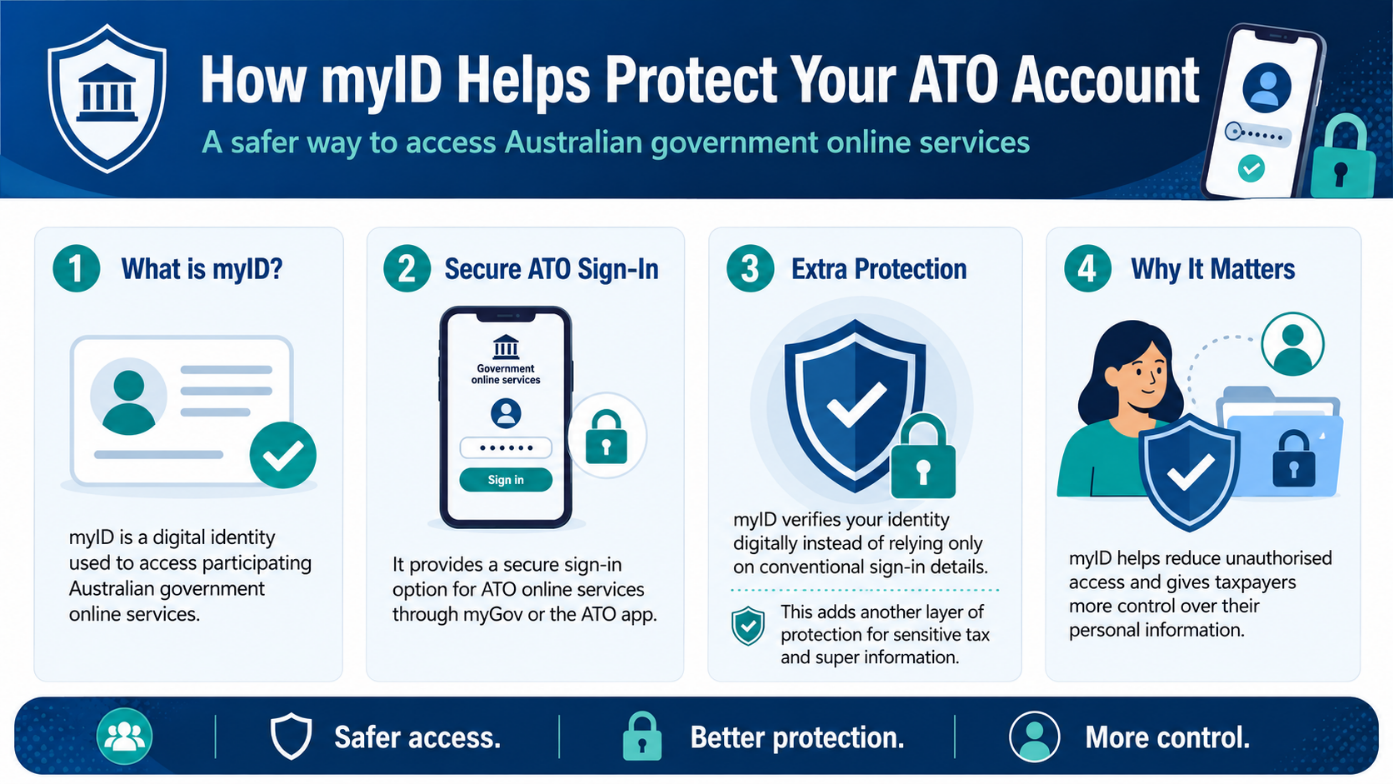
myID is a digital identity that can be used to access participating Australian government online services. It provides a secure sign-in option for ATO online services through myGov or the ATO app.
Instead of relying only on conventional sign-in details, myID allows users to confirm their identity through a digital identity system. This adds another layer of protection when accessing sensitive information, including tax and superannuation records.
For everyday taxpayers, the main benefit is safer access to their ATO account. The system is designed to reduce the risk of unauthorised access and help individuals maintain control over their personal information.
Why Online Security Matters at Tax Time
Tax accounts can contain a wide range of sensitive information. This may include income records, superannuation details and other personal data used to manage tax obligations.
When someone’s identity is compromised, access to these services may be affected. The individual may then need to spend additional time resolving the problem, restoring access and confirming their identity.
During tax time, these complications may lead to added stress and delays. Acting before a problem occurs can therefore make it easier to manage tax affairs and continue using online services securely.
The ATO is continuing to strengthen its systems to protect client information and combat fraud. However, individuals and their advisers also have a role in maintaining secure access and reducing avoidable risks.
Understanding myID Identity Strength
myID can be set up with different levels of identity strength. The identity strength reflects how much information has been verified within the digital identity.
The ATO recommends that people increase their myID identity strength to Strong where possible. A Strong myID provides the most secure sign-in option currently available for accessing ATO online services.
Achieving this level requires users to confirm more of their identity information. This additional verification helps strengthen the connection between the digital identity and the person using it.
For individuals who can complete the process, increasing the identity strength before they need urgent access may help avoid difficulties later.
How a Strong myID Helps After Identity Compromise
A Strong myID may be particularly useful for people whose identity has previously been compromised.
The ATO advises that these individuals can use a Strong myID to sign in securely and maintain ongoing access to online services. This may allow them to access their account without needing to call the ATO each time.
That can be important during tax time, when people may need frequent access to income statements, tax records and superannuation information.
For someone already dealing with identity theft or unauthorised activity, a secure and ongoing sign-in method can reduce further inconvenience. It also provides a clearer way to regain control of online access.
How Tax Advisers Can Support Their Clients
Tax professionals and advisers are often trusted with highly sensitive financial information. They can help clients understand the importance of online security and encourage them to take preventive steps.
This may involve discussing how myID works, helping clients understand identity-strength options and directing them to official guidance or factsheets.
These conversations do not need to be highly technical. For many clients, the most useful advice is to set up myID, increase the identity strength to Strong where possible and avoid delaying security improvements until an account issue occurs.
Advisers can also share myID factsheets to help clients understand the sign-in process and the available security features.
What Individuals Should Consider
People who regularly access ATO online services should review how they currently sign in and whether their myID identity strength can be increased.
Those who have previously experienced identity compromise should pay particular attention to the Strong myID option. Setting it up early may support secure access and reduce the need for additional contact with the ATO.
It is also important to treat account security as an ongoing responsibility rather than a one-time task. Cyber threats continue to evolve, making regular attention to sign-in security increasingly relevant.
What to Watch
Taxpayers should watch for any unexpected changes to their online access, unusual account activity or difficulty signing in. They should also review official ATO and myID information when updating their digital identity or changing account access.
The availability of a Strong identity strength may depend on whether the required identity information can be verified. Individuals should follow the official process and seek support through appropriate channels if they experience difficulty.
Risks
Failing to strengthen online account security may increase the risk of unauthorised access, fraud, loss of personal information and delays in accessing tax or superannuation services.


 Nov 12, 2026





 Please wait processing your request...