
 CA
 NZ
 UK
 US
 IND

 AU

 Share
 X (Formerly Twitter)
 Whatsapp
 Facebook
 LinkedIn
 Telegram
 Email This Article
 Copy Link
 Summarize with AI
 Chat GPT
 Perplexity

Key Highlights
- The ATO has identified WFH deductions as a primary compliance focus area for the 2025–26 tax year.
- The fixed-rate method is set at 70 cents per hour; the actual cost method carries higher scrutiny and record demands.
- Contemporaneous records, not year-end estimates, are now the ATO's explicit evidentiary standard.
- Dual claims on occupancy costs and running expenses remain one of the most-audited areas in individual returns.
- Data matching across employers, banks, and digital platforms gives the ATO greater visibility than in prior years.
The Australian Taxation Office has positioned work-from-home deductions as a highest-priority compliance target in the final quarter of the 2025–26 financial year. Hybrid work is now structurally embedded across Australian industries, and so is the ATO's scrutiny of the claims it generates.
Which method applies to you?
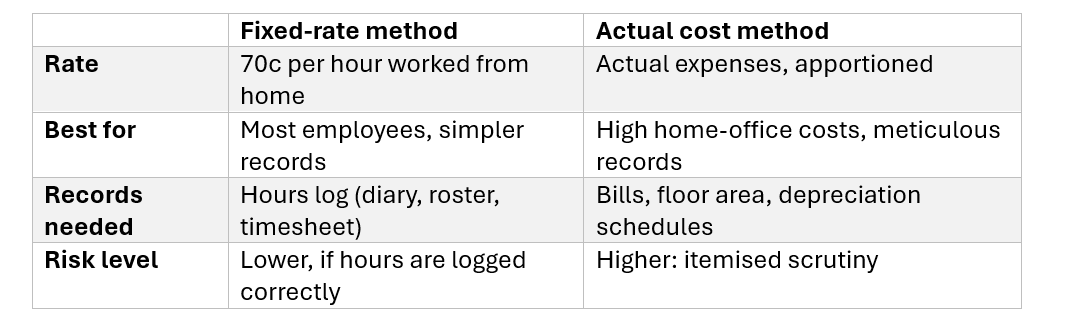
The fixed-rate method suits most employees. The actual cost method yields a larger deduction only when genuine home-office expenses are high and records have been kept rigorously all year.
Where the structural risk concentrates
Three error patterns drive most disallowed claims.
- Claiming occupancy costs (rent or mortgage interest) without a dedicated workspace used exclusively for work. Shared domestic areas; a kitchen table, living room, fail the ATO's "place of business" test.
- Double-counting costs already bundled into the fixed-rate method. Internet and phone expenses are the most common offenders; taxpayers claim them separately on top of the 70c/hr rate, which already covers them.
- Claiming equipment depreciation without purchase records or a defensible work-use percentage. If you can't show what you paid and what proportion of use was work-related, the claim is exposed.
The ATO's data-matching infrastructure cross-references employer declarations, banks, and digital platforms against lodged returns, flagging inconsistent claims automatically.
The window before 30 June is still open
A diary gap identified in March is recoverable: hours can be logged prospectively from today. The same gap found in October cannot be remedied without retrospective reconstruction, which the ATO treats as a substantiation failure. Resume a WFH hours log now, audit occupancy and equipment claims against documentation, and confirm no fixed-rate costs are being claimed separately. Engaging a registered tax agent before 30 June, not at lodgement, is the clearest line of defence.
For the ATO's full record-keeping requirements and worked examples for both methods, refer to the official guidance: Working from home expenses — ATO
Frequently asked questions
Doesn't the ATO allow $300 in claims without receipts?
Partially. You can claim up to $300 in work-related expenses without written evidence, but you must have genuinely incurred the costs and explain the calculation. "Everyone does it" is not a valid basis. WFH hours always require a record regardless of the amount.
What counts as a "contemporaneous" record?
A record created at or near the time the hours were worked: a calendar entry, timesheet, employer roster, or handwritten diary updated regularly. The ATO accepts a representative four-week log extrapolated across the year, but a single entry made at tax time covering the whole year does not meet the standard.
I work two jobs, one from home. Does that change my claim?
Yes. You can only claim WFH expenses attributable to income-producing work. If one role is office-based and one is remote, your hours log must isolate the hours worked from home for the remote role specifically. Blending both roles into a single WFH claim is an audit risk.
What happens if the ATO flags my claim?
The ATO may issue a review request, require substantiation records, or initiate a formal audit. Penalties for shortfalls include interest charges and a loading of up to 75% of the underpaid amount for deliberate omissions.


 Nov 12, 2026





 Please wait processing your request...