
 CA
 NZ
 UK
 US
 IND

 AU

 Share
 X (Formerly Twitter)
 Whatsapp
 Facebook
 LinkedIn
 Telegram
 Email This Article
 Copy Link
 Summarize with AI
 Chat GPT
 Perplexity

Every Australian SMSF must be audited annually by an approved SMSF auditor. For funds holding Cryptocurrency, the audit places specific demands on record-keeping, valuation and ownership evidence. Trustees who prepare a clear audit pack early in the process generally fare better than those who improvise at lodgement time.
This article provides a practical SMSF crypto audit checklist, organised by category, to help trustees plan their record-keeping.
Ownership and Account Documentation
- Trust deed and any amendments authorising crypto Investment.
- Investment strategy referencing crypto, with dated review notes.
- Exchange account opening documents in the SMSF's name.
- Custody agreements with any third-party Custodian.
- Trustee resolutions or declarations on wallet ownership.
Wallet and Address Inventory
- List of every wallet used by the SMSF, with addresses where applicable.
- Notes on whether the wallet is hot, cold, multi-sig or custodial.
- Evidence linking each wallet to the SMSF.
- Migration history with dates and reasons.
Transaction Records
- Exchange statements covering the full financial year.
- On-chain transaction histories for self-custody wallets.
- Reconciliation reports linking on-chain and exchange records to the books.
- Source-of-funds documentation for major movements.
Income Events
- Staking reward histories with dates and AUD values.
- Airdrop receipts and documentation.
- DeFi reward distributions, where applicable.
- Records of any in-kind income (e.g. tokens received for services).
Valuation Evidence
- 30 June closing prices from chosen reference exchange.
- Screenshots or downloadable reports with timestamps.
- Notes on methodology for non-standard or Illiquid Assets.
- Comparisons with alternative sources for higher-value holdings.
Fees, Costs and Tax Working Papers
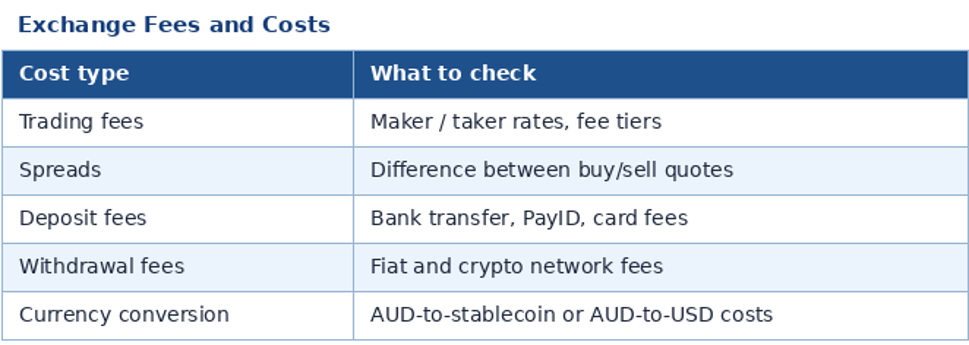
- Trading fees, deposit/Withdrawal fees, network costs.
- Tax workings: cost bases, capital gains/losses, income events.
- Foreign exchange conversions where applicable.
- Records of any tax adjustments or amendments.
Cyber Security and Governance
- Documentation of access controls and key management.
- Incident response records, if any breaches occurred.
- Evidence of multi-Factor authentication for critical accounts.
- Trustee Training records on crypto compliance and security.
Common Audit Findings
Auditor Contravention Reports
If the auditor identifies a significant breach, they are obliged to lodge an auditor contravention report (ACR) with the ATO. Some breaches can be rectified, but persistent failings can trigger ATO penalties or even loss of complying status.
Practical Considerations for Australian Trustees
Beyond the headline rules, Australian self-managed super fund trustees should think about how the issues discussed above translate into day-to-day practice. Cryptocurrency is administered through digital systems that work around the clock, settle quickly and produce data that can be voluminous and highly granular. Trustees who treat SMSF crypto as a 'set and forget' asset often discover at audit time that the records they need were never captured.
Establish a documented procedures pack
A short procedures document — held alongside the trust deed and investment strategy — can describe how the fund opens accounts, executes trades, custodies assets, manages access, captures transactions, values holdings, prepares for audit and responds to incidents.
Plan for trustee succession
Cryptocurrency access can be lost if a sole trustee becomes incapacitated, dies, or leaves the fund without handing over keys, wallets or passwords. Multi-signature arrangements, custody providers and clear documentation can all reduce this risk.
Build a working relationship with specialists
SMSF crypto sits at the intersection of Superannuation law, tax law, anti-Money Laundering rules and digital asset technology. Trustees often work with an SMSF specialist Accountant, a registered tax agent with crypto expertise, an approved SMSF auditor familiar with digital assets, and, where required, an SMSF lawyer.
Illustrative Scenario
Consider a hypothetical four-member SMSF with $1.8 million in assets, comprising listed Australian shares, international Equity ETFs, cash and a small commercial property. Two of the members are in accumulation phase in their early 40s; two are in pension phase in their late 60s.
Working with their SMSF specialist accountant and lawyer, they update the trust deed to expressly authorise cryptocurrency, refresh the investment strategy to include a 0% to 4% crypto allocation range, and document the rationale, risk considerations and review cadence. They open an AUSTRAC-registered exchange account in the SMSF's full legal name, link it to the fund's dedicated bank account, and acquire a single, dedicated hardware wallet to hold long-term balances. They start with a small purchase of Bitcoin, document every transaction and capture a 30 June valuation in their first year of holding.
The trustees brief their approved SMSF auditor in advance, share the wallet ownership evidence, and provide the exchange statements at audit time. The example is illustrative only and does not reflect the situation of any specific fund.
Key Takeaways
- Treat the audit as a year-round exercise, not a one-time scramble.
- Keep ownership and wallet documentation thorough and current.
- Capture transaction and valuation evidence as you go.
- Engage the auditor early on crypto-specific issues.
- Address findings promptly to avoid escalation.


 Nov 03, 2026





 Please wait processing your request...