
 CA
 NZ
 UK
 US
 IND

 AU

 Share
 X (Formerly Twitter)
 Whatsapp
 Facebook
 LinkedIn
 Telegram
 Email This Article
 Copy Link
 Summarize with AI
 Chat GPT
 Perplexity

Highlights
- Account-based pensions offer flexibility but no lifetime guarantee.
- Annuities can provide peace of mind with guaranteed income for life.
- Lump sum withdrawals can help meet big expenses but reduce long-term security.
- Your super strategy affects how much Age Pension you may receive.
- Combining income Options can create a more stable retirement plan.
Retirement marks a major shift in how you manage money. Instead of growing your Superannuation, the focus moves to turning your retirement savings into a steady income. In Australia, the super system offers several flexible ways to use your super after you retire. Understanding these Options can help you build a reliable income stream while managing longevity risk and lifestyle needs.
When Can You Access Your Super?
You can generally access your super when you reach your preservation age (between 55 and 60 depending on your birth year) and retire, or when you turn 65, even if you continue working. Once eligible, you can choose how to draw income from your super balance based on your financial goals, health, and lifestyle plans.
Account-Based Pensions
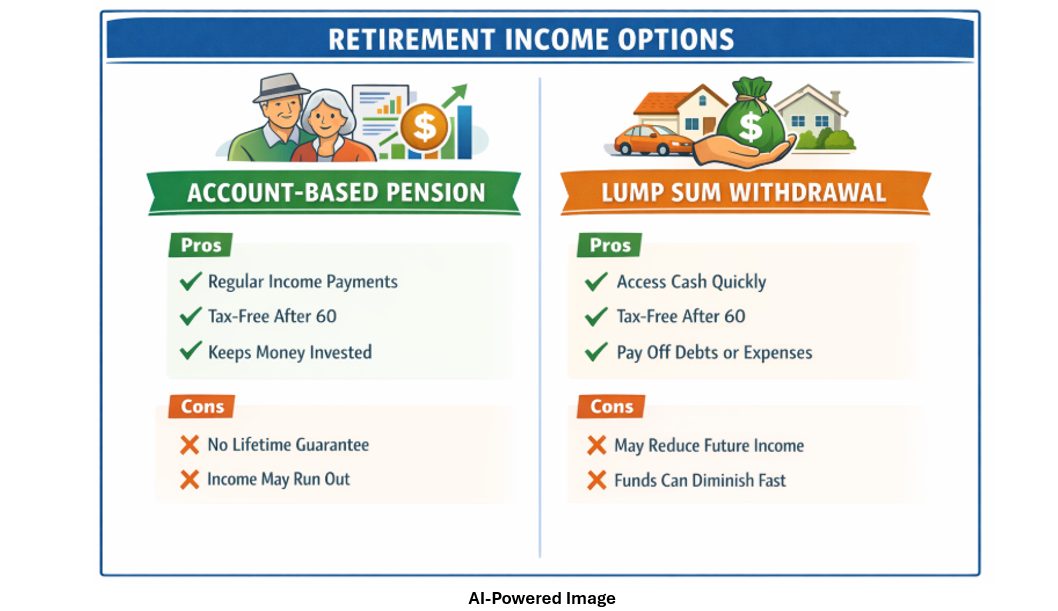
An account-based pension (also called an allocated pension) is the most common retirement income option in Australia. Your super balance is transferred into a pension account, and you draw a regular income from it. You can choose how much to withdraw each year, as long as you meet the government’s minimum Withdrawal requirements.
This option provides flexibility and allows your remaining balance to stay invested, giving it the potential to grow. Investment Earnings and withdrawals are tax-free after age 60. However, there is no guarantee your money will last for life, so managing Withdrawal rates is crucial.
Lump Sum Withdrawals
Some retirees choose to withdraw part or all of their super as a lump sum. This can be useful for paying off Debt, funding home renovations, or helping family members. Lump sum withdrawals are tax-free after age 60 for most people.
While this option offers flexibility, taking large amounts early in retirement may reduce long-term income security. It’s important to consider how withdrawing a lump sum will affect your ability to fund future living expenses.
Annuities and Lifetime Income Streams
Annuities provide a guaranteed income for a set period or for life. You invest a portion of your super into an Annuity product, and in return, you receive regular payments. Some lifetime annuities also offer payments that continue to a spouse or beneficiary after your death.
Annuities can provide peace of mind because they protect against the risk of outliving your savings. However, they usually offer less flexibility and may not provide access to large sums of money once invested. Many retirees combine annuities with account-based pensions to balance security and flexibility.
The Age Pension and Super
The Australian Age Pension can supplement your retirement income if you meet eligibility criteria based on income and Assets tests. How you structure your super withdrawals can impact how much Age Pension you receive.
For example, money in an account-based pension is counted under the Assets test, while income drawn from certain lifetime income streams may be assessed more favourably. Coordinating your super strategy with Age Pension eligibility can significantly improve overall retirement income.
Creating a Balanced Retirement Income Strategy
There is no one-size-fits-all approach to using your super after retirement. Many Australians choose a blended strategy, combining an account-based pension for flexibility, an Annuity for guaranteed income, and the Age Pension as a safety net.
A sustainable Withdrawal rate, diversified investments, and regular reviews of your income plan can help your savings last longer. Market movements, health changes, and lifestyle needs can all affect your strategy over time.
Get Professional Advice
Retirement income decisions can have long-term consequences. Speaking to a licensed financial adviser can help you choose the right mix of income Options based on your personal circumstances, goals, and Risk tolerance.
Retirement shifts the role of Superannuation from Wealth accumulation to income generation, and choosing how to draw on those savings can shape long-term financial security. Australians can access their super upon reaching preservation age and retirement or at age 65, with several income Options available. Account-based pensions offer flexibility and continued Investment exposure but require careful Withdrawal management to ensure funds last. Lump sum withdrawals provide immediate access to cash for large expenses, though they may reduce future income capacity. Annuities deliver guaranteed income for life, helping manage longevity risk but with limited flexibility. The Age Pension can further support retirees, with eligibility influenced by how super is structured. Many retirees adopt a blended strategy, combining these Options to balance flexibility, stability, and long-term sustainability.
FAQs
What is the most common way to use super in retirement?
The most common option is an account-based pension, which allows retirees to draw a flexible income while keeping their remaining balance invested.
Can I withdraw all my super as a lump sum?
Yes, you can withdraw your super as a lump sum once eligible, but doing so may reduce your long-term retirement income and financial security.
How do annuities help in Retirement Planning?
Annuities provide guaranteed income for a fixed period or for life, helping protect against the risk of outliving your savings.
Does my super affect my Age Pension payments?
Yes, how your super is structured and withdrawn can impact your eligibility and payment amount under the Age Pension due to income and Assets tests.


 Nov 12, 2026





 Please wait processing your request...