
 CA
 NZ
 UK
 US
 IND

 AU

 Share
 X (Formerly Twitter)
 Whatsapp
 Facebook
 LinkedIn
 Telegram
 Email This Article
 Copy Link
 Summarize with AI
 Chat GPT
 Perplexity

Highlights
- Household spending rose 0.5 per cent, led by higher electricity, gas and fuel costs.
- Rising interest rates and fuel prices contributed to more cautious consumer spending.
- The household saving to income ratio fell from 7.0 per cent to 6.2 per cent.
- Higher income tax and interest payments reduced growth in household Disposable Income.
Australia's economy grew by 0.3 per cent during the March quarter 2026 and by 2.5 per cent over the year, according to the Australian Bureau of Statistics (ABS). While GDP figures are often viewed as broad economic indicators, they can provide useful insights into the financial pressures and spending habits affecting households.
The latest data highlights a common theme facing many Australians: living costs continued to rise, households spent more on essentials, and savings growth struggled to keep pace with expenses.
Household Budgets Faced Higher Essential Costs
One of the clearest messages from the data is that households devoted more of their budgets to essential expenses.
Household spending increased by 0.5 per cent during the quarter, with spending on electricity, gas and other fuels rising 11.7 per cent. The increase followed the cessation of government rebates, resulting in higher out-of-pocket expenses for households.
Essential goods and services spending rose 0.8 per cent, compared with just 0.1 per cent growth in discretionary spending.
For households, this suggests a larger share of income was directed toward necessities rather than optional purchases. When Utility and fuel bills consume a greater portion of the budget, consumers often become more selective about entertainment, travel and other discretionary expenses.
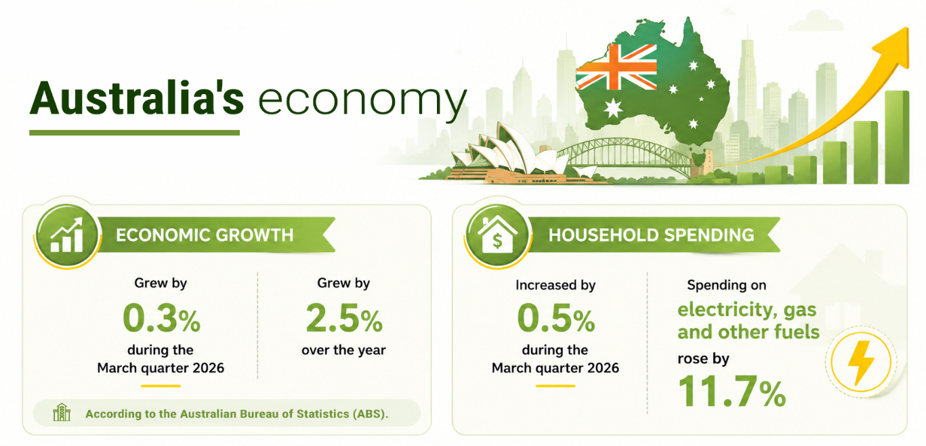
Data source: ABS, Image source: © 2026 Krish Capital Pty. Ltd.
Interest Rates Continue to Influence Spending Decisions
The ABS noted that rising interest rates and significantly higher fuel costs in the March month likely created an environment for more cautious consumer behaviour.
For Mortgage holders, higher interest rates can increase monthly repayments or maintain pressure on existing household budgets. At the same time, higher fuel costs can affect commuting, transportation and delivery-related expenses.
These pressures may help explain why spending was reduced across a range of household expenditure categories. Households often respond to rising costs by delaying purchases, reducing discretionary spending or reviewing monthly budgets more carefully.
Why Savings Fell Despite Income Growth
A key Personal Finance takeaway from the release is the decline in the household saving to income ratio.
The ratio fell to 6.2 per cent from 7.0 per cent in the December quarter. According to the ABS, household spending in nominal terms rose faster than household disposable income.
While compensation of employees increased by 1.2 per cent, growth in disposable income was reduced by higher income tax and interest payments.
This means that although many households may have seen income growth, a larger portion of that income was absorbed by taxes, borrowing costs and everyday spending. As a result, less income was available to be set aside as savings.
For individuals focused on financial planning, the data highlights the challenge of maintaining savings rates during periods when living costs rise faster than disposable income.
Economic Conditions Can Still Affect Household Finances
The March quarter also saw weather-related disruptions affect Mining, transport, postal and Warehousing industries. Mining production fell 1.5 per cent, exports declined 1.1 per cent and overall net trade detracted 0.8 percentage points from GDP growth.
At the same time, private Business Investment rose 6.0 per cent, supported by a 16.3 per cent increase in machinery and equipment investment.
While these figures may seem removed from everyday household finances, broader economic activity can influence employment opportunities, wage growth and business confidence over time. Changes in major industries can eventually affect income prospects and financial security for many households.
The Bottom Line for Households
The March quarter data paints a picture of households managing higher costs while becoming more cautious with spending. Essential expenses increased, discretionary spending remained subdued, and savings rates declined as spending outpaced growth in disposable income.
For individuals monitoring their finances, the figures underscore how rising utility costs, fuel prices, interest payments and taxes can affect day-to-day budgeting decisions, even when overall economic growth remains positive.


 Nov 09, 2026





 Please wait processing your request...