
 CA
 NZ
 UK
 US
 IND

 AU

 Share
 X (Formerly Twitter)
 Whatsapp
 Facebook
 LinkedIn
 Telegram
 Email This Article
 Copy Link
 Summarize with AI
 Chat GPT
 Perplexity

Highlights
- Reviewing finances and securing pre-approval can help clarify your Investment budget.
- Investment goals such as Cash Flow, Capital growth, and tax planning can influence property choices.
- Location, rental Demand, and ongoing costs are important considerations when evaluating a property.
- Property inspections, management decisions, and tax planning play a role in long-term investment outcomes.
Buying an investment property is often considered a long-term financial commitment that requires careful planning and informed decision-making. Before entering the property market, investors may benefit from understanding their financial position, investment objectives, and the responsibilities involved in owning a rental property.
A structured approach can help reduce uncertainty and support more confident decision-making throughout the investment journey.
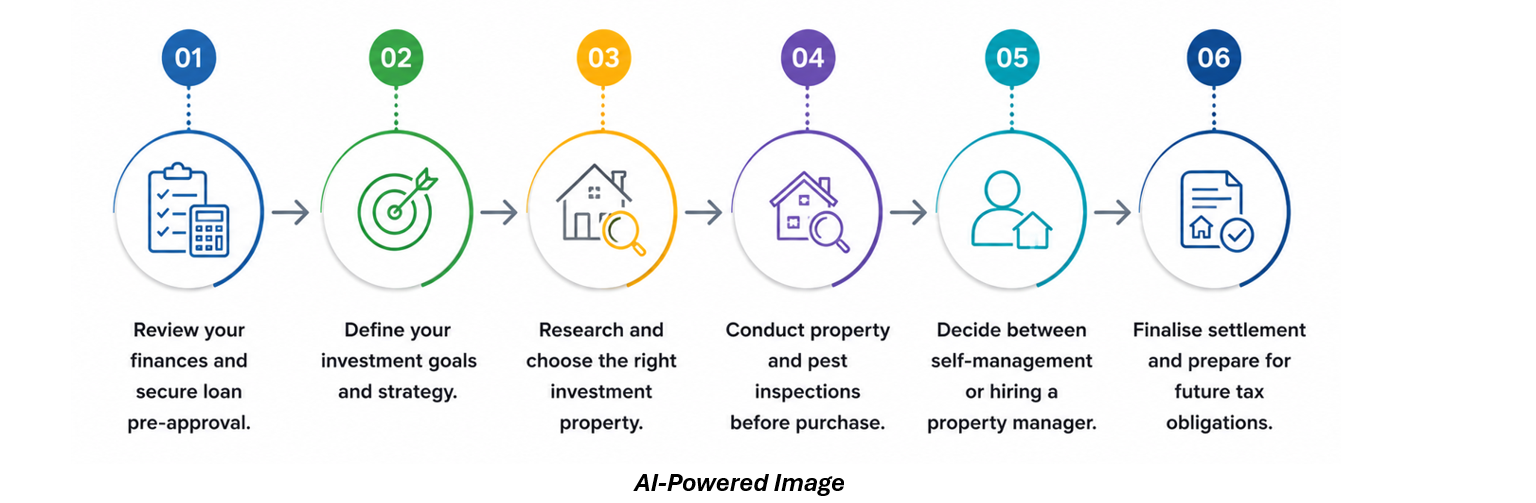
Step 1: Review Your Finances
The first step in buying an investment property is assessing financial readiness. This includes calculating borrowing power, determining how much can comfortably be used as a deposit, and reviewing existing financial commitments.
For homeowners, Equity in an existing property may also be used to support the purchase of an investment property. Equity can increase if a portion of the home Loan has been repaid or if the property value has appreciated over time.
Potential investors should also prepare for additional costs associated with the purchase. These may include stamp duty, legal fees, insurance, and possible renovation or repair expenses. Some lenders may require a 20 per cent deposit to avoid Lenders Mortgage Insurance (LMI).
Choosing the right loan structure is another important consideration. Fixed or variable interest rates, as well as principal and interest or interest-only loan Options, may suit different investment strategies and financial goals.
Obtaining loan pre-approval before searching for a property may provide greater clarity around budget limits and demonstrate seriousness to sellers.
Step 2: Define Investment Goals
Clear investment goals can help guide property selection and financial decisions. Some investors may focus on positive cash flow, where rental income covers expenses and potentially generates profit. Others may prioritise long-term capital growth by targeting properties expected to increase in value over time.
Tax considerations may also influence investment decisions. Deductions related to interest, repairs, and Depreciation are commonly considered as part of broader financial planning.
Having a defined strategy may help investors evaluate opportunities more effectively and avoid decisions driven purely by market trends or emotions.
Step 3: Research the Right Property
Property research is a significant part of the investment process. One common consideration is whether to purchase a new build or an established property.
Established properties may offer immediate rental income but could involve higher maintenance requirements. New builds may have lower upkeep costs and potential tax incentives, although rental returns in newer areas may differ.
Location is another major Factor. Properties located near schools, shopping centres, and public transport are often considered attractive to renters. Investors may also benefit from understanding the likely tenant demographic in a particular area.
Rental Yield and vacancy rates can provide insight into potential rental income and tenant demand. Areas with lower vacancy rates may offer more consistent rental income, while locations with Long-term Growth potential may appeal to investors focused on future capital appreciation.
Additional considerations can include employment opportunities, projected population growth, and planned infrastructure developments.
Step 4: Conduct Property Inspections
Professional property inspections can help identify hidden issues before purchase. Building and pest inspections may reveal structural concerns or maintenance problems that could lead to future expenses.
For private sales, buyers often make offers subject to inspection outcomes. In auction situations, inspections are usually completed before bidding, as auction purchases are typically unconditional.
Inspections may also provide an opportunity to negotiate the purchase price if issues are identified.
Step 5: Decide on Property Management
Once a property purchase is confirmed, investors may choose between self-managing the property or hiring a property manager.
Self-management may reduce management fees but generally requires more time and involvement in handling tenant communication, inspections, maintenance, and rent collection.
Hiring a property manager can offer a more hands-off experience and may help streamline administrative responsibilities.
Step 6: Finalise Settlement and Prepare for Tax Obligations
The settlement process for an investment property is generally similar to buying a home to live in. If the property is already tenanted, Lease arrangements may continue under the new owner. Vacant properties may require additional time and costs to secure tenants.
Investors should also understand potential tax liabilities, including Capital Gains Tax (CGT), which may apply when selling the property. CGT is generally calculated based on the profit made after considering eligible expenses such as improvements and conveyancing costs.
Planning for tax obligations early may help investors better understand the long-term financial impact of their investment decisions.
FAQs
Q: What is the first step when buying an investment property?
A: The first step is reviewing your finances, including borrowing capacity, deposit amount, and additional purchase-related costs.
Q: Why is loan pre-approval important?
A: Loan pre-approval can help clarify your budget and show sellers that you are a serious buyer.
Q: What factors should be considered when choosing a property location?
A: Investors may consider proximity to amenities, rental demand, vacancy rates, employment opportunities, and future growth potential.
Q: Should investors choose a new build or an established property?
A: Both options have advantages and considerations. Established properties may provide immediate rental income, while new builds may offer lower maintenance costs and possible tax incentives.
Q: What is capital gains tax (CGT)?
A: CGT is a tax applied to the profit made from selling an investment property after accounting for eligible expenses.


 Nov 09, 2026





 Please wait processing your request...