
 CA
 NZ
 UK
 US
 IND

 AU

 Share
 X (Formerly Twitter)
 Whatsapp
 Facebook
 LinkedIn
 Telegram
 Email This Article
 Copy Link
 Summarize with AI
 Chat GPT
 Perplexity

Highlights
- Rising oil prices triggered by Middle East tensions are pushing fuel and transportation costs higher worldwide.
- Market volatility has increased as investors react to geopolitical uncertainty and energy supply risks.
- Higher energy prices could keep inflation elevated and delay potential interest rate cuts.
- Strengthening savings and maintaining diversified investments can help households navigate economic shocks.
The latest escalation of tensions across the Middle East has once again highlighted how global events can quickly influence everyday finances. As uncertainty spreads across energy markets, oil prices have surged above the US$100 per barrel mark, triggering ripple effects across industries and financial markets.
Although the conflict is unfolding thousands of kilometres away from many households, its economic consequences can reach consumer budgets through higher living costs, market volatility, and inflation pressures.
Rising Oil Prices and the Cost of Living
Energy sits at the core of the global economy, which means disruptions in oil supply can quickly translate into higher prices across multiple sectors. When oil prices climb, transportation costs typically increase, and businesses often pass those higher expenses on to consumers.
This can lead to rising petrol and diesel prices, higher airline fares, and increased costs for goods that rely on shipping and logistics. Even food prices may feel the impact because agriculture and fertiliser production depend heavily on energy.
Market Volatility During Geopolitical Uncertainty
Financial markets often react sharply to geopolitical developments. Investors tend to move cautiously during periods of conflict, which can trigger short-term volatility in equities, commodities, and currencies.
While such fluctuations may create uncertainty for investors, market history suggests that geopolitical shocks tend to cause temporary disruptions rather than long-term structural declines. As the situation becomes clearer, markets typically stabilise.
Inflation and Interest Rate Concerns
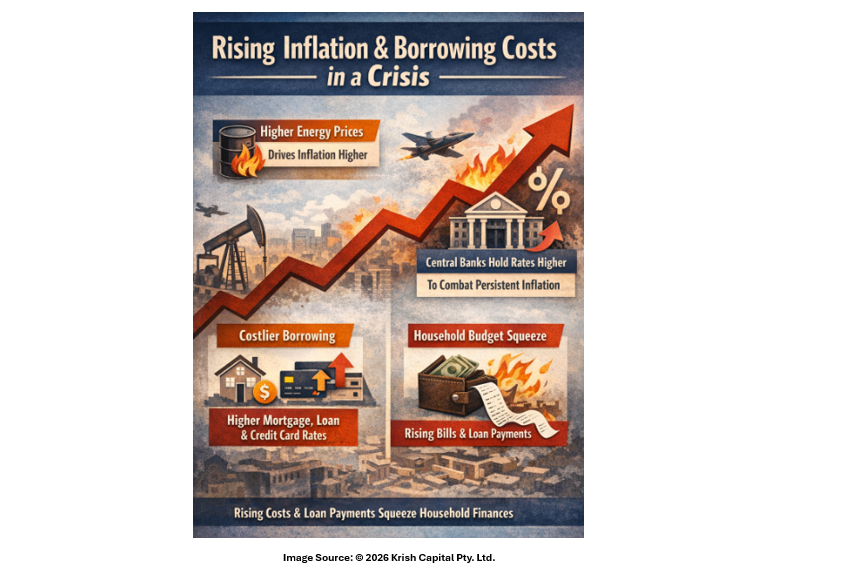
Higher energy prices can push inflation higher across global economies. If inflation remains elevated, central banks may keep interest rates higher for longer in order to control price pressures.
For households, this could translate into higher borrowing costs, including mortgage payments, personal loans, and credit card interest rates. Combined with rising living expenses, this environment may place additional pressure on household budgets.
How Individuals Can Protect Their Finances
While geopolitical events are beyond individual control, building resilient financial habits can help households navigate uncertain periods.
Maintaining a healthy emergency fund can provide a buffer against rising expenses, while diversified investment portfolios may reduce exposure to sudden market swings. At the same time, focusing on long-term financial goals rather than reacting emotionally to market volatility can help investors stay on track.
The Bigger Financial Lesson
Global conflicts often serve as reminders that personal finance is closely linked to international events. From oil markets to inflation trends, geopolitical developments can shape the economic environment in which households manage their money.
By prioritising savings, managing debt carefully, and investing with a long-term perspective, individuals can strengthen their financial resilience even during periods of global uncertainty.


 Nov 09, 2026





 Please wait processing your request...