
 CA
 NZ
 UK
 US
 IND

 AU

 Share
 X (Formerly Twitter)
 Whatsapp
 Facebook
 LinkedIn
 Telegram
 Email This Article
 Copy Link
 Summarize with AI
 Chat GPT
 Perplexity

Key Highlights
- New graduates should start by tracking income and expenses to build a realistic budget.
- Adopting a “save first, spend later” approach helps build emergency funds and long-term wealth.
- Managing debt strategically—especially high-interest obligations—is key to financial stability.
- Building consistent financial habits early creates a strong foundation for future financial goals.
Congratulations—you’ve graduated, stepped (or are about to step) into the world of full-time work, and you’re ready to launch your career. Alongside that excitement comes a big shift: your money habits. It’s one thing to get by as a student, but when you’re earning a salary and paying full-fledged bills, the rules change. The good news? You don’t need to be a financial wizard to get started. With a few smart habits, you can get ahead rather than feel behind. Here’s how.
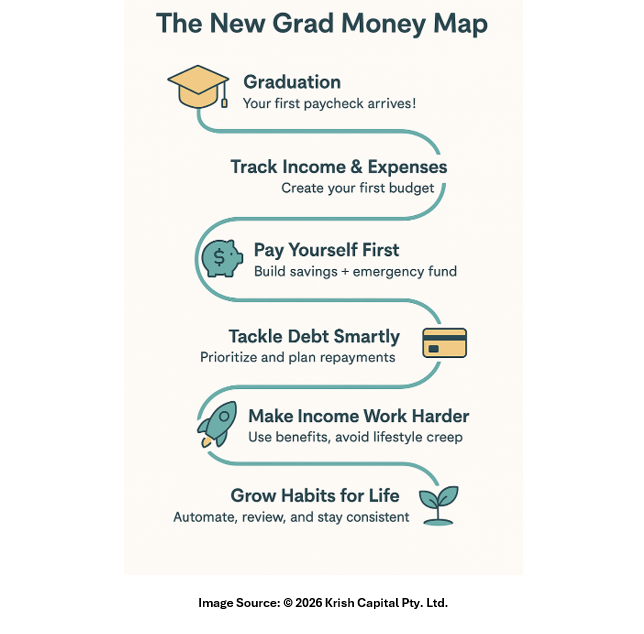
1. Get clear on what’s coming in and what’s going out
When your salary arrives, it might feel like freedom—but it can also feel like a flood if you haven’t yet figured out whether you’re spending or saving more (or less) than you should. First step: track your income and expenses for one month. What’s your take-home pay after taxes? What are all the costs—rent, food, commuting, internet, streaming services, social outings?
Once you know your numbers, you can build a budget. A popular guideline is the 50/30/20 rule: 50 % of your income goes to “needs” (rent, utilities, essentials), 30 % to “wants” (dining out, travel, shopping), and 20 % to savings and debt repayment. Choosing a method that works for you—whether simple or detailed—is more important than finding the “perfect” one.
If expenses are creeping too high, this exercise gives you a chance to pull the brakes early instead of feeling the pinch later.
2. Save first, spend later
One of the most powerful habits is “paying yourself first.” Before you let your salary float into your checking account and disappear, set aside some of it for savings. That covers your emergency fund and future goals. Many advice sources suggest starting with 20% of income for savings and debt repayment.
Your emergency fund should aim to cover 3–6 months of living expenses—just in case life throws a curveball.
Then you can also begin thinking about longer-term goals: maybe buying a home, investing, or building up a down payment. The earlier you start, the more time your money has to work for you.
3. Handle debt smartly
If you graduated with debt—student loans, credit cards, etc.—you’re not alone. What matters is how you deal with it. First, understand what you owe: interest rates, repayment terms, and grace periods.
Credit cards are convenient but tricky if you carry a balance: interest can become a long-term drain. Building and maintaining good credit early helps you later (for apartment rentals, loans, etc.).
If you have both student loans and credit card debt, often the higher-interest or riskier debt gets priority. At the same time, don’t ignore your budget or savings in favor of paying only debt—it’s a balancing act.
4. Make your income count
You may have your first “adult” job now, and that’s fantastic. But a salary is just the start—you need to make it count. Here are a few quick moves:
- Check any employer benefits: Does your company offer a retirement savings plan? Are there matching contributions? Even if your income is modest, contributing something is a smart move.
- Know what the market pays: If you’re entering a role, see what salaries similar jobs command. You might be surprised. Being informed puts you in a stronger position.
- Avoid lifestyle creeps: As income increases, it’s tempting to increase spending proportionately. But maintaining some discipline gives you more freedom later.
5. Build good habits early
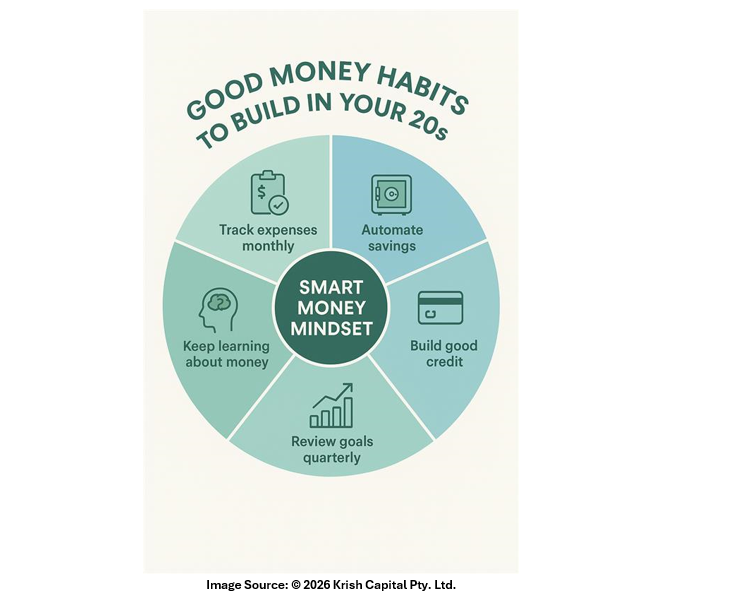
Here’s the hidden secret: managing money well is a habit game, not just a numbers game. The earlier you build strong habits, the easier life becomes. Some habits to adopt:
- Review your bank account and credit card statements monthly. Make sure you know what’s leaving and why.
- Automate savings and bill payments, so you’re less tempted to skip them.
- Track your credit score and understand what affects it. It may be payment history, credit-utilization ratio, or length of credit record. Good credit opens doors.
- Be flexible: your budget, goals, and circumstances will change. Revisit and tweak regularly.
6. Think ahead—but don’t get overwhelmed
You’re fresh out of school and you probably can’t predict everything you’ll want or need in ten years. That’s okay. Instead of trying to plan every detail, aim to build a strong foundation now, so you’re ready for what comes.
Set short-term goals for instance, build an emergency fund, clear a small debt, save for a trip) and longer-term goals for example, buy a home, invest, retire comfortably. Breaking them down into manageable steps makes things a lot less scary.
And remember: wealth isn’t only about what you earn—it’s about what you keep, how you manage it, and how you plan for the future.
Final word
Being a new grad is an exciting time of freedom, discovery—and financial responsibility. The habits you form now will echo for years. By tracking your income and expenses, building savings, handling debt thoughtfully, making your income work for you, and developing smart money habits, you’ll turn this phase not just into survival, but into a strong launch pad for your future.
You don’t need perfect finances to get started—just the willingness to decide to do it, and to keep doing it, consistently. Your future self will thank you.
FAQs
- What is the first step a new graduate should take to manage money?
Start by tracking your income and expenses for at least a month to understand spending patterns and create a workable budget. - How much should a new grad aim to save?
A common guideline is to save around 20% of income, including contributions toward an emergency fund and debt repayment. - How can new graduates manage debt effectively?
Focus on understanding interest rates and repayment terms, and prioritize paying off high-interest debt while maintaining some savings. - Why are financial habits important early in a career?
Early habits like budgeting, saving, and monitoring credit help build long-term financial stability and make future financial decisions easier.


 Nov 09, 2026





 Please wait processing your request...