
 CA
 NZ
 UK
 US
 IND

 AU

 Share
 X (Formerly Twitter)
 Whatsapp
 Facebook
 LinkedIn
 Telegram
 Email This Article
 Copy Link
 Summarize with AI
 Chat GPT
 Perplexity

Highlights
- An emergency fund ensures financial stability during unexpected expenses or income disruptions.
- Financial experts typically recommend three to six months of living expenses in liquid assets.
- Prioritising liquidity before investing can prevent forced asset sales during emergencies.
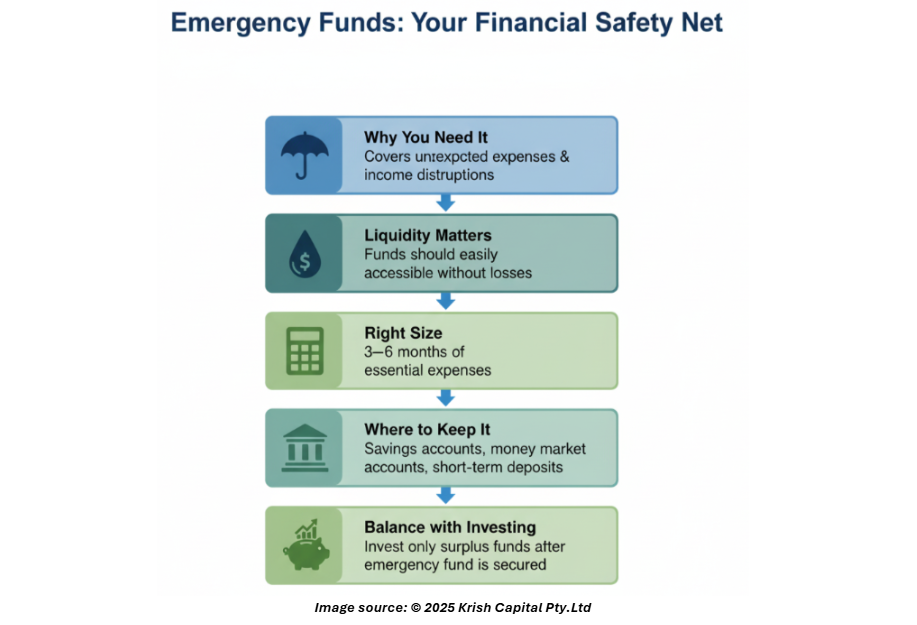
Before embarking on investment journeys, one of the foundational steps in personal finance is establishing an emergency fund. An emergency fund provides readily accessible cash to cover unexpected expenses such as medical bills, urgent home repairs, or temporary income loss. Unlike long-term investments that may carry market risk or require time to liquidate, an emergency fund emphasises safety and immediate availability. It acts as a financial cushion, reducing stress and preventing reliance on high-interest debt during unforeseen situations.
Why Liquidity Matters
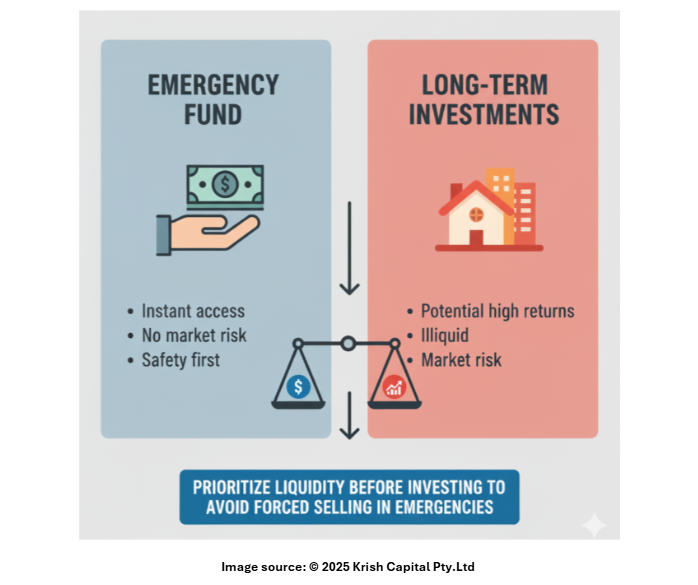
Liquidity refers to the ease with which an asset can be converted into cash without a significant loss of value. For an emergency fund, liquidity is critical. Holding emergency savings in instruments like savings accounts, money market accounts, or short-term term deposits ensures that funds are available instantly when needed. In contrast, investments such as stocks, bonds, or real estate may require days, weeks, or even months to convert into cash, and their value can fluctuate in the meantime. Using illiquid investments for emergencies can result in financial strain or forced selling at an unfavourable market price.
Determining the Right Size
Financial planners often recommend maintaining an emergency fund that covers three to six months of essential living expenses. The exact amount depends on individual circumstances, such as employment stability, household size, monthly expenses, and the presence of other financial safety nets. Those with variable incomes, such as freelancers or business owners, may prefer a larger fund to account for income volatility. On the other hand, individuals with stable employment and multiple income streams might manage comfortably with a smaller fund.
Where to Keep Your Emergency Fund
The primary goal of an emergency fund is accessibility rather than high returns. Suitable options include savings accounts with immediate withdrawal capabilities, high-interest savings accounts, money market accounts, or short-term fixed deposits. These accounts often provide modest interest but maintain principal security. Avoid locking emergency funds in long-term investments, equities, or illiquid assets, as these carry market risks and withdrawal constraints.
Balancing Savings and Investing
While it may be tempting to invest every available dollar for higher returns, neglecting liquidity can backfire during crises. Establishing an emergency fund first allows individuals to invest surplus funds with a clear risk profile and time horizon. Knowing that unexpected expenses are covered prevents panic selling of investments and helps maintain long-term investment strategies, even during market volatility.
Conclusion
An emergency fund is an essential building block of personal finance. By prioritising liquidity and maintaining adequate savings to cover unforeseen expenses, individuals can safeguard financial stability while pursuing investment opportunities. The fund acts as a buffer that allows measured, disciplined investing without jeopardising day-to-day financial security. In essence, an emergency fund is not just a safety net, it is the foundation for confident financial planning.


 Nov 12, 2026





 Please wait processing your request...